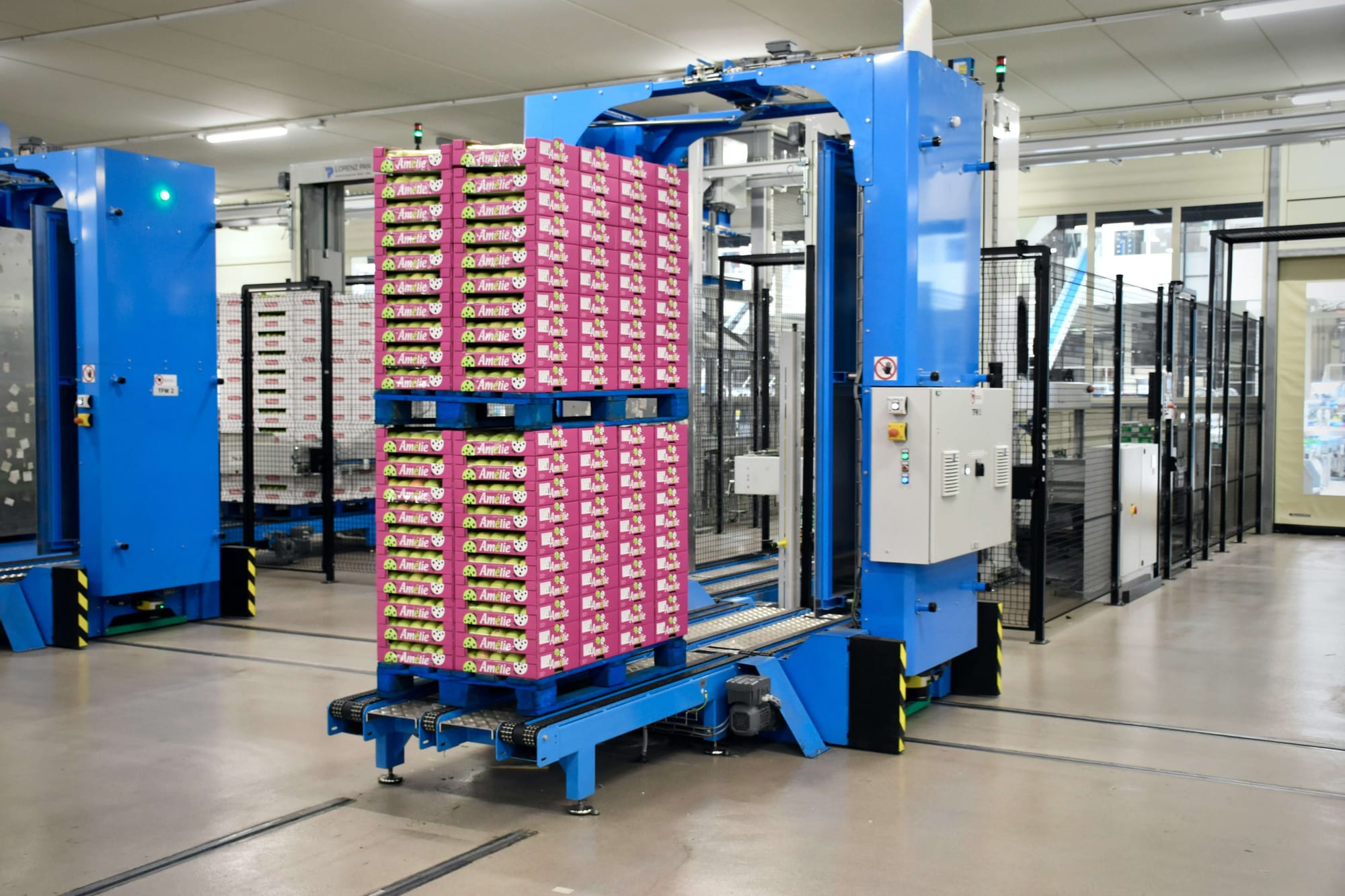


Managing inventory across multiple warehouses is far more challenging than simply tracking stock in a single location. As businesses expand their operations, they often face inventory discrepancies, delayed stock updates, transfer errors, and inconsistent inventory records across facilities. These issues can lead to stockouts, excess inventory, fulfillment delays, and increased operating costs, making effective stock adjustment management a critical component of successful warehouse operations.
Stock adjustments play a vital role in maintaining inventory accuracy across a distributed warehouse network. Whether adjustments result from damaged goods, cycle count variances, returns, shrinkage, or inter-warehouse transfer discrepancies, businesses must ensure that inventory records accurately reflect physical stock levels at all times. Without a structured approach to managing stock adjustments, even small errors can quickly multiply across multiple locations, disrupting supply chain efficiency and customer satisfaction.
Modern ERP systems have become essential tools for overcoming these challenges. By centralizing inventory data and synchronizing stock information across warehouses, ERP software helps businesses maintain accurate inventory records in real time. Studies show that organizations using integrated ERP-driven inventory management can reduce stockouts by as much as 60% while lowering inventory carrying costs by 10% to 20%. This improved visibility and control not only streamline distribution processes but also enhance working capital performance and overall operational efficiency.
Deskera ERP provides businesses with a comprehensive platform for managing inventory across multiple warehouses from a single system. It offers real-time inventory tracking, automated stock adjustments, warehouse transfer management, barcode-enabled inventory control, and advanced reporting capabilities. With centralized inventory visibility and automation, Deskera ERP helps businesses reduce inventory discrepancies, improve stock accuracy, and optimize warehouse operations at scale.
What Are Stock Adjustments?
Stock adjustments are changes made to recorded inventory quantities to ensure that inventory records accurately reflect the actual stock available in a warehouse or storage location. These adjustments become necessary whenever there is a discrepancy between the physical inventory count and the quantity recorded in the inventory management system. By correcting these differences, businesses can maintain accurate inventory data, support efficient operations, and make informed purchasing and fulfillment decisions.
Stock adjustments can either increase or decrease inventory levels. Positive adjustments occur when additional stock is discovered during inventory counts, while negative adjustments are made when inventory is lost, damaged, stolen, expired, or incorrectly recorded. Common reasons for stock adjustments include cycle count variances, receiving errors, shipping mistakes, customer returns, production issues, and discrepancies during warehouse transfers.
In multi-warehouse operations, stock adjustments are particularly important because inventory is constantly moving between locations. Without timely and accurate adjustments, businesses may experience stockouts in one warehouse while excess inventory remains hidden in another. This lack of visibility can lead to inaccurate forecasting, delayed order fulfillment, higher carrying costs, and reduced customer satisfaction.
Effective stock adjustment management helps businesses maintain inventory accuracy, improve warehouse efficiency, strengthen financial reporting, and support better decision-making. When supported by modern inventory management or ERP systems, stock adjustments can be recorded and tracked in real time, ensuring inventory records remain synchronized across all warehouse locations.
Types of Stock Adjustments
Effective inventory management requires businesses to understand the different types of stock adjustments and inventory adjustments that may be needed to keep inventory records accurate. While some adjustments correct inventory quantities, others update inventory values or inventory status.
Using the correct stock adjustment method is essential because an incorrect adjustment can leave businesses with inaccurate stock levels, distorted inventory valuation, and poor operational decisions.
In multi-warehouse operations, where inventory is constantly moving between locations, understanding these inventory adjustment types becomes even more important.
1. Quantity Increase Adjustment
A quantity increase stock adjustment is used when the physical inventory count is higher than the quantity recorded in the inventory system. This inventory adjustment increases stock levels to reflect the actual inventory available.
Common reasons for a quantity increase inventory adjustment include:
- Unrecorded inventory discovered during physical counts
- Customer returns that are inspected and returned to sellable stock
- Corrections of previous inventory recording errors
- Inventory receipts that were not properly entered into the system
This type of stock adjustment ensures that inventory records accurately reflect available inventory and prevents underreporting of stock levels.
2. Quantity Decrease Adjustment
A quantity decrease inventory adjustment is made when the physical stock count is lower than the quantity shown in inventory records. This stock adjustment reduces recorded inventory levels to match actual stock on hand.
Common causes include:
- Inventory shrinkage and theft
- Damaged, defective, or expired products
- Picking and shipping errors
- Internal consumption of inventory
- Lost or misplaced stock
Regular inventory adjustments of this type help businesses maintain inventory accuracy and identify recurring inventory control issues.
3. Cost Adjustment (Inventory Revaluation)
A cost adjustment is a type of inventory adjustment that changes the financial value of inventory without affecting the physical quantity. Unlike quantity-based stock adjustments, this adjustment focuses solely on inventory valuation.
Businesses typically perform cost adjustments when:
- Supplier costs differ from the original purchase order price
- Inventory values need to be updated due to market changes
- Product costs were entered incorrectly
- Inventory valuation methods require correction
Accurate inventory adjustments for valuation purposes help ensure reliable financial reporting, inventory accounting, and cost-of-goods-sold calculations.
4. Inventory Status Adjustment
An inventory status adjustment changes the classification of inventory without changing the total quantity on hand. This type of stock adjustment is commonly used when products need to be moved between different inventory statuses.
Examples include:
- Moving inventory from sellable stock to damaged stock
- Transferring products to a quarantine area for inspection
- Reclassifying defective items awaiting supplier returns
- Separating expired products from available inventory
These inventory adjustments improve inventory visibility and help ensure that only approved inventory is available for order fulfillment.
5. Warehouse Transfer Adjustment
In multi-warehouse operations, stock adjustments are often required when inventory is transferred between locations. If discrepancies occur during the transfer process, businesses may need to perform inventory adjustments to reconcile stock records across warehouses.
Common scenarios include:
- Quantity mismatches between shipping and receiving warehouses
- Inventory damaged during transit
- Incorrect transfer documentation
- Delayed inventory updates between facilities
Warehouse transfer-related stock adjustments are critical for maintaining accurate inventory balances and ensuring inventory visibility across all locations. Without proper inventory adjustment procedures, businesses risk creating discrepancies that can affect replenishment planning, order fulfillment, and overall warehouse performance.
Importance of Stock Adjustments for Inventory Accuracy
Accurate inventory records are the foundation of effective inventory management, especially in businesses operating multiple warehouses. However, inventory discrepancies can arise due to damaged goods, theft, receiving errors, returns, or stock transfer issues.
Regular stock adjustments and inventory adjustments help reconcile these differences, ensuring that inventory records match actual stock levels. By maintaining inventory accuracy, businesses can improve operational efficiency, reduce costs, and make better supply chain decisions.
Improved Inventory Visibility
Regular stock adjustments ensure that inventory records accurately reflect the quantity of products available across all locations. Accurate inventory visibility helps businesses track stock movements, monitor inventory levels in real time, and prevent discrepancies from accumulating over time. This is particularly important in multi-warehouse operations where inventory is frequently transferred between facilities.
Reduced Stockouts and Overstocking
Accurate inventory adjustments help businesses maintain optimal inventory levels by ensuring replenishment decisions are based on reliable data. When stock records are incorrect, businesses may unknowingly reorder products they already have or fail to replenish items that are running low. Timely stock adjustments reduce the risk of both stockouts and excess inventory, improving inventory control and customer service.
Better Demand Forecasting and Planning
Demand forecasting depends on accurate inventory data. Regular stock adjustments eliminate discrepancies that can distort inventory reports and planning models.
With accurate inventory records, businesses can better predict future demand, optimize purchasing decisions, and allocate inventory more effectively across warehouses, leading to improved operational efficiency and reduced inventory carrying costs.
Enhanced Order Fulfillment Accuracy
Inventory accuracy directly impacts a company's ability to fulfill customer orders correctly and on time. Proper stock adjustments ensure that warehouse teams work with accurate inventory information when picking and shipping products.
This reduces fulfillment errors, prevents canceled orders caused by unavailable stock, and improves customer satisfaction by ensuring reliable product availability.
Stronger Financial Reporting
Inventory is often one of the largest assets on a company's balance sheet. Inventory adjustments help ensure that inventory valuation accurately reflects actual stock levels and costs.
Accurate stock adjustment processes support reliable financial statements, cost-of-goods-sold calculations, profitability analysis, and compliance with accounting and auditing requirements.
Faster Identification of Inventory Issues
Frequent stock adjustments help businesses identify recurring inventory problems such as shrinkage, theft, process inefficiencies, or warehouse handling errors.
By analyzing inventory adjustment trends, managers can uncover root causes of discrepancies and implement corrective measures. This proactive approach strengthens inventory controls and helps improve overall warehouse performance.
Improved Multi-Warehouse Coordination
In multi-warehouse operations, inventory accuracy depends on maintaining synchronized stock records across all locations. Stock adjustments help reconcile transfer discrepancies, receiving errors, and inventory movements between warehouses.
Accurate inventory adjustments improve coordination between facilities, ensuring that inventory decisions are based on consistent and up-to-date information throughout the organization.
Why Stock Adjustments Are Challenging in Multi-Warehouse Operations
Managing stock adjustments becomes significantly more complex when inventory is distributed across multiple warehouses. Unlike single-location operations, businesses must track inventory movements, transfers, receipts, and fulfillment activities across several facilities simultaneously.
As the number of locations increases, so does the likelihood of inventory discrepancies, making accurate inventory adjustments more difficult to manage. Without standardized processes and real-time visibility, even minor errors can create widespread inventory inaccuracies.
Inventory Visibility Issues Across Locations
One of the biggest challenges in multi-warehouse operations is maintaining complete visibility into inventory levels at every location. When inventory data is stored in separate systems or updated manually, stock records can quickly become outdated.
This makes it difficult to perform accurate stock adjustments and inventory adjustments, increasing the risk of inventory discrepancies and poor decision-making.
Inconsistent Inventory Recording Practices
Different warehouses may follow different procedures for receiving, counting, transferring, and adjusting inventory. These inconsistencies can result in variations in how stock adjustments are recorded and managed.
Without standardized inventory adjustment processes, businesses may struggle to maintain accurate inventory records and ensure consistency across all warehouse locations.
Delays in Updating Inventory Data
Inventory information is constantly changing as products are received, transferred, picked, packed, and shipped. When inventory updates are delayed, businesses may perform stock adjustments based on outdated information.
These delays can create discrepancies between physical inventory and system records, making inventory accuracy more difficult to maintain across multiple warehouses.
Errors During Inter-Warehouse Transfers
Inventory transfers between warehouses are a common source of stock adjustment challenges. Products may be damaged, misplaced, delayed, or incorrectly counted during transit.
If transfer records do not match the inventory received at the destination warehouse, businesses must perform inventory adjustments to reconcile the differences and maintain accurate stock balances.
Managing High SKU Volumes Across Multiple Facilities
As businesses grow, they often manage thousands of SKUs across several warehouses. Tracking inventory movements and performing stock adjustments for a large number of products can become increasingly complex.
High SKU volumes increase the likelihood of counting errors, misplaced inventory, and data discrepancies, making inventory adjustments more frequent and time-consuming.
Difficulty Identifying the Root Cause of Discrepancies
When inventory discrepancies occur in a multi-warehouse environment, identifying the source of the problem can be challenging. Errors may originate from receiving, picking, shipping, transfers, returns, or manual data entry.
Without detailed audit trails and inventory tracking, businesses may struggle to determine why stock adjustments are necessary, allowing recurring issues to persist.
Lack of Real-Time Inventory Synchronization
Many businesses still rely on disconnected systems or periodic inventory updates between warehouses. Without real-time synchronization, stock levels may differ across locations, leading to inaccurate inventory records.
This creates additional inventory adjustment requirements and increases the risk of stockouts, overstocking, and fulfillment errors throughout the warehouse network.
Common Causes of Stock Adjustments in Multi-Warehouse Environments
Stock adjustments and inventory adjustments are a normal part of warehouse operations, but frequent discrepancies often indicate underlying inventory management challenges.
In multi-warehouse environments, inventory moves through multiple locations, systems, and processes, creating more opportunities for errors.
Understanding the most common causes of stock adjustments can help businesses identify weaknesses in their operations and implement stronger inventory control measures.
Inventory Count Variances
Physical inventory counts do not always match the quantities recorded in inventory systems. These variances can occur due to counting mistakes, misplaced inventory, scanning errors, or delays in recording inventory transactions.
Regular stock adjustments are often required to reconcile these differences and ensure inventory records accurately reflect actual stock levels across all warehouse locations.
Damaged, Lost, or Stolen Inventory
Products may become damaged during storage, handling, transportation, or warehouse operations. Inventory can also be lost due to misplacement or shrinkage caused by theft.
When these incidents occur, businesses must perform inventory adjustments to remove affected items from available stock and maintain accurate inventory records and valuation.
Receiving and Put-away Errors
Mistakes during receiving and put-away processes are a common reason for stock adjustments. Inventory may be received in incorrect quantities, entered incorrectly into the system, or stored in the wrong warehouse location.
These errors can create discrepancies between physical inventory and system records, requiring inventory adjustments to restore inventory accuracy.
Picking and Shipping Mistakes
Incorrect product picks, shipment errors, and order fulfillment mistakes can all lead to inventory discrepancies. For example, warehouse staff may accidentally pick extra items or ship the wrong products to customers.
When inventory records no longer match actual stock levels, businesses must perform stock adjustments to correct the inventory balance.
Returns Processing Issues
Customer returns often create inventory adjustment challenges, especially when products are inspected, restocked, repaired, or discarded. Delays in processing returns or incorrectly classifying returned inventory can cause inventory records to become inaccurate. Timely stock adjustments help ensure returned products are properly accounted for within the inventory system.
Inter-Warehouse Transfer Discrepancies
Inventory transfers between warehouses can create discrepancies if products are damaged, lost, delayed, or incorrectly counted during transit. Differences between the quantity shipped and the quantity received often require stock adjustments and inventory adjustments to reconcile records across locations and maintain accurate inventory visibility.
Data Entry and System Integration Errors
Manual data entry mistakes and poor system integration can significantly impact inventory accuracy.
Incorrect inventory transactions, duplicate records, delayed updates, or synchronization failures between systems may create discrepancies that require stock adjustments.
Businesses with multiple warehouses are particularly vulnerable to these issues when inventory data is managed across disconnected platforms.
Production and Assembly Variances
For manufacturers, inventory adjustments may be required when actual material consumption differs from planned production quantities. Scrap, waste, rework, and inaccurate bill of materials (BOM) data can all contribute to inventory discrepancies. Performing timely stock adjustments helps ensure raw material and finished goods inventories remain accurate throughout the production process.
How to Manage Stock Adjustments in Multi-Warehouse Operations
Managing stock adjustments across multiple warehouses requires more than simply correcting inventory discrepancies as they occur.
Businesses need standardized processes, real-time inventory visibility, and strong inventory controls to ensure that stock adjustments and inventory adjustments are recorded accurately across all locations.
By implementing the right strategies, organizations can improve inventory accuracy, reduce operational disruptions, and maintain consistent inventory records throughout their warehouse network.
Establish Standardized Stock Adjustment Procedures
Creating consistent procedures for stock adjustments is essential when managing multiple warehouses.
Every location should follow the same guidelines for recording inventory adjustments, investigating discrepancies, and approving inventory changes.
Standardized processes reduce errors, improve accountability, and ensure that inventory records remain consistent regardless of where stock adjustments occur.
Implement Real-Time Inventory Tracking
Real-time inventory tracking allows businesses to monitor inventory movements as they happen across all warehouse locations.
When inventory data is updated instantly, stock adjustments can be made based on accurate information rather than outdated records.
This helps minimize discrepancies, improves inventory visibility, and supports faster resolution of inventory adjustment issues.
Use Barcode and RFID Technology
Barcode scanning and RFID technology significantly improve inventory accuracy by reducing manual data entry and tracking inventory movements automatically.
These technologies help warehouse teams record inventory transactions correctly, identify discrepancies quickly, and perform stock adjustments with greater precision.
As a result, businesses can reduce inventory adjustment errors and improve inventory control.
Conduct Regular Cycle Counts
Regular cycle counting helps businesses identify inventory discrepancies before they become major problems.
Instead of waiting for annual physical inventory counts, warehouses can continuously verify inventory accuracy throughout the year.
Frequent cycle counts support timely stock adjustments, improve inventory records, and reduce the risk of large inventory adjustment corrections later.
Automate Inter-Warehouse Transfer Tracking
Inventory transfers are one of the most common sources of stock adjustment issues in multi-warehouse operations. Automating transfer tracking ensures that inventory movements are recorded accurately from shipment to receipt.
This helps businesses detect transfer discrepancies quickly and perform necessary inventory adjustments before inventory inaccuracies affect fulfillment or replenishment decisions.
Establish Approval Workflows for Inventory Adjustments
Not all stock adjustments should be processed automatically. Implementing approval workflows ensures that significant inventory adjustments are reviewed and authorized before they are finalized.
This additional layer of control helps prevent unauthorized inventory changes, reduces fraud risks, and improves the accuracy of inventory adjustment records.
Maintain Detailed Audit Trails
A comprehensive audit trail allows businesses to track every stock adjustment and inventory adjustment made across warehouses.
Detailed records provide visibility into who made the adjustment, when it occurred, and why it was necessary. Audit trails simplify investigations, improve compliance, and help businesses identify recurring inventory management issues.
Train Warehouse Staff on Inventory Best Practices
Warehouse employees play a critical role in maintaining inventory accuracy. Providing regular training on inventory procedures, stock adjustment processes, barcode usage, and cycle counting techniques helps reduce operational errors.
Well-trained staff are more likely to identify discrepancies early and perform inventory adjustments correctly, leading to more reliable inventory records.
Centralize Inventory Data Across All Warehouses
Managing inventory through a centralized inventory management or ERP system helps ensure that all warehouses operate from the same set of inventory data.
Centralized systems provide real-time visibility into stock levels, inventory movements, and stock adjustments across locations. This eliminates information silos and makes inventory adjustments more accurate and efficient.
Analyze Inventory Adjustment Trends
Businesses should regularly review stock adjustment and inventory adjustment data to identify recurring patterns and root causes. Frequent discrepancies may indicate process weaknesses, training gaps, theft, or system issues.
By analyzing adjustment trends, organizations can take corrective action, improve inventory controls, and reduce the need for future stock adjustments.
Best Practices for Accurate Stock Adjustments Across Multiple Warehouses
Accurate stock adjustments are essential for maintaining inventory accuracy in multi-warehouse operations. While inventory adjustments help correct discrepancies, businesses should also focus on preventing errors before they occur.
By implementing strong inventory controls, standardized procedures, and data-driven management practices, organizations can reduce the frequency of stock adjustments, improve inventory visibility, and ensure consistent inventory records across all warehouse locations.
Centralize Inventory Data in a Single System
Managing inventory through a centralized inventory management or ERP system ensures that all warehouses operate using the same inventory data.
Centralized visibility helps businesses track inventory movements, stock adjustments, and inventory adjustments in real time.
This reduces data silos, minimizes discrepancies between locations, and enables faster, more accurate inventory decision-making.
Define Adjustment Thresholds and Exception Rules
Establishing predefined thresholds for stock adjustments helps businesses identify unusual inventory discrepancies quickly. Exception rules can automatically flag significant inventory adjustments for review and approval.
This approach improves inventory control, prevents unauthorized changes, and ensures that large inventory discrepancies receive appropriate investigation before adjustments are finalized.
Monitor Inventory Movements Continuously
Continuous monitoring of inventory movements helps businesses detect discrepancies before they become larger problems.
Tracking receiving, transfers, picking, shipping, and returns in real time improves inventory visibility and allows warehouse teams to address issues promptly.
Effective monitoring reduces the need for large corrective stock adjustments and improves overall inventory accuracy.
Reconcile Inventory Records Regularly
Frequent reconciliation of inventory records helps ensure that system data matches physical inventory levels. Businesses should perform regular cycle counts and periodic physical inventory audits across all warehouse locations.
These activities help identify discrepancies early, support timely inventory adjustments, and prevent inventory errors from accumulating over time.
Analyze Adjustment Trends to Identify Root Causes
Reviewing stock adjustment and inventory adjustment data can reveal recurring inventory issues that require attention. Patterns in inventory discrepancies may indicate process inefficiencies, training gaps, warehouse handling problems, or theft. By identifying and addressing root causes, businesses can reduce future inventory adjustments and improve long-term inventory accuracy.
Use Role-Based Access Controls for Inventory Changes
Restricting access to inventory adjustment functions helps protect inventory data and prevent unauthorized changes. Role-based permissions ensure that only authorized personnel can approve or execute stock adjustments.
This strengthens accountability, improves auditability, and reduces the risk of inventory discrepancies caused by human error or fraud.
Improve Data Accuracy in Inventory Management Systems
Accurate inventory data is critical for reducing unnecessary stock adjustments. Businesses should ensure that inventory transactions are recorded correctly and updated promptly across all systems.
Integrating barcode scanning, RFID technology, and automated data capture tools can significantly improve inventory accuracy and minimize manual entry errors.
Enhance Warehouse Controls and Security Procedures
Strong warehouse controls help prevent inventory losses caused by theft, damage, or misplacement. Security measures such as restricted access areas, surveillance systems, inventory tracking tools, and standardized handling procedures can reduce inventory shrinkage. Fewer inventory losses mean fewer stock adjustments and more reliable inventory records.
Standardize Inventory Valuation Methods
Using consistent inventory valuation methods across all warehouse locations ensures accurate inventory reporting and financial consistency. Standardized valuation practices simplify inventory adjustments, improve inventory accounting accuracy, and support more reliable financial statements, especially for organizations managing inventory across multiple facilities.
Align Inventory Planning with Demand Forecasting
Accurate demand forecasting helps businesses maintain appropriate inventory levels and reduce inventory-related disruptions. When purchasing, replenishment, and warehouse allocation decisions are aligned with expected demand, businesses can minimize stock imbalances, reduce emergency stock adjustments, and improve inventory utilization across all locations.
Key Metrics to Track for Effective Stock Adjustment Management
Managing stock adjustments effectively requires more than simply correcting inventory discrepancies. Businesses must continuously monitor key performance indicators (KPIs) to evaluate inventory accuracy, identify recurring issues, and improve inventory control processes.
Tracking the right metrics helps organizations reduce unnecessary inventory adjustments, improve warehouse performance, and maintain accurate inventory records across multiple locations.
Inventory Accuracy Rate
Inventory accuracy rate measures how closely recorded inventory matches the actual physical inventory available in warehouses. It is one of the most important indicators of inventory management effectiveness.
A high inventory accuracy rate suggests that stock adjustments and inventory adjustments are being managed properly, while low accuracy may signal process gaps, counting errors, or inventory control issues.
Stock Adjustment Frequency
This metric tracks how often stock adjustments are performed within a specific period.
While occasional inventory adjustments are normal, frequent adjustments may indicate recurring operational problems such as inventory handling errors, poor receiving processes, or inadequate inventory tracking.
Monitoring adjustment frequency helps businesses identify areas where inventory management practices need improvement.
Inventory Shrinkage Rate
Inventory shrinkage rate measures the percentage of inventory lost due to theft, damage, misplacement, administrative errors, or other causes. High shrinkage often leads to increased stock adjustments and inventory adjustments.
Tracking this metric helps businesses evaluate warehouse controls, strengthen security measures, and reduce inventory losses that impact profitability.
Cycle Count Accuracy
Cycle count accuracy compares inventory records with the results of regular cycle counts conducted throughout the warehouse. This metric helps businesses assess the reliability of inventory data and the effectiveness of counting procedures.
Consistently high cycle count accuracy reduces the need for major stock adjustments and supports better inventory planning.
Warehouse Transfer Accuracy
Warehouse transfer accuracy measures how accurately inventory is transferred between locations. It evaluates whether the quantity shipped matches the quantity received without discrepancies.
Poor transfer accuracy often results in additional inventory adjustments and inventory visibility issues. Monitoring this metric helps improve inter-warehouse coordination and inventory control.
Order Fulfillment Accuracy
Order fulfillment accuracy tracks the percentage of customer orders shipped correctly and completely. Inaccurate inventory records can lead to incorrect shipments, stockouts, and fulfillment delays.
By monitoring this metric, businesses can assess how effectively stock adjustments and inventory accuracy support order fulfillment performance and customer satisfaction.
Inventory Adjustment Value
This metric measures the total financial impact of stock adjustments and inventory adjustments over a specific period. Tracking adjustment value helps businesses understand how inventory discrepancies affect inventory valuation, profitability, and financial reporting. Significant adjustment values may indicate underlying operational issues that require corrective action.
Time to Resolve Inventory Discrepancies
Time to resolve inventory discrepancies measures how quickly inventory issues are identified, investigated, and corrected. Faster resolution times help maintain inventory accuracy and prevent discrepancies from affecting warehouse operations, replenishment planning, and customer service. This metric reflects the efficiency of a company's inventory adjustment processes.
Inventory Turnover Ratio
Inventory turnover ratio measures how efficiently inventory is sold and replenished over a given period. While not directly tied to stock adjustments, inaccurate inventory records can negatively impact turnover calculations and replenishment decisions. Monitoring inventory turnover alongside inventory adjustment metrics provides a more complete view of inventory performance.
Percentage of Adjustments by Root Cause
Tracking stock adjustments by root cause helps businesses identify the most common reasons for inventory discrepancies. Categories may include receiving errors, transfer issues, shrinkage, damaged goods, returns, or data entry mistakes. Analyzing these trends allows organizations to address recurring problems proactively and reduce the need for future inventory adjustments.
How Deskera ERP Helps Manage Stock Adjustments Effectively
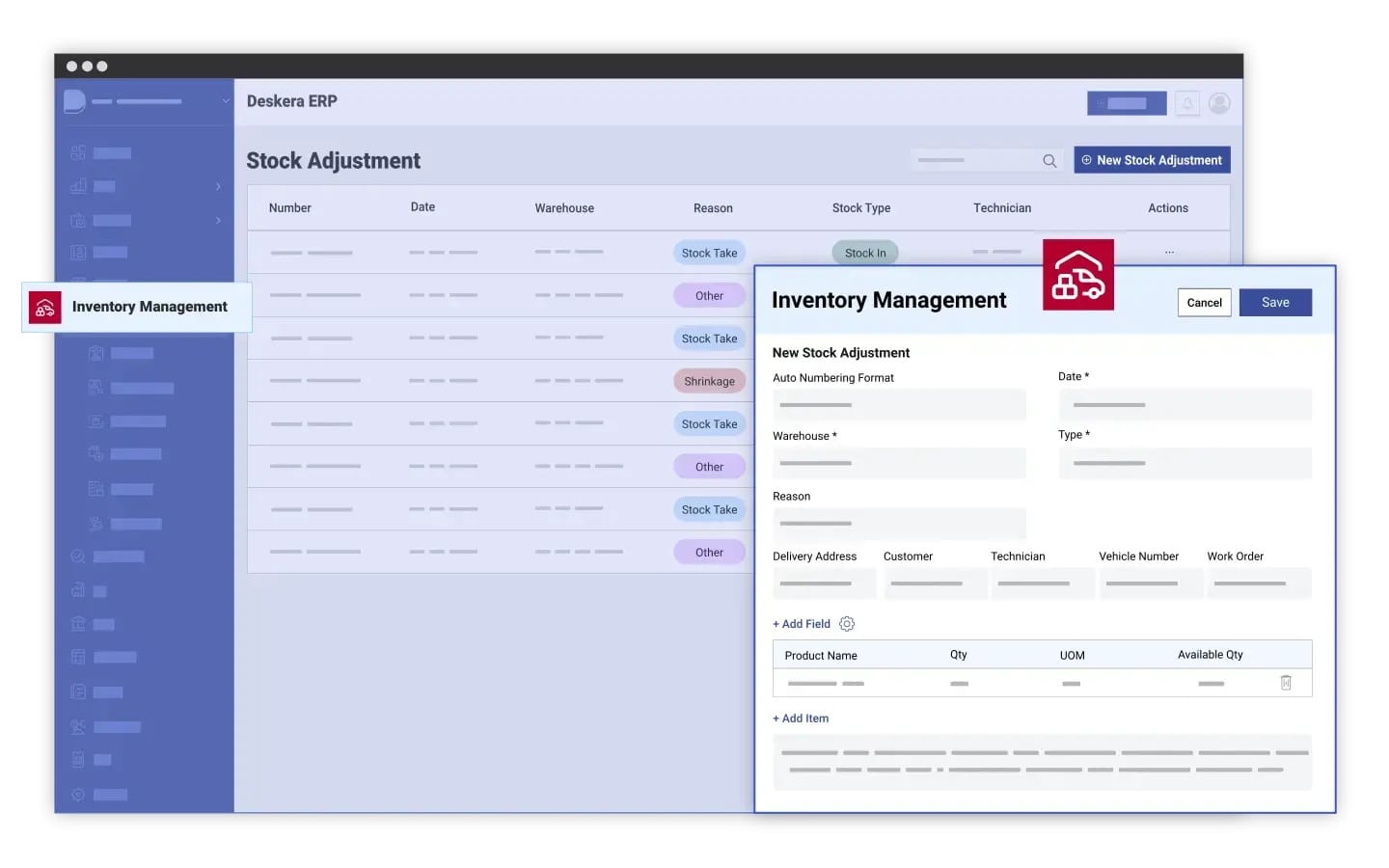
Managing stock adjustments across multiple warehouses can be complex, especially when inventory is constantly moving between locations. Deskera ERP helps businesses simplify inventory adjustment processes by providing real-time inventory visibility, centralized inventory management, and automated inventory controls. By maintaining accurate inventory records and reducing manual intervention, Deskera ERP enables organizations to improve inventory accuracy and minimize costly inventory discrepancies.
Centralized Multi-Warehouse Inventory Management
Deskera ERP allows businesses to manage inventory across multiple warehouses from a single platform. All inventory movements, stock adjustments, and inventory adjustments are recorded within a centralized system, ensuring consistent inventory data across locations. This unified view helps businesses quickly identify discrepancies and maintain accurate inventory records throughout the warehouse network.
Real-Time Inventory Tracking
With real-time inventory tracking, Deskera ERP provides up-to-date visibility into inventory levels, stock transfers, receipts, and shipments. Inventory data is automatically updated as transactions occur, allowing businesses to perform stock adjustments based on accurate information. Real-time visibility reduces inventory discrepancies and helps prevent stockouts, overstocking, and fulfillment errors.
Simplified Stock Adjustment and Inventory Correction Processes
Deskera ERP makes it easier to record and manage stock adjustments whenever inventory discrepancies occur. Businesses can quickly update inventory quantities, document adjustment reasons, and maintain accurate inventory records. This streamlined inventory adjustment process helps warehouse teams resolve discrepancies efficiently while ensuring complete traceability of inventory changes.
Automated Inventory Transfers Between Warehouses
Inter-warehouse transfers are a common source of inventory discrepancies. Deskera ERP helps businesses track inventory transfers from dispatch to receipt, ensuring accurate inventory movement records across locations. Automated transfer tracking reduces manual errors, improves warehouse coordination, and minimizes the need for corrective stock adjustments caused by transfer discrepancies.
Barcode-Enabled Inventory Control
Deskera ERP supports barcode-based inventory management, enabling warehouse teams to scan and track inventory throughout receiving, storage, picking, and shipping processes. Barcode automation reduces manual data entry errors and improves inventory accuracy, resulting in fewer inventory adjustments and more reliable stock records.
Comprehensive Audit Trails and Inventory Tracking
Every stock adjustment and inventory adjustment recorded in Deskera ERP is tracked through detailed audit logs. Businesses can monitor who made an adjustment, when it occurred, and why it was necessary. These audit trails improve accountability, simplify inventory investigations, and support compliance with internal controls and auditing requirements.
Advanced Reporting and Inventory Analytics
Deskera ERP provides inventory reports and analytics that help businesses monitor stock adjustment trends, inventory accuracy, warehouse performance, and inventory movement patterns. By analyzing adjustment data, organizations can identify recurring issues, address root causes of discrepancies, and continuously improve inventory management processes.
Mobile Accessibility for Warehouse Operations
Deskera ERP's mobile capabilities allow warehouse personnel to access inventory information, record inventory transactions, and manage stock adjustments from anywhere within the facility. Mobile access improves operational efficiency, enables faster inventory updates, and helps ensure inventory records remain accurate in real time.
Better Inventory Planning and Replenishment
Accurate inventory records are critical for effective replenishment planning and demand forecasting. By reducing inventory discrepancies through timely stock adjustments and automated inventory management, Deskera ERP helps businesses maintain optimal inventory levels, improve purchasing decisions, and allocate inventory efficiently across multiple warehouse locations.
Key Takeaways
- Stock adjustments and inventory adjustments help reconcile differences between recorded inventory and actual stock levels, ensuring accurate inventory records and operational efficiency.
- Types of Stock Adjustments: Understanding the different types of stock adjustments—quantity increases, quantity decreases, cost adjustments, status adjustments, and transfer adjustments—helps businesses apply the correct inventory correction method.
- Importance of Stock Adjustments for Inventory Accuracy: Regular stock adjustments improve inventory accuracy, support better planning, reduce stockouts, and strengthen financial reporting.
- Why Stock Adjustments Are Challenging in Multi-Warehouse Operations: Managing inventory adjustments across multiple warehouses is complex due to visibility gaps, transfer discrepancies, inconsistent processes, and delayed inventory updates.
- Common Causes of Stock Adjustments in Multi-Warehouse Environments: Inventory count variances, damaged goods, receiving errors, transfer issues, returns, and data inaccuracies are among the most common reasons businesses perform stock adjustments.
- How to Manage Stock Adjustments in Multi-Warehouse Operations: Standardized procedures, real-time inventory tracking, cycle counting, automated transfer management, and centralized inventory systems are essential for effective stock adjustment management.
- Best Practices for Accurate Stock Adjustments Across Multiple Warehouses: Centralized inventory data, continuous monitoring, regular reconciliations, role-based controls, and root-cause analysis help minimize inventory discrepancies and improve inventory accuracy.
- Key Metrics to Track for Effective Stock Adjustment Management: Monitoring metrics such as inventory accuracy rate, stock adjustment frequency, shrinkage rate, cycle count accuracy, and transfer accuracy helps businesses improve inventory control and operational performance.
- Benefits of Effective Stock Adjustment Management: Well-managed stock adjustments reduce inventory losses, improve warehouse coordination, enhance customer satisfaction, and support better financial and operational outcomes.
- How ERP Software Improves Stock Adjustment Management: ERP systems streamline inventory adjustments through real-time visibility, automation, centralized data management, audit trails, and advanced inventory analytics.
- How Deskera ERP Helps Manage Stock Adjustments Effectively: Deskera ERP simplifies stock adjustment processes with multi-warehouse inventory management, real-time tracking, barcode-enabled controls, automated transfers, audit logs, and powerful inventory reporting capabilities.
Related Articles
 Niti Samani
 Niti Samani
 Niti Samani
 Niti Samani
 Niti Samani
 Niti Samani