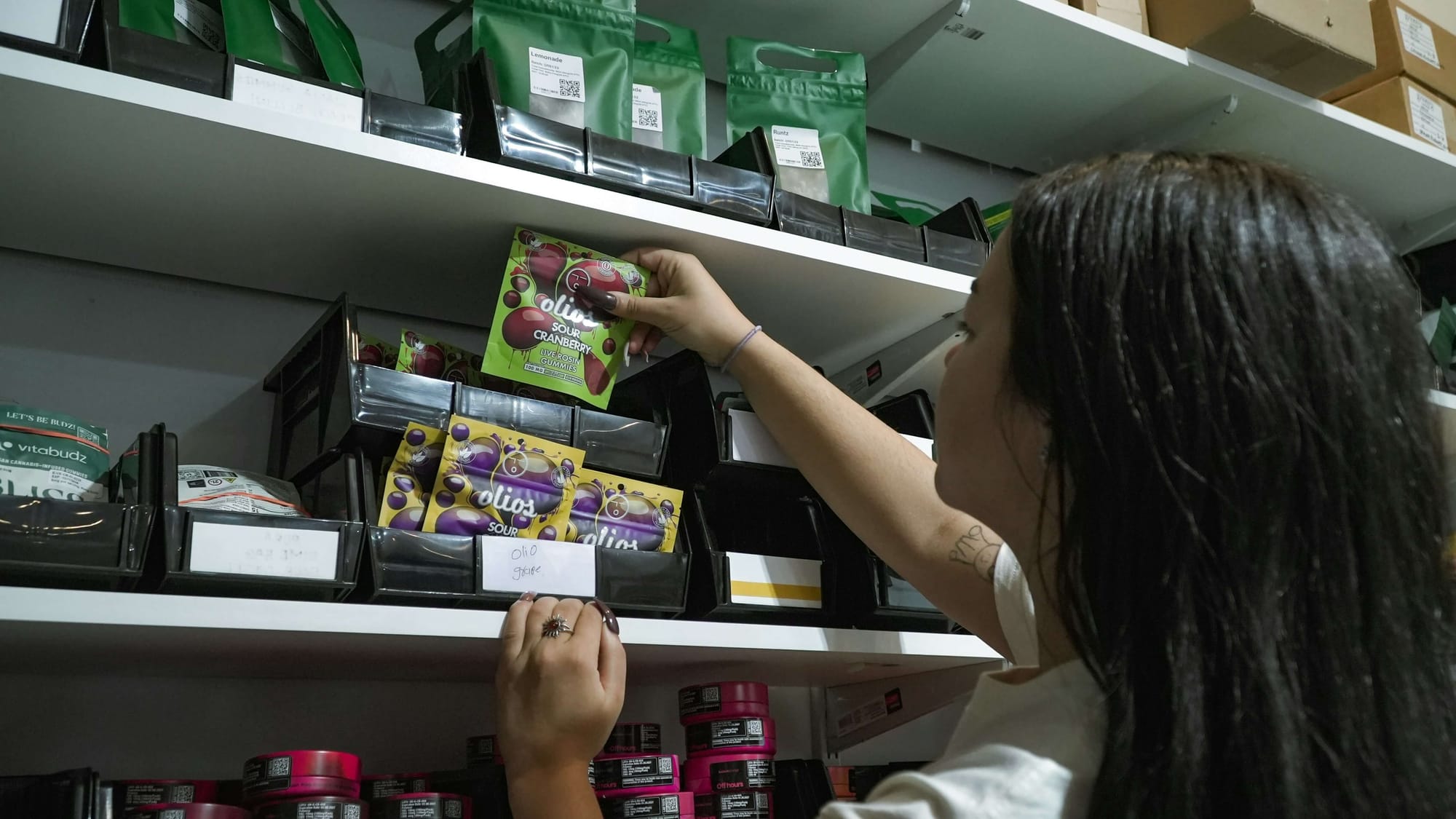

Efficient inventory replenishment planning is the foundation of a resilient and profitable supply chain. Businesses today operate in an environment where customer expectations are rising, demand patterns are constantly shifting, and supply chain disruptions can occur without warning. Without a structured replenishment strategy, companies often struggle with stock imbalances that lead to delayed deliveries, lost sales, excess inventory costs, and reduced operational efficiency. This is why inventory replenishment planning has become a critical process for manufacturers, retailers, distributors, and eCommerce businesses alike.
One of the biggest challenges businesses face is inventory stockouts, which directly impact customer satisfaction and revenue. In fact, studies show that approximately 70% to 90% of stockouts are caused by poor inventory replenishment practices. When replenishment decisions rely on inaccurate forecasting, delayed supplier coordination, or manual tracking methods, businesses risk running out of essential inventory at crucial moments. On the other hand, overstocking ties up working capital, increases carrying costs, and creates warehouse inefficiencies. Achieving the right inventory balance is therefore essential for maintaining both profitability and operational continuity.
Inventory replenishment planning helps organizations determine when to reorder inventory, how much stock to purchase, and how to maintain optimal inventory levels across multiple locations. By combining demand forecasting, inventory tracking, supplier management, and real-time analytics, businesses can improve inventory accuracy and streamline procurement decisions. Modern replenishment strategies such as Just-in-Time (JIT), demand-based replenishment, and automated reorder point systems further enable companies to respond quickly to changing market conditions while minimizing waste and inventory-related costs.
This is where ERP solutions like Deskera ERP play a transformative role. Deskera helps businesses automate inventory replenishment with real-time inventory visibility, intelligent demand forecasting, automated purchase order generation, and multi-warehouse inventory management capabilities. Its integrated platform allows businesses to monitor stock levels, track supplier lead times, and optimize replenishment workflows from a centralized system. With advanced reporting, AI-powered insights, and mobile accessibility, Deskera ERP enables organizations to make faster, data-driven inventory decisions while improving efficiency across the entire supply chain.
What Is Inventory Replenishment Planning?
Inventory replenishment planning is the strategic process of ensuring that inventory is restocked at the right time, in the right quantity, and at the right location to meet customer demand without creating excess stock.
At its core, replenishment planning focuses on maintaining optimal inventory levels by continuously monitoring stock movement, forecasting future demand, and coordinating timely reordering decisions. Rather than waiting for products to run out, businesses proactively replenish inventory before stock levels become critically low, helping prevent disruptions in sales, production, and order fulfillment.
In simple terms, inventory replenishment involves reordering fast-moving or low-stock items to keep operations running smoothly. However, modern replenishment planning goes far beyond manual purchasing decisions or guesswork.
It combines demand forecasting, supplier performance tracking, inventory analytics, lead time management, and stock monitoring to create a data-driven replenishment strategy. The ultimate goal is to balance inventory availability with inventory costs — ensuring businesses can satisfy customer demand while avoiding overstocking, unnecessary storage expenses, and cash flow issues.
Inventory replenishment planning also plays a vital role across the supply chain. It may involve ordering raw materials from suppliers, transferring stock between warehouses and retail stores, moving inventory from reserve storage to fulfillment areas, or coordinating replenishment across multiple distribution channels.
For businesses managing hundreds or thousands of SKUs, replenishment becomes increasingly complex because different products sell at different rates and require varying reorder frequencies. This complexity has made automated inventory replenishment systems and ERP solutions essential for improving visibility, forecasting accuracy, and replenishment efficiency.
An effective inventory replenishment strategy typically includes accurate demand forecasting, SKU segmentation methods like ABC analysis, balanced safety stock policies, supplier performance monitoring, and AI-powered inventory insights.
These components help businesses predict future inventory needs, reduce stockouts, improve inventory turnover, and minimize excess inventory. When executed correctly, inventory replenishment planning ensures businesses always have the right products available where and when customers need them — maximizing sales opportunities while reducing operational costs and inventory waste.
Inventory Replenishment vs Inventory Control
Inventory replenishment and inventory control are closely related concepts, but they serve different purposes within inventory management. While inventory replenishment focuses on restocking products at the right time and in the right quantity, inventory control is concerned with monitoring, organizing, and maintaining optimal inventory levels across the business. Together, they help companies avoid stockouts, reduce carrying costs, improve warehouse efficiency, and maintain smooth supply chain operations.
Understanding the difference between these two functions is important because businesses need both effective replenishment strategies and strong inventory control practices to achieve operational efficiency and customer satisfaction.
Key Components of Inventory Replenishment Planning
Effective inventory replenishment planning relies on several interconnected components that help businesses maintain optimal stock levels while minimizing operational costs.
These components work together to improve inventory visibility, enhance forecasting accuracy, reduce stockouts, and ensure products are available when customers need them.
A strong replenishment strategy combines data, planning, supplier coordination, and warehouse efficiency to support smooth supply chain operations.
End-to-End Supply Chain Visibility
Supply chain visibility allows businesses to monitor inventory movement across the entire supply chain, from raw material sourcing to final product delivery. Real-time visibility helps companies identify delays, disruptions, and inventory shortages early so corrective action can be taken quickly.
Without clear visibility, businesses may struggle with shipment delays, inaccurate inventory data, and poor replenishment decisions that negatively impact operations and customer satisfaction.
Forecasting and Demand Planning
Demand forecasting helps businesses predict future inventory requirements based on historical sales data, seasonal trends, promotions, and changing customer behavior. Accurate forecasting ensures companies replenish inventory before shortages occur while avoiding excess stock accumulation.
Effective demand planning also improves procurement decisions, production scheduling, and warehouse utilization, allowing businesses to respond proactively to fluctuating market demand.
Reorder Point Planning
Reorder point planning determines the inventory level at which a replenishment order should be triggered. It helps businesses maintain continuous inventory availability by ensuring new stock arrives before existing inventory runs out.
Reorder points are typically calculated using average demand, lead times, and safety stock levels, helping businesses reduce stockouts while optimizing inventory investment.
Safety Stock Management
Safety stock acts as a buffer inventory that protects businesses against unexpected demand spikes, supplier delays, or supply chain disruptions. Maintaining the right amount of safety stock helps ensure operational continuity without creating unnecessary carrying costs.
Effective safety stock management balances risk and inventory efficiency, allowing businesses to maintain service levels while minimizing excess inventory.
Lead Time Management
Lead time management focuses on understanding the time required for suppliers to process, ship, and deliver inventory orders. Since supplier lead times can vary due to transportation issues, production delays, or market disruptions, businesses must carefully monitor and manage them. Accurate lead time tracking improves replenishment timing, prevents emergency orders, and helps businesses maintain stable inventory levels.
Space Planning and Warehouse Optimization
Efficient space planning ensures warehouses have adequate storage capacity for incoming inventory while maintaining organized inventory flow.
Proper warehouse optimization improves accessibility, reduces congestion, and supports faster picking, packing, and replenishment processes.
Businesses must continuously adjust warehouse layouts and storage allocation to accommodate seasonal demand changes and high-demand inventory items.
Stocking and Inventory Rotation Plans
Stocking and rotation plans help businesses manage how inventory is stored, moved, and consumed within warehouses. Techniques such as FIFO (First In, First Out) ensure older inventory is used or sold before newer stock, reducing spoilage, obsolescence, and waste. Organized stocking processes also improve inventory visibility, warehouse efficiency, and order fulfillment accuracy.
Current Sales and Market Insights
Inventory replenishment planning must continuously adapt to real-time sales performance and changing market conditions. Consumer demand often shifts unexpectedly due to trends, promotions, economic conditions, or seasonal factors.
Monitoring current sales insights allows businesses to quickly adjust replenishment decisions, helping avoid inventory shortages or overstock situations that can impact profitability and customer service.
Supplier Coordination and Collaboration
Strong supplier coordination ensures inventory replenishment occurs smoothly and on schedule. Businesses must maintain close communication with suppliers, vendors, manufacturers, and logistics providers to manage lead times, shipment schedules, and inventory availability. Effective supplier collaboration improves replenishment reliability, reduces delays, and supports more agile supply chain operations.
Capacity Alignment and Inventory Balancing
Capacity alignment ensures inventory replenishment decisions match warehouse space, production capacity, transportation availability, and financial objectives.
Businesses must balance inventory investment with operational capabilities to avoid excessive stock accumulation or resource shortages.
Proper inventory balancing improves efficiency across procurement, warehousing, and order fulfillment processes while supporting long-term business growth.
How Inventory Replenishment Planning Works
Inventory replenishment planning follows a structured process designed to maintain optimal stock levels while ensuring products are available when customers need them.
The process combines inventory monitoring, demand forecasting, supplier coordination, warehouse planning, and automated decision-making to prevent stockouts and excess inventory.
Although replenishment workflows may vary across industries, most businesses follow a series of core steps to create a more efficient and proactive inventory management system.
Step 1: Gain Complete Business and Inventory Visibility
The replenishment process begins with obtaining a clear, real-time view of inventory, supply chain operations, and overall business activities. Businesses must monitor inventory levels across warehouses, stores, distribution centers, and sales channels to understand current stock availability and movement.
Visibility also includes tracking supplier performance, transportation status, and operational workflows so businesses can quickly identify delays, shortages, or disruptions before they affect inventory availability.
Step 2: Analyze Demand and Forecast Inventory Needs
Once inventory visibility is established, businesses analyze historical sales data, customer buying patterns, seasonal trends, promotions, and market conditions to forecast future demand.
Accurate demand forecasting helps determine which products will be needed, in what quantities, and at what time. This proactive approach allows businesses to replenish inventory before shortages occur while minimizing the risk of overstocking slow-moving products.
Step 3: Define Replenishment Parameters and Reorder Points
Businesses then establish replenishment rules such as reorder points, safety stock levels, reorder quantities, and replenishment frequency. Reorder points act as inventory thresholds that automatically trigger replenishment when stock levels fall below a predefined limit.
These parameters are calculated using factors such as average demand, supplier lead times, inventory turnover rates, and demand variability to ensure inventory remains balanced and available.
Step 4: Understand Distribution and Supply Chain Processes
Effective replenishment planning also requires a detailed understanding of the product distribution process. Businesses must evaluate how inventory moves from suppliers to warehouses, stores, fulfillment centers, or customers.
This includes reviewing manufacturing timelines, packaging processes, shipping schedules, warehouse processing times, and store-specific demand patterns. Understanding these distribution flows helps businesses coordinate replenishment more accurately and reduce delays across the supply chain.
Step 5: Trigger Purchase Orders or Inventory Transfers
When inventory levels reach the reorder point, replenishment actions are initiated automatically or manually. Businesses may generate purchase orders to suppliers or transfer inventory between warehouses and retail locations to balance stock levels. Automated replenishment systems can streamline this process by creating orders instantly based on predefined inventory rules and real-time stock data.
Step 6: Account for Supplier Lead Times
Lead time management is a critical part of inventory replenishment planning. Businesses must consider how long suppliers need to manufacture, process, ship, and deliver inventory.
Since lead times can vary due to supply chain disruptions or transportation delays, replenishment orders must be placed early enough to ensure inventory arrives before stock levels become critically low. Accurate lead time planning reduces the risk of emergency purchasing and stock shortages.
Step 7: Receive, Verify, and Restock Inventory
Once inventory arrives, businesses inspect and verify shipments to ensure order accuracy and product quality. The inventory is then stored in designated warehouse locations or moved directly to picking and fulfillment areas.
Efficient warehouse mapping and inventory organization improve storage utilization, speed up replenishment processes, and support faster order fulfillment.
Step 8: Leverage AI and Advanced Analytics
Modern replenishment planning increasingly relies on AI-powered forecasting, automation, and advanced analytics. AI tools analyze large volumes of inventory, supplier, and sales data to generate more accurate forecasts and replenishment recommendations at the SKU and location level.
Automation reduces manual errors, improves replenishment speed, and allows businesses to optimize inventory decisions more efficiently across multiple locations and product categories.
Step 9: Monitor Performance and Continuously Optimize
Inventory replenishment planning is an ongoing process that requires regular monitoring and adjustments. Businesses continuously review key metrics such as stockout rates, inventory turnover, supplier performance, lead time accuracy, and order fulfillment rates.
These insights help organizations refine replenishment parameters, improve forecasting models, and adapt quickly to changing market conditions or supply chain disruptions.
Step 10: Prepare for Risks and Unexpected Disruptions
A strong replenishment strategy also includes contingency planning for unexpected risks such as supplier failures, transportation disruptions, severe weather events, or sudden demand spikes.
Businesses may use safety stock, backup suppliers, alternative shipping methods, or inventory reallocation strategies to maintain continuity during disruptions. Risk planning improves supply chain resilience and helps businesses maintain stable inventory availability even during uncertain conditions.
Importance of Inventory Replenishment Planning
Inventory replenishment planning plays a critical role in maintaining smooth business operations, improving customer satisfaction, and supporting long-term profitability.
Without an effective replenishment strategy, businesses risk running out of stock, accumulating excess inventory, increasing operational costs, and disrupting supply chain efficiency.
Proper replenishment planning ensures that the right products are available in the right quantities at the right time, helping organizations maintain balance between inventory availability and inventory costs.
Prevents Stockouts and Lost Sales
One of the biggest advantages of inventory replenishment planning is its ability to prevent stock shortages.
When businesses fail to replenish inventory on time, customers may experience delayed deliveries or unavailable products, often leading them to competitors.
Effective replenishment planning ensures consistent product availability, helping businesses capture sales opportunities and maintain customer trust.
Reduces Excess Inventory and Carrying Costs
Overstocking ties up valuable working capital and increases storage, insurance, and inventory handling expenses.
Inventory replenishment planning helps businesses maintain optimal stock levels by ordering inventory based on actual demand patterns and forecasts.
This reduces unnecessary inventory accumulation while improving cash flow and warehouse efficiency.
Improves Demand Forecasting Accuracy
Replenishment planning relies heavily on demand forecasting and inventory analytics. By analyzing historical sales trends, seasonal fluctuations, and customer purchasing behavior, businesses can make more accurate inventory decisions.
Better forecasting reduces inventory imbalances and enables companies to respond proactively to changing market conditions.
Enhances Customer Satisfaction
Customers expect products to be consistently available and delivered on time. Inventory replenishment planning helps businesses maintain high service levels by ensuring inventory is available whenever customers place orders.
Reliable product availability improves customer experience, strengthens brand reputation, and increases customer loyalty over time.
Supports Smooth Supply Chain Operations
Efficient replenishment planning improves coordination between suppliers, warehouses, manufacturers, and distribution centers.
Businesses can better manage procurement schedules, supplier lead times, and inventory movement throughout the supply chain. This minimizes delays, reduces operational disruptions, and improves overall supply chain efficiency.
Improves Inventory Turnover
Inventory replenishment planning helps businesses maintain healthy inventory turnover rates by reducing slow-moving and obsolete stock.
Faster inventory movement minimizes storage costs and improves profitability by ensuring inventory investment generates consistent returns.
Businesses can also identify underperforming products and adjust replenishment strategies accordingly.
Enables Better Financial Management
Inventory is one of the largest operational expenses for many businesses. Poor replenishment decisions can negatively impact profitability, working capital, and cash flow.
Effective replenishment planning helps businesses optimize purchasing decisions, reduce unnecessary inventory spending, and improve overall financial stability.
Helps Businesses Respond to Market Changes
Market demand can shift rapidly due to seasonality, promotions, economic conditions, or changing consumer preferences.
Inventory replenishment planning allows businesses to adapt quickly to these fluctuations by adjusting stock levels and replenishment schedules in real time.
This flexibility helps companies remain competitive in dynamic market environments.
Minimizes Emergency Orders and Expedited Shipping Costs
Without proper replenishment planning, businesses may need to place urgent orders or pay premium shipping fees to avoid stockouts. These emergency measures significantly increase operational costs.
A well-structured replenishment strategy reduces the need for last-minute purchasing by ensuring inventory is replenished proactively and efficiently.
Improves Warehouse and Operational Efficiency
Proper replenishment planning helps warehouses maintain organized inventory flow and efficient storage utilization.
Businesses can better allocate warehouse space, streamline inventory handling processes, and reduce congestion caused by excess stock. This improves picking, packing, and fulfillment efficiency across operations.
Supports Business Growth and Scalability
As businesses expand across multiple products, warehouses, or sales channels, inventory management becomes increasingly complex. Inventory replenishment planning provides the structure and visibility needed to scale operations efficiently.
Automated replenishment systems and ERP solutions further help businesses manage growing inventory demands while maintaining operational control and profitability.
Why Are New Inventory Replenishment Planning Tactics Important Today?
Modern supply chains are far more complex and unpredictable than they were just a few years ago. Customer demand shifts rapidly, supply chain disruptions can occur without warning, and businesses are expected to deliver products faster than ever before.
Traditional replenishment methods that rely heavily on historical sales data, manual spreadsheets, or intuition are no longer enough to maintain inventory accuracy and operational efficiency.
As a result, companies are increasingly adopting smarter, technology-driven inventory replenishment tactics to stay competitive and resilient.
1. Market Volatility Has Become the New Normal
Today’s inventory environment is highly dynamic. Demand can spike overnight due to seasonal promotions, online trends, viral social media activity, changing consumer preferences, or sudden market disruptions.
Businesses can no longer depend solely on past sales performance to predict future inventory requirements. Without flexible replenishment strategies, companies risk overstocking slow-moving items or understocking high-demand products.
Modern replenishment tactics use AI-powered forecasting, predictive analytics, and real-time inventory visibility to quickly detect demand fluctuations and respond proactively. These tools help businesses maintain optimal stock levels even during uncertain market conditions.
2. Lead Times Are Longer and Less Predictable
Although supply chain conditions have improved in recent years, supplier lead times still remain inconsistent for many industries.
Delays caused by transportation disruptions, raw material shortages, labor challenges, or global events can significantly impact inventory availability.
Inconsistent lead times make replenishment planning much more difficult because businesses may not know exactly when inventory will arrive.
New replenishment strategies focus on improving supply chain visibility, monitoring supplier performance, and using dynamic safety stock calculations to reduce the risk of stockouts.
Businesses are also adopting more agile replenishment models that allow faster adjustments when delays occur.
3. Traditional ERP Systems Alone Are No Longer Sufficient
ERP systems remain essential for managing inventory and business operations, but many traditional ERP tools provide only basic forecasting and replenishment capabilities.
While they can track inventory data and generate standard reports, they often lack the advanced analytics, granular forecasting, and real-time responsiveness needed for modern supply chains.
This is why businesses are integrating advanced inventory planning solutions, AI-driven analytics, and automated replenishment tools alongside ERP systems.
These technologies provide deeper insights into demand trends, inventory movement, SKU performance, and supplier behavior, enabling more accurate and strategic replenishment decisions.
4. Artificial Intelligence Is Transforming Inventory Planning
Artificial intelligence has rapidly evolved from an emerging technology into a critical driver of modern inventory management.
AI-powered replenishment systems can analyze massive volumes of inventory, sales, supplier, and market data far faster than manual methods. This improves forecasting accuracy, reduces excess safety stock, and helps businesses optimize inventory investment.
Advanced AI capabilities can now identify slow-moving inventory, predict declining product demand, recommend reorder quantities, and even forecast when certain products may become obsolete.
Businesses that continue relying on outdated manual systems or static forecasting models risk falling behind competitors that use AI to improve inventory efficiency and customer service levels.
5. Businesses Need Faster and Smarter Decision-Making
Modern supply chains require real-time decision-making. Businesses operating across multiple warehouses, sales channels, and geographic regions need immediate visibility into inventory levels, demand patterns, and replenishment needs. Delayed decisions can lead to lost sales, excess inventory, increased carrying costs, and operational bottlenecks.
New replenishment planning tactics leverage automation, cloud-based inventory systems, and real-time analytics to improve responsiveness. Automated reorder points, inventory alerts, and intelligent procurement workflows allow businesses to react quickly to inventory changes while reducing manual workload and human error.
6. Customer Expectations Continue to Rise
Customers today expect fast deliveries, accurate order fulfillment, and consistent product availability across all sales channels. Even a single stockout can damage customer trust and push buyers toward competitors. To meet these expectations, businesses must ensure inventory is always available at the right place and time.
Modern replenishment strategies help companies maintain higher service levels by aligning inventory planning with actual customer demand. This improves order fulfillment rates, enhances customer satisfaction, and strengthens long-term customer loyalty.
Ultimately, adopting new inventory replenishment planning tactics is no longer optional — it is essential for maintaining profitability, operational efficiency, and supply chain resilience.
Businesses that embrace AI-driven forecasting, automation, real-time analytics, and smarter replenishment strategies are better positioned to reduce costs, improve inventory accuracy, and respond confidently to changing market conditions.
Key Inventory Replenishment Strategies
Businesses use different inventory replenishment strategies depending on their industry, product demand patterns, supply chain complexity, and operational goals.
The right replenishment strategy helps maintain product availability, reduce inventory carrying costs, improve cash flow, and prevent stockouts or overstocking.
Modern businesses often combine multiple replenishment approaches to create a flexible and efficient inventory management system.
Just-in-Time (JIT) Replenishment
Just-in-Time replenishment focuses on ordering inventory only when it is needed for production or customer demand. This strategy minimizes excess inventory, reduces storage costs, and improves cash flow efficiency.
However, JIT requires highly accurate forecasting and reliable suppliers because even minor delays can disrupt operations and lead to stock shortages.
Demand-Based Replenishment
Demand-based replenishment uses real-time sales and customer demand data to trigger inventory restocking. Instead of relying solely on fixed schedules, businesses replenish products based on actual consumption patterns.
This strategy improves inventory accuracy, reduces waste, and allows companies to adapt quickly to changing customer preferences and market trends.
Reorder Point Replenishment
Reorder point replenishment automatically triggers a new inventory order once stock levels reach a predetermined threshold. The reorder point is calculated using average demand, supplier lead time, and safety stock levels.
This strategy helps businesses maintain continuous inventory availability while reducing the risk of stockouts and emergency purchasing.
Safety Stock Replenishment Strategy
Safety stock replenishment involves maintaining additional buffer inventory to protect against unexpected demand spikes, supplier delays, or supply chain disruptions.
This strategy helps businesses maintain service levels during uncertainty while minimizing operational interruptions. Effective safety stock management requires balancing inventory availability with carrying costs to avoid excessive stock accumulation.
Periodic Replenishment Strategy
In periodic replenishment, inventory levels are reviewed at fixed intervals such as weekly, monthly, or quarterly. Businesses place replenishment orders based on inventory status during each review cycle.
This strategy simplifies inventory management and purchasing processes but may increase the risk of temporary stock shortages between review periods.
Continuous Replenishment Strategy
Continuous replenishment relies on real-time inventory monitoring and automated restocking whenever inventory levels decline.
This strategy provides greater inventory accuracy and faster response times compared to periodic replenishment. It is especially effective for fast-moving products and businesses operating across multiple sales channels or warehouse locations.
ABC Inventory Replenishment Strategy
ABC analysis categorizes inventory based on product value, sales importance, or consumption frequency.
High-value “A” items receive tighter replenishment control and more frequent monitoring, while lower-value “C” items require less attention.
This strategy helps businesses prioritize inventory resources and optimize replenishment decisions based on product importance.
Vendor-Managed Inventory (VMI)
Vendor-Managed Inventory allows suppliers to monitor inventory levels and manage replenishment on behalf of the business. Suppliers use inventory and sales data to determine when replenishment is needed.
VMI improves supplier collaboration, reduces administrative workload, and enhances replenishment efficiency while helping maintain stable inventory availability.
Lean Inventory Replenishment
Lean replenishment focuses on minimizing waste while maintaining efficient inventory flow throughout the supply chain. Businesses using lean strategies aim to reduce excess stock, unnecessary handling, and inefficient processes.
This approach improves operational efficiency, lowers carrying costs, and supports faster inventory movement across warehouses and production facilities.
Seasonal Replenishment Strategy
Seasonal replenishment helps businesses prepare for predictable fluctuations in demand during holidays, promotional events, or peak sales seasons.
Companies increase inventory levels ahead of expected demand surges and reduce replenishment afterward. This strategy helps businesses maximize sales opportunities while minimizing the risk of seasonal stock shortages.
Multi-Echelon Inventory Replenishment
Multi-echelon replenishment manages inventory across multiple warehouses, distribution centers, retail locations, or fulfillment hubs.
The strategy ensures inventory is distributed efficiently throughout the supply chain based on demand patterns and location-specific requirements. It improves inventory balancing, reduces transportation delays, and enhances overall supply chain responsiveness.
Key Factors That Influence Inventory Replenishment Strategies
Inventory replenishment strategies are shaped by a variety of operational, market, and supply chain factors. Since customer demand and supply chain conditions constantly change, businesses must continuously adjust their replenishment approaches to maintain optimal stock levels and operational efficiency.
Understanding these influencing factors helps organizations create more accurate, flexible, and resilient replenishment plans that reduce stockouts, lower costs, and improve customer satisfaction.
Demand Variability and Market Fluctuations
Customer demand is one of the most influential factors affecting inventory replenishment. Seasonal trends, promotions, product launches, changing consumer preferences, and social media-driven buying behavior can cause sudden fluctuations in demand.
Businesses that rely on static forecasting models may struggle to respond effectively to these changes. Modern replenishment strategies use real-time demand sensing, predictive analytics, and dynamic forecasting to adjust replenishment quantities quickly and accurately.
Supply Chain Lead Times
Lead times directly impact when businesses should reorder inventory and how much safety stock they need to maintain. However, supplier lead times are increasingly unpredictable due to transportation delays, labor shortages, geopolitical issues, and global supply chain disruptions.
Businesses must continuously monitor supplier performance and account for lead time variability when planning replenishment schedules to avoid inventory shortages or emergency purchasing.
Forecast Accuracy
Inventory replenishment decisions depend heavily on demand forecasting accuracy. Inaccurate forecasts can result in overstocking, stockouts, excessive carrying costs, or lost sales opportunities.
Businesses that regularly review historical sales data, market trends, and customer purchasing behavior are better equipped to create accurate replenishment plans. AI-powered forecasting tools further improve prediction accuracy by analyzing large volumes of real-time data.
Inventory Visibility and Data Accuracy
Real-time inventory visibility is essential for effective replenishment planning. Businesses need accurate information about current stock levels, warehouse movement, incoming shipments, and product availability across all locations.
Poor inventory visibility often leads to duplicate ordering, delayed replenishment decisions, and inventory imbalances. Integrated inventory management systems and ERP platforms help improve visibility and support more informed replenishment decisions.
Warehouse Space and Storage Capacity
Warehouse capacity significantly influences replenishment strategies. Businesses must ensure there is enough space to store incoming inventory while maintaining efficient inventory flow and warehouse operations.
Overstocking can create warehouse congestion, reduce picking efficiency, and limit space for fast-moving products. Proper space planning, slotting optimization, and warehouse layout management help align replenishment activities with available storage capacity.
Supplier Reliability and Vendor Performance
Suppliers play a critical role in replenishment success. Frequent delivery delays, inconsistent product quality, or poor communication can disrupt replenishment schedules and inventory availability.
Businesses must evaluate supplier reliability based on delivery performance, lead time consistency, responsiveness, and product quality. Working with reliable suppliers or maintaining backup sourcing options improves supply chain stability and replenishment efficiency.
Safety Stock Policies
Safety stock levels directly affect replenishment strategies by determining how much buffer inventory businesses maintain to absorb unexpected disruptions. Businesses operating in volatile markets or facing long supplier lead times may require higher safety stock levels.
However, excessive safety stock increases carrying costs and warehouse congestion. Replenishment strategies must balance inventory protection with cost efficiency.
Product Life Cycle Stages
Products experience different demand patterns throughout their life cycles, including introduction, growth, maturity, and decline stages.
New products may require aggressive replenishment to support growing demand, while declining products may need reduced reorder quantities to avoid obsolete inventory.
Businesses must align replenishment strategies with product life cycle changes to maintain inventory efficiency and profitability.
Multi-Location Inventory Management
Businesses operating across multiple warehouses, retail stores, or fulfillment centers face additional replenishment complexity. Inventory must be balanced efficiently across locations to prevent shortages in one facility and excess stock in another.
Multi-location replenishment strategies rely on centralized inventory visibility, inventory transfers, and demand forecasting at each location to optimize stock allocation.
Technology and Automation Capabilities
The level of technology adoption within a business strongly influences replenishment efficiency.
Automated inventory systems, AI-powered forecasting tools, barcode scanning, warehouse management systems, and ERP software improve replenishment accuracy and reduce manual errors.
Businesses using outdated or manual replenishment processes often struggle to respond quickly to inventory changes and market fluctuations.
Cross-Functional Communication and Collaboration
Successful replenishment planning requires strong communication between procurement teams, warehouse managers, sales departments, suppliers, and demand planners.
Poor communication can create inventory mismatches, delayed replenishment actions, and operational inefficiencies. Cross-functional collaboration ensures all stakeholders work with consistent inventory data and aligned replenishment goals.
External Economic and Market Conditions
Economic trends, inflation, tariffs, freight costs, geopolitical conflicts, and consumer spending patterns can all impact replenishment planning.
Businesses must monitor these external factors closely because they influence supplier costs, transportation timelines, product demand, and inventory investment decisions.
Agile replenishment strategies help organizations adapt quickly to changing market conditions.
Warehouse Throughput and Operational Efficiency
Warehouse throughput capacity affects how quickly inventory can be received, stored, picked, and replenished.
High-volume operations require replenishment strategies that support smooth inventory movement without causing bottlenecks or operational delays.
Businesses often align replenishment schedules with warehouse processing capabilities to maintain efficient order fulfillment and inventory flow.
Common Challenges in Inventory Replenishment Planning
Although inventory replenishment planning is essential for maintaining efficient operations and consistent product availability, businesses often face several challenges that make replenishment decisions complex.
Factors such as unpredictable demand, supply chain disruptions, limited inventory visibility, and manual processes can lead to stock imbalances, increased operational costs, and reduced customer satisfaction.
Understanding these challenges helps businesses build more resilient and accurate replenishment strategies.
Inaccurate Demand Forecasting
Demand forecasting remains one of the biggest challenges in inventory replenishment planning.
Customer preferences, seasonal fluctuations, market trends, and economic conditions can change rapidly, making demand difficult to predict accurately.
Poor forecasting often leads to overstocking or stockouts, both of which negatively impact profitability and operational efficiency.
Supply Chain Disruptions
Global supply chains are increasingly vulnerable to disruptions caused by transportation delays, raw material shortages, geopolitical events, labor issues, and natural disasters.
These disruptions can delay inventory replenishment and create significant gaps in product availability. Businesses without flexible replenishment strategies often struggle to respond quickly to unexpected supply chain interruptions.
Variable and Unpredictable Lead Times
Supplier lead times are no longer as stable or predictable as they once were. Delays in manufacturing, shipping, customs clearance, or transportation can impact replenishment schedules and inventory availability.
Businesses that fail to account for lead time variability may place orders too late, resulting in stock shortages and fulfillment delays.
Lack of Real-Time Inventory Visibility
Without real-time inventory tracking, businesses may not have accurate information about stock levels, inventory movement, or warehouse availability.
Poor visibility can lead to duplicate ordering, inventory discrepancies, delayed replenishment decisions, and inefficient stock allocation across locations.
This problem becomes even more challenging for businesses managing multiple warehouses or sales channels.
Overstocking and Excess Inventory
Many businesses struggle with maintaining the right inventory balance. Overstocking often occurs when replenishment decisions rely on inaccurate forecasts, excessive safety stock, or poor inventory planning.
Excess inventory increases carrying costs, consumes warehouse space, ties up working capital, and raises the risk of obsolete or unsold products.
Frequent Stockouts
Stockouts occur when inventory runs out before replenishment arrives. This challenge can result from inaccurate forecasting, delayed supplier deliveries, sudden demand spikes, or inefficient reorder point calculations.
Frequent stock shortages damage customer trust, reduce sales opportunities, and may push customers toward competitors.
Manual Inventory Management Processes
Businesses that still rely on spreadsheets, paper-based tracking, or manual replenishment methods often face slower decision-making and higher error rates.
Manual processes make it difficult to monitor inventory in real time, adjust replenishment quickly, or scale operations efficiently. Human errors in data entry and calculations can also lead to costly inventory mistakes.
Managing Multiple SKUs and Product Variations
Companies with large product catalogs often struggle to manage replenishment across thousands of SKUs with varying demand patterns, shelf lives, and reorder cycles.
Different products may require unique replenishment strategies, making inventory planning increasingly complex. Without advanced inventory systems, managing diverse inventory efficiently becomes difficult.
Seasonal Demand Fluctuations
Seasonal products, promotional campaigns, and peak shopping periods can create sudden spikes or drops in demand. Businesses that fail to prepare for seasonal fluctuations may either run out of inventory during peak periods or hold excess stock afterward. Balancing inventory levels during changing demand cycles remains a major replenishment challenge.
Poor Supplier Coordination
Ineffective communication and coordination with suppliers can disrupt replenishment schedules and create inventory delays. Businesses may face inconsistent deliveries, inaccurate shipment timelines, or limited supplier responsiveness. Weak supplier relationships can reduce replenishment reliability and increase operational uncertainty.
Balancing Safety Stock Levels
Maintaining sufficient safety stock is essential for preventing stockouts, but excessive safety stock increases inventory carrying costs and warehouse congestion.
Businesses often struggle to determine the right balance between inventory protection and cost optimization, especially during periods of volatile demand or uncertain lead times.
Multi-Location Inventory Complexity
Businesses operating across multiple warehouses, retail stores, or distribution centers face additional replenishment challenges. Inventory must be balanced efficiently across locations to avoid shortages in one facility and excess stock in another.
Coordinating replenishment across multiple sites requires accurate data, strong visibility, and advanced inventory planning tools.
Rising Customer Expectations
Customers today expect faster deliveries, real-time product availability, and seamless order fulfillment. Even minor replenishment delays can impact customer experience and brand reputation.
Businesses must continuously improve replenishment speed and inventory accuracy to meet these growing expectations while controlling operational costs.
Proven Best Practices for Effective Inventory Replenishment Planning
Successful inventory replenishment planning requires more than simply reordering products when stock runs low. Businesses must combine accurate forecasting, real-time inventory visibility, supplier collaboration, and data-driven decision-making to maintain optimal stock levels while controlling costs.
By implementing the right replenishment practices, companies can reduce stockouts, improve inventory turnover, strengthen customer satisfaction, and create a more agile and resilient supply chain.
Use Advanced Inventory Management Software
Modern inventory replenishment is too complex to manage efficiently with spreadsheets or manual processes alone.
Businesses should invest in inventory management software that supports real-time tracking, automated replenishment, AI-powered forecasting, and detailed inventory analytics.
The right software helps improve forecasting accuracy, optimize reorder points, reduce manual errors, and provide better visibility across warehouses and sales channels.
Improve Inventory Visibility Across the Supply Chain
Complete inventory visibility allows businesses to monitor stock levels, supplier shipments, warehouse movement, and customer demand in real time.
Better visibility reduces the risk of inventory discrepancies, duplicate orders, and delayed replenishment decisions.
Cloud-based inventory systems and integrated ERP platforms help all stakeholders stay aligned and make faster, more accurate inventory decisions.
Segment Inventory Using ABC Analysis
Not all inventory items require the same replenishment strategy or service level. ABC analysis helps businesses categorize products based on value, demand frequency, profitability, or sales contribution.
High-priority “A” items receive tighter inventory control and higher service levels, while lower-priority products require less aggressive replenishment. This targeted approach improves inventory efficiency and resource allocation.
Focus on Accurate Demand Forecasting
Demand forecasting forms the foundation of effective replenishment planning. Businesses should regularly analyze historical sales data, seasonal demand trends, market changes, promotions, and customer behavior to improve forecast accuracy.
Incorporating real-time sales insights and predictive analytics helps organizations adjust replenishment decisions proactively instead of reacting to inventory shortages after they occur.
Maintain Strategic Safety Stock Levels
Safety stock protects businesses from unexpected demand spikes, supplier delays, and supply chain disruptions. However, excessive safety stock increases carrying costs and warehouse congestion.
Businesses should calculate safety stock carefully using demand variability, supplier reliability, and lead time data to maintain the right balance between inventory protection and cost efficiency.
Monitor Supplier Reliability and Performance
Suppliers play a major role in replenishment success. Businesses should continuously evaluate supplier performance based on delivery accuracy, lead times, product quality, and consistency.
Tracking supplier reliability helps organizations identify risks early, negotiate better service terms, and maintain stable inventory availability. Working with backup suppliers can also reduce supply chain vulnerability.
Consider Product Life Cycles in Replenishment Planning
Inventory demand changes throughout a product’s life cycle. New products may experience rapid demand growth, while mature products may stabilize or decline over time.
Businesses should adjust replenishment strategies based on product life cycle stages to avoid overstocking declining items or understocking fast-growing products. This improves inventory turnover and reduces obsolete inventory.
Conduct Regular Inventory Counts and Audits
Accurate inventory data is essential for effective replenishment planning. Regular cycle counts, barcode scanning, spot checks, and physical inventory audits help verify stock accuracy and identify discrepancies, theft, or damaged inventory.
Consistent inventory verification improves replenishment accuracy and ensures businesses make decisions using reliable inventory data.
Strengthen Supplier Communication and Collaboration
Open communication with suppliers improves replenishment efficiency and reduces unexpected disruptions. Businesses should share demand forecasts, inventory plans, and replenishment schedules with suppliers to help them prepare production and deliveries accordingly.
Collaborative supply chain relationships improve delivery consistency, reduce delays, and create more responsive replenishment processes.
Automate Replenishment Workflows
Automation reduces manual workload, speeds up replenishment decisions, and minimizes human error. Automated systems can generate purchase orders, trigger reorder alerts, monitor inventory thresholds, and update stock levels in real time.
Businesses using automated replenishment workflows can respond faster to changing demand while improving operational efficiency and inventory accuracy.
Continuously Monitor and Optimize Replenishment Strategies
Inventory replenishment planning should be treated as an ongoing process of continuous improvement. Businesses should regularly review replenishment performance metrics such as stockout rates, inventory turnover, forecast accuracy, and supplier lead times.
Continuous analysis helps organizations refine forecasting models, improve replenishment rules, and adapt quickly to changing market conditions.
Account for Supply Chain Risks and Demand Volatility
Supply chains are increasingly affected by disruptions such as transportation delays, geopolitical events, labor shortages, and sudden demand shifts.
Businesses should develop contingency plans that include backup suppliers, inventory buffers, alternative transportation options, and flexible replenishment policies.
Proactive risk management improves supply chain resilience and minimizes operational disruptions.
Reduce Human Error Through Automation and Standardization
Manual inventory tracking and replenishment processes increase the risk of costly errors in stock counts, purchase orders, and forecasting calculations.
Automated scanning systems, standardized replenishment procedures, and integrated inventory software reduce inaccuracies while improving process consistency.
Reducing human error helps businesses maintain more reliable and efficient inventory operations.
Analyze Real-Time Market Trends and Customer Behavior
Modern replenishment planning requires businesses to monitor real-world market conditions continuously. Economic shifts, freight costs, promotions, social media trends, and competitor activities can all impact customer demand.
Businesses that use real-time market insights and data analytics can adjust replenishment strategies quickly and maintain better inventory alignment with customer needs.
How Deskera ERP Helps with Inventory Replenishment Planning
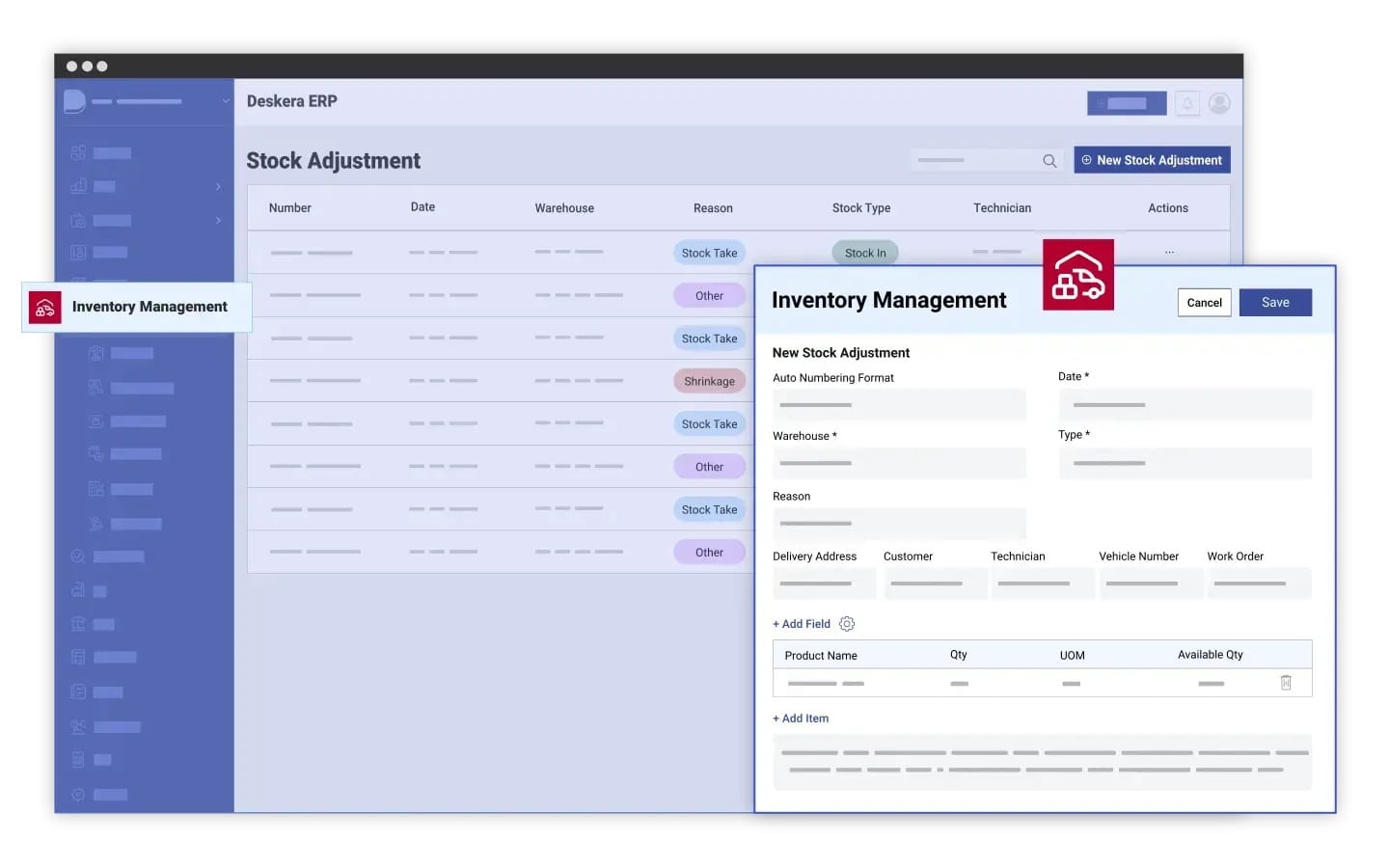
Effective inventory replenishment planning requires accurate forecasting, real-time inventory visibility, supplier coordination, and automated workflows. Managing these processes manually becomes increasingly difficult as businesses scale operations, handle multiple SKUs, or operate across different warehouses and sales channels. Deskera ERP helps businesses streamline replenishment planning by centralizing inventory, procurement, warehouse, and supply chain operations into a single integrated platform.
Real-Time Inventory Visibility
Deskera ERP provides real-time visibility into inventory levels across warehouses, retail locations, and distribution centers. Businesses can monitor stock movement, incoming shipments, available inventory, and low-stock alerts from a centralized dashboard. This visibility helps teams make faster replenishment decisions while reducing inventory discrepancies and stock shortages.
Automated Reorder Point Management
The platform allows businesses to set reorder points, minimum stock levels, and safety stock thresholds for each SKU. Once inventory reaches predefined levels, the system can automatically trigger replenishment workflows or purchase requests. Automated reorder management helps businesses avoid stockouts while minimizing excess inventory accumulation.
AI-Powered Demand Forecasting
Deskera ERP uses historical sales data, inventory trends, and demand patterns to improve forecasting accuracy. Businesses can analyze seasonal demand fluctuations, fast-moving products, and purchasing behavior to plan replenishment more effectively. Better forecasting reduces overstocking, improves inventory turnover, and supports more accurate procurement decisions.
Multi-Warehouse Inventory Management
For businesses operating across multiple warehouses or locations, Deskera ERP helps manage inventory allocation and stock transfers efficiently. The system provides centralized inventory tracking and enables businesses to redistribute stock between locations to balance inventory levels and prevent shortages in high-demand areas.
Supplier and Procurement Management
The ERP platform streamlines supplier coordination by automating purchase order creation, tracking supplier lead times, and monitoring vendor performance. Businesses can maintain stronger supplier relationships, improve procurement planning, and ensure inventory orders are placed on time. Supplier visibility also helps businesses reduce delays and improve replenishment reliability.
Demand-Based Inventory Replenishment
Deskera ERP supports demand-driven replenishment planning by analyzing real-time sales and inventory data. Businesses can align replenishment schedules with actual consumption patterns instead of relying solely on fixed ordering cycles. This improves inventory accuracy and allows faster responses to market demand changes.
Warehouse and Inventory Optimization
The platform helps businesses optimize warehouse operations by improving inventory organization, stock tracking, and inventory movement. Barcode scanning, inventory categorization, and warehouse management features improve inventory accuracy while reducing manual handling errors. Efficient warehouse operations support smoother replenishment workflows and faster order fulfillment.
Integrated Supply Chain and Financial Management
Because Deskera ERP integrates inventory management with accounting, procurement, sales, and supply chain operations, businesses gain a complete view of inventory-related costs and operational performance. This integration improves financial planning, inventory investment decisions, and overall operational efficiency.
Advanced Reporting and Inventory Analytics
The ERP system provides detailed reports and analytics on inventory turnover, stock aging, carrying costs, stockout rates, supplier performance, and replenishment efficiency. These insights help businesses identify inventory bottlenecks, optimize replenishment policies, and continuously improve inventory management performance.
Mobile Accessibility and Real-Time Monitoring
Deskera ERP offers mobile accessibility, allowing managers and warehouse teams to monitor inventory, approve purchase orders, and track replenishment activities from anywhere. Real-time mobile access improves decision-making speed and operational responsiveness across the supply chain.
Reduced Manual Errors Through Automation
Manual inventory management often leads to data entry mistakes, delayed replenishment decisions, and inaccurate stock records. Deskera ERP automates repetitive inventory processes such as stock updates, reorder alerts, and procurement workflows, helping businesses reduce human error and improve replenishment accuracy.
Scalability for Growing Businesses
As businesses grow, inventory complexity increases significantly. Deskera ERP provides scalable inventory and supply chain management capabilities that support expanding product catalogs, higher transaction volumes, and multi-location operations. This scalability allows businesses to maintain efficient replenishment planning as operational demands increase.
Key Takeaways
- Inventory replenishment planning helps businesses maintain the right stock levels while minimizing stockouts, overstocking, and inventory carrying costs.
- Modern replenishment planning relies on data-driven forecasting, supplier coordination, inventory visibility, and automation rather than manual decision-making.
- New inventory replenishment tactics are essential today because businesses face unpredictable demand, longer lead times, and increasing supply chain complexity.
- Inventory replenishment focuses on restocking inventory efficiently, while inventory control focuses on monitoring and managing inventory accuracy and movement.
- Successful replenishment planning depends on key components such as demand forecasting, safety stock management, lead time tracking, warehouse optimization, and supplier collaboration.
- Businesses can choose from multiple replenishment strategies such as Just-in-Time (JIT), demand-based replenishment, reorder point planning, ABC analysis, and vendor-managed inventory depending on operational needs.
- Inventory replenishment planning is important because it improves customer satisfaction, strengthens supply chain efficiency, enhances inventory turnover, and supports better financial management.
- Common replenishment challenges include inaccurate forecasting, variable supplier lead times, poor inventory visibility, supply chain disruptions, and manual inventory processes.
- Inventory replenishment planning works through a structured process that includes inventory monitoring, forecasting demand, setting reorder points, triggering purchase orders, managing lead times, and continuously optimizing inventory performance.
- Effective replenishment planning requires best practices such as real-time inventory visibility, automated replenishment workflows, supplier performance monitoring, accurate demand forecasting, and continuous inventory audits.
- Several factors influence replenishment strategies, including demand variability, warehouse capacity, supplier reliability, inventory visibility, lead times, and changing market conditions.
- ERP solutions like Deskera ERP help businesses automate replenishment planning with features such as AI-powered forecasting, real-time inventory tracking, multi-warehouse management, supplier coordination, and advanced inventory analytics.
Related Articles
 Niti Samani
 Niti Samani
 Niti Samani
 Niti Samani
 Niti Samani
 Niti Samani