


Why do so many projects exceed their budgets, miss deadlines, or fail to deliver expected results? The answer often lies in project overruns—a common yet costly challenge that can disrupt operations, strain resources, and reduce overall profitability. Whether caused by poor planning, scope creep, resource shortages, or unexpected risks, project overruns can significantly impact business performance and stakeholder confidence.
Project overrun occurs when a project surpasses its planned budget, schedule, or resource allocation. These overruns can affect businesses across industries, from manufacturing and construction to IT and professional services. Even minor deviations from the original plan can escalate into substantial financial losses, delayed deliverables, and reduced customer satisfaction if not managed proactively.
Understanding the root causes of project overrun is essential for organizations aiming to improve project outcomes. By strengthening project planning, implementing accurate forecasting, improving communication, and leveraging technology, businesses can minimize risks and maintain better control over costs and timelines. Preventing overruns is not just about avoiding losses—it is about improving efficiency, maintaining competitiveness, and ensuring long-term project success.
Deskera ERP provides businesses with integrated tools for project planning, budgeting, resource allocation, and real-time performance tracking. With features such as automated workflows, financial management, inventory oversight, and advanced reporting, Deskera helps organizations reduce inefficiencies and maintain tighter control over project execution. By centralizing operations and improving visibility, Deskera ERP empowers businesses to prevent project overruns and achieve more predictable project success.
What Is Project Overrun?
Project overrun occurs when a project exceeds its originally planned budget, timeline, or allocated resources, resulting in higher-than-expected costs, delayed completion, or both. In simple terms, it happens when the actual effort, expenses, or duration required to complete a project surpass the estimates established during the planning phase. While cost overruns are often the primary concern, schedule delays and resource inefficiencies are equally critical components of project overrun.
At its core, project overrun is typically caused by a mismatch between projected assumptions and real-world execution. Inaccurate budgeting, poor scheduling, scope changes, unforeseen risks, inefficient resource management, and operational disruptions can all contribute to overruns. Even small planning errors can escalate over time, especially in complex projects involving multiple teams, vendors, and stakeholders, leading to substantial financial and operational consequences.
Project overruns can take several forms, including budget overruns, schedule overruns, and scope overruns. Direct costs such as labor, materials, consultants, and equipment may rise unexpectedly, while indirect costs such as employee salaries, administrative overhead, and lost productivity can further increase financial pressure. These overruns not only reduce profitability but can also force organizations to divert resources away from other strategic initiatives, creating broader business challenges.
Beyond financial losses, project overruns can damage customer relationships, reduce stakeholder confidence, strain internal teams, and negatively impact future project opportunities. This is why modern project management emphasizes proactive monitoring, accurate forecasting, and real-time visibility into budgets, labor, and project performance. By identifying issues early, businesses can minimize deviations, maintain control, and improve the likelihood of successful project delivery.
Major Causes of Project Overruns
Project overruns rarely stem from a single issue. In most cases, they result from a combination of planning gaps, budget inaccuracies, resource inefficiencies, and unforeseen disruptions that gradually push projects beyond their original scope, timeline, or financial limits.
Understanding these root causes is essential for businesses looking to improve project performance, control costs, and reduce the risk of delays.
Inaccurate Cost Estimates and Unrealistic Budgeting
One of the most common causes of project overruns is underestimating the true cost of labor, materials, equipment, and overhead during the planning phase.
Overly optimistic budgets, outdated pricing data, or rushed bidding processes can create unrealistic financial expectations. When actual expenses exceed projections, businesses face budget shortfalls that can delay execution and reduce overall profitability.
Poor Project Planning and Scheduling
Weak project planning often leads to unclear objectives, unrealistic deadlines, and inefficient workflows. Without detailed scheduling, resource forecasting, and contingency preparation, teams may struggle to manage tasks effectively.
Small planning errors can compound throughout the project lifecycle, causing missed milestones, increased costs, and operational disruptions that significantly contribute to project overruns.
Scope Creep and Uncontrolled Changes
Scope creep occurs when project requirements gradually expand beyond the original agreement without proper approval or budget adjustments. Additional client requests, design modifications, or evolving stakeholder expectations can increase workload, resource consumption, and project complexity. Without strong change management controls, even minor scope changes can lead to substantial time and cost overruns.
Resource Mismanagement and Labor Constraints
Inefficient allocation of workforce, equipment, or materials can severely impact project timelines and budgets. Understaffing, skill mismatches, equipment shortages, or poor coordination between departments often reduce productivity and increase labor costs. When resources are not properly planned or monitored, delays and financial inefficiencies become more likely.
Design Errors and Technical Challenges
Flawed project designs, incomplete specifications, or technical issues can disrupt project execution and force costly rework. Mistakes in early project phases often create downstream complications that require additional labor, materials, and time to correct. Technical glitches, software failures, or design inaccuracies can quickly escalate project costs and delay completion.
Communication Gaps and Administrative Failures
Poor communication between stakeholders, project managers, vendors, and team members can create misunderstandings, unrealistic expectations, and delayed decision-making.
Inadequate reporting, fragmented collaboration, or administrative oversights often result in preventable mistakes. Without clear communication channels, project teams may struggle to identify risks early and maintain alignment.
External Factors and Market Disruptions
Economic fluctuations, inflation, regulatory changes, supply chain disruptions, and unforeseen events such as natural disasters can significantly impact project performance.
Rising material costs, labor shortages, or compliance changes may increase expenses and delay schedules. Although these factors may be outside direct control, failing to plan for them can worsen project overruns.
Weak Risk Management and Lack of Contingency Planning
Projects that fail to identify potential risks early are more vulnerable to unexpected setbacks. Without proactive risk assessments, mitigation strategies, and financial reserves, businesses may struggle to adapt to disruptions. A lack of contingency planning often forces reactive decision-making, which can further increase costs and prolong delays.
Impact of Project Overruns
Project overruns can have far-reaching consequences that extend well beyond exceeding a budget or missing a deadline. When projects surpass planned costs, schedules, or resource allocations, businesses often face financial strain, operational inefficiencies, and reputational challenges. These setbacks can disrupt broader organizational goals, reduce profitability, and weaken stakeholder confidence.
Increased Financial Pressure and Reduced Profitability
Project overruns directly increase expenses through rising labor costs, material price inflation, equipment rentals, and administrative overhead. As budgets expand beyond original estimates, profit margins shrink, and organizations may need to divert funds from other strategic initiatives. In severe cases, cost overruns can jeopardize the financial viability of the entire project.
Delayed Project Delivery and Operational Disruptions
When projects exceed planned timelines, businesses may experience delayed product launches, postponed service rollouts, or interruptions to operational workflows.
Missed deadlines can create scheduling conflicts, resource bottlenecks, and lost market opportunities. These delays often have a ripple effect across departments and future projects.
Resource Drain and Productivity Losses
Project overruns often require additional labor, management attention, and financial resources to address emerging problems. This can overburden teams, reduce workforce productivity, and create resource shortages for other business priorities. Continuous firefighting can also lead to employee burnout and reduced organizational efficiency.
Damage to Client Relationships and Stakeholder Confidence
Clients, investors, and internal stakeholders expect projects to meet agreed-upon deliverables, budgets, and deadlines. Frequent overruns can erode trust, create dissatisfaction, and damage long-term business relationships. Repeated project failures may also reduce confidence in leadership and future project management capabilities.
Reputational Risks and Competitive Disadvantages
Consistent project overruns can harm a company’s reputation in the market. Businesses known for delays or budget failures may struggle to secure new contracts, attract investors, or maintain customer loyalty. Reputational damage can reduce competitive advantage and limit future growth opportunities.
Increased Risk of Project Failure
Severe overruns can ultimately result in project cancellation or failure if financial deficits, technical challenges, or operational disruptions become unmanageable. This not only wastes invested resources but can also negatively impact broader business objectives, strategic plans, and long-term sustainability.
Warning Signs of Project Overruns
Project overruns rarely happen without warning. In most cases, there are early indicators that a project is veering off course financially, operationally, or strategically. Recognizing these warning signs early allows project managers to take corrective action before minor issues escalate into major cost or schedule failures.
Poorly Defined Project Scope
A vague or incomplete project scope often creates confusion around deliverables, timelines, and responsibilities. When objectives are unclear from the outset, teams may struggle to stay aligned, increasing the likelihood of scope creep, duplicated work, and budget miscalculations that can trigger significant overruns.
Repeated Missed Deadlines and Milestones
Consistent delays in achieving project milestones are one of the clearest indicators of project overrun risk. Missed deadlines often signal deeper issues such as poor planning, resource shortages, technical challenges, or communication failures, all of which can compound costs and disrupt overall project timelines.
Frequent Budget Adjustments or Rising Costs
Unexpected increases in labor, material, or operational expenses can quickly indicate that a project is exceeding its financial plan. Repeated budget revisions or unexplained spending spikes suggest inaccurate initial estimates, weak cost controls, or unforeseen risks that require immediate attention.
Increased Scope Changes and Change Requests
A growing number of client requests, design revisions, or additional deliverables can significantly increase project complexity. Without formal change management processes, these adjustments often consume more resources and time than anticipated, pushing projects beyond their original budget and schedule.
Lack of Real-Time Budget and Performance Tracking
Projects without consistent monitoring systems often suffer from delayed issue detection. Limited visibility into costs, resource utilization, and performance metrics can create blind spots, allowing small inefficiencies to develop into large-scale overruns before leadership can respond effectively.
Resource Bottlenecks and Productivity Declines
Overworked teams, equipment shortages, or poor resource allocation can create workflow disruptions and productivity losses. If employees consistently face capacity challenges or resource conflicts, project progress may slow, increasing labor costs and threatening deadlines.
Communication Breakdowns and Stakeholder Concerns
Poor communication between teams, vendors, or stakeholders can lead to misaligned expectations, delayed approvals, and costly misunderstandings. Growing complaints from clients or internal leadership regarding transparency, costs, or project progress often indicate underlying project management issues.
Rising Team Stress and Increased Rework
Frequent overtime, burnout, and repeated task revisions may signal that the project is under significant pressure. Increased rework often points to planning flaws, design errors, or rushed decision-making, all of which can further inflate project costs and timelines.
Best Practices for Managing Project Overruns
Effectively managing project overruns requires a proactive combination of strategic planning, continuous monitoring, stakeholder collaboration, and rapid corrective action.
While some overruns may be unavoidable due to external factors, strong management practices can significantly reduce their severity, protect profitability, and keep projects aligned with business objectives.
Establish Strong Scope Control Measures
Preventing and managing scope creep is essential for controlling project overruns. Clearly define project deliverables, responsibilities, and approval processes from the outset.
Implement formal change management procedures so that any modifications to scope are carefully evaluated for cost, timeline, and resource impact before approval.
Build Contingency Plans for Unexpected Challenges
Every project should include contingency reserves for potential disruptions such as supply chain issues, regulatory changes, or material price fluctuations.
By preparing for unexpected risks in advance, businesses can respond more effectively without derailing budgets or timelines when challenges arise.
Monitor Budgets and Performance in Real Time
Consistent financial oversight is critical for early detection of project overruns. Use real-time budget tracking, milestone monitoring, and performance dashboards to identify deviations quickly.
Continuous monitoring enables project managers to address issues before they escalate into larger operational or financial problems.
Reassess and Prioritize Deliverables
When overruns occur, teams should immediately evaluate which deliverables are mission-critical and which can be scaled back or delayed.
Prioritizing core business objectives allows organizations to focus limited resources on high-value outcomes while minimizing additional losses.
Improve Stakeholder Communication and Transparency
Open communication with stakeholders is crucial during project overruns. Regularly share accurate updates on budget changes, delays, risks, and corrective plans. Transparent collaboration helps maintain trust, reduce misunderstandings, and ensure alignment on revised expectations.
Optimize Resource Allocation
Efficient management of labor, materials, and equipment can help control costs and restore project momentum. Regularly review resource utilization, eliminate waste, and reassign assets where necessary to improve productivity and reduce financial inefficiencies.
Learn from Historical Project Data
Reviewing previous projects can reveal recurring causes of overruns, estimation weaknesses, and operational bottlenecks. Applying lessons learned from past experiences improves future forecasting accuracy, strengthens planning processes, and reduces repeated mistakes.
Leverage Project Management Software
Modern project management tools provide centralized oversight for budgeting, scheduling, resource planning, and collaboration. These systems improve visibility, automate reporting, and enable faster decision-making, making it easier to manage project overruns effectively.
Conduct Root Cause Analysis and Continuous Improvement
After addressing an overrun, organizations should perform a detailed review to identify the root causes. Documenting lessons learned and refining project governance, communication strategies, and estimation practices can improve long-term project performance and prevent similar overruns in the future.
Tips for Preventing Project Overruns
Preventing project overruns is far more effective than correcting them after costs and delays have already escalated. By focusing on stronger planning, accurate forecasting, and early risk prevention, businesses can significantly improve project control and protect profitability from the start.
Create Realistic Project Estimates
Accurate budgeting and scheduling begin with data-driven estimates. Use historical project performance, current market rates, and input from experienced teams to create practical forecasts for costs, labor, and timelines. Avoid overly optimistic assumptions, and include realistic buffers for complex or high-risk tasks.
Clearly Define Scope and Deliverables Early
A detailed project scope establishes clear boundaries around objectives, deliverables, responsibilities, and exclusions. Creating a strong statement of work (SOW) reduces ambiguity, prevents misunderstandings, and minimizes the risk of uncontrolled scope expansion later in the project lifecycle.
Involve Stakeholders During Planning
Early stakeholder collaboration ensures alignment on project goals, expectations, and resource requirements. By securing stakeholder input upfront, businesses can reduce approval delays, prevent conflicting priorities, and minimize unexpected changes that often lead to project overruns.
Build Contingency Budgets and Schedule Buffers
Unexpected challenges are common in complex projects, making contingency planning essential. Allocate financial reserves and timeline flexibility for potential disruptions such as material shortages, inflation, regulatory issues, or technical setbacks. This proactive approach improves resilience when conditions change.
Standardize Processes to Reduce Human Error
Implement structured workflows, approval checkpoints, and regular quality reviews to minimize costly mistakes. Standardized project governance improves consistency, reduces administrative oversights, and helps identify planning or execution errors before they become major financial problems.
Continuously Track Costs and Progress
Regular monitoring of budgets, milestones, and resource utilization allows teams to detect warning signs early. Real-time visibility into project performance makes it easier to identify spending anomalies, schedule slippage, or productivity declines before they escalate into full-scale overruns.
Strengthen Resource Planning and Allocation
Ensure teams, equipment, and materials are appropriately assigned based on workload demands and availability. Effective resource planning prevents bottlenecks, avoids overutilization, and improves operational efficiency, reducing the likelihood of schedule delays and labor cost increases.
Use Advanced Project Management Software
Project management software enhances preventive control by centralizing budgeting, scheduling, vendor management, communication, and risk monitoring. Automated dashboards and reporting tools improve decision-making, accountability, and early intervention capabilities.
Regularly Review and Update Risk Assessments
Project risks evolve throughout execution, so prevention requires ongoing evaluation. Conduct routine risk reviews to identify emerging threats, adjust mitigation plans, and ensure contingency strategies remain relevant. Proactive risk management helps businesses stay ahead of potential overruns.
How Can Deskera ERP Help Prevent and Manage Project Overruns?
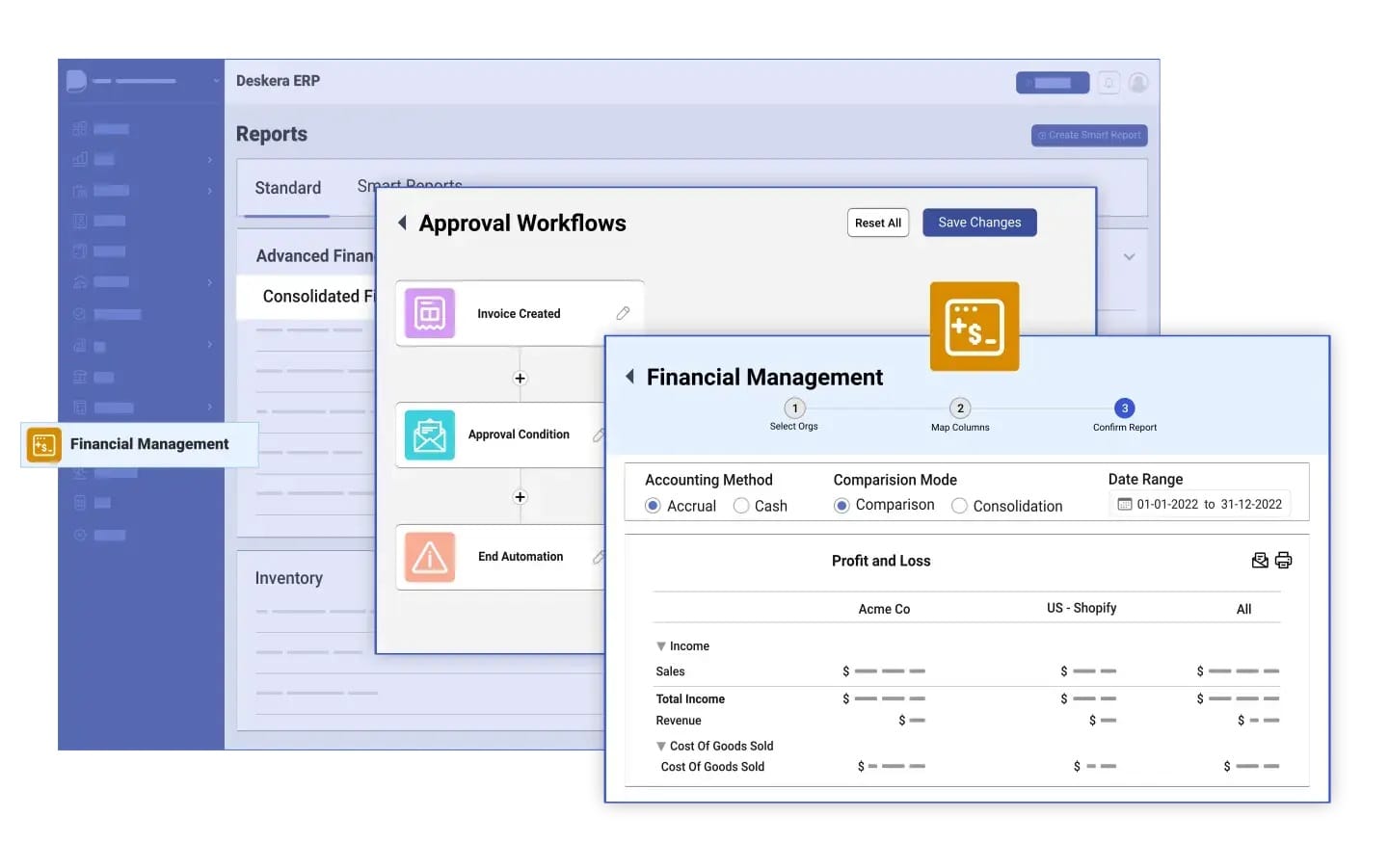
Deskera ERP provides an integrated, cloud-based platform that helps businesses gain greater control over project planning, budgeting, resource allocation, and operational performance. By centralizing key business functions, Deskera enables organizations to proactively reduce project risks, improve execution efficiency, and minimize costly overruns.
Real-Time Budget Tracking and Financial Visibility
Deskera ERP offers project accounting, budgeting, and forecasting tools that allow businesses to monitor project expenses, labor costs, and financial performance in real time. This visibility helps managers quickly identify budget deviations, control spending, and make informed financial decisions before small variances escalate into major overruns.
Improved Resource Planning and Allocation
With integrated resource management capabilities, Deskera helps businesses optimize workforce scheduling, material availability, and equipment utilization. By ensuring resources are properly allocated and tracked, organizations can reduce bottlenecks, avoid underutilization or overloading, and maintain smoother project execution.
Automated Workflows and Task Management
Deskera ERP automates task assignments, approval processes, procurement workflows, and project tracking. Automation reduces administrative inefficiencies, minimizes human error, and improves operational consistency, allowing teams to stay focused on delivering projects on time and within scope.
Centralized Data for Better Decision-Making
Deskera consolidates finance, procurement, HR, CRM, and project data into a single source of truth. This centralized system eliminates data silos, improves collaboration across departments, and gives project managers access to real-time dashboards and reporting for faster, data-driven decisions.
Enhanced Risk Monitoring and Forecasting
Advanced reporting, analytics, and forecasting features help businesses identify project risks early, analyze performance trends, and create more accurate future project estimates. This proactive approach strengthens long-term project governance and reduces recurring overrun risks.
Scalable Support for Growing Businesses
Deskera ERP’s scalable architecture supports businesses as project complexity increases, making it suitable for small businesses and expanding enterprises alike. Its flexibility allows organizations to maintain strong project controls while adapting to evolving operational demands.
By combining financial oversight, automation, resource optimization, and real-time analytics, Deskera ERP empowers businesses to prevent project overruns, improve profitability, and consistently deliver projects with greater efficiency and control.
Key Takeaways
- Project overrun occurs when a project exceeds its planned budget, timeline, or resources, often due to inaccurate assumptions and execution gaps.
- The major causes of project overruns include poor planning, scope creep, inaccurate estimates, resource mismanagement, communication failures, and external disruptions.
- Project overruns can significantly impact profitability, operational efficiency, stakeholder trust, and long-term business competitiveness.
- Early warning signs such as missed milestones, rising costs, frequent scope changes, and poor tracking can help businesses identify overrun risks before they escalate.
- Managing project overruns effectively requires strong scope control, real-time monitoring, stakeholder transparency, resource optimization, and corrective planning.
- Preventing project overruns depends on realistic forecasting, clear project boundaries, stakeholder alignment, contingency planning, and continuous risk management.
- Deskera ERP helps businesses prevent and control project overruns through real-time budgeting, resource planning, automation, centralized data, and advanced forecasting tools.
Related Articles
 Niti Samani
 Deskera Content Team
 Niti Samani
 Niti Samani
 Niti Samani
 Damini