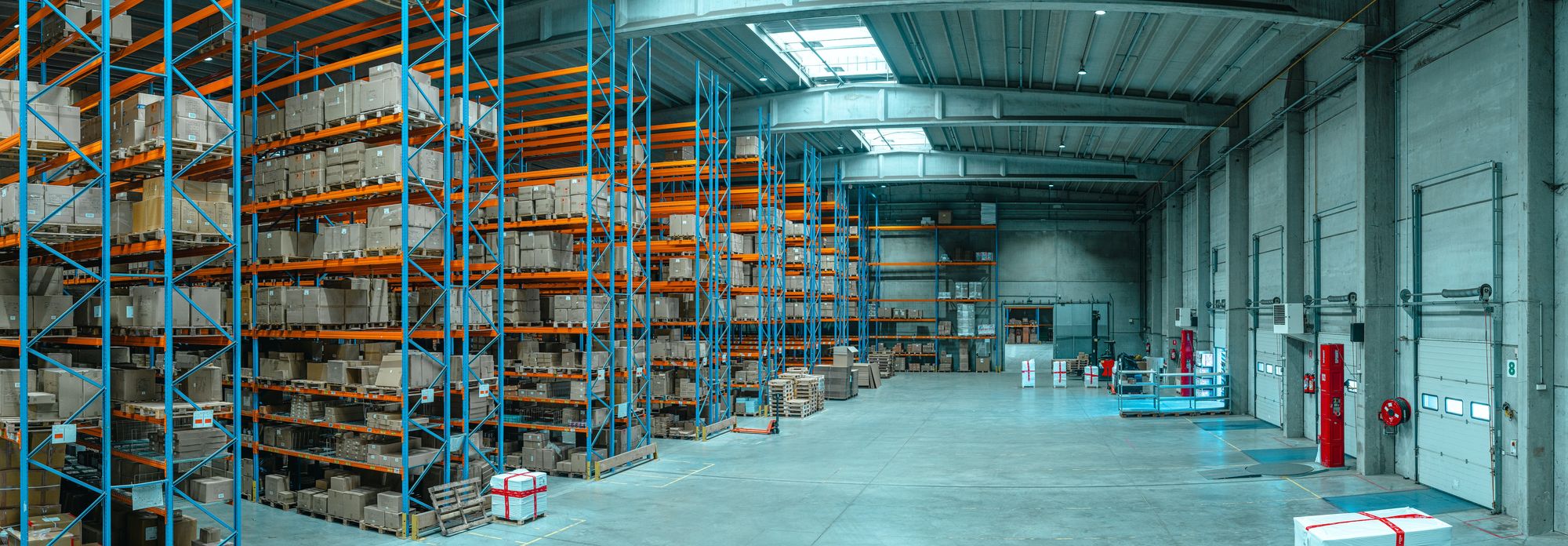


What makes modern manufacturing supply chains so difficult to manage? The answer lies in growing complexity. From global sourcing and fluctuating customer demand to rising transportation costs and supplier disruptions, manufacturers today must coordinate countless moving parts to keep operations running smoothly. Even a small delay or inventory issue can impact production schedules, customer satisfaction, and profitability.
Supply chain complexity has increased significantly as manufacturers expand into global markets, offer customized products, and manage larger supplier networks. At the same time, customers expect faster deliveries, better product availability, and greater transparency. This puts pressure on manufacturers to improve visibility, streamline workflows, and respond quickly to changing market conditions while maintaining operational efficiency.
Effectively managing supply chain complexity is no longer just about reducing costs—it is about building resilience, agility, and long-term competitiveness. Manufacturers that adopt smarter planning strategies, automate manual processes, and use real-time data can reduce disruptions, improve inventory control, and make faster, more informed decisions. A well-managed supply chain also helps businesses strengthen supplier relationships and improve overall customer experience.
This is where Deskera Manufacturing ERP can make a significant difference for manufacturers. Deskera Manufacturing ERP helps businesses centralize supply chain operations, monitor inventory in real time, automate procurement and production workflows, and improve demand forecasting accuracy. With better visibility across the entire supply chain, manufacturers can respond faster to disruptions, optimize resource planning, and simplify even the most complex operational processes.
What Is Supply Chain Complexity?
Supply chain complexity refers to the interconnected challenges, dependencies, and processes involved in sourcing, producing, and delivering goods or services. It arises when manufacturers must manage multiple suppliers, production facilities, transportation networks, inventory locations, and customer demands simultaneously. As supply chains become more global and interconnected, even small disruptions can create ripple effects across the entire operation.
In manufacturing, supply chain complexity grows due to factors such as supplier diversity, fluctuating customer demand, global sourcing, regulatory requirements, and evolving market conditions. Businesses often rely on a network of suppliers, logistics providers, distributors, and technology systems that must work together efficiently. When one part of the supply chain experiences delays, shortages, or communication issues, the impact can spread quickly throughout the entire network.
Modern supply chains are also constantly changing. Customer expectations evolve, new competitors enter the market, technologies advance, and businesses expand into new regions. At the same time, economic uncertainty, geopolitical risks, transportation bottlenecks, and environmental disruptions make supply chain management even more challenging. Internal factors such as poor communication, disconnected systems, or changing business strategies can further increase operational complexity.
If not managed effectively, supply chain complexity can lead to higher operational costs, inventory imbalances, production delays, compliance risks, and reduced visibility across operations. This is why manufacturers increasingly rely on digital solutions like Deskera Manufacturing ERP to improve supply chain visibility, streamline workflows, automate processes, and make faster, data-driven decisions.
Key Factors That Influence Supply Chain Complexity
The complexity of a supply chain is determined by several interconnected factors, including the size of supplier networks, operational processes, product diversity, customer expectations, and the technologies used across the supply chain.
As businesses expand operations, enter new markets, and introduce more products and services, supply chains become increasingly difficult to coordinate and manage efficiently.
Modern supply chains involve constant communication and collaboration between suppliers, manufacturers, logistics providers, distributors, and customers. Any disruption, delay, or lack of visibility within this network can impact overall performance.
Understanding the factors that influence supply chain complexity helps manufacturers identify operational gaps, improve coordination, and build more resilient and agile supply chain systems.
Supplier Base
The size and diversity of a company’s supplier network play a major role in determining supply chain complexity. Businesses that rely on multiple suppliers across different regions must manage more contracts, communication channels, quality standards, and delivery schedules.
While supplier diversification helps reduce dependency risks, managing too many suppliers can increase operational costs and reduce visibility across the supply chain.
Interdependencies Between Supply Chain Partners
Supply chains rely heavily on collaboration between manufacturers, suppliers, distributors, and logistics providers. These interconnected relationships create dependencies where delays or disruptions in one area can impact the entire network.
Strong communication, data sharing, and coordination are necessary to ensure smooth handoffs between different supply chain stages and reduce the risk of operational bottlenecks.
Number of Components and Materials
The more components and raw materials required to manufacture a product, the more complex the supply chain becomes. Each additional component may involve separate suppliers, procurement processes, transportation schedules, and inventory planning activities. A delay or shortage involving even one component can interrupt production schedules and affect product delivery timelines.
Product and Service Diversity
Offering a wide variety of products, product variants, or customized solutions significantly increases supply chain complexity. Each product may require unique materials, production methods, packaging, and distribution strategies. Managing multiple product lines also creates forecasting challenges and increases the difficulty of maintaining optimal inventory levels across operations.
Process Complexity
Supply chains involve several interconnected processes, including procurement, production planning, inventory management, warehousing, transportation, and order fulfillment. When these processes are overly complicated, poorly standardized, or dependent on manual workflows, operational efficiency decreases. Complex processes often result in communication gaps, slower decision-making, and increased risks of delays and errors.
Variability in Customer Demand
Changing customer preferences, seasonal demand fluctuations, and shifting market trends make demand forecasting difficult. Unpredictable customer demand creates challenges in balancing inventory, production capacity, and supplier coordination. Manufacturers must continuously adjust operations to avoid stock shortages, excess inventory, or delayed deliveries while maintaining customer satisfaction.
Geographic Expansion and Global Operations
Supply chains that operate across multiple countries and regions face greater complexity due to varying transportation systems, customs procedures, regulations, and market conditions. Global sourcing and distribution increase the likelihood of delays, disruptions, and communication challenges. Managing international operations also requires businesses to adapt to regional customer preferences and compliance requirements.
Regulatory and Compliance Requirements
Manufacturers must comply with a wide range of regulations related to product quality, safety, sourcing, transportation, labeling, and environmental standards. Regulatory requirements often differ between regions and industries, increasing the complexity of supply chain operations. Failing to meet compliance standards can result in operational disruptions, financial penalties, and reputational risks.
Organizational Structure and Internal Coordination
Internal business structures can also influence supply chain complexity. Poor communication between departments such as procurement, production, sales, and logistics can create silos that reduce operational efficiency. Conflicting priorities and disconnected decision-making processes often lead to delays, inaccurate forecasting, and reduced supply chain visibility.
Technology and System Integration
Modern supply chains depend heavily on digital systems and real-time data sharing. However, when organizations use disconnected software platforms or outdated technologies, information silos and data inconsistencies can arise. Poor system integration limits visibility across operations and makes it harder for teams to coordinate procurement, inventory management, production planning, and logistics activities effectively.
External Market and Environmental Factors
External factors such as economic uncertainty, geopolitical conflicts, transportation disruptions, trade restrictions, and natural disasters can significantly increase supply chain complexity. These unpredictable events can affect supplier availability, shipping timelines, material costs, and customer demand. Manufacturers must remain flexible and proactive to minimize risks and maintain supply chain continuity during disruptions.
Causes of Supply Chain Complexity
Supply chain complexity increases as manufacturers expand operations, work with multiple suppliers, manage larger product portfolios, and respond to changing customer demands. Modern supply chains involve numerous interconnected activities, from procurement and production to logistics and delivery. When these activities are spread across different regions, systems, and stakeholders, managing the entire network becomes increasingly challenging.
Several internal and external factors contribute to supply chain complexity. These include supplier networks, operational processes, product variations, changing consumer expectations, and technology integration challenges. Understanding these causes helps manufacturers identify operational bottlenecks, improve visibility, and build more resilient supply chain strategies.
Network Complexity
Network complexity occurs when supply chains involve multiple suppliers, manufacturing facilities, warehouses, logistics providers, and distribution channels spread across different locations. As businesses rely on larger supplier networks and outsourcing partners, coordination becomes more difficult. Limited visibility into second- and third-tier suppliers can increase the risk of disruptions, delays, and communication gaps across the entire supply chain ecosystem.
Process Complexity
Supply chains consist of numerous interconnected processes, including procurement, production planning, inventory management, transportation, and order fulfillment. Over time, these processes often become more complicated due to changing business needs, manual workflows, and disconnected systems. Multiple process steps and poor coordination between departments can reduce efficiency, increase delays, and make supply chain operations harder to manage effectively.
Product Complexity
Product complexity arises when manufacturers manage a large number of products, components, variants, or customized offerings. Products with complex bills of materials and low component standardization make production planning and inventory management more difficult. As the number of product variations increases, forecasting demand becomes less accurate, operational flexibility decreases, and manufacturers face greater challenges in maintaining optimal inventory levels.
Customer Complexity
Customer complexity develops when businesses offer multiple service options, customized products, flexible delivery requirements, or personalized solutions. Different customers may have unique ordering patterns, shipping expectations, and service demands. Managing these varying requirements increases operational costs and creates additional pressure on inventory planning, logistics coordination, and customer service teams across the supply chain.
Supplier Complexity
Supplier complexity occurs when businesses work with a large and diverse supplier base. Managing multiple supplier relationships requires continuous communication, quality control, performance monitoring, and coordination. While supplier diversification can reduce dependency risks, it also increases transaction costs and operational challenges. Without proper supplier management strategies, businesses may struggle with inconsistent lead times, supply disruptions, and reduced supply chain visibility.
Operational Complexity
Operational complexity refers to challenges associated with day-to-day supply chain activities such as inventory control, warehouse management, transportation, and order fulfillment. As operations grow, coordinating these activities becomes more difficult, especially when businesses rely on manual systems or disconnected technologies. Poor operational coordination can lead to delays, stock imbalances, inefficient workflows, and increased overall supply chain costs.
Information Complexity
Modern supply chains depend heavily on the exchange of data and information across suppliers, manufacturers, logistics providers, and customers. Information complexity arises when businesses use disconnected systems that limit real-time visibility and collaboration. Inaccurate or delayed data can affect forecasting, inventory planning, and decision-making. Poor information flow also increases the risk of communication errors and operational inefficiencies throughout the supply chain.
External Complexity
External complexity is caused by factors outside a company’s direct control, including economic uncertainty, changing regulations, geopolitical instability, environmental disruptions, and transportation challenges. Market fluctuations and unexpected events can disrupt supply chain operations and increase operational risks. Businesses must continuously adapt to these external pressures while maintaining supply chain continuity, efficiency, and customer satisfaction.
Organizational Complexity
Organizational complexity develops when businesses operate with siloed departments, hierarchical structures, and disconnected decision-making processes. Lack of collaboration between procurement, production, sales, and logistics teams can slow down operations and reduce supply chain responsiveness. Internal communication gaps often create inefficiencies, delays, and misaligned business objectives that make managing supply chain activities more challenging.
Technology and Integration Complexity
As businesses adopt advanced technologies such as ERP systems, automation tools, IoT devices, and analytics platforms, integration challenges can increase supply chain complexity. Different departments and external partners may use separate systems that do not communicate effectively with one another. Without proper system integration, businesses may face data silos, limited operational visibility, and slower decision-making across supply chain functions.
Importance of Managing Supply Chain Complexity
Managing supply chain complexity is essential for manufacturers looking to maintain operational efficiency, reduce costs, and remain competitive in rapidly changing markets. As supply chains become more interconnected and global, businesses must coordinate suppliers, production facilities, logistics providers, and customer demands more effectively. Without proper management, complexity can lead to delays, inefficiencies, communication gaps, and increased operational risks.
Effectively managing supply chain complexity helps manufacturers improve visibility, strengthen collaboration, and build more agile operations. It also enables businesses to respond quickly to disruptions, maintain consistent product availability, and improve overall customer satisfaction. A well-managed supply chain supports long-term business growth by improving decision-making, operational resilience, and resource optimization.
Improves Operational Efficiency
Managing supply chain complexity helps businesses streamline workflows, reduce unnecessary processes, and improve coordination across operations. Better process management minimizes delays, reduces manual errors, and ensures smoother movement of materials, products, and information throughout the supply chain. Improved efficiency also helps manufacturers increase productivity and optimize resource utilization.
Reduces Supply Chain Disruptions
Complex supply chains are more vulnerable to disruptions caused by supplier delays, transportation issues, inventory shortages, or external events. Effective supply chain management helps businesses identify risks early, improve visibility across operations, and create contingency plans. This allows manufacturers to respond faster to disruptions and maintain operational continuity during uncertain conditions.
Enhances Supply Chain Visibility
Supply chain complexity often creates information silos and communication gaps between departments and external partners. Managing complexity improves real-time visibility into procurement, production, inventory, and logistics activities. Greater visibility helps businesses track operations more accurately, monitor supplier performance, and make faster, data-driven decisions.
Supports Better Demand Forecasting
Managing complexity enables businesses to improve demand planning and forecasting accuracy by integrating data across supply chain functions. Better forecasting helps manufacturers align production schedules, procurement activities, and inventory levels with customer demand. This reduces the risk of stockouts, excess inventory, and production inefficiencies.
Improves Inventory Management
Efficient management of supply chain complexity helps businesses maintain optimal inventory levels across warehouses and distribution centers. Real-time inventory visibility reduces carrying costs, minimizes waste, and improves order fulfillment performance. Manufacturers can also avoid overstocking or shortages that negatively affect profitability and customer satisfaction.
Strengthens Supplier Collaboration
Managing supply chain complexity improves communication and collaboration with suppliers and logistics partners. Stronger supplier relationships help businesses improve product quality, reduce lead times, and maintain consistent supply availability. Better coordination across supplier networks also supports faster responses to market changes and operational disruptions.
Reduces Operational Costs
Unmanaged supply chain complexity can increase transportation expenses, inventory carrying costs, administrative workload, and operational inefficiencies. By simplifying processes, automating workflows, and improving coordination, businesses can reduce unnecessary costs while improving productivity and supply chain performance.
Increases Agility and Flexibility
Modern manufacturing environments require businesses to adapt quickly to changing customer preferences, market conditions, and disruptions. Managing supply chain complexity helps organizations build more agile operations that can adjust production schedules, sourcing strategies, and logistics plans more efficiently. Greater flexibility improves responsiveness and supports long-term business resilience.
Improves Customer Satisfaction
Efficient supply chain management ensures products are delivered on time, inventory remains available, and customer expectations are consistently met. Reducing delays, improving order accuracy, and maintaining product availability enhance the customer experience and strengthen brand reputation. A reliable supply chain also helps businesses build long-term customer trust and loyalty.
Supports Business Growth and Competitiveness
As businesses expand into new markets, launch new products, or increase production capacity, supply chain operations naturally become more complex. Managing this complexity effectively allows manufacturers to scale operations while maintaining efficiency and control. Businesses with agile and resilient supply chains are better positioned to compete in dynamic global markets.
Common Challenges in Managing Supply Chain Complexity
Managing supply chain complexity is a major challenge for manufacturers operating in highly competitive and rapidly changing markets. Modern supply chains involve multiple suppliers, global transportation networks, evolving customer demands, and interconnected operational processes. Without proper coordination and visibility, businesses may struggle to maintain efficiency, reduce costs, and respond quickly to disruptions.
As supply chains continue to expand and become more dynamic, manufacturers face several operational, technological, and strategic challenges that can impact overall performance. Understanding these challenges is essential for building more resilient, agile, and efficient supply chain operations.
Limited Supply Chain Visibility
One of the biggest challenges manufacturers face is the lack of real-time visibility across supply chain operations. Disconnected systems, manual processes, and poor data sharing make it difficult to track inventory, shipments, supplier performance, and production activities. Limited visibility can delay decision-making and increase the risk of disruptions, stock shortages, and operational inefficiencies.
Managing Multiple Suppliers
Working with a large and geographically diverse supplier network increases operational complexity. Manufacturers must manage supplier relationships, quality standards, pricing, delivery timelines, and communication across multiple partners. Poor supplier coordination or overdependence on specific suppliers can create delays, shortages, and quality-related issues that affect the entire supply chain.
Demand Forecasting Uncertainty
Changing customer preferences, seasonal fluctuations, and market volatility make demand forecasting increasingly difficult. Inaccurate forecasts can lead to excess inventory, stockouts, production delays, and increased operational costs. Manufacturers often struggle to balance supply and demand while maintaining flexibility to respond to sudden market changes.
Rising Transportation and Logistics Costs
Transportation disruptions, fuel price fluctuations, shipping delays, and global logistics challenges continue to increase supply chain costs. Managing transportation routes, warehouse operations, and delivery schedules across different regions requires strong coordination and planning. Rising logistics expenses can significantly impact profitability and overall operational efficiency.
Data Silos and Poor System Integration
Many manufacturers use separate software systems for procurement, inventory management, production, logistics, and sales operations. These disconnected systems create data silos that limit communication and reduce operational transparency. Poor integration makes it harder to share accurate information, coordinate workflows, and make timely decisions across the supply chain.
Inventory Management Challenges
Maintaining optimal inventory levels across multiple warehouses and distribution centers is a common challenge in complex supply chains. Businesses must avoid both excess inventory and stock shortages while responding to fluctuating customer demand. Poor inventory visibility and inaccurate forecasting can increase storage costs, waste, and order fulfillment issues.
Regulatory and Compliance Requirements
Manufacturers operating across multiple regions must comply with various regulations related to product quality, sourcing, environmental standards, transportation, and trade policies. Managing compliance across different countries and markets can be difficult, especially when regulations change frequently. Noncompliance can result in penalties, shipment delays, and reputational damage.
Supply Chain Disruptions and External Risks
External factors such as natural disasters, geopolitical conflicts, economic instability, cyberattacks, and supplier failures can severely disrupt supply chain operations. Since many disruptions are unpredictable, manufacturers often struggle to maintain continuity and minimize operational downtime during unexpected events.
Resistance to Digital Transformation
Many businesses face challenges when implementing new technologies and modernizing supply chain operations. Employees may resist process changes, while organizations may struggle with high implementation costs, training requirements, or outdated infrastructure. Slow digital adoption can limit visibility, automation, and operational efficiency.
Communication and Collaboration Issues
Effective supply chain management depends on strong communication between suppliers, manufacturers, logistics providers, and internal departments. Poor collaboration can lead to delays, misunderstandings, inaccurate forecasting, and operational inefficiencies. Communication gaps become even more challenging when supply chain operations span multiple regions and partners.
Balancing Cost Efficiency and Flexibility
Manufacturers often struggle to balance cost reduction with supply chain flexibility and resilience. While lean operations help reduce expenses, overly optimized supply chains may lack the flexibility needed to handle disruptions or sudden demand changes. Businesses must carefully balance efficiency, inventory levels, supplier diversification, and operational agility.
12 Strategies for Effectively Managing Supply Chain Complexities
Managing supply chain complexity requires manufacturers to build resilient, agile, and data-driven operations that can quickly adapt to disruptions and changing market conditions. As supply chains become more global and interconnected, businesses must improve visibility, strengthen supplier relationships, streamline processes, and use technology to reduce operational inefficiencies.
An effective supply chain management strategy focuses on balancing flexibility, cost efficiency, collaboration, and risk reduction. By adopting the right processes and digital tools, manufacturers can improve decision-making, maintain business continuity, and create a more responsive supply chain network.
Improve Supply Chain Visibility
End-to-end visibility helps manufacturers monitor inventory, supplier performance, logistics activities, and production processes in real time. Better visibility allows businesses to identify bottlenecks, track disruptions early, and make faster operational decisions. Using technologies such as IoT, AI-driven analytics, and centralized dashboards helps improve transparency across the entire supply chain while reducing delays and communication gaps.
Strengthen Supplier Relationship Management
Building strong and collaborative relationships with suppliers is essential for reducing supply chain risks and improving operational reliability. Regular communication, performance monitoring, and strategic partnerships help manufacturers maintain product quality, improve delivery timelines, and respond more effectively to disruptions. Supplier relationship management also helps businesses create flexible sourcing strategies and improve coordination across supplier networks.
Standardize Supply Chain Processes
Standardized supply chain procedures help businesses reduce operational inconsistencies and improve efficiency across procurement, production, warehousing, and logistics activities. Clearly defined workflows and standard operating procedures eliminate unnecessary steps, minimize errors, and improve coordination between departments. Standardization also helps manufacturers scale operations more effectively while maintaining process stability and quality control.
Leverage Automation Across Operations
Automation helps manufacturers simplify repetitive and time-consuming supply chain activities such as order processing, inventory tracking, warehouse operations, and reporting. Automated systems improve accuracy, reduce manual errors, and accelerate operational workflows. Technologies such as AI, robotics, and automated data processing also help businesses improve productivity, reduce operational costs, and respond faster to supply chain disruptions.
Implement Real-Time Inventory Management
Real-time inventory management allows businesses to monitor stock levels, material movement, and warehouse operations continuously. Accurate inventory visibility helps manufacturers avoid stockouts, excess inventory, and production delays. Advanced inventory management systems also support better demand planning, improve order fulfillment efficiency, and provide the flexibility needed to adapt to changing customer and market demands.
Improve Demand Planning and Forecasting
Accurate demand forecasting helps manufacturers align production schedules, procurement activities, and inventory levels with customer demand. Businesses can use historical sales data, market trends, and predictive analytics to improve forecasting accuracy and reduce uncertainty. Better demand planning minimizes inventory carrying costs, prevents shortages, and helps companies respond proactively to changing market conditions.
Integrate Supply Chain Technologies
Disconnected systems and information silos often increase supply chain complexity. Integrating supply chain management software with ERP systems, supplier portals, and logistics platforms improves communication and data sharing across operations. Technology integration enables real-time collaboration, faster decision-making, and improved visibility while helping businesses manage procurement, production, inventory, and transportation more efficiently.
Build Agile and Flexible Operations
Agile supply chain operations allow manufacturers to respond quickly to disruptions, changing customer preferences, and fluctuating market conditions. Flexible sourcing strategies, adaptable production processes, and cross-functional collaboration help businesses maintain continuity during unexpected events. Agile operations also reduce lead times and improve a company’s ability to handle demand variability effectively.
Use Data Analytics for Better Decision-Making
Data analytics helps manufacturers identify inefficiencies, predict risks, and optimize supply chain performance. Businesses can analyze operational data to improve forecasting, inventory planning, supplier management, and logistics coordination. AI-driven analytics and reporting tools also provide actionable insights that support proactive decision-making, reduce waste, and improve overall operational efficiency.
Focus on Risk Management and Supply Chain Resilience
Effective risk management strategies help businesses prepare for disruptions such as supplier failures, transportation delays, cybersecurity threats, and economic uncertainty. Manufacturers should develop contingency plans, diversify suppliers, and continuously monitor supply chain risks. Building resilience into supply chain operations enables businesses to recover faster from disruptions and maintain operational stability.
Enhance Collaboration Across the Supply Chain
Collaboration between suppliers, manufacturers, distributors, and logistics providers improves communication, coordination, and problem-solving across the supply chain. Shared data platforms and collaborative planning processes help businesses align inventory, production, and delivery activities more effectively. Strong collaboration also supports faster responses to disruptions and improves overall supply chain efficiency.
Optimize Financial and Operational Planning
Strong financial planning helps manufacturers maintain cost control while supporting supply chain flexibility and innovation. Businesses should regularly evaluate procurement costs, transportation expenses, inventory investments, and operational budgets to improve efficiency. Optimized financial planning also allows organizations to invest in technologies and strategies that strengthen long-term supply chain resilience and competitiveness.
Key Supply Chain KPIs Manufacturers Should Monitor
Tracking the right supply chain KPIs helps manufacturers measure operational efficiency, identify bottlenecks, improve forecasting accuracy, and optimize overall supply chain performance. These metrics provide valuable insights into procurement, inventory, production, logistics, and customer service activities.
By continuously monitoring supply chain performance indicators, businesses can make data-driven decisions, reduce operational risks, and improve responsiveness across the supply chain.
Inventory Turnover Ratio
Inventory turnover measures how efficiently a company uses and replenishes inventory over a specific period. A higher turnover ratio indicates strong inventory management and healthy product demand, while a lower ratio may signal overstocking or slow-moving inventory. Monitoring this KPI helps manufacturers reduce carrying costs and improve inventory optimization.
Order Fulfillment Rate
The order fulfillment rate measures the percentage of customer orders delivered accurately and on time. This KPI helps manufacturers evaluate the efficiency of inventory management, warehouse operations, and logistics processes. A high fulfillment rate improves customer satisfaction and strengthens supply chain reliability.
Forecast Accuracy
Forecast accuracy measures how closely projected demand matches actual customer demand. Accurate forecasting helps businesses optimize procurement, production scheduling, and inventory planning. Poor forecasting can lead to stock shortages, excess inventory, increased operational costs, and delayed deliveries.
Supplier Lead Time
Supplier lead time tracks the amount of time suppliers take to deliver raw materials or components after an order is placed. Monitoring lead times helps manufacturers identify supplier performance issues, reduce procurement delays, and improve production planning. Consistent lead times support smoother supply chain operations and better inventory control.
On-Time Delivery Performance
This KPI measures the percentage of shipments delivered to customers within the promised delivery timeline. On-time delivery performance reflects the effectiveness of transportation, logistics coordination, and order management processes. High delivery performance improves customer trust and minimizes supply chain disruptions.
Perfect Order Rate
Perfect order rate evaluates how many orders are completed without errors, delays, damages, or missing items. It provides a comprehensive view of supply chain efficiency by combining inventory accuracy, order fulfillment, shipping, and customer service performance into a single metric.
Inventory Carrying Cost
Inventory carrying cost measures the total expenses associated with storing and maintaining inventory, including warehousing, insurance, depreciation, and storage costs. Tracking this KPI helps businesses identify opportunities to reduce excess inventory and improve working capital management.
Cash-to-Cash Cycle Time
Cash-to-cash cycle time measures how long it takes for a business to convert inventory investments into cash from customer sales. This KPI helps manufacturers assess supply chain efficiency, liquidity, and working capital performance. Shorter cycle times indicate faster operational and financial efficiency.
Production Downtime
Production downtime measures the amount of time manufacturing operations stop due to equipment failures, material shortages, or operational disruptions. Monitoring downtime helps businesses identify inefficiencies, improve maintenance planning, and reduce delays that impact supply chain performance.
Transportation Costs
Transportation cost metrics help manufacturers evaluate the efficiency of shipping and logistics operations. Tracking fuel costs, freight expenses, and delivery efficiency enables businesses to optimize transportation routes, reduce logistics spending, and improve overall supply chain profitability.
Fill Rate
Fill rate measures the percentage of customer demand fulfilled immediately from available inventory without backorders or delays. A high fill rate indicates strong inventory planning and efficient order fulfillment processes, while a low fill rate may signal supply chain inefficiencies or inventory shortages.
Supply Chain Cycle Time
Supply chain cycle time measures the total time required to move products from procurement to final customer delivery. This KPI helps businesses evaluate operational speed, process efficiency, and responsiveness across the entire supply chain. Reducing cycle times improves agility and customer satisfaction.
How Deskera Manufacturing ERP Helps Manufacturers Manage Supply Chain Complexity
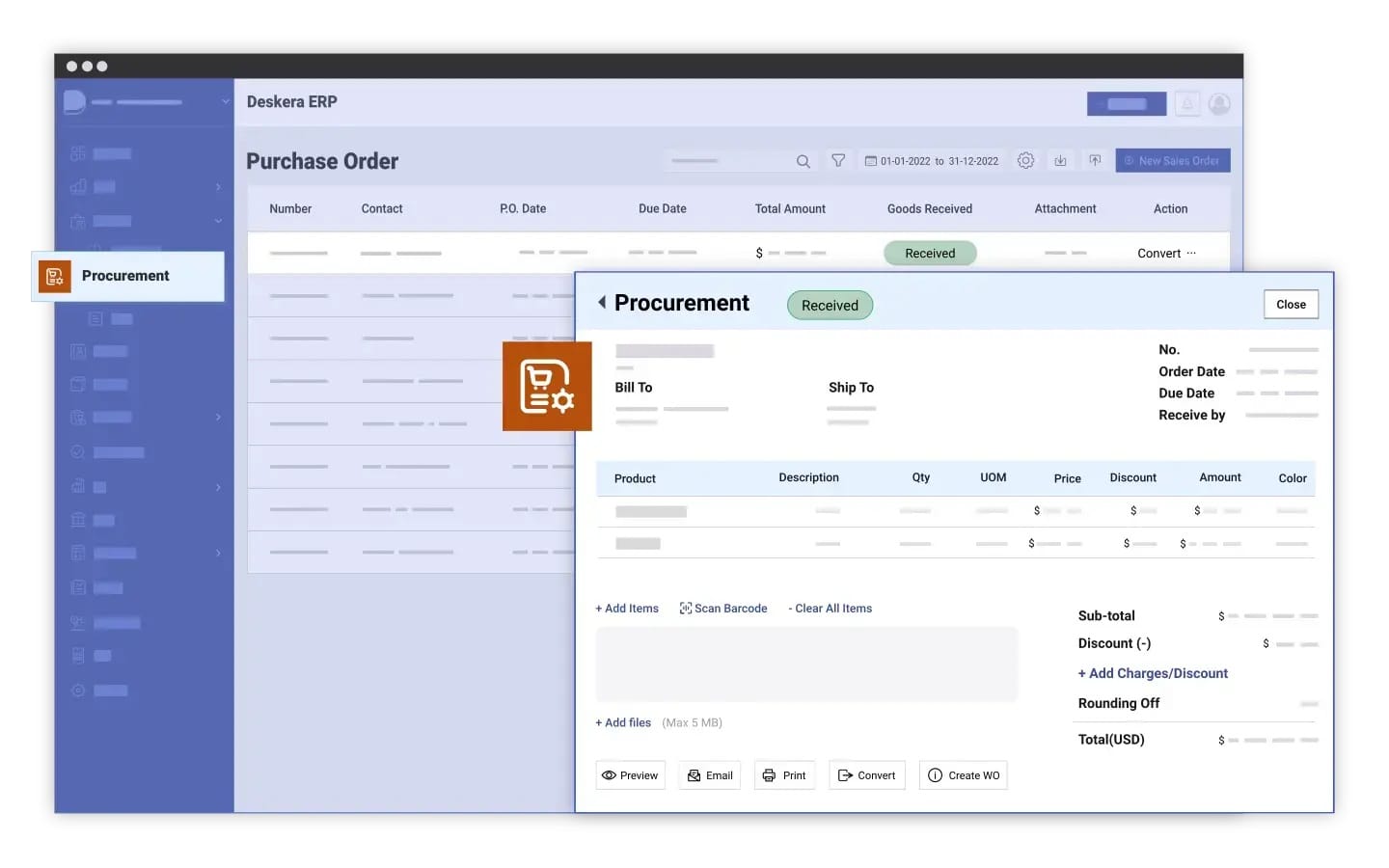
Deskera Manufacturing ERP helps manufacturers simplify complex supply chain operations by centralizing procurement, inventory, production, warehouse management, and financial processes within a single platform. With real-time insights, automation capabilities, and integrated workflows, manufacturers can improve operational efficiency, reduce bottlenecks, and make faster, data-driven decisions across the supply chain.
Improves End-to-End Supply Chain Visibility
Deskera Manufacturing ERP provides real-time visibility into procurement, inventory, production, warehousing, and order fulfillment processes. Manufacturers can monitor stock levels, material movement, supplier activities, and production progress from a centralized dashboard. Better visibility helps businesses identify bottlenecks early, reduce delays, and improve operational coordination across the supply chain.
Streamlines Procurement and Supplier Management
Managing multiple suppliers can become difficult without proper coordination and communication tools. Deskera Manufacturing ERP helps businesses automate procurement workflows, manage purchase orders, track supplier performance, and streamline vendor communication. Centralized procurement management improves supplier collaboration, reduces manual tasks, and ensures raw materials are available when needed for production operations.
Enhances Demand Forecasting and Production Planning
Accurate forecasting is essential for reducing supply chain disruptions and maintaining inventory balance. Deskera Manufacturing ERP includes demand forecasting and production planning tools that help manufacturers align procurement, inventory, and production schedules with customer demand. Businesses can use real-time data and analytics to improve forecasting accuracy, optimize resource allocation, and reduce excess inventory or stock shortages.
Enables Real-Time Inventory Management
Inventory management becomes increasingly challenging as supply chains grow more complex. Deskera Manufacturing ERP allows manufacturers to track inventory levels, material usage, batch numbers, and stock movement in real time. Automated inventory replenishment, barcode scanning, and warehouse tracking capabilities help businesses reduce inventory carrying costs, avoid stockouts, and improve order fulfillment efficiency.
Supports Multi-Level Bill of Materials (BOM) Management
Manufacturers managing complex products with multiple components often struggle with production coordination and material tracking. Deskera Manufacturing ERP supports multi-level bill of materials management, allowing businesses to organize product structures, track component usage, and improve production accuracy. This helps manufacturers manage product complexity more efficiently while maintaining better control over materials and costs.
Automates Supply Chain Workflows
Manual supply chain processes can increase operational delays and the risk of human error. Deskera Manufacturing ERP automates repetitive workflows such as purchase approvals, inventory updates, order processing, invoicing, and warehouse operations. Automation improves process efficiency, reduces administrative workload, and allows teams to focus on strategic supply chain activities.
Improves Warehouse and Logistics Coordination
Efficient warehouse and logistics management are critical for reducing transportation delays and maintaining supply chain continuity. Deskera Manufacturing ERP helps manufacturers manage multiple warehouses, optimize stock transfers, automate shipping processes, and track order fulfillment activities. Better coordination between warehousing and logistics operations improves delivery performance and reduces operational inefficiencies.
Provides Real-Time Reporting and Analytics
Data-driven decision-making is essential for managing supply chain complexity effectively. Deskera Manufacturing ERP offers real-time analytics, dashboards, and reporting tools that help manufacturers monitor KPIs, identify operational inefficiencies, and improve forecasting accuracy. Access to accurate and centralized business data enables faster responses to disruptions and supports continuous operational improvement.
Integrates Supply Chain Operations Across Departments
Disconnected systems often create data silos that reduce visibility and slow decision-making. Deskera Manufacturing ERP integrates procurement, inventory, production, finance, sales, and warehouse operations into a unified system. This integration improves communication between departments, enhances collaboration, and ensures consistent data flow across the organization.
Helps Build a More Agile and Resilient Supply Chain
Modern supply chains require flexibility and resilience to handle changing market conditions and unexpected disruptions. Deskera Manufacturing ERP enables manufacturers to respond faster to demand fluctuations, supplier delays, and operational challenges through automation, real-time visibility, and better planning capabilities. This helps businesses maintain continuity, improve responsiveness, and strengthen long-term supply chain resilience.
Key Takeaways
- Supply chain complexity arises from interconnected suppliers, processes, technologies, logistics networks, and changing customer demands that manufacturers must manage efficiently.
- Factors such as supplier networks, product variety, process complexity, geographic expansion, and regulatory requirements significantly influence supply chain complexity.
- Managing supply chain complexity is essential for improving operational efficiency, reducing disruptions, optimizing inventory, and maintaining customer satisfaction.
- Improving supply chain visibility helps manufacturers track operations in real time, identify bottlenecks early, and make faster data-driven decisions.
- Strong supplier relationship management improves collaboration, reduces procurement risks, and ensures consistent material availability across operations.
- Standardizing supply chain processes helps eliminate inefficiencies, improve coordination, and create more stable and scalable operations.
- Automation reduces manual tasks, improves workflow efficiency, minimizes errors, and accelerates supply chain operations.
- Real-time inventory management helps businesses maintain optimal stock levels, reduce carrying costs, and avoid stock shortages or overstocking.
- Accurate demand planning and forecasting help manufacturers align production schedules and inventory levels with changing customer demand.
- Integrated supply chain technologies improve communication, data sharing, and operational visibility across procurement, production, logistics, and warehousing functions.
- Agile and flexible supply chain operations enable manufacturers to adapt quickly to disruptions, demand fluctuations, and changing market conditions.
- Data analytics helps businesses improve forecasting accuracy, identify inefficiencies, optimize operations, and support proactive decision-making.
- Effective risk management strategies help manufacturers reduce the impact of disruptions such as supplier failures, transportation delays, and economic uncertainty.
- Collaboration across suppliers, logistics providers, and internal teams improves coordination, transparency, and overall supply chain performance.
- Tracking KPIs such as inventory turnover, order fulfillment rate, supplier lead time, and forecast accuracy helps manufacturers continuously improve supply chain efficiency.
- Common challenges in managing supply chain complexity include limited visibility, disconnected systems, rising logistics costs, supplier coordination issues, and forecasting uncertainty.
- Deskera Manufacturing ERP helps manufacturers simplify supply chain complexity through real-time visibility, automated workflows, inventory management, demand forecasting, supplier management, and centralized operational control.
Related Articles
 Niti Samani
 Niti Samani
 Niti Samani
 Niti Samani
 Nalini
 Niti Samani