


What separates successful product launches from costly market failures? The answer often lies in having a well-structured go-to-market (GTM) strategy. Without a clear GTM plan, even the most innovative products can struggle to reach the right audience, communicate their value, or generate sustainable growth. A go-to-market strategy serves as the blueprint that helps businesses effectively introduce products or services to the market, align teams, and maximize revenue opportunities.
In today’s highly competitive business environment, companies cannot afford to rely on guesswork when entering new markets or launching new offerings. Studies consistently show that a significant percentage of product launches fail due to poor market fit, unclear messaging, or weak execution. A comprehensive GTM strategy helps organizations identify target customers, refine their value proposition, select the best distribution channels, and coordinate sales and marketing efforts to improve launch success.
Whether you are a startup introducing your first product, an established company expanding into new regions, or a business repositioning existing offerings, understanding how to build and execute a GTM strategy is essential. From market research and customer segmentation to pricing, sales enablement, and performance tracking, a strong GTM framework minimizes risks while accelerating market penetration and business scalability.
Deskera ERP further strengthens GTM execution by integrating critical business functions such as inventory management, CRM, financial planning, and demand forecasting into one unified platform. With real-time operational visibility, automation capabilities, and scalable tools, Deskera ERP helps businesses streamline product launches, improve resource allocation, and ensure smoother coordination between sales, marketing, and operations teams—making it a valuable asset for organizations seeking long-term market success.
What Is a Go-To-Market Strategy?
A go-to-market (GTM) strategy is a structured, end-to-end plan that businesses use to launch a new product or service, enter a new market, or reposition an existing offering for stronger market performance.
It serves as a strategic roadmap that helps organizations identify the right customers, communicate their value effectively, select the best sales and distribution channels, and maximize revenue potential.
Rather than relying on trial and error, a GTM strategy provides businesses with a clear framework for successfully introducing products to the market while reducing launch risks and improving long-term profitability.
A GTM strategy answers essential business questions, including:
- What product or service is being offered?
- What specific customer problem does it solve?
- Who is the ideal target audience?
- Which markets should the business focus on?
- How should the product be priced?
- Which marketing, sales, and distribution channels should be used?
- How will the business differentiate itself from competitors?
Core Elements of a Go-To-Market Strategy
A successful go-to-market (GTM) strategy is built on multiple interconnected components that ensure a product or service is positioned, launched, and scaled effectively. Each element plays a critical role in reducing risk, improving product-market fit, and maximizing revenue opportunities.
Market Analysis
Comprehensive market research forms the foundation of a GTM strategy by helping businesses understand:
- Market size and growth potential
- Industry trends and opportunities
- Customer demand patterns
- Economic and geographic considerations
- Emerging market shifts
Target Customer Definition
Clearly identifying the ideal customer ensures better targeting and messaging.
This includes:
- Ideal Customer Profile (ICP)
- Buyer personas
- Customer pain points
- Buying behaviors
- Demographic, psychographic, and behavioral segmentation
Value Proposition
A compelling value proposition explains why customers should choose your product over alternatives.
It should define:
- Core customer benefits
- Problem-solving capabilities
- Product differentiation
- Unique selling points (USPs)
- Competitive advantages
Competitive Analysis
Understanding competitors allows businesses to identify gaps and opportunities.
Key areas include:
- Competitor products and services
- Strengths and weaknesses
- Pricing models
- Market positioning
- Customer perception
Product Positioning
Product positioning determines how your offering fits within the market and how it stands out.
This involves:
- Brand messaging
- Market category
- Customer relevance
- Differentiation strategy
- Perceived value
Sales Strategy
A strong sales framework outlines how products will reach customers and generate revenue.
This includes:
- Direct sales
- Channel sales
- Partnerships
- Account-based selling
- Sales team structure
- Revenue targets
Marketing and Promotion Plan
Demand generation is essential for awareness and lead generation.
Key strategies include:
- Content marketing
- SEO
- Paid advertising
- Social media
- Product launches
- Email marketing
- Public relations
Pricing Strategy
Pricing directly impacts competitiveness, profitability, and customer adoption.
Considerations include:
- Cost structure
- Competitor pricing
- Value-based pricing
- Market demand
- Revenue goals
Distribution Plan
Distribution ensures efficient product delivery to customers.
This may include:
- E-commerce channels
- Retail partnerships
- Resellers
- Direct fulfillment
- Logistics planning
- Geographic expansion
Customer Support and Service
Post-purchase support is critical for retention and long-term growth.
This includes:
- Onboarding
- Customer service channels
- Technical support
- Retention strategies
- Customer success initiatives
Metrics and KPIs
Performance measurement helps optimize GTM effectiveness.
Important metrics include:
- Customer Acquisition Cost (CAC)
- Customer Lifetime Value (CLV)
- Conversion rates
- Churn rates
- Revenue growth
- Market share
- Sales cycle length
Budget and Resource Allocation
A GTM strategy requires financial planning to ensure resources are allocated efficiently.
This includes:
- Marketing budgets
- Sales investments
- Operational expenses
- Technology tools
- Team resources
Timeline and Execution Roadmap
A clear implementation schedule keeps teams aligned and ensures timely execution.
This covers:
- Product launch milestones
- Campaign rollouts
- Sales readiness
- Market expansion phases
- Performance review checkpoints
Risk Assessment and Mitigation
Identifying potential obstacles helps businesses prepare for challenges.
Common risks include:
- Market saturation
- Poor product-market fit
- Competitive threats
- Pricing issues
- Operational bottlenecks
Feedback Loops and Continuous Optimization
An effective GTM strategy remains dynamic through continuous improvement.
This involves:
- Customer feedback collection
- Sales team insights
- Performance reviews
- Strategy refinement
- Product iteration
A go-to-market strategy is more than just a product launch plan—it is a comprehensive business strategy that aligns product, sales, marketing, and operational functions to ensure successful market entry and sustainable growth.
By combining customer insights, strategic execution, and performance optimization, businesses can improve product-market fit, strengthen their competitive edge, and scale more efficiently.
Whether launching a startup, expanding product lines, or entering new markets, a well-crafted GTM strategy is essential for long-term success.
Go-To-Market Strategy vs Marketing Strategy
While go-to-market (GTM) strategy and marketing strategy are closely related, they serve different purposes within a business’s growth framework. A GTM strategy is a broader, cross-functional plan focused on successfully launching a product, entering a new market, or repositioning an offering, while a marketing strategy primarily focuses on building awareness, generating demand, and sustaining long-term customer engagement.
Understanding the distinction between these two strategies is essential because businesses need both to successfully introduce products and maintain competitive growth. In most cases, a marketing strategy operates as a subset of the larger GTM strategy.
A go-to-market strategy and marketing strategy are complementary rather than interchangeable. GTM strategy provides the comprehensive launch and market-entry blueprint, while marketing strategy ensures ongoing customer acquisition and brand development. Businesses that align both strategies effectively can improve product launches, accelerate growth, and create stronger long-term competitive advantages.
Key Characteristics of an Effective GTM Strategy
A successful go-to-market (GTM) strategy is not just about launching a product—it is about creating a scalable, customer-focused, and revenue-driven framework that ensures long-term business success. To achieve strong market penetration and sustainable growth, businesses need a GTM strategy that is adaptable, measurable, and aligned across all departments.
Below are the key characteristics that define an effective GTM strategy:
Customer-Centric Approach
An effective GTM strategy places the customer at the center of every decision. Businesses must deeply understand their target audience’s needs, pain points, buying behaviors, and preferences to create messaging and offerings that resonate.
Key focus areas include:
- Developing ideal customer profiles (ICP)
- Creating detailed buyer personas
- Understanding customer challenges
- Personalizing messaging and positioning
Clear and Compelling Value Proposition
A strong GTM strategy clearly communicates why a product or service is valuable and how it solves customer problems better than competitors.
This includes:
- Highlighting unique selling points (USPs)
- Demonstrating measurable customer benefits
- Differentiating from competitors
- Maintaining consistent brand messaging
Data-Driven Decision Making
Successful GTM strategies rely on accurate market data, customer insights, and performance analytics to guide planning and execution.
Important elements include:
- Market research
- Competitive analysis
- Customer feedback
- Sales performance tracking
- KPI monitoring
Cross-Functional Team Alignment
A GTM strategy must align all core business functions, including:
- Product development
- Marketing
- Sales
- Customer success
- Operations
This alignment ensures consistent messaging, smoother execution, and stronger collaboration across teams.
Flexible and Adaptable Framework
Markets, customer behaviors, and competitive conditions constantly evolve. A successful GTM strategy must be agile enough to adapt to:
- Customer feedback
- Market shifts
- New competitors
- Pricing changes
- Emerging technologies
Defined Goals and Measurable Metrics
An effective GTM strategy includes clear, trackable objectives that help businesses evaluate success and optimize performance.
Common GTM metrics include:
- Customer acquisition cost (CAC)
- Conversion rates
- Revenue growth
- Customer lifetime value (CLV)
- Churn rates
- Market share
Optimized Channel Strategy
Choosing the right sales, marketing, and distribution channels is critical to maximizing reach and ROI.
This may involve:
- Direct sales
- Digital marketing
- Social media
- E-commerce platforms
- Strategic partnerships
- Channel partners
Focus on Revenue and Profitability
Ultimately, a GTM strategy should prioritize sustainable business growth by balancing customer acquisition with profitability.
This involves:
- Efficient resource allocation
- Scalable sales processes
- Pricing optimization
- Demand generation
- Revenue forecasting
An effective GTM strategy combines customer insights, strategic positioning, team collaboration, and performance measurement into a unified growth engine.
By focusing on these key characteristics, businesses can reduce launch risks, improve market entry success, and build a strong foundation for long-term profitability and competitive advantage.
Types of Go-To-Market (GTM) Strategies
Businesses can adopt different go-to-market (GTM) strategies depending on their product type, target audience, sales goals, market conditions, and growth objectives.
The right GTM strategy determines how effectively a company reaches customers, generates demand, and scales revenue. Selecting the appropriate model is essential for maximizing market penetration and competitive advantage.
Below are the most common types of GTM strategies businesses use:
Product-Led GTM Strategy
A product-led strategy focuses on letting the product itself drive customer acquisition, adoption, and expansion.
Best for:
- SaaS companies
- Freemium models
- Self-service platforms
- Scalable digital products
Key features include:
- Free trials
- Freemium access
- In-app onboarding
- Product-driven referrals
- Low-friction purchasing
Advantages:
- Lower customer acquisition costs
- Faster user adoption
- Scalable growth
- Strong user experience focus
Sales-Led GTM Strategy
A sales-led strategy relies on direct sales teams to acquire customers through relationship-building, lead nurturing, and high-touch sales processes.
Best for:
- Enterprise solutions
- Complex B2B products
- High-ticket offerings
- Long sales cycles
Common tactics:
- Inside sales
- Field sales
- Sales enablement
- CRM-driven prospecting
- Consultative selling
Advantages:
- Higher deal sizes
- Personalized customer relationships
- Better control over enterprise sales
- Strong revenue forecasting
Marketing-Led GTM Strategy
A marketing-led approach emphasizes brand awareness, lead generation, and customer education through promotional channels.
Best for:
- Consumer products
- Brand-focused businesses
- High-volume markets
- Awareness-driven launches
Channels include:
- SEO
- Content marketing
- Paid advertising
- Social media
- Email campaigns
- Influencer partnerships
Advantages:
- Broad market reach
- Brand visibility
- Scalable lead generation
- Demand creation
Outbound GTM Strategy
Outbound GTM focuses on proactively reaching potential customers through direct outreach and prospecting.
Best for:
- Rapid sales growth
- New product launches
- High-value account acquisition
- Competitive markets
Common tactics:
- Cold calling
- Cold emailing
- Direct mail
- Trade shows
- Social selling
Advantages:
- Faster pipeline generation
- Direct customer engagement
- High control over prospecting
Account-Based Marketing (ABM) GTM Strategy
ABM targets high-value accounts with highly personalized campaigns designed for specific businesses or buyer groups.
Best for:
- Enterprise B2B sales
- Channel partnerships
- Strategic accounts
- Large deal sizes
Key components:
- Personalized messaging
- Stakeholder targeting
- Custom sales outreach
- Case studies
- Multi-touch campaigns
Advantages:
- Higher conversion rates
- Stronger enterprise relationships
- Improved customer lifetime value
Demand Generation GTM Strategy
Demand generation strategies focus on building awareness and interest to create sustained market demand.
Best for:
- New categories
- Niche products
- Market education
- Brand building
Tactics include:
- Paid campaigns
- Webinars
- Lead magnets
- Email nurturing
- Content syndication
Advantages:
- Long-term pipeline growth
- Increased brand authority
- Strong lead generation
Channel-Led GTM Strategy
Channel-led GTM relies on third-party partners, distributors, resellers, or affiliates to sell products.
Best for:
- Fast expansion
- Geographic scaling
- Resource-constrained businesses
- Large distribution networks
Examples include:
- Reseller programs
- Affiliate sales
- Strategic partnerships
- Marketplace distribution
Advantages:
- Lower operational burden
- Expanded reach
- Faster market penetration
Hybrid GTM Strategy
Many businesses combine multiple GTM models to maximize growth.
Examples include:
- Product-led + sales-led
- Marketing-led + ABM
- Demand generation + channel partnerships
Advantages:
- Greater flexibility
- Multi-channel growth
- Diversified revenue streams
- Better market adaptability
There is no one-size-fits-all go-to-market strategy. The best GTM model depends on your product complexity, target market, customer journey, and business objectives.
Whether leveraging product-led growth, sales-driven execution, account-based marketing, or hybrid approaches, businesses that select and optimize the right GTM strategy can accelerate market entry, improve customer acquisition, and achieve sustainable long-term growth.
How to Choose the Right Go-To-Market Strategy
Selecting the right go-to-market (GTM) strategy is one of the most important decisions a business can make when launching a product, entering a new market, or scaling growth.
The ideal GTM strategy depends on several factors, including your product complexity, target audience, market conditions, business goals, budget, and internal capabilities. Choosing the wrong approach can lead to wasted resources, poor customer acquisition, and missed revenue opportunities.
To maximize success, businesses should carefully evaluate their specific needs and align their GTM strategy with both short-term launch objectives and long-term growth goals.
Understand Your Product Type and Complexity
The nature of your product or service heavily influences which GTM strategy will be most effective.
Consider:
- Is the product simple or complex?
- Does it require customer education?
- Is it low-cost or high-ticket?
- Is it self-service or sales-assisted?
- Does it solve a niche or broad market problem?
Examples:
- SaaS tools may benefit from product-led growth
- Enterprise software often requires sales-led or ABM approaches
- Consumer products may perform better with marketing-led strategies
Identify Your Target Audience
A successful GTM strategy must align with customer preferences and buying behavior.
Evaluate:
- B2B vs B2C
- Customer demographics
- Purchase decision-makers
- Sales cycle length
- Preferred communication channels
- Geographic considerations
For example:
- Enterprise buyers may require direct sales
- SMBs may prefer self-service models
- Consumers may respond better to digital marketing
Analyze Market Conditions
Understanding market dynamics helps businesses select the most competitive GTM model.
Key factors include:
- Market saturation
- Competitor strategies
- Customer demand
- Regulatory requirements
- Economic conditions
- Regional opportunities
Examples:
- Competitive markets may require strong differentiation and ABM
- Emerging markets may benefit from demand generation
- New categories may require customer education and marketing-led approaches
Define Your Business Objectives
Different GTM strategies serve different goals.
Ask:
- Are you prioritizing rapid growth?
- Do you need quick revenue?
- Are you targeting brand awareness?
- Is profitability the primary focus?
- Are you entering new regions?
Examples:
- Rapid scaling may favor product-led growth
- High-value enterprise sales may require sales-led models
- Brand-building may demand marketing-led execution
Evaluate Budget and Resources
Your available resources will influence what GTM strategy is realistic.
Consider:
- Marketing budget
- Sales team size
- Operational capabilities
- Technology stack
- Distribution infrastructure
Examples:
- Limited budgets may favor self-service or channel-led approaches
- Larger organizations may support hybrid or enterprise sales models
Assess Sales and Distribution Requirements
Choosing the right pathway to customers is essential.
Common options include:
- Direct sales
- E-commerce
- Channel partnerships
- Resellers
- Affiliate networks
- Inside sales
- Field sales
The right strategy depends on customer buying preferences and product requirements.
Consider Customer Acquisition Costs (CAC) and Revenue Potential
Some GTM models have higher upfront costs but larger deal sizes, while others scale efficiently with lower margins.
Examples:
- Product-led strategies often reduce CAC
- Sales-led models may increase CAC but deliver higher CLV
- Channel-led approaches can reduce operational burden
Balancing CAC with customer lifetime value (CLV) is critical.
Prioritize Scalability and Flexibility
Your GTM strategy should support future growth and market changes.
Look for strategies that allow:
- Market expansion
- Product diversification
- Pricing flexibility
- Channel optimization
- Operational scalability
Hybrid models often provide greater long-term flexibility.
Test, Measure, and Optimize
Choosing a GTM strategy is not a one-time decision. Businesses should:
- Pilot different channels
- Test messaging
- Track KPIs
- Gather customer feedback
- Optimize continuously
A flexible, data-driven approach improves long-term success.
Choosing the right go-to-market strategy requires balancing customer needs, product characteristics, market realities, and business objectives. There is no universal GTM model—success depends on selecting a strategy that fits your unique business environment while remaining adaptable as conditions evolve.
By making strategic, data-informed choices, businesses can improve market entry success, accelerate growth, and build a strong foundation for sustainable profitability.
Importance of Go-To-Market Strategies for Businesses
A go-to-market (GTM) strategy is a critical business framework that guides organizations in successfully launching products, entering new markets, and driving sustainable growth.
Beyond product introductions, GTM strategies help businesses align their mission, optimize resources, reduce risks, and improve customer acquisition.
A well-executed GTM strategy ensures that every aspect of market entry is strategically planned for maximum profitability and long-term success.
Market Alignment and Product-Market Fit
A GTM strategy ensures that products or services are aligned with actual market needs, customer pain points, and industry demand. By understanding target audiences and market conditions, businesses can improve product acceptance, enhance relevance, and significantly increase their chances of successful market penetration.
Resource Optimization and Cost Efficiency
With a clearly defined GTM plan, businesses can allocate budgets, personnel, and operational resources more efficiently. Strategic planning helps prioritize high-impact initiatives, reduce unnecessary spending, improve marketing ROI, and ensure that resources are directed toward activities that generate measurable business outcomes.
Risk Reduction and Strategic Preparedness
Launching a product without a GTM strategy increases the likelihood of costly mistakes. A strong GTM framework helps businesses identify potential challenges, competitive threats, and operational risks early, allowing them to create mitigation plans and reduce uncertainties before entering the market.
Focused Messaging and Competitive Differentiation
A GTM strategy develops clear, persuasive messaging that communicates a product’s unique value proposition consistently across channels. This focused communication strengthens brand differentiation, improves customer understanding, and positions the business more effectively against competitors in crowded markets.
Sales Enablement and Revenue Acceleration
A successful GTM strategy equips sales teams with structured processes, customer insights, and effective selling tools. This alignment improves lead generation, conversion rates, and customer acquisition speed, ultimately accelerating revenue generation and shortening the path to profitability.
Marketing Synergy and Brand Awareness
GTM strategies coordinate marketing campaigns across digital, social, content, and promotional channels to create cohesive customer engagement. This integrated approach enhances brand visibility, expands market reach, and ensures that promotional activities consistently support broader business goals.
Improved Customer Experience and Retention
By considering the entire customer journey—from awareness to post-purchase support—GTM strategies help businesses deliver better customer experiences. This customer-centric approach improves satisfaction, strengthens loyalty, and supports long-term retention through more personalized interactions.
Faster Time-to-Market
A well-structured GTM strategy streamlines launch processes by defining priorities, refining positioning, and organizing distribution channels in advance. This reduces delays, accelerates product launches, and enables businesses to capitalize on market opportunities faster than competitors.
Strategic Market Learning and Business Growth
Developing a GTM strategy provides valuable insights into customer behavior, competitive landscapes, and industry opportunities. These insights not only support immediate product launches but also strengthen broader business strategies, helping organizations identify new growth avenues and scale more effectively.
Feedback Loops and Continuous Improvement
An effective GTM strategy incorporates mechanisms for gathering customer feedback and performance data. This enables businesses to continuously refine their products, messaging, and market approach, ensuring adaptability and sustained competitiveness in evolving markets.
Go-to-market strategies are essential for businesses seeking successful product launches, efficient market entry, and long-term scalability.
By combining market intelligence, operational planning, customer understanding, and performance optimization, GTM strategies reduce risks while maximizing growth potential.
For businesses aiming to compete effectively and accelerate profitability, a comprehensive GTM strategy is a foundational requirement.
When Is a Go-To-Market Strategy Required?
A go-to-market (GTM) strategy is essential whenever a business makes significant moves that impact how it sells, who it serves, or where it competes. Whether for startups launching their first product or established companies expanding into new opportunities, a GTM strategy provides the structure needed to minimize risks, align teams, and maximize market success.
Businesses should prioritize a GTM strategy during major growth, expansion, or repositioning phases where strategic execution directly influences profitability and competitive advantage.
Launching a New Product or Service in an Existing Market
When businesses introduce a new product to their current customer base, a GTM strategy helps ensure successful product positioning, customer targeting, pricing, and launch execution.
Examples include:
- A software company launching a new product module
- A retail brand expanding product categories
- A restaurant chain adding new service offerings
Entering a New Geographic Market
Expanding into new regions, countries, or territories requires businesses to adapt to new customer behaviors, regulations, competition, and distribution channels.
This may involve:
- International expansion
- Regional market entry
- Franchise growth
- Cross-border e-commerce launches
Targeting a New Customer Segment
When businesses reposition products for different audiences, industries, or buyer personas, a GTM strategy helps refine messaging, pricing, and channel strategies.
Examples include:
- B2B companies entering SMB markets
- Consumer brands targeting enterprise buyers
- SaaS platforms expanding into niche industries
Launching a New Product in a Completely New Market
This scenario carries the highest level of uncertainty and requires detailed market validation, competitive research, and customer education.
Common situations include:
- Startups launching first-time products
- Businesses entering unfamiliar industries
- Innovation-driven product categories
Repositioning or Rebranding Existing Products
If customer demands shift or market conditions evolve, businesses may need to reposition existing products for new use cases or audiences.
This can include:
- Product rebranding
- Pricing model changes
- Feature expansion
- Category repositioning
Introducing New Pricing or Monetization Models
Changing subscription models, freemium offerings, enterprise pricing, or packaging structures can significantly impact customer adoption and revenue.
A GTM strategy helps manage:
- Customer communication
- Sales enablement
- Pricing acceptance
- Revenue forecasting
Launching Major Features or Product Upgrades
Large product enhancements with revenue expectations often require dedicated GTM planning to ensure adoption and customer engagement.
Examples include:
- AI integrations
- Premium feature releases
- Platform upgrades
- New service tiers
During Business Growth and Strategic Transformation
As organizations scale, diversify, or modernize operations, GTM strategies help coordinate departments and ensure strategic consistency.
This includes:
- Mergers and acquisitions
- Digital transformation
- Product portfolio expansion
- Operational restructuring
A go-to-market strategy is required whenever businesses make meaningful strategic moves that affect product launches, market expansion, customer targeting, or revenue models.
It is not limited to startups—it is equally critical for mature organizations navigating change, competition, and growth.
By implementing a clear GTM strategy during these pivotal moments, businesses can reduce uncertainty, accelerate success, and improve long-term scalability.
How to Build a Go-To-Market (GTM) Strategy
Building a successful go-to-market (GTM) strategy requires a structured, data-driven approach that aligns product offerings with customer needs, market demand, and business objectives.
A well-designed GTM strategy helps businesses reduce launch risks, optimize resources, and improve product-market fit while creating a clear roadmap for successful market entry and long-term growth.
Below is a step-by-step framework for building an effective GTM strategy:
Step 1: Identify the Market Problem and Product-Market Fit
Every successful GTM strategy begins by understanding the specific problem your product or service solves.
Key questions include:
- What customer pain points does your product address?
- Why is this problem significant?
- How does your solution improve customer outcomes?
- Is there sufficient market demand?
This step ensures your offering has a strong product-market fit before launch.
Step 2: Conduct Comprehensive Market Research
Detailed market analysis helps businesses understand:
- Industry size and growth potential
- Market trends
- Customer behaviors
- Competitive saturation
- Geographic opportunities
- Regulatory considerations
This research provides the strategic foundation for market entry decisions.
Step 3: Define Your Target Audience
Clearly identifying your target market ensures more precise messaging and resource allocation.
This involves:
- Creating Ideal Customer Profiles (ICP)
- Developing buyer personas
- Segmenting customers by demographics, psychographics, and behavior
- Understanding purchase readiness
- Identifying customer pain points
Step 4: Analyze Competitors
Competitive research helps businesses uncover opportunities and differentiation points.
Focus on:
- Competitor offerings
- Pricing models
- Sales channels
- Strengths and weaknesses
- Customer feedback
- Positioning strategies
This enables businesses to develop stronger market advantages.
Step 5: Develop a Unique Value Proposition (UVP)
Your value proposition should clearly explain:
- What makes your product unique
- Why customers should choose it
- How it solves customer challenges
- How it outperforms alternatives
A compelling UVP strengthens product positioning and messaging.
Step 6: Build Product Positioning and Messaging
Create clear, audience-specific messaging that resonates emotionally and rationally.
This includes:
- Brand positioning
- Core messaging pillars
- Persona-based messaging
- Sales narratives
- Promotional messaging
- A/B testing for optimization
Step 7: Define Pricing Strategy
Pricing should balance profitability, competitiveness, and customer value.
Consider:
- Cost structure
- Competitor pricing
- Customer willingness to pay
- Subscription vs transactional models
- Dynamic pricing opportunities
Step 8: Choose Sales and Distribution Channels
Determine the most effective pathways to reach customers.
Options include:
- Direct sales
- E-commerce
- Channel partners
- Resellers
- Inside sales
- Field sales
- Self-service platforms
Your distribution model should minimize customer friction and maximize accessibility.
Step 9: Develop a Marketing and Promotion Plan
An omnichannel marketing strategy helps generate demand and awareness.
Key channels may include:
- SEO
- Paid advertising
- Social media
- Email campaigns
- Content marketing
- Product launches
- Webinars
- Public relations
Step 10: Map the Customer Journey
Understanding the buyer’s journey ensures that marketing and sales efforts align with each purchase stage.
This includes:
- Awareness
- Consideration
- Decision
- Onboarding
- Retention
- Advocacy
Step 11: Create a Launch Timeline and Execution Roadmap
A phased launch plan improves coordination and reduces execution errors.
This should include:
- Pre-launch testing
- Beta programs
- Marketing milestones
- Sales readiness
- Launch dates
- Post-launch performance reviews
Step 12: Establish KPIs and Success Metrics
Define measurable goals to evaluate GTM performance.
Common metrics include:
- Customer Acquisition Cost (CAC)
- Customer Lifetime Value (CLV)
- Conversion rates
- Revenue growth
- Churn rates
- Sales cycle length
- Net Promoter Score (NPS)
Step 13: Assess Risks and Build Contingency Plans
Prepare for:
- Competitive threats
- Market shifts
- Pricing challenges
- Supply chain disruptions
- Operational bottlenecks
- Compliance issues
Risk mitigation strengthens execution confidence.
Step 14: Build Feedback Loops and Optimize Continuously
GTM strategies should evolve based on:
- Customer feedback
- Sales team insights
- Product usage data
- Market changes
- Campaign performance
Continuous refinement improves long-term scalability.
Step 15: Leverage Technology and Strategic Partnerships
Modern GTM execution often relies on:
- CRM systems
- ERP platforms
- Marketing automation
- Predictive analytics
- AI-driven insights
- Channel partnerships
These tools improve efficiency, visibility, and execution speed.
Building a go-to-market strategy is a comprehensive process that combines market intelligence, customer understanding, competitive positioning, sales planning, and operational execution.
By following a structured GTM framework, businesses can launch products more effectively, reduce uncertainty, improve customer acquisition, and accelerate revenue growth. A well-crafted GTM strategy is not just a launch plan—it is a scalable business growth engine.
Best Practices for a Successful Go-To-Market Strategy
A successful go-to-market (GTM) strategy requires more than careful planning—it demands cross-functional alignment, customer focus, adaptability, and continuous optimization.
In today’s competitive landscape, businesses must move beyond generic launch approaches and implement data-driven, agile strategies that maximize customer acquisition, market penetration, and long-term profitability.
Below are the key best practices businesses should follow to build and execute a high-performing GTM strategy:
Prioritize Deep Customer and Market Understanding
A strong GTM strategy begins with comprehensive market intelligence. Businesses must deeply understand:
- Customer pain points
- Buying behaviors
- Market trends
- Competitive positioning
- Industry opportunities
Detailed customer segmentation, buyer personas, and ideal customer profiles improve targeting precision and product-market fit.
Align Sales, Marketing, Product, and Customer Success Teams
Cross-functional collaboration is critical for seamless execution. Sales, marketing, product, and customer success teams must work together to ensure:
- Consistent messaging
- Shared KPIs
- Smooth customer journeys
- Better lead quality
- Faster feedback loops
Strong alignment reduces internal silos and improves customer trust.
Build a Flexible and Adaptable GTM Framework
Markets evolve rapidly, and even well-planned launches can face unexpected changes. Successful GTM strategies remain agile by:
- Monitoring performance continuously
- Responding to customer feedback
- Adjusting pricing or messaging
- Refining channel strategies
- Reallocating resources quickly
Adaptability helps businesses stay competitive and resilient.
Use Data-Driven Decision Making
Effective GTM strategies rely heavily on data rather than assumptions.
Key data sources include:
- Historical sales performance
- Customer behavior analytics
- Win-loss analysis
- Campaign ROI
- Market research
- Predictive analytics
Businesses should consistently track metrics to improve strategic precision.
Launch With a Minimum Viable Product (MVP) When Appropriate
Launching with an MVP allows businesses to:
- Validate market demand
- Gather real-world customer feedback
- Reduce development costs
- Accelerate time-to-market
- Refine products based on user behavior
This approach minimizes risk while supporting iterative product development.
Focus on Clear, Consistent, and Personalized Messaging
Your GTM messaging should communicate a compelling value proposition across all touchpoints.
Best practices include:
- Persona-based messaging
- Consistent branding
- Emotional and rational value communication
- Personalized outreach
- Multi-channel consistency
This improves customer trust and brand differentiation.
Optimize Channel Selection for Maximum ROI
Choosing the right sales, marketing, and distribution channels significantly impacts success.
Businesses should prioritize:
- High-performing customer acquisition channels
- Customer-preferred buying pathways
- Omnichannel strategies
- Digital and offline integration
- Channel performance measurement
Efficient channel optimization reduces costs and improves scalability.
Invest in Sales Enablement
Sales teams need the right tools, training, and resources to convert prospects effectively.
This includes:
- Product knowledge
- CRM integration
- Competitive intelligence
- Sales collateral
- Playbooks
- Customer case studies
Well-equipped sales teams accelerate revenue growth.
Establish Clear KPIs and Performance Benchmarks
A successful GTM strategy requires measurable goals.
Important KPIs include:
- Customer Acquisition Cost (CAC)
- Customer Lifetime Value (CLV)
- Conversion rates
- Revenue growth
- Sales cycle length
- Churn rate
- Net Promoter Score (NPS)
Regular analysis supports informed optimization.
Encourage Testing, Experimentation, and Continuous Improvement
The best GTM strategies evolve over time.
Businesses should:
- A/B test messaging
- Experiment with pricing
- Pilot new channels
- Test campaigns
- Analyze customer feedback
- Refine execution regularly
Continuous experimentation improves long-term outcomes.
Leverage Strategic Partnerships and External Expertise
Partnerships can expand reach and accelerate growth through:
- Resellers
- Affiliates
- Technology integrations
- Influencer collaborations
- Channel partners
External insights can also strengthen planning and execution.
Ensure Strong Internal Communication and Stakeholder Buy-In
Senior stakeholders should actively participate in GTM planning and execution.
This improves:
- Organizational alignment
- Budget planning
- Strategic consistency
- Team accountability
- Faster decision-making
A well-supported GTM strategy is more likely to succeed.
Successful go-to-market strategies are built on customer insights, strategic collaboration, data, agility, and ongoing refinement. By following these best practices, businesses can reduce launch risks, improve product adoption, accelerate revenue generation, and build a sustainable competitive advantage. In modern markets, GTM success depends not only on planning but also on execution excellence and continuous optimization.
How to Measure the Success of a Go-To-Market Strategy
Measuring the success of a go-to-market (GTM) strategy is essential to determine whether your product launch, market expansion, or customer acquisition efforts are delivering the desired business outcomes.
A successful GTM strategy should not only generate awareness but also drive customer adoption, revenue growth, operational efficiency, and long-term profitability. Without clear measurement, businesses risk missing critical insights that could improve performance and scalability.
To effectively evaluate GTM success, businesses must track a combination of financial, operational, sales, marketing, and customer experience metrics.
Customer Acquisition Cost (CAC)
CAC measures how much it costs to acquire a new customer through your GTM efforts.
Formula:
Total sales and marketing expenses ÷ Number of new customers acquired
Why it matters:
- Evaluates cost efficiency
- Helps optimize budgets
- Identifies profitability potential
Lower CAC often indicates more efficient customer acquisition.
Customer Lifetime Value (CLV)
CLV measures the total revenue a business expects to generate from a customer over the entire relationship.
Why it matters:
- Assesses long-term profitability
- Determines sustainability
- Helps compare against CAC
A successful GTM strategy should maintain a healthy CLV-to-CAC ratio.
Conversion Rates
Conversion rates track how effectively prospects move through the funnel.
Examples include:
- Lead-to-customer conversion
- Trial-to-paid conversion
- Website visitor-to-lead conversion
- Demo-to-sale conversion
Why it matters:
- Reveals messaging effectiveness
- Measures sales funnel efficiency
- Identifies friction points
Revenue Growth
Revenue is one of the clearest indicators of GTM effectiveness.
Key metrics include:
- Monthly recurring revenue (MRR)
- Annual recurring revenue (ARR)
- Product launch revenue
- Regional expansion revenue
- Average deal size
Strong revenue growth signals successful market penetration.
Sales Cycle Length
This metric measures how long it takes to convert leads into paying customers.
Why it matters:
- Evaluates sales efficiency
- Identifies bottlenecks
- Improves forecasting accuracy
Shorter sales cycles often indicate better alignment between product, messaging, and customer needs.
Market Penetration and Share
Market penetration measures how effectively your product captures target market opportunities.
Track:
- Percentage of target audience reached
- Market share growth
- Geographic expansion success
- Segment adoption rates
This helps determine competitive positioning.
Lead Generation and Pipeline Growth
Strong demand generation is a key sign of GTM success.
Metrics include:
- Qualified leads generated
- Sales pipeline value
- Lead velocity
- Marketing-qualified leads (MQLs)
- Sales-qualified leads (SQLs)
Healthy pipeline growth indicates sustained momentum.
Customer Retention and Churn Rate
Acquiring customers is important, but retaining them is critical for sustainable growth.
Churn rate measures:
- Customer losses over time
- Subscription cancellations
- Product abandonment
Why it matters:
- Reflects customer satisfaction
- Indicates product-market fit
- Impacts long-term profitability
Net Promoter Score (NPS) and Customer Satisfaction
Customer sentiment provides insight into brand loyalty and customer experience.
Key indicators:
- NPS
- Customer satisfaction surveys
- Product reviews
- Support ticket trends
High customer satisfaction often correlates with stronger retention and referrals.
Channel Performance and ROI
Different GTM channels should be evaluated individually for efficiency.
Measure:
- Paid advertising ROI
- SEO performance
- Email conversion rates
- Partner sales effectiveness
- Sales team productivity
This helps optimize channel investments.
Brand Awareness and Market Visibility
Marketing-led GTM strategies often prioritize visibility metrics such as:
- Website traffic
- Social engagement
- Media mentions
- Share of voice
- Search volume growth
Improved awareness supports future demand generation.
Operational Efficiency
A successful GTM strategy should also improve internal performance.
Evaluate:
- Launch speed
- Inventory turnover
- Sales enablement effectiveness
- Team productivity
- Forecast accuracy
Operational excellence supports scalable growth.
Best Practices for GTM Measurement
To improve accuracy:
- Set clear KPIs before launch
- Establish performance benchmarks
- Use CRM and analytics platforms
- Monitor metrics regularly
- Build customer feedback loops
- Adjust strategies based on data
- Conduct quarterly GTM reviews
Measuring the success of a go-to-market strategy requires a balanced view of customer acquisition, revenue growth, market penetration, customer retention, and operational performance.
By consistently tracking the right metrics and refining execution based on performance insights, businesses can improve future launches, strengthen competitive advantage, and maximize long-term profitability.
A GTM strategy is only as effective as its measurable outcomes, making performance analysis a critical component of sustained business growth.
How Can Deskera ERP Help You?
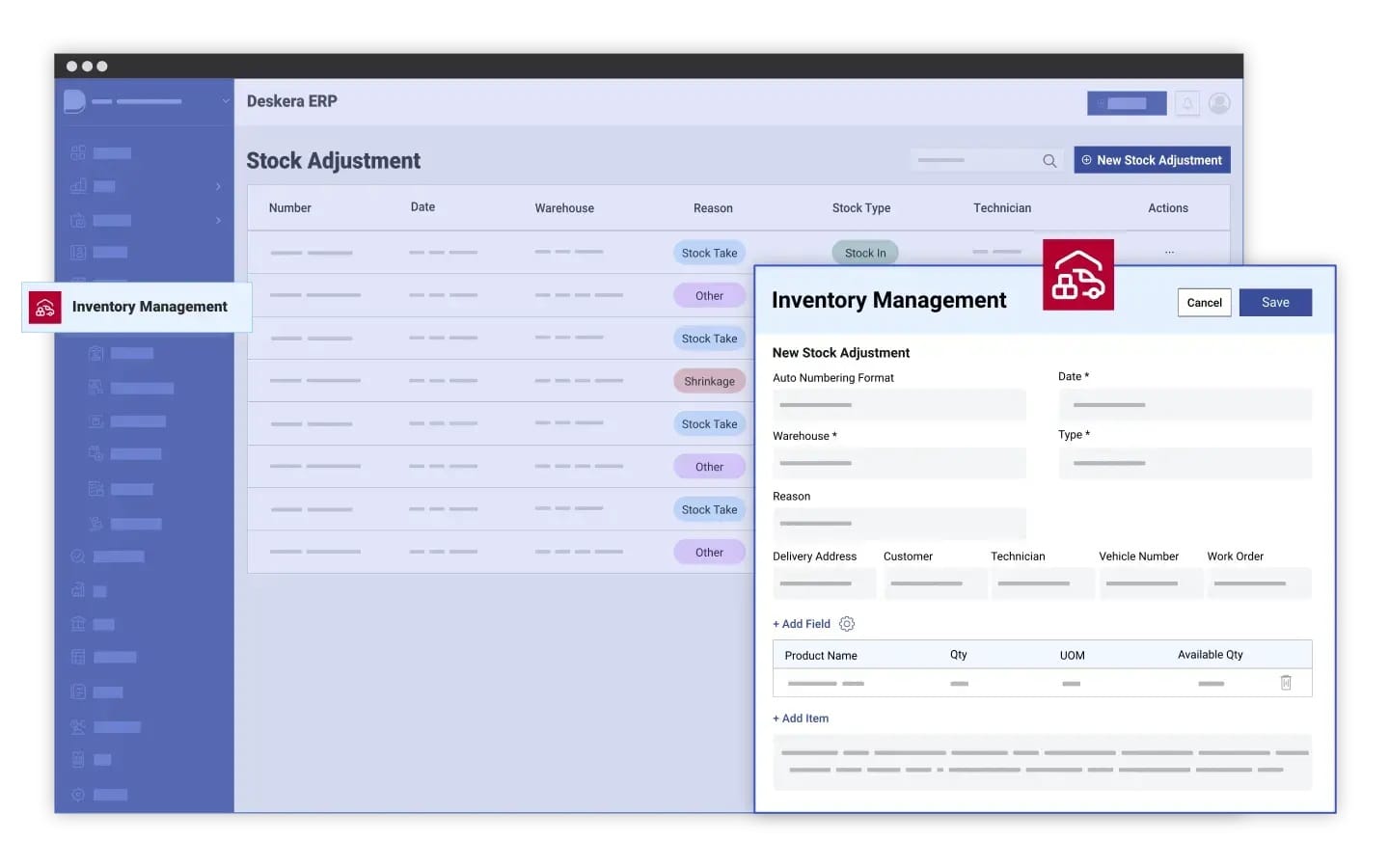
A successful go-to-market (GTM) strategy requires seamless coordination across sales, inventory, finance, customer management, and operational planning. Without the right systems in place, businesses often face inefficiencies, delayed launches, poor forecasting, and disconnected teams.
Deskera ERP provides an integrated business management platform that helps organizations streamline GTM execution, improve decision-making, and accelerate business growth through automation, real-time visibility, and cross-functional alignment.
Unified Business Operations Management
Deskera ERP centralizes critical business functions—including inventory, accounting, CRM, HR, procurement, and production—into a single platform. This unified approach ensures all departments involved in GTM execution operate with synchronized data, reducing silos, improving collaboration, and enabling smoother product launches.
Advanced Demand Forecasting and Inventory Planning
Accurate forecasting is essential for successful market entry. Deskera ERP uses real-time business data to help companies predict customer demand, optimize stock levels, prevent overstocking or stockouts, and align supply chain operations with GTM objectives, ensuring products are available when and where customers need them.
Integrated Customer Relationship Management (CRM)
Deskera’s built-in CRM tools help businesses manage leads, sales pipelines, customer interactions, and post-sale relationships more effectively. By improving customer acquisition, nurturing prospects, and tracking conversions, Deskera supports stronger sales execution and customer retention throughout the GTM journey.
Financial Planning and Budget Control
Go-to-market strategies require careful budget management to maximize ROI. Deskera ERP enables businesses to monitor expenses, track revenue performance, manage pricing strategies, and gain real-time financial insights, ensuring GTM initiatives remain cost-efficient and profitable.
Sales Enablement and Revenue Optimization
Deskera ERP supports sales teams with streamlined workflows, automated invoicing, quotation management, performance tracking, and reporting tools. This helps businesses shorten sales cycles, improve sales productivity, and accelerate revenue generation during product launches and expansion efforts.
Real-Time Analytics and Performance Monitoring
Successful GTM strategies depend on measurable outcomes. Deskera ERP provides advanced dashboards and reporting tools that allow businesses to monitor KPIs such as customer acquisition costs, sales growth, inventory turnover, and operational efficiency, enabling continuous strategy refinement.
Scalable Support for Market Expansion
Whether launching a new product, entering new regions, or targeting new customer segments, Deskera ERP offers scalable infrastructure that grows with your business. Its flexible capabilities make it easier to manage increasing operational complexity while maintaining strategic control.
Automation for Greater Efficiency
Deskera ERP automates repetitive tasks such as order management, invoicing, payroll, procurement, and reporting. This reduces manual errors, saves time, and allows teams to focus on strategic GTM priorities rather than administrative processes.
Key Takeaways
- A go-to-market (GTM) strategy is a comprehensive business framework that guides product launches, market expansion, and customer acquisition while maximizing revenue and profitability.
- Successful GTM strategies combine market research, target audience analysis, value proposition development, pricing, sales, marketing, and distribution into one cohesive execution plan.
- The core elements of a GTM strategy include market analysis, customer segmentation, competitive intelligence, product positioning, pricing, distribution, performance metrics, and continuous optimization.
- GTM strategies are essential for reducing launch risks, improving resource allocation, accelerating time-to-market, strengthening brand positioning, and driving long-term business growth.
- While GTM strategy focuses on product launch and market entry, marketing strategy primarily supports ongoing brand awareness, demand generation, and customer retention.
- Businesses need GTM strategies when launching new products, entering new markets, targeting new customer segments, repositioning offerings, or introducing major pricing and monetization changes.
- Building a successful GTM strategy requires a structured process that includes identifying customer pain points, conducting market research, defining target customers, crafting messaging, selecting channels, and measuring outcomes.
- Different GTM models—such as product-led, sales-led, marketing-led, account-based marketing (ABM), outbound, and hybrid strategies—serve different business goals depending on product complexity and market conditions.
- Best practices for GTM success include customer-centric planning, cross-functional alignment, data-driven decisions, sales enablement, continuous testing, agile execution, and strategic adaptability.
- Choosing the right GTM strategy depends on factors such as product type, audience, budget, competition, customer acquisition costs, business objectives, and scalability requirements.
- Measuring GTM success requires tracking key performance indicators such as customer acquisition cost (CAC), customer lifetime value (CLV), conversion rates, revenue growth, churn, market share, and customer satisfaction.
- Deskera ERP strengthens GTM execution by integrating inventory management, CRM, financial planning, demand forecasting, sales enablement, and real-time analytics into one scalable platform.
- A well-executed GTM strategy is not just a product launch plan—it is a long-term growth engine that helps businesses improve competitive advantage, accelerate revenue, and scale sustainably.
Related Articles
 Niti Samani
 Niti Samani
 Niti Samani
 Niti Samani
 Niti Samani
 Niti Samani