

What if your production line appears efficient, but hidden defects across multiple stages are quietly reducing profitability? The answer lies in measuring the true effectiveness of your manufacturing processes with rolled throughput yield (RTY). Unlike basic quality metrics, RTY evaluates how efficiently products move through every stage of production without defects or rework. This gives manufacturers a more accurate picture of process performance, operational bottlenecks, and overall production quality.
In today’s highly competitive manufacturing landscape, maintaining high product quality while minimizing waste and operational costs is more important than ever. Even small inefficiencies at different production stages can accumulate into major losses over time. Rolled throughput yield helps manufacturers identify these hidden inefficiencies by calculating the probability of producing defect-free products throughout the entire manufacturing process. As a result, businesses can make better decisions to improve productivity, reduce scrap, and enhance customer satisfaction.
RTY has become an essential metric in lean manufacturing and Six Sigma initiatives because it highlights process weaknesses that traditional metrics may overlook. By continuously monitoring rolled throughput yield, manufacturers can improve consistency, streamline workflows, optimize resource utilization, and strengthen overall operational performance. It also helps organizations create a culture of continuous improvement by focusing on defect prevention instead of defect correction.
Modern manufacturing systems such as Deskera MRP make it easier for businesses to monitor and improve rolled throughput yield in real time. Deskera MRP helps manufacturers automate production planning, track inventory movement, manage quality control processes, and gain complete visibility across the shop floor. With features like real-time reporting, demand forecasting, production scheduling, and analytics-driven insights, manufacturers can quickly identify inefficiencies, reduce rework, and improve overall manufacturing performance.
What Is Rolled Throughput Yield (RTY)?
Rolled Throughput Yield (RTY) is a manufacturing and process quality metric that measures the probability of a product successfully passing through every stage of a production process without defects, rework, or scrap. Unlike traditional yield metrics that evaluate individual operations separately, RTY provides a complete view of process performance across the entire production line. It helps manufacturers understand how efficiently their processes operate from start to finish while maintaining quality standards.
RTY is considered one of the most effective ways to measure overall process quality because it captures the cumulative effect of defects across multiple process steps. Even when individual production stages show high yields, small defects at each step can significantly reduce the final defect-free output. RTY exposes this “hidden factory” by highlighting inefficiencies, rework activities, and process weaknesses that may otherwise go unnoticed. This enables manufacturers to identify the poorest-performing stages and focus on improvement opportunities that deliver the greatest operational impact.
In lean manufacturing and Six Sigma methodologies, RTY is widely used to evaluate process effectiveness and support continuous improvement initiatives. It extends beyond simple first-pass yield measurements by considering the combined performance of sequential operations. Manufacturers use RTY to assess defect rates, optimize workflows, reduce waste, improve consistency, and strengthen overall production efficiency. Because RTY reflects the real-world probability of producing defect-free products, it provides a more accurate representation of manufacturing capability and operational excellence.
RTY is calculated by multiplying the yield of each individual process step throughout the manufacturing cycle. As the number of production stages increases, the overall RTY typically decreases because defects accumulate across the process. This makes RTY especially valuable in complex manufacturing environments where multiple operations, inspections, and handling stages are involved. By continuously tracking rolled throughput yield, manufacturers can improve quality control, minimize production losses, and achieve higher customer satisfaction through more reliable and defect-free products.
First Pass Yield vs Rolled Throughput Yield vs Total Throughput Yield
Manufacturers use different yield metrics to measure process efficiency, product quality, and operational performance. While First Pass Yield (FPY), Rolled Throughput Yield (RTY), and Total Throughput Yield (TTY) are all related to production quality, each metric serves a different purpose and provides unique insights into manufacturing processes.
Understanding the differences between these metrics helps businesses identify hidden inefficiencies, reduce defects, and improve overall production outcomes.
The table below highlights the key differences between FPY, RTY, and TTY:
How Rolled Throughput Yield Works
Rolled Throughput Yield (RTY) works by evaluating the probability that a product or unit can pass through every stage of a manufacturing process without defects, scrap, or rework.
Instead of measuring quality at a single step, RTY analyzes the combined performance of all sequential operations.
This helps manufacturers understand the true efficiency of their production systems and identify hidden losses that may not appear in traditional yield measurements.
Understanding Process Stages in Manufacturing
Most manufacturing operations involve multiple interconnected stages such as cutting, assembly, inspection, packaging, and testing. At every stage, there is a possibility of defects or process failures occurring.
RTY works by evaluating the success rate of each of these stages individually and collectively. By analyzing every production step, manufacturers gain better visibility into where inefficiencies occur and which stages require process improvements.
Measuring Yield at Each Production Step
For RTY calculations, manufacturers first determine the yield of every process stage. The yield at each step represents the percentage of units that successfully pass through that stage without needing corrections or rework.
Even if a process stage has a high success rate, small defects can still impact overall production quality. Measuring individual yields helps businesses identify weak points within the manufacturing workflow.
Multiplying Individual Process Yields
Once the yield of each production stage is calculated, RTY is determined by multiplying all the individual yields together. This approach provides the cumulative probability of producing a completely defect-free product throughout the entire process.
Since defects compound across multiple operations, the final RTY value is usually lower than the yield of any single stage. This gives manufacturers a more realistic picture of operational performance.
Identifying Hidden Factory Losses
One of the most important ways RTY works is by exposing the “hidden factory,” which refers to the time, labor, and resources spent correcting defects and reworking products.
Traditional metrics may overlook these hidden inefficiencies because they focus only on final output. RTY highlights where defects accumulate during production, helping manufacturers target the most problematic areas for process optimization and quality improvement.
Evaluating Overall Process Efficiency
RTY provides a complete view of manufacturing efficiency by measuring how well the entire production system performs rather than focusing on isolated operations.
A low RTY often indicates issues such as inconsistent workflows, machine problems, poor material quality, or inadequate quality control procedures.
Manufacturers use RTY insights to streamline operations, improve process reliability, reduce waste, and enhance customer satisfaction through better product quality.
Supporting Continuous Improvement Initiatives
RTY plays a critical role in lean manufacturing and Six Sigma initiatives because it helps organizations continuously monitor and improve process performance. By tracking RTY regularly, manufacturers can measure the impact of quality improvement efforts over time.
It also enables teams to make data-driven decisions, prioritize process improvements, and establish more efficient production systems that minimize defects and maximize operational productivity.
Rolled Throughput Yield Formula
Rolled Throughput Yield (RTY) is calculated by multiplying the yield of every individual process step in a manufacturing operation. The formula measures the probability that a product will pass through the entire production process without defects, scrap, or rework.
RTY Formula:
RTY = Y1 × Y2 × Y3 × ... × Yn
Where:
- Y1 = Yield of Process Step 1
- Y2 = Yield of Process Step 2
- Y3 = Yield of Process Step 3
- Yn = Yield of the final process step
The yield for each individual process step is calculated using the following formula:
Process Yield Formula:
Process Yield = Good Units Produced / Total Units Processed
To calculate RTY, manufacturers first determine the yield percentage for every production stage and then multiply all the yields together.
Example of RTY Calculation
Suppose a manufacturing process has three stages with the following yields:
- Stage 1 Yield = 95% or 0.95
- Stage 2 Yield = 90% or 0.90
- Stage 3 Yield = 92% or 0.92
The RTY calculation would be:
RTY = 0.95 × 0.90 × 0.92
RTY = 0.7866
RTY = 78.66%
This means that only 78.66% of products successfully pass through the entire manufacturing process without defects or rework.
Example of Rolled Throughput Yield Calculation
Understanding rolled throughput yield (RTY) becomes easier when viewed through a practical manufacturing example. RTY measures the probability that a product will successfully move through every stage of production without defects, scrap, or rework. By calculating the yield at each production stage and multiplying them together, manufacturers can determine the true efficiency of the overall process.
Step 1: Identify the Production Stages
Suppose a company manufactures electronic devices using a three-stage production process:
- Component Assembly
- Product Testing
- Final Packaging
Each stage has its own process yield based on the number of defect-free units produced.
Step 2: Calculate Yield at Each Stage
The company processes 1,000 units through the production line.
Step 3: Apply the RTY Formula
RTY is calculated by multiplying the yield of each production stage:
RTY = 0.95 × 0.968 × 0.978
RTY = 0.899
RTY = 89.9%
Step 4: Interpret the Results
The final rolled throughput yield is 89.9%, which means approximately 90 out of every 100 products pass through the entire manufacturing process without requiring any rework or generating defects. Even though each individual stage has a relatively high yield, the cumulative effect of small losses at every step reduces the overall process efficiency.
This example demonstrates why RTY is an important metric in manufacturing. It helps businesses uncover hidden inefficiencies, identify problematic process stages, and focus on continuous improvement initiatives that improve product quality and operational performance.
Why Rolled Throughput Yield Is Important
Rolled Throughput Yield (RTY) is an essential manufacturing metric because it provides a realistic view of overall process efficiency and product quality. Unlike traditional yield measurements that focus only on individual production stages, RTY evaluates the cumulative impact of defects across the entire manufacturing process. This helps businesses uncover hidden inefficiencies, improve operational performance, and make more informed process improvement decisions.
Helps Identify Hidden Process Inefficiencies
Many production processes appear efficient when individual stages are evaluated separately. However, small defects and losses at multiple stages can significantly reduce overall productivity.
RTY exposes these hidden inefficiencies by measuring the probability of producing defect-free products across the entire workflow. This gives manufacturers greater visibility into process weaknesses that may otherwise remain unnoticed.
Improves Product Quality and Consistency
RTY helps manufacturers maintain higher quality standards by identifying areas where defects frequently occur. By continuously monitoring process yields, businesses can reduce variations, improve consistency, and ensure that products meet customer expectations. Higher RTY values typically indicate stronger process control and better manufacturing reliability.
Reduces Waste, Scrap, and Rework
Defects often lead to material waste, production delays, rework costs, and scrap generation. RTY helps organizations minimize these losses by highlighting production stages with poor performance.
When manufacturers improve RTY, they can reduce unnecessary resource consumption, lower operating costs, and create more sustainable manufacturing processes.
Supports Lean Manufacturing and Six Sigma Initiatives
RTY is widely used in lean manufacturing and Six Sigma methodologies because it focuses on defect prevention and continuous process improvement. It helps organizations measure the effectiveness of quality initiatives and identify opportunities to streamline operations. By improving RTY, manufacturers can eliminate non-value-added activities and create more efficient production systems.
Enhances Customer Satisfaction
Customers expect products that are reliable, consistent, and defect-free. A low RTY often indicates quality problems that may eventually affect customer experience and brand reputation.
Improving rolled throughput yield helps businesses deliver better-quality products, reduce customer complaints, and increase long-term customer satisfaction and customer loyalty.
Increases Operational Efficiency and Profitability
Higher RTY values indicate that more products successfully pass through production without requiring additional labor, materials, or corrections.
This improves manufacturing efficiency, reduces production costs, and increases profitability. Businesses with strong RTY performance can optimize resource utilization, improve throughput, and gain a competitive advantage in the market.
Provides Better Decision-Making Insights
RTY gives manufacturers accurate data about overall process performance, helping management teams make informed operational decisions. It enables businesses to prioritize improvement efforts, allocate resources effectively, and monitor the success of quality improvement strategies over time. This data-driven approach supports long-term operational excellence and continuous growth.
Key Factors That Affect Rolled Throughput Yield
Rolled Throughput Yield (RTY) is influenced by multiple operational, technical, and human-related factors across the manufacturing process.
Since RTY measures the probability of producing defect-free products throughout every production stage, even small inefficiencies can significantly impact the final yield.
Understanding these factors helps manufacturers identify problem areas, improve process stability, and enhance overall production performance.
Machine Downtime and Equipment Failures
Frequent machine breakdowns and unplanned downtime can disrupt production workflows and increase the likelihood of defects.
Poorly maintained equipment may produce inconsistent results, reduce process accuracy, and create quality issues across multiple production stages.
Preventive maintenance and real-time equipment monitoring are essential for maintaining stable production conditions and improving RTY.
Human Errors and Inconsistent Workflows
Manual errors during production, assembly, inspection, or material handling can negatively affect product quality and process consistency. Inconsistent work procedures, lack of standardization, and communication gaps often increase the chances of defects and rework. Proper employee training, standardized operating procedures, and workflow automation help minimize human-related inefficiencies.
Poor Raw Material Quality
Low-quality or inconsistent raw materials can create defects early in the production process, which may continue throughout downstream operations.
Variations in material specifications, supplier inconsistencies, or damaged inventory can reduce process reliability and increase rejection rates.
Strong supplier quality management and incoming material inspections are important for maintaining high RTY levels.
Inefficient Process Design
Complex or poorly designed manufacturing processes often create unnecessary production steps, bottlenecks, and opportunities for defects. Inefficient workflows can increase handling errors, delays, and operational variability.
Manufacturers that simplify process design and optimize production layouts are better positioned to improve throughput and reduce cumulative process losses.
Weak Quality Control Measures
Insufficient quality inspections and delayed defect detection can allow faulty products to move through multiple production stages before problems are identified.
This increases rework costs and lowers overall RTY. Implementing real-time quality monitoring, automated inspection systems, and in-process quality checks helps manufacturers identify and correct defects earlier in the workflow.
Lack of Employee Training
Employees who are not properly trained may struggle to follow production standards, operate machinery efficiently, or identify quality issues. This can result in higher defect rates and inconsistent process performance.
Continuous employee training programs improve operational knowledge, enhance quality awareness, and support better manufacturing consistency.
Process Variability and Production Inconsistency
Variations in machine settings, environmental conditions, production speeds, or operational methods can lead to inconsistent output quality.
High process variability increases the likelihood of defects at different production stages, reducing the overall rolled throughput yield.
Process standardization and statistical process control help manufacturers maintain stable and predictable production performance.
Inadequate Production Visibility
Limited visibility into shop floor operations can make it difficult for manufacturers to track defects, monitor process performance, and identify bottlenecks in real time.
Without accurate production data, businesses may struggle to address inefficiencies quickly. Digital manufacturing systems and ERP solutions provide better operational visibility and help improve decision-making for RTY optimization.
Common Challenges in Managing RTY
Managing Rolled Throughput Yield (RTY) can be challenging because it requires accurate monitoring of every production stage, consistent quality control, and strong process visibility.
Since RTY measures cumulative process efficiency, even small operational issues can significantly affect the final yield.
Manufacturers often face technical, organizational, and data-related challenges when trying to improve and maintain high RTY levels across complex production environments.
Difficulty in Collecting Accurate Production Data
RTY calculations depend heavily on accurate and real-time production data from every process stage. Many manufacturers still rely on manual data collection methods, spreadsheets, or disconnected systems, which can lead to errors and incomplete information. Inaccurate data makes it difficult to calculate true process yields and identify the root causes of production inefficiencies.
Limited Visibility Across Production Stages
In complex manufacturing environments, products often move through multiple departments, machines, and workflows. Without centralized visibility, manufacturers may struggle to track defects and process performance across the entire production line. Limited visibility can hide operational bottlenecks and prevent teams from identifying which stages are contributing most to low RTY.
Managing Complex Manufacturing Processes
Manufacturing operations with numerous production steps, product variations, and assembly procedures are naturally more difficult to manage. As the number of process stages increases, the probability of defects also increases, causing RTY to decline. Coordinating quality control and maintaining process consistency across complex workflows can become a major operational challenge.
Identifying Root Causes of Defects
Defects may originate from multiple sources such as machine issues, material inconsistencies, human errors, or process variability. Identifying the exact root cause of recurring defects can be time-consuming and complicated. Without proper root cause analysis methods, manufacturers may implement temporary fixes instead of addressing the underlying operational problems affecting RTY.
Resistance to Process Standardization
Standardized workflows are essential for improving process consistency and reducing defects. However, employees and departments may resist operational changes due to existing habits, lack of training, or fear of disruption. This resistance can slow down quality improvement initiatives and make it difficult to establish consistent manufacturing practices across the organization.
Inadequate Quality Control Systems
Many organizations struggle with delayed inspections and inefficient quality control procedures. When defects are detected late in the production cycle, businesses may face higher rework costs and material waste. Weak quality management systems reduce the effectiveness of RTY monitoring and make it harder to prevent defects from progressing through multiple production stages.
Balancing Production Speed and Quality
Manufacturers often face pressure to increase production output while maintaining strict quality standards. In some cases, faster production speeds can increase the likelihood of defects, process errors, and equipment stress. Finding the right balance between operational efficiency and product quality is a common challenge when managing RTY.
Lack of Real-Time Monitoring and Analytics
Without real-time production monitoring tools, manufacturers may not detect process deviations or quality issues quickly enough to prevent defects. Delayed reporting and limited analytics capabilities can reduce the effectiveness of continuous improvement initiatives. Modern ERP systems, IoT devices, and manufacturing analytics tools help organizations gain better visibility and improve RTY management.
Best Practices to Improve Rolled Throughput Yield
Improving Rolled Throughput Yield (RTY) requires manufacturers to focus on reducing defects, improving process consistency, and enhancing operational visibility across the entire production workflow.
Since RTY reflects the cumulative efficiency of all manufacturing stages, even small improvements at individual steps can significantly increase overall process performance.
By adopting the right strategies and technologies, businesses can reduce waste, minimize rework, and achieve higher production quality.
Standardize Manufacturing Processes
Standardized workflows help ensure that every production task is performed consistently and according to predefined quality standards. Clear operating procedures reduce process variability, minimize human errors, and improve overall manufacturing stability. Manufacturers should document best practices, establish quality guidelines, and regularly update process instructions to maintain consistent production performance.
Implement Real-Time Quality Monitoring
Real-time monitoring systems allow manufacturers to detect defects and process deviations immediately as they occur. This helps prevent defective products from moving through multiple production stages and reduces the need for costly rework. Automated inspection systems, sensors, and quality dashboards provide instant visibility into process performance and support faster corrective actions.
Use Preventive and Predictive Maintenance
Equipment failures and machine inconsistencies are major contributors to low RTY. Preventive maintenance helps manufacturers reduce unexpected downtime by servicing machinery regularly, while predictive maintenance uses data and analytics to identify potential equipment issues before failures occur. Maintaining reliable equipment improves process accuracy, reduces defects, and enhances production consistency.
Improve Employee Training and Skill Development
Well-trained employees are better equipped to follow production standards, identify quality issues, and operate machinery efficiently. Regular training programs help workers understand quality expectations, safety procedures, and process improvement methods. Investing in workforce development reduces operational errors and supports a stronger culture of continuous improvement.
Strengthen Supplier Quality Management
The quality of raw materials directly impacts manufacturing performance and RTY. Manufacturers should work closely with suppliers to ensure material consistency and compliance with quality standards. Conducting supplier audits, performing incoming material inspections, and maintaining strong supplier relationships can significantly reduce material-related defects during production.
Reduce Process Variability
Variations in machine settings, production methods, environmental conditions, and handling procedures can increase defect rates. Manufacturers should use statistical process control (SPC), automation, and process optimization techniques to maintain stable production conditions. Reducing variability improves process predictability and increases the probability of producing defect-free products.
Leverage Automation and Digital Technologies
Automation helps improve manufacturing accuracy, reduce manual intervention, and increase production consistency. Digital manufacturing tools such as ERP systems, IoT-enabled devices, and production analytics platforms provide real-time operational insights and better shop floor visibility. These technologies enable manufacturers to monitor process performance continuously and make faster, data-driven decisions to improve RTY.
Continuously Monitor Key Performance Metrics
Manufacturers should regularly track production metrics such as defect rates, first pass yield, scrap rate, downtime, and cycle time alongside RTY. Continuous performance monitoring helps businesses identify trends, measure improvement progress, and quickly address operational issues. Using data-driven insights supports long-term quality improvement and operational excellence initiatives.
Apply Lean Manufacturing and Six Sigma Principles
Lean manufacturing and Six Sigma methodologies focus on reducing waste, eliminating defects, and improving process efficiency. Manufacturers can use tools such as root cause analysis, Kaizen, value stream mapping, and DMAIC frameworks to identify inefficiencies and optimize workflows. Combining RTY monitoring with continuous improvement strategies leads to more reliable and efficient manufacturing operations.
Role of Lean Manufacturing and Six Sigma in Improving RTY
Lean manufacturing and Six Sigma play a major role in improving Rolled Throughput Yield (RTY) by helping manufacturers reduce defects, eliminate waste, and optimize production processes.
Since RTY measures the probability of producing defect-free products across the entire manufacturing workflow, both methodologies focus on improving process consistency and operational efficiency at every production stage.
Together, they provide a structured approach for achieving higher quality standards and continuous improvement.
How Lean Manufacturing Improves RTY
Lean manufacturing focuses on eliminating non-value-added activities that create waste, delays, and inefficiencies within production systems. Waste such as excess inventory, unnecessary movement, overproduction, waiting time, and rework can significantly lower RTY. By streamlining workflows and improving process flow, lean practices help manufacturers reduce defects and increase the percentage of products that pass through production without issues.
Lean tools such as value stream mapping, 5S, Kaizen, and standardized work procedures help organizations identify bottlenecks and improve operational consistency. These improvements reduce process variability and create smoother production workflows, which directly contributes to higher rolled throughput yield and better manufacturing performance.
How Six Sigma Helps Reduce Defects
Six Sigma is a data-driven methodology designed to minimize defects and improve process quality through statistical analysis and process control. Since RTY measures cumulative process quality, reducing defects at every production stage is essential for improving overall yield. Six Sigma helps manufacturers identify the root causes of quality issues and implement corrective actions that improve process capability.
The DMAIC framework — Define, Measure, Analyze, Improve, and Control — is widely used in Six Sigma projects to systematically improve manufacturing processes. By reducing process variation and enhancing quality control, Six Sigma increases the probability of producing defect-free products throughout the production cycle, leading to improved RTY.
Reducing Process Variability for Better RTY
One of the biggest factors affecting RTY is process variability. Inconsistent machine settings, operator practices, environmental conditions, and material quality can all contribute to defects and production losses. Lean manufacturing and Six Sigma both focus heavily on standardization and process stability to reduce these variations.
Manufacturers that establish standardized workflows, monitor production data continuously, and apply statistical process control can achieve more predictable production outcomes. Lower variability results in fewer defects, reduced rework, and improved rolled throughput yield across the entire manufacturing process.
Supporting Continuous Improvement Initiatives
Both lean manufacturing and Six Sigma encourage a culture of continuous improvement where organizations regularly evaluate and optimize their operations. RTY serves as an important performance metric within these initiatives because it provides measurable insights into process efficiency and quality performance.
By continuously tracking RTY, manufacturers can evaluate the effectiveness of improvement efforts, identify new opportunities for optimization, and maintain long-term operational excellence. Continuous improvement initiatives help businesses remain competitive while improving product quality, reducing operational costs, and increasing customer satisfaction.
Enhancing Operational Efficiency and Profitability
Improving RTY through lean manufacturing and Six Sigma leads to higher operational efficiency and lower production costs. Fewer defects mean less material waste, reduced scrap, lower rework expenses, and improved resource utilization. Efficient processes also reduce production delays and improve throughput capacity.
As RTY improves, manufacturers can produce more high-quality products with fewer operational losses, which directly increases profitability. Organizations that successfully integrate lean and Six Sigma practices often gain a competitive advantage through improved productivity, stronger quality performance, and more reliable manufacturing operations.
Key Metrics to Track Alongside RTY
Rolled Throughput Yield (RTY) provides valuable insights into overall process quality and production efficiency, but manufacturers should monitor additional performance metrics alongside RTY to gain a more complete understanding of operational performance.
Tracking related manufacturing KPIs helps businesses identify process inefficiencies, improve quality control, reduce waste, and make better data-driven decisions across the production lifecycle.
First Pass Yield (FPY)
First Pass Yield measures the percentage of products that successfully pass through a single production stage without requiring rework or repairs. While RTY evaluates cumulative process performance, FPY focuses on the efficiency of individual operations. Monitoring FPY alongside RTY helps manufacturers identify which specific production stages are contributing most to defects and process losses.
Overall Equipment Effectiveness (OEE)
Overall Equipment Effectiveness is a key manufacturing metric that measures equipment performance based on availability, performance efficiency, and product quality. Low machine efficiency can negatively affect RTY by increasing downtime, production inconsistencies, and defect rates. Tracking OEE helps manufacturers improve equipment reliability and optimize shop floor productivity.
Scrap Rate
Scrap rate measures the percentage of materials or products that are discarded because they fail to meet quality standards. High scrap rates often indicate serious process inefficiencies, material issues, or equipment problems that directly impact RTY. Reducing scrap helps manufacturers lower material waste, improve resource utilization, and increase overall process efficiency.
Rework Rate
Rework rate tracks the percentage of products that require corrections or additional processing before they can be approved for final delivery. Since RTY specifically measures defect-free production without rework, monitoring rework rates helps businesses identify recurring quality problems and operational bottlenecks that reduce manufacturing efficiency.
Defect Rate
Defect rate measures the number of defective products produced during manufacturing. It provides direct insight into production quality and process stability. A high defect rate usually results in lower RTY because defects accumulate across multiple production stages. Tracking defect trends helps manufacturers implement targeted quality improvement initiatives.
Cycle Time
Cycle time refers to the total time required to complete a manufacturing process from start to finish. Longer cycle times can indicate workflow inefficiencies, machine delays, or process bottlenecks that affect productivity and quality performance. Monitoring cycle time alongside RTY helps organizations balance operational speed with defect-free production.
Downtime
Downtime measures the amount of time production equipment or manufacturing systems remain unavailable due to breakdowns, maintenance, or operational disruptions. Excessive downtime can interrupt production flow, create inconsistencies, and increase the likelihood of quality issues. Tracking downtime helps manufacturers improve equipment reliability and maintain stable production operations.
Throughput Rate
Throughput rate measures the number of products successfully produced within a specific period. While RTY focuses on product quality, throughput rate evaluates production capacity and operational output. Monitoring both metrics together helps manufacturers ensure they maintain high production volumes without compromising product quality or process efficiency.
Customer Return Rate
Customer return rate measures how often finished products are returned due to defects, performance issues, or quality concerns. Even if internal production metrics appear acceptable, high customer return rates may indicate hidden quality problems affecting RTY. Tracking this metric helps manufacturers improve product reliability and strengthen customer satisfaction.
Cost of Poor Quality (COPQ)
Cost of Poor Quality includes expenses related to defects, rework, scrap, warranty claims, inspections, and production inefficiencies. A low RTY often leads to higher quality-related costs. Monitoring COPQ helps manufacturers understand the financial impact of operational inefficiencies and prioritize improvement efforts that reduce waste and increase profitability.
Industries That Commonly Use RTY
Rolled Throughput Yield (RTY) is widely used across industries that rely on high production accuracy, consistent quality control, and efficient manufacturing processes. Since RTY measures the probability of producing defect-free products across multiple process stages, it is especially valuable in industries where even small defects can lead to major operational, financial, or safety consequences. Manufacturers use RTY to improve efficiency, reduce waste, and maintain high product quality standards.
Automotive Manufacturing
The automotive industry uses RTY extensively to monitor the quality and efficiency of complex production processes involving thousands of components and multiple assembly stages. Defects in automotive manufacturing can lead to costly recalls, safety issues, and customer dissatisfaction. RTY helps manufacturers identify weak production areas, reduce rework, improve assembly line consistency, and maintain strict quality standards throughout vehicle production.
Electronics Manufacturing
Electronics manufacturing involves highly precise production processes where small defects can significantly impact product functionality and reliability. RTY helps electronics manufacturers track quality performance across processes such as circuit board assembly, soldering, testing, and packaging. By improving RTY, companies can reduce defective products, minimize production losses, and improve the reliability of electronic devices and components.
Pharmaceutical Industry
In pharmaceutical manufacturing, product quality and regulatory compliance are critical because defects can directly affect patient safety. RTY is used to monitor production consistency across formulation, mixing, packaging, and quality inspection stages. Pharmaceutical companies rely on RTY to reduce contamination risks, maintain process accuracy, improve batch quality, and ensure compliance with strict industry regulations.
Food and Beverage Production
Food and beverage manufacturers use RTY to improve production efficiency while maintaining food safety and quality standards. Defects such as contamination, incorrect packaging, or inconsistent product quality can lead to product recalls and regulatory issues. RTY helps manufacturers identify inefficiencies, reduce waste, optimize production workflows, and ensure consistent product quality throughout processing and packaging operations.
Aerospace Manufacturing
The aerospace industry requires extremely high levels of precision, reliability, and safety in manufacturing processes. Even minor defects in aerospace components can have severe consequences. RTY helps aerospace manufacturers monitor quality performance across machining, assembly, inspection, and testing stages. Improving RTY supports better process control, reduces costly defects, and enhances product reliability in mission-critical applications.
Medical Device Manufacturing
Medical device manufacturers use RTY to ensure consistent product quality and compliance with strict healthcare regulations. Since medical devices must meet precise safety and performance standards, manufacturers closely monitor defects and process variations throughout production. RTY helps improve manufacturing consistency, reduce rework, and maintain high-quality standards for critical healthcare products.
Semiconductor Manufacturing
Semiconductor production involves highly sensitive and complex fabrication processes where even microscopic defects can affect chip performance. RTY helps semiconductor manufacturers measure process efficiency across wafer fabrication, etching, testing, and packaging operations. By improving RTY, companies can increase production yields, reduce material losses, and improve overall manufacturing profitability.
Industrial Equipment Manufacturing
Manufacturers of industrial machinery and heavy equipment use RTY to improve production quality across machining, welding, assembly, and testing processes. Large-scale manufacturing operations often involve multiple production stages and custom components, making RTY an important metric for identifying process inefficiencies and improving operational consistency.
Consumer Goods Manufacturing
Consumer goods manufacturers use RTY to maintain consistent product quality while managing high-volume production environments. Products such as appliances, packaged goods, personal care products, and household items often require multiple production and packaging stages. RTY helps businesses reduce defects, improve customer satisfaction, and optimize manufacturing performance across large-scale operations.
How Deskera MRP Helps Improve Rolled Throughput Yield
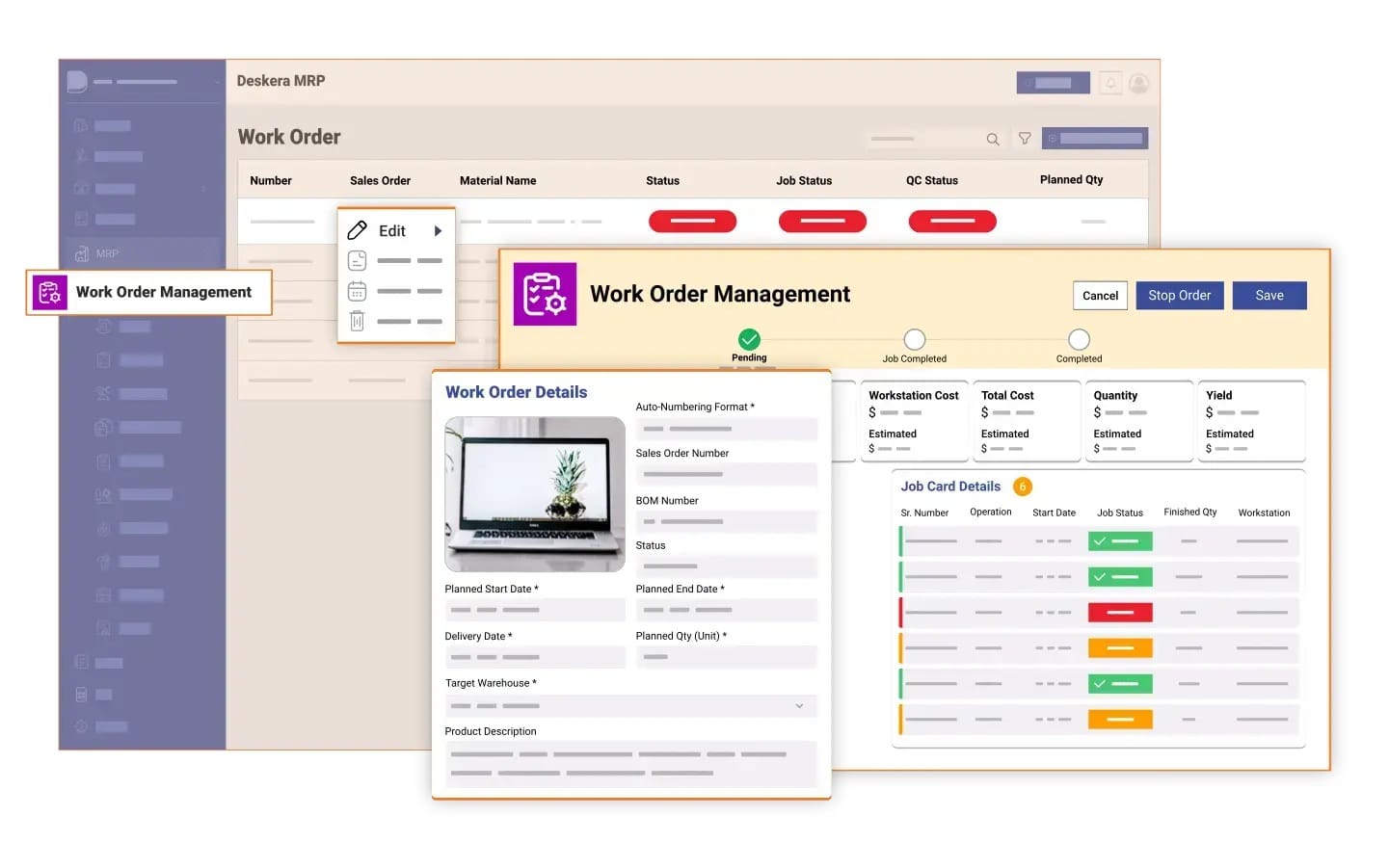
Improving Rolled Throughput Yield (RTY) requires manufacturers to reduce defects, improve process consistency, and gain complete visibility across every stage of production. Deskera MRP helps manufacturers achieve these goals by providing integrated tools for production planning, inventory management, quality monitoring, machine maintenance, and real-time production tracking. With better operational visibility and automation, businesses can identify inefficiencies faster and improve overall manufacturing performance.
Real-Time Production Monitoring
Deskera MRP provides real-time visibility into manufacturing operations, allowing businesses to monitor work-in-progress (WIP), production status, and shop floor activities continuously. This helps manufacturers quickly identify bottlenecks, process delays, and quality issues before they affect downstream operations. Better visibility across production stages improves decision-making and supports higher rolled throughput yield.
Automated Work Order Management
Manual work order management often leads to delays, communication gaps, and process inconsistencies that negatively impact RTY. Deskera MRP automates work order creation, task assignments, and progress tracking, ensuring smoother production workflows and better operational coordination. Automated workflows reduce errors, improve process consistency, and help maintain defect-free production across multiple stages.
Improved Production Planning and Scheduling
Efficient production planning is essential for maintaining stable manufacturing operations and reducing process variability. Deskera MRP helps businesses create production schedules, allocate resources, manage deadlines, and optimize manufacturing capacity. Better scheduling minimizes idle time, reduces operational disruptions, and ensures consistent production performance, which directly contributes to improved RTY.
Better Inventory and Material Management
Poor material availability and inconsistent raw material quality can significantly reduce rolled throughput yield. Deskera MRP helps manufacturers manage inventory levels, track material movement, and optimize procurement processes in real time. Accurate inventory tracking ensures the right materials are available at the right time, reducing production interruptions and material-related defects.
Quality Control and Yield Tracking
Deskera MRP includes features for yield calculation, quality checks, and production reporting, helping manufacturers monitor product quality throughout the manufacturing process. Businesses can analyze production data, identify defect trends, and track process performance more effectively. Continuous quality monitoring enables faster corrective actions and helps improve the percentage of defect-free products moving through the production line.
Machine Management and Preventive Maintenance
Machine failures and unplanned downtime are major causes of low RTY. Deskera MRP offers machine management and maintenance scheduling capabilities that help manufacturers monitor equipment performance and reduce unexpected breakdowns. Preventive maintenance improves machine reliability, maintains production consistency, and reduces defects caused by equipment-related issues.
Demand Forecasting and Resource Optimization
Accurate demand forecasting helps manufacturers plan production more effectively and avoid overproduction or material shortages. Deskera MRP uses forecasting and resource planning tools to optimize inventory, labor, and machine utilization. Better resource planning reduces process disruptions, improves operational efficiency, and supports smoother production workflows that contribute to higher RTY.
Advanced Reporting and Analytics
Deskera MRP provides comprehensive production reports and analytics that help manufacturers monitor costs, process efficiency, bottlenecks, and operational performance. Real-time insights allow businesses to identify problem areas quickly and implement data-driven process improvements. These analytics support continuous improvement initiatives and help manufacturers optimize RTY over time.
Key Takeaways
- Rolled Throughput Yield (RTY) measures the probability of producing defect-free products across the entire manufacturing process without rework or scrap.
- RTY provides a more accurate picture of overall process efficiency compared to metrics that evaluate only individual production stages.
- First Pass Yield (FPY), Rolled Throughput Yield (RTY), and Total Throughput Yield (TTY) each measure production performance differently and serve unique operational purposes.
- RTY works by multiplying the yield of every production stage to calculate the cumulative impact of defects across the entire workflow.
- The RTY formula helps manufacturers identify the true efficiency of complex production processes and uncover hidden quality losses.
- Practical RTY calculations show how small inefficiencies at multiple stages can significantly reduce final defect-free output.
- RTY is important because it helps manufacturers improve product quality, reduce waste, lower rework costs, and strengthen operational performance.
- Factors such as machine downtime, poor raw material quality, process variability, and human errors can negatively affect rolled throughput yield.
- Manufacturers often face challenges in managing RTY due to limited production visibility, inaccurate data collection, and difficulty identifying root causes of defects.
- Standardized workflows, real-time monitoring, predictive maintenance, and automation are some of the best practices for improving RTY.
- Lean manufacturing and Six Sigma methodologies help improve RTY by reducing defects, eliminating waste, and supporting continuous process improvement.
- Tracking additional metrics such as FPY, OEE, scrap rate, defect rate, downtime, and cycle time provides deeper insights into manufacturing performance alongside RTY.
- Industries such as automotive, electronics, pharmaceuticals, aerospace, food manufacturing, and semiconductors commonly use RTY to maintain high-quality production standards.
- Deskera MRP helps manufacturers improve RTY through real-time production monitoring, automated workflows, inventory management, quality control, and advanced analytics.
- Continuous monitoring and optimization of RTY enable manufacturers to improve operational efficiency, profitability, and long-term customer satisfaction.
Related Articles
 Niti Samani
 Niti Samani
 Niti Samani
 Niti Samani
 Niti Samani
 Niti Samani