


What if your project could avoid missed deadlines, budget overruns, and employee burnout before they even happen? The answer often lies in effective resource forecasting. In project management, resource forecasting is the strategic process of predicting the people, tools, materials, time, and budget required to complete a project successfully. As projects grow more complex, businesses need accurate forecasting to ensure resources are available when needed, without overloading teams or wasting valuable assets.
Studies show that poor resource management is one of the leading causes of project failure, often resulting in delayed timelines, increased costs, and reduced productivity. Resource forecasting helps organizations stay proactive by identifying future resource demands, aligning them with current capacity, and minimizing operational disruptions. By forecasting resource needs accurately, project managers can improve planning, optimize utilization, and maintain better control over project outcomes.
Modern businesses are increasingly turning to digital tools and advanced analytics to improve forecasting precision. From workforce scheduling to budget allocation, resource forecasting supports smarter decision-making across every stage of project execution. It not only strengthens project performance but also enhances collaboration, profitability, and long-term business scalability.
Deskera ERP simplifies resource forecasting by integrating project planning, workforce management, inventory tracking, and financial oversight into one unified platform. With real-time insights, automated reporting, and intelligent planning tools, Deskera ERP helps businesses forecast resource requirements more accurately, reduce inefficiencies, and execute projects with greater confidence. For organizations aiming to improve project success rates, Deskera ERP offers a practical, data-driven solution.
What Is Resource Forecasting in Project Management?
Resource forecasting in project management is the strategic process of estimating future resource requirements to ensure a project is completed successfully, on time, and within budget. It involves predicting the people, time, budget, equipment, and materials needed for upcoming project activities while comparing those requirements against currently available resources. By creating accurate forecasts, project managers can determine whether existing resources are sufficient or if adjustments are needed to avoid shortages, delays, or excessive costs.
At its core, resource forecasting focuses heavily on workforce capacity, as people are often the most valuable and dynamic resource in any project. Project managers assess team workload, utilization rates, skill sets, and availability to identify who is fully booked, underutilized, or at risk of burnout. This visibility allows organizations to allocate work more effectively, balance workloads fairly, and prevent overburdening critical team members. Proper forecasting not only protects employee productivity but also supports stronger workforce retention and project efficiency.
Effective resource forecasting relies on data from multiple sources rather than a single estimate. Sales pipelines provide visibility into incoming projects, project plans break down deliverables and milestones, resource calendars track availability and scheduling conflicts, and timesheets offer real-time productivity insights. By consolidating these data points, businesses gain a more accurate picture of future resource demand and can proactively manage risks before they disrupt operations.
Ultimately, resource forecasting serves as a critical component of broader resource management strategies such as resource leveling and smoothing. It empowers project managers to align resource supply with project demand, improve budgeting accuracy, optimize operational efficiency, and enhance decision-making. In today’s fast-paced business environment, resource forecasting is essential for maintaining project control, maximizing productivity, and ensuring sustainable organizational growth.
Resource Forecasting vs. Resource Planning
While resource forecasting and resource planning are closely related, they serve distinct purposes within project management. Resource forecasting focuses on predicting future resource needs based on upcoming projects, team capacity, and business demands, whereas resource planning is the practical process of allocating and scheduling those resources to meet project objectives.
Understanding the difference between these two functions is essential for improving project efficiency, avoiding resource shortages, and ensuring successful execution. Forecasting helps organizations prepare for future demands, while planning ensures those predictions are translated into actionable resource allocation strategies.
Both resource forecasting and resource planning are essential for effective project management. Forecasting provides the strategic foresight needed to prepare for future demands, while planning ensures those resources are used efficiently in day-to-day project operations. Together, they create a balanced approach to resource management that improves productivity, profitability, and project success.
Key Factors That Influence Resource Forecasting in Project Management
Resource forecasting accuracy depends on a wide range of internal and external factors that can directly impact project planning, workforce allocation, budgets, and operational performance.
Understanding these influencing factors is essential for creating realistic forecasts, reducing risks, and ensuring successful project execution. By evaluating these variables proactively, organizations can make better strategic decisions and improve forecasting precision.
1. Project Scope and Complexity
The size, complexity, and structure of a project significantly influence resource forecasting. Larger or more complex projects often require more specialized skills, additional workforce, extended timelines, and increased budgets. Frequent scope changes can also disrupt forecasts and require constant reassessment.
2. Team Size, Skills, and Availability
Workforce capacity is one of the most critical factors in resource forecasting. Organizations must evaluate team size, employee skill sets, workload distribution, availability, productivity, and potential skill gaps to ensure resources align with project requirements.
3. Project Timelines and Deadlines
Shorter project timelines may require additional staffing, overtime, or external resources, while longer timelines may demand sustained workforce planning. Tight deadlines increase forecasting complexity and can place additional strain on available resources.
4. Market Conditions
Economic trends, industry growth, labor market availability, inflation, and competitive pressures can all affect resource forecasting. Changes in market conditions may influence project demand, hiring costs, resource accessibility, and overall business strategy.
5. Changing Client Requirements
Client expectations, revised deliverables, or shifting business priorities can alter project scope and resource demands unexpectedly. Forecasting models must remain flexible enough to adapt to these evolving requirements.
6. Technological Changes and Advancements
New technologies, automation tools, software platforms, and digital transformation initiatives can significantly impact resource requirements. Technology may reduce manual labor needs, create demand for new skills, or improve forecasting efficiency.
7. Hiring and Staffing Strategies
Recruitment timelines, contractor availability, onboarding capacity, and workforce planning methods directly affect an organization’s ability to meet forecasted demands. Delays in hiring or limited access to specialized talent can create resource gaps.
8. Resource Allocation Across Multiple Projects
Organizations managing multiple projects simultaneously must account for overlapping schedules, competing priorities, and shared resources. Improper allocation can lead to resource conflicts, burnout, or underutilization.
9. Budget Constraints
Financial limitations can restrict hiring, procurement, outsourcing, and operational expansion. Even when resource needs are accurately forecasted, budget constraints may limit an organization’s ability to fulfill those needs effectively.
10. Historical Data Quality
Forecasting accuracy often depends on past project data, resource utilization patterns, and productivity metrics. Poor-quality or incomplete historical data can reduce forecast reliability and increase uncertainty.
11. Employee Turnover and Workforce Stability
Unexpected resignations, absenteeism, employee burnout, or organizational restructuring can disrupt workforce availability and forecasting models. High turnover rates increase uncertainty and planning complexity.
12. External Supply Chain and Operational Disruptions
Delays in equipment procurement, material shortages, regulatory changes, or vendor challenges can impact project schedules and resource availability, requiring adjustments to forecasts.
13. Organizational Strategy and Growth Objectives
Business expansion plans, mergers, new service offerings, or strategic pivots can significantly alter resource demand. Forecasting must align with long-term business objectives to support sustainable growth.
14. Risk Management and Uncertainty
Potential risks such as economic downturns, policy changes, resource shortages, or project delays can influence forecasting outcomes. Organizations that incorporate risk assessments into forecasting improve resilience.
Resource forecasting is influenced by multiple interconnected factors, and successful forecasting requires continuous monitoring, flexibility, and strategic planning. By accounting for these variables, businesses can create more reliable forecasts, improve resource optimization, and strengthen project management outcomes.
Key Types of Resources Considered in Effective Resource Forecasting
Resource forecasting in project management goes beyond simply estimating workforce needs—it involves evaluating every critical resource required to deliver a project successfully. Accurate forecasting ensures that businesses can align future project demands with available assets, minimize disruptions, and maintain operational efficiency.
From human capital to financial resources, each resource category plays a vital role in project execution. Understanding these resource types helps project managers create more precise forecasts, optimize allocation, and reduce the risk of project delays or budget overruns.
1. Human Resources
People are often the most valuable resource in any project. This includes:
- Team members
- Contractors
- Consultants
- Managers
- Specialized skill sets
Forecasting human resources involves assessing employee availability, workload, utilization rates, productivity, and skill requirements to ensure the right people are available at the right time.
2. Financial Resources
Budget forecasting is essential to determine whether sufficient funds are available for:
- Salaries
- Equipment purchases
- Operational costs
- Vendor payments
- Unexpected project expenses
Proper financial forecasting helps control costs, improve profitability, and prevent budget overruns.
3. Equipment and Machinery
Many projects require physical tools, machinery, or technical equipment to operate efficiently. Examples include:
- Manufacturing machinery
- Construction tools
- IT infrastructure
- Software licenses
- Vehicles
Forecasting equipment availability helps prevent downtime and ensures projects stay on schedule.
4. Material Resources
Projects often depend on raw materials, supplies, or inventory, such as:
- Construction materials
- Manufacturing components
- Office supplies
- Technology hardware
Material forecasting ensures adequate stock levels while reducing waste and overstocking.
5. Time Resources
Time is a critical project resource that directly impacts productivity and deadlines. Forecasting time includes:
- Task durations
- Milestone schedules
- Team capacity hours
- Project timelines
Effective time forecasting improves scheduling accuracy and supports on-time project delivery.
6. Technological Resources
Modern projects increasingly rely on digital tools and systems, including:
- Project management software
- ERP platforms
- Cloud storage
- Communication tools
- Automation systems
Forecasting technology needs ensures businesses have the infrastructure required to support operations efficiently.
7. External Resources
These include third-party vendors, suppliers, freelancers, or outsourced services that contribute to project success. Forecasting external resources helps businesses manage supply chain continuity and avoid service disruptions.
By forecasting all relevant resource categories, organizations can develop comprehensive project strategies, improve operational agility, and reduce risks associated with shortages or inefficiencies. A well-rounded resource forecasting process enables smarter planning, stronger project execution, and long-term business success.
Why Resource Forecasting Is Essential for Successful Project Management
Resource forecasting is a critical function that helps businesses predict future resource needs and prepare for upcoming project demands with greater accuracy.
By forecasting workforce, budget, equipment, and operational requirements in advance, organizations can improve planning, reduce inefficiencies, and strengthen overall project execution.
Effective resource forecasting supports better decision-making while ensuring projects remain aligned with business goals.
1. Supports Accurate Project Staffing
Resource forecasting helps project managers identify the number of employees, skills, and roles needed for future projects. This allows organizations to create realistic staffing plans, allocate resources more effectively, and avoid project delays caused by understaffing or resource shortages. It also improves workload distribution across teams.
2. Improves Hiring and Workforce Planning
By identifying future talent shortages or skill gaps, resource forecasting enables businesses to make proactive hiring, training, or contractor decisions. This prevents rushed recruitment processes, reduces unnecessary hiring costs, and ensures organizations have the right workforce available when project demands increase.
3. Prevents Budget Overruns
Accurate resource forecasting improves financial planning by estimating labor costs, material expenses, and operational budgets more effectively. This helps project managers control spending, reduce waste, and ensure projects remain within financial constraints while maintaining profitability and resource efficiency.
4. Enhances Resource Utilization
Resource forecasting gives organizations better visibility into resource capacity and future demands, allowing managers to optimize workforce allocation. This reduces idle time, prevents overutilization, and ensures resources are assigned where they deliver the greatest operational value.
5. Reduces Employee Burnout and Turnover
Proper forecasting helps distribute workloads more evenly across teams, preventing key employees from becoming overburdened. This reduces burnout, improves employee satisfaction, supports retention, and creates a healthier, more sustainable work environment for long-term productivity.
6. Improves Project Scheduling and Deadline Management
Forecasting allows project managers to identify resource bottlenecks before they disrupt project timelines. With better foresight, businesses can adjust schedules, reallocate resources, and maintain more reliable delivery timelines, improving client satisfaction and project consistency.
7. Strengthens Risk Management
By predicting potential resource shortages, scheduling conflicts, or workforce challenges, resource forecasting helps organizations proactively address risks before they escalate. This improves contingency planning, operational resilience, and the ability to respond effectively to unexpected project changes.
8. Aligns Projects With Strategic Business Goals
Resource forecasting provides a clear view of future capacity and project pipelines, helping organizations prioritize initiatives that align with broader strategic objectives. This ensures resources are invested in projects that support growth, profitability, and competitive advantage.
9. Helps Businesses Adapt to Industry Changes
Market conditions, customer demands, and industry trends can shift rapidly. Resource forecasting helps businesses remain agile by adjusting staffing, budgets, and operational plans based on external changes, allowing organizations to remain competitive.
10. Improves Data-Driven Decision-Making
Resource forecasting consolidates data from multiple sources, including project plans, resource calendars, and workload metrics. This enables managers to make informed decisions based on accurate insights rather than assumptions, improving project performance and long-term business planning.
Key Components of Effective Resource Forecasting in Project Management
Successful resource forecasting depends on several critical components that work together to provide an accurate picture of future project demands. These elements help project managers predict resource needs, assess organizational capacity, and allocate resources efficiently.
By understanding these core components, businesses can improve forecasting accuracy, reduce operational risks, and ensure projects remain on schedule and within budget.
1. Resource Demand Analysis
Resource demand analysis involves estimating the quantity and type of resources required based on project scope, deliverables, timelines, and complexity. This includes forecasting workforce needs, budget requirements, equipment usage, and material consumption to ensure project objectives can be met effectively.
2. Current Resource Capacity Assessment
To forecast future needs accurately, organizations must evaluate existing resource availability. This includes reviewing employee workloads, skill sets, equipment availability, budget capacity, and operational limitations to determine whether current resources can support projected demands.
3. Workforce Skill and Utilization Analysis
Assessing employee capabilities, productivity levels, and utilization rates is essential for effective human resource forecasting. This helps managers identify skill gaps, overbooked team members, underutilized employees, and potential burnout risks while ensuring optimal workforce deployment.
4. Project Pipeline Visibility
A clear understanding of upcoming projects, sales opportunities, and business growth plans is crucial for forecasting future resource demands. Visibility into the project pipeline allows organizations to anticipate resource needs earlier and align staffing and operational strategies accordingly.
5. Resource Scheduling and Calendar Management
Resource calendars provide a comprehensive overview of team availability, project assignments, leave schedules, and workload distribution. This information supports more accurate forecasting by accounting for real-world constraints that may impact resource allocation.
6. Budget Forecasting and Financial Planning
Resource forecasting must include financial analysis to estimate future project costs, labor expenses, procurement budgets, and contingency requirements. Accurate financial forecasting ensures projects remain profitable and financially sustainable.
7. Risk and Scenario Planning
Forecasting should account for uncertainties such as employee turnover, project delays, scope changes, or market fluctuations. Scenario planning helps organizations prepare for multiple outcomes and develop contingency strategies that reduce disruptions.
8. Historical Data and Performance Insights
Past project performance, productivity metrics, and resource utilization trends provide valuable data for forecasting future needs. Historical analysis improves prediction accuracy by identifying patterns and recurring challenges.
9. Technology and Data Integration
Modern forecasting relies heavily on integrated software systems such as ERP platforms, project management tools, and analytics dashboards. Centralized data improves forecasting precision, visibility, and decision-making across departments.
10. Continuous Monitoring and Forecast Adjustments
Resource forecasting is not a one-time process. Ongoing monitoring of project progress, changing demands, and resource performance allows businesses to adjust forecasts in real time, ensuring greater flexibility and forecasting reliability.
By combining these key components, organizations can build a more strategic and data-driven approach to resource forecasting. This leads to stronger project outcomes, improved resource efficiency, reduced costs, and better long-term operational planning.
Types of Resource Forecasting Methods in Project Management
Resource forecasting methods vary based on organizational goals, data availability, and project complexity. Different forecasting techniques help project managers estimate future resource requirements more accurately, whether through expert judgment, historical analysis, statistical models, or collaborative planning. Selecting the right forecasting method improves staffing decisions, budgeting accuracy, and overall project performance.
1. Delphi Technique
The Delphi technique relies on input from subject-matter experts who provide forecasts independently over multiple rounds. After each round, feedback is summarized and shared, allowing participants to refine their responses. This method helps organizations develop well-informed forecasts by combining expert knowledge while reducing direct bias.
2. Nominal Group Technique
This structured forecasting method involves individuals generating ideas independently before group discussion. Suggestions are reviewed collectively, and the most suitable solutions are selected. The nominal group technique promotes balanced participation and is useful for resource planning decisions requiring diverse team input.
3. Brainstorming Method
Brainstorming is a collaborative forecasting approach where teams openly discuss resource needs, project risks, and staffing strategies. This method encourages creativity and rapid idea generation, making it valuable for early-stage project forecasting or when addressing uncertain project requirements.
4. Trend Analysis
Trend analysis uses historical project data to identify recurring resource patterns over time. By studying previous workloads, project durations, and staffing requirements, organizations can estimate future resource demands more effectively. This method is particularly useful for businesses with consistent project cycles.
5. Time Series Forecasting
Time series forecasting applies statistical analysis to historical data over specific time intervals to predict future resource requirements. This method helps organizations account for recurring patterns, seasonal demands, and long-term resource fluctuations.
6. Ratio Analysis
Ratio analysis forecasts resource needs by evaluating performance metrics and operational ratios, such as workforce productivity or labor-to-output relationships. This method simplifies forecasting and helps organizations align resource allocation with operational targets.
7. Scatter Plot Analysis
Scatter plot forecasting visually analyzes relationships between two variables, such as project workload and resource demand. This method helps identify patterns or correlations that may influence future resource requirements and supports more informed decision-making.
8. Bottom-Up Forecasting
Bottom-up forecasting estimates resource needs by analyzing individual tasks, project phases, and deliverables in detail. This highly detailed approach improves forecasting precision and is particularly effective for complex projects with clearly defined requirements.
9. Top-Down Forecasting
Top-down forecasting begins with broader organizational goals or project objectives and estimates overall resource needs from a strategic perspective. While faster than bottom-up forecasting, it may be less detailed but is useful for early planning stages.
10. Predictive Analytics Forecasting
Modern organizations increasingly use predictive analytics, artificial intelligence, and integrated software systems to forecast resource needs. These tools analyze large volumes of historical and real-time data, improving forecasting speed, precision, and adaptability.
11. Scenario-Based Forecasting
Scenario forecasting develops multiple forecasts based on different potential business conditions, project outcomes, or market changes. This method helps businesses prepare contingency plans and remain flexible in uncertain environments.
12. Capacity-Based Forecasting
Capacity forecasting focuses on comparing projected resource demands with existing organizational capacity. This method ensures businesses understand whether their current workforce, budgets, and operational resources can support future projects.
Each resource forecasting method offers unique advantages depending on business needs and project environments. By combining appropriate forecasting techniques, organizations can improve resource planning accuracy, reduce operational risks, and create stronger project management strategies.
Step-by-Step Process for Effective Resource Forecasting
Effective resource forecasting requires a structured approach that helps organizations predict future resource needs, align them with project demands, and minimize operational disruptions.
By following a clear forecasting process, project managers can improve workforce planning, optimize resource allocation, and ensure projects remain on time and within budget.
1. Define the Upcoming Project Pipeline
The first step in resource forecasting is identifying all upcoming and potential projects within the organization. This includes understanding project scope, timelines, deliverables, priorities, and strategic importance. Having clear visibility into future project commitments allows managers to anticipate resource demands early and prepare accordingly.
2. Assess Project Scope and Resource Requirements
Once projects are identified, managers must evaluate the specific resources needed for each project phase. This includes estimating workforce capacity, required skill sets, equipment, materials, time, and budget. Breaking projects into smaller tasks and milestones improves forecasting accuracy and supports more realistic planning.
3. Analyze Current Resource Availability
After determining future needs, organizations must assess their current resource capacity. This involves reviewing employee workloads, utilization rates, resource calendars, skill availability, financial capacity, and equipment readiness. Comparing projected demand with current supply helps identify shortages, conflicts, or excess capacity.
4. Identify Resource Gaps and Potential Constraints
At this stage, project managers evaluate whether current resources can meet forecasted project requirements. Any skill shortages, capacity limitations, scheduling conflicts, or budget constraints should be identified early. This enables proactive decisions related to hiring, outsourcing, reskilling, or timeline adjustments.
5. Develop the Resource Forecast
Using collected data, managers create a detailed resource forecast outlining projected resource allocation by project, phase, or timeframe. This forecast should account for workforce demand, budget estimates, equipment needs, and operational risks while incorporating contingency planning for unexpected changes.
6. Validate Forecast Assumptions With Stakeholders
Resource forecasting should involve collaboration with department leaders, project teams, and operational stakeholders to confirm assumptions and improve forecast reliability. Stakeholder input helps uncover scheduling conflicts, workforce availability issues, or business changes that may impact resource plans.
7. Finalize Resource Allocation Strategy
Once validated, managers can finalize staffing plans, resource schedules, budgets, and contingency measures. This step ensures all required resources are secured and aligned with project priorities before execution begins.
8. Monitor Resource Utilization Continuously
Resource forecasting is not a one-time activity. As projects progress, managers should track actual resource usage, compare it with forecasts, and monitor changes in demand, productivity, or availability. Continuous monitoring improves agility and forecasting precision.
9. Adjust Forecasts Based on Real-Time Changes
Project scopes, market conditions, workforce availability, and organizational priorities can change over time. Regularly updating forecasts ensures resource plans remain accurate and responsive to evolving business conditions.
10. Use Forecasting Insights for Future Planning
Historical forecasting performance should be reviewed to improve future forecasting strategies. By analyzing past forecast accuracy, resource bottlenecks, and project outcomes, businesses can refine their forecasting models for stronger long-term planning.
A step-by-step resource forecasting process provides organizations with the structure needed to optimize resources, improve project delivery, reduce financial risks, and strengthen strategic planning. Consistent forecasting helps businesses remain proactive, agile, and better prepared for future growth.
Best Practices for Accurate Resource Forecasting in Project Management
Accurate resource forecasting requires more than estimating future needs—it depends on strong processes, reliable data, consistent collaboration, and continuous refinement.
Organizations that follow proven forecasting best practices can improve planning precision, reduce operational risks, and ensure resources are aligned with project and business goals.
1. Establish Clear Forecasting Processes
A strong forecasting foundation begins with clearly defined processes, forecasting scope, and organizational goals. Businesses should standardize how forecasting is conducted, determine update frequency, and create structured frameworks that guide project managers in evaluating future resource needs consistently.
2. Maintain High-Quality Data Hygiene
Forecast accuracy depends heavily on clean, current, and reliable data. Organizations should regularly update project schedules, workforce capacity, skills inventories, timesheets, and financial information to ensure forecasting decisions are based on accurate operational insights.
3. Centralize Resource Management Data
Using a centralized system for resource planning improves visibility across departments and reduces forecasting errors caused by disconnected spreadsheets or isolated scheduling tools. Consolidated data supports better workforce planning, resource allocation, and strategic decision-making.
4. Involve Key Stakeholders Early
Accurate forecasting requires input from multiple departments, including project management, sales, finance, HR, and operations. Early stakeholder involvement improves forecast reliability by ensuring all future project opportunities, staffing needs, and business priorities are considered.
5. Prioritize Regular Communication
Frequent communication between teams ensures forecasting remains aligned with project changes, staffing updates, and business developments. Ongoing collaboration helps organizations identify resource challenges early and make timely adjustments.
6. Use Scenario Planning for Flexibility
Forecasting should account for multiple business scenarios, including best-case, expected, and worst-case outcomes. Scenario planning improves organizational agility by preparing businesses for resource shortages, demand surges, or unexpected project changes.
7. Analyze Historical Trends
Reviewing past project performance, resource utilization patterns, and forecasting outcomes helps organizations identify recurring issues and improve future predictions. Historical trend analysis strengthens forecast accuracy over time.
8. Standardize Project Templates and Forecasting Models
Reusable forecasting templates, project structures, and resource estimation frameworks improve consistency and reduce planning inefficiencies. Standardization accelerates forecasting while improving reliability across multiple projects.
9. Integrate Financial Forecasting
Resource forecasting should align with financial planning to ensure staffing, procurement, and operational decisions remain cost-effective. Integrating budget forecasting supports profitability and stronger strategic resource management.
10. Continuously Monitor and Update Forecasts
Resource forecasting is an ongoing process that requires regular review and adjustment. As project scopes, market conditions, or workforce availability evolve, forecasts should be updated in real time to maintain relevance and accuracy.
11. Build Contingency Plans
Organizations should prepare backup staffing, outsourcing, or operational strategies to address unforeseen disruptions such as employee turnover, project delays, or market fluctuations. Contingency planning strengthens resilience.
12. Leverage Advanced Forecasting Technology
Modern forecasting tools, including ERP systems, resource management software, and predictive analytics platforms, improve forecasting speed, visibility, and precision. Technology enables real-time data analysis and more informed resource planning.
By implementing these best practices, businesses can create more accurate, flexible, and strategic resource forecasting systems. This leads to improved project delivery, optimized resource utilization, stronger financial control, and better long-term organizational performance.
How to Implement Resource Forecasting in Your Organization Successfully
Implementing resource forecasting requires a strategic organizational shift that goes beyond planning—it involves evaluating current operations, building forecasting capabilities, integrating systems, and creating scalable processes.
A structured implementation approach helps organizations improve resource visibility, strengthen project planning, and align forecasting with long-term business growth.
1. Audit Existing Resource Management Processes
Begin by evaluating your current project planning, resource allocation, staffing methods, and capacity management processes. Identify inefficiencies, bottlenecks, data gaps, or overutilized teams. Understanding current strengths and weaknesses provides the foundation for building a more effective forecasting framework.
2. Define Organizational Forecasting Objectives
Establish clear goals for resource forecasting based on business priorities. These goals may include improving workforce utilization, reducing project delays, enhancing budget accuracy, minimizing employee burnout, or supporting growth initiatives. Clear objectives ensure forecasting efforts are aligned with strategic outcomes.
3. Identify Key Forecasting Metrics
Determine which performance indicators will measure forecasting success. This may include resource utilization rates, staffing efficiency, project completion timelines, budget adherence, resource availability, or forecast accuracy. Defining measurable KPIs helps organizations track performance and improve over time.
4. Centralize Resource and Project Data
Successful implementation requires consolidating resource information, project plans, workforce data, timesheets, and financial information into a unified system. Centralized data improves visibility, supports real-time analysis, and reduces errors caused by fragmented planning processes.
5. Select Appropriate Forecasting Technology
Choose forecasting tools or integrated ERP and project management systems that match your organizational complexity and resource planning needs. The right technology should support workforce planning, capacity analysis, budgeting, scenario modeling, and real-time reporting.
6. Develop Standardized Forecasting Frameworks
Create consistent forecasting processes, templates, and methodologies that can be applied across departments or projects. Standardization improves scalability, ensures consistency, and makes forecasting more reliable across the organization.
7. Train Teams on Forecasting Processes
Provide project managers, department leaders, HR teams, and financial planners with training on forecasting principles, data management, and technology usage. Organizational adoption is critical for forecasting accuracy and long-term success.
8. Pilot Forecasting Within a Controlled Scope
Start by implementing forecasting in a single department, business unit, or smaller project portfolio before expanding organization-wide. Pilot programs help refine forecasting processes, uncover operational challenges, and improve implementation strategies.
9. Foster Cross-Department Collaboration
Resource forecasting impacts multiple business functions, so collaboration between departments is essential. Encourage communication between project management, sales, HR, operations, and finance teams to improve forecast accuracy and strategic alignment.
10. Monitor Forecasting Performance Regularly
Track forecast outcomes against actual project performance, resource utilization, and business objectives. Continuous monitoring allows organizations to identify gaps, improve accuracy, and refine forecasting models over time.
11. Scale Forecasting Across the Organization
Once forecasting processes are validated, expand implementation across additional teams, departments, or business units. A phased rollout supports smoother adoption while maintaining operational consistency.
12. Continuously Optimize Forecasting Systems
As business conditions, technologies, and project demands evolve, forecasting systems should be updated regularly. Ongoing optimization ensures forecasting remains accurate, flexible, and aligned with organizational growth.
Implementing resource forecasting successfully requires a balance of strategy, technology, process standardization, and workforce engagement. By taking a phased and structured approach, organizations can strengthen operational planning, improve project outcomes, and build a more agile, data-driven business environment.
How Deskera ERP Can Help You Improve Resource Forecasting in Project Management
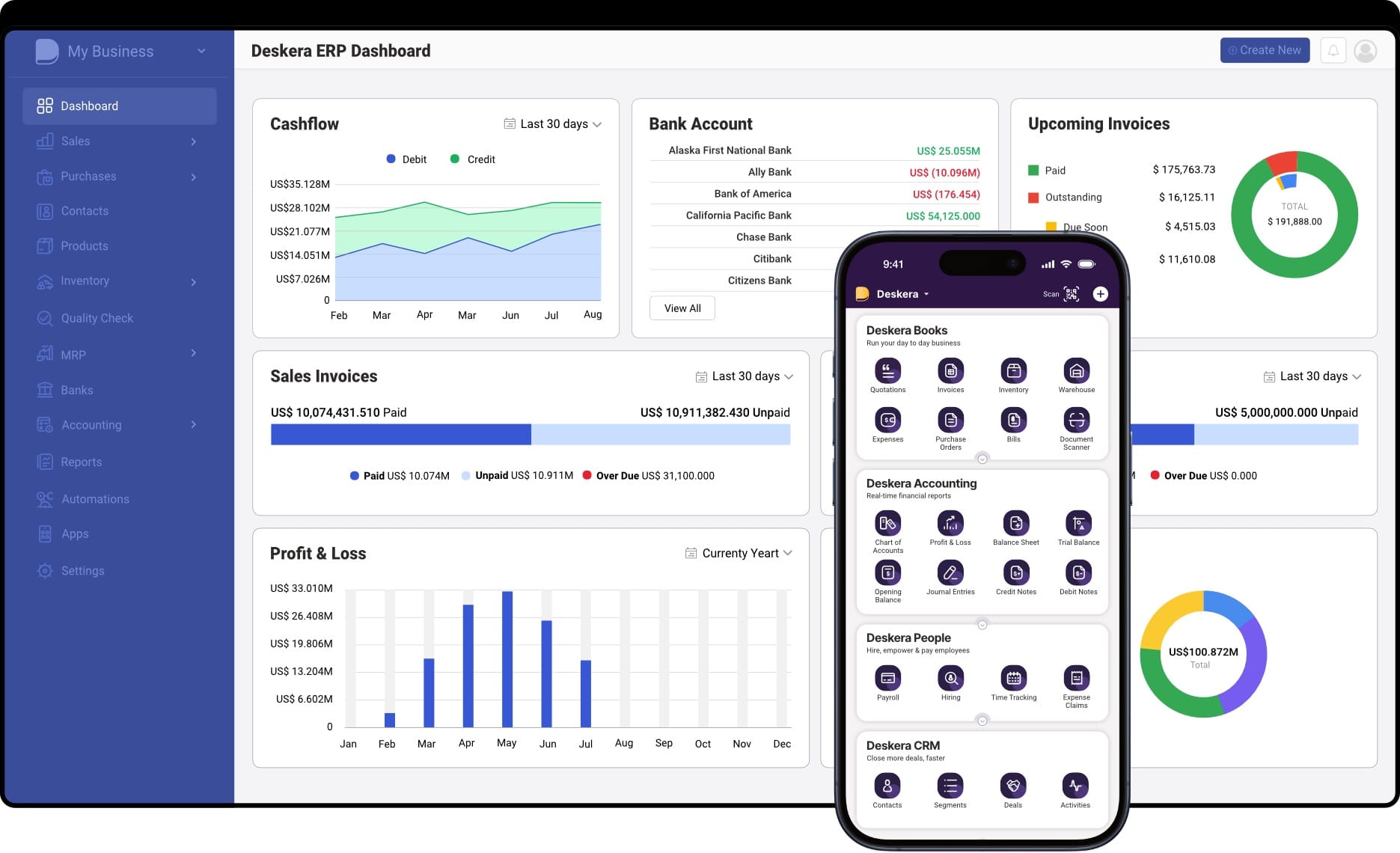
Deskera ERP provides an integrated platform that helps businesses streamline resource forecasting by combining project management, workforce planning, financial oversight, and operational visibility into one centralized system. Instead of relying on fragmented spreadsheets or disconnected tools, organizations can use Deskera to make more accurate, data-driven forecasting decisions.
1. Centralizes Resource and Project Data
Deskera ERP consolidates information from HR, finance, inventory, procurement, and project operations into a single platform. This unified data environment gives project managers real-time visibility into resource availability, workloads, and future demands, significantly improving forecasting accuracy.
2. Enhances Workforce Planning and Capacity Management
Deskera’s HR and project management tools allow organizations to monitor employee workloads, attendance, skill sets, and utilization levels. This helps managers forecast staffing needs more accurately, balance workloads, and prevent employee burnout or underutilization.
3. Supports Budgeting and Financial Forecasting
With built-in financial management capabilities, Deskera ERP helps businesses forecast project costs, labor expenses, procurement budgets, and operational spending. Real-time budget tracking and forecasting tools reduce financial uncertainty and help keep projects within budget.
4. Improves Demand and Material Forecasting
Deskera’s material resource planning and demand forecasting features help businesses anticipate future inventory, production, and operational needs. This is especially valuable for manufacturing and supply chain-heavy projects where material shortages or delays can impact project timelines.
5. Automates Resource Allocation and Workflow Management
Deskera automates task assignments, approvals, work orders, and scheduling processes, reducing manual forecasting errors and improving resource deployment. Automation improves efficiency and ensures resources are aligned with project priorities.
6. Provides Real-Time Reporting and Analytics
Advanced dashboards and business intelligence tools allow managers to monitor project performance, resource utilization, and forecasting outcomes continuously. This supports faster decision-making and enables real-time forecast adjustments as project conditions evolve.
7. Strengthens Cross-Department Collaboration
Because Deskera integrates multiple business functions, departments such as sales, finance, operations, and HR can collaborate more effectively. This improves forecasting reliability by ensuring all relevant business inputs are included in planning.
8. Scales With Organizational Growth
Deskera ERP’s flexible cloud-based architecture supports businesses as they grow, making it easier to expand forecasting capabilities across multiple teams, departments, or locations without sacrificing operational control.
9. Reduces Operational Risks
By offering proactive forecasting tools, capacity planning, and integrated reporting, Deskera helps businesses identify potential resource shortages, scheduling conflicts, and budget risks before they disrupt project execution.
10. Supports Long-Term Strategic Planning
Deskera’s forecasting, analytics, and automation tools help organizations align resource planning with larger business objectives, improving scalability, profitability, and project success over time.
Deskera ERP transforms resource forecasting from a reactive planning process into a proactive, strategic business function. By centralizing operations, improving data accuracy, and automating resource management, Deskera helps organizations optimize project delivery, reduce inefficiencies, and build stronger long-term operational resilience.
Key Takeaways
- Resource forecasting is the process of predicting future workforce, budget, equipment, and material needs to ensure projects are completed efficiently, on time, and within budget.
- Unlike resource planning, which focuses on current allocation, resource forecasting emphasizes future resource demand and strategic preparation.
- Effective resource forecasting covers multiple resource categories, including human resources, finances, materials, equipment, technology, and time.
- Key components of resource forecasting include demand analysis, capacity planning, workforce assessment, project pipeline visibility, budgeting, and continuous monitoring.
- Organizations can use various forecasting methods such as historical analysis, predictive analytics, Delphi technique, scenario planning, and capacity-based forecasting depending on project complexity.
- A structured forecasting process involves defining project pipelines, assessing resource needs, analyzing current capacity, identifying gaps, validating assumptions, and continuously refining forecasts.
- Common forecasting challenges include inaccurate data, changing project scopes, skill shortages, budget limitations, and limited cross-department visibility.
- Accurate forecasting is supported by best practices such as centralized data management, stakeholder collaboration, scenario planning, historical trend analysis, and technology integration.
- Multiple internal and external factors influence resource forecasting, including market conditions, project complexity, workforce capabilities, client requirements, technological changes, and financial constraints.
- Successful implementation of resource forecasting requires process audits, clear objectives, forecasting metrics, technology adoption, employee training, phased deployment, and ongoing optimization.
- Deskera ERP enhances resource forecasting by centralizing data, improving workforce planning, automating workflows, supporting budget forecasting, and providing real-time analytics for smarter project management.
- Strong resource forecasting improves project staffing, reduces burnout, controls budgets, enhances productivity, mitigates risks, and aligns resource management with long-term business growth.
Related Articles
 Niti Samani
 Niti Samani
 Deskera Content Team
 Niti Samani
 Niti Samani
 Damini