


Delivering a memorable customer experience is no longer optional—it is a competitive necessity. As customers move seamlessly across websites, apps, social channels, and support touchpoints, they expect every interaction to be personalized, consistent, and context-aware. This expectation has pushed Customer Data Integration (CDI) to the top of the strategic agenda for modern businesses. Yet the reality is far more complex: organizations often sit on vast amounts of customer information, but very little of it is connected in a meaningful way.
Research underscores this gap clearly. While 74% of service agents say integrated customer data significantly enhances personalization, a staggering 54% of organizations still struggle with fragmented data and persistent silos. This disconnect directly impacts customer satisfaction and loyalty. In fact, customers are 92% less likely to churn when businesses have robust integrations in place, proving that unified data is one of the strongest predictors of long-term retention.
The cost of disjointed data is not just operational—it affects the entire customer journey. Without a single source of truth, companies are unable to understand behavior patterns, anticipate needs, or deliver timely support. This leads to inconsistent experiences, longer resolution times, and a growing mismatch between what customers expect and what brands deliver. Seamless customer data integration bridges this gap by creating a holistic, real-time view of every customer interaction, ultimately transforming how businesses engage, sell, and support.
This is where platforms like Deskera ERP bring immense value. Deskera offers an integrated ecosystem that connects sales, inventory, finance, CRM, and customer records in one unified environment. With real-time synchronization and AI-driven insights, Deskera ensures that teams across departments access the same accurate, updated customer information. This empowers businesses to deliver faster service, more personalized interactions, and a consistent customer experience at every touchpoint.
What Is Customer Data Integration?
Customer Data Integration (CDI) is the process of collecting, extracting, and unifying customer information from multiple source systems into a single, centralized location—most commonly a data warehouse or CRM platform.
It ensures that customer data scattered across sales tools, marketing systems, support platforms, e-commerce apps, and financial software is combined, organized, and made accessible in one place. The ultimate goal is to provide teams with a clean, consistent, and up-to-date 360-degree view of every customer.
In practice, CDI can be implemented using three primary approaches:
1. Consolidation
This is the most robust and widely used method. Customer data is pulled from various systems, cleansed to remove errors or duplicates, standardized for consistency, and then loaded into a data warehouse. From here, teams can reliably access a unified customer profile that is accurate and ready for analysis. This article primarily focuses on the consolidation approach.
2. Propagation
In this method, customer data is directly copied or transferred between applications. Although simple to execute, propagation can lead to inconsistencies if data updates do not sync evenly across systems.
3. Federation
Federation extracts customer data from multiple sources and presents it in a single interface. While it gives the illusion of consolidated data to the end user, the actual merging happens only when the data is requested. This offers flexibility but may not provide the real-time accuracy needed for advanced personalization.
To illustrate how CDI works—especially under the consolidation model—consider a scenario where a business uses separate tools for sales outreach, customer support, billing, and marketing automation. A CDI tool pulls customer information from each of these platforms, cleans and standardizes it, and stores it in a centralized repository. That repository then becomes the organization’s single source of truth, enabling consistent insights across teams and powering more personalized, proactive, and efficient customer experiences.
This unified data layer can be built in multiple ways: custom-coded integrations, individual connectors for each application, or a more scalable Integration Platform as a Service (iPaaS). Regardless of the method, the outcome is the same—integrated customer data that enables smarter decisions and richer customer interactions.
Key Components of Seamless Customer Data Integration
Achieving seamless customer data integration requires more than just connecting systems—it demands a well-structured data foundation, consistent processes, and reliable synchronization across every customer-facing platform.
These components ensure that data flows smoothly, remains accurate, and becomes actionable for teams across sales, marketing, support, and operations.
Below are the core building blocks that make effective CDI possible.
Real-Time Data Synchronization Across Channels
Seamless CDI depends on the continuous movement of data between all customer touchpoints. Real-time sync ensures that customer actions—such as purchases, website activity, support interactions, or profile updates—are immediately reflected across systems. This prevents outdated information, reduces duplication, and helps teams respond quickly with the most current context.
Centralized Customer Data Repository
A consolidated data warehouse, CRM, or ERP acts as the single source of truth for all customer information. By storing cleansed, standardized, and deduplicated data in one central repository, organizations enable complete visibility into each customer’s history, interactions, and behavior patterns. This unified view is essential for personalized engagement and consistent omnichannel experiences.
Data Quality Management and Standardization
Even the most advanced integrations fail without reliable data quality. Data quality management includes cleaning inaccurate records, removing duplicates, enforcing consistent formatting, and validating incoming data. Standardization ensures that similar fields—from names to transaction values—follow the same structure across systems, making the data easier to analyze and activate.
Identity Resolution and Duplicate Management
Identity resolution matches customer records that appear in different systems but belong to the same person. This component is crucial for eliminating duplicate profiles and creating unified customer identities. By merging fragmented records, businesses gain precise insights, avoid confusion during support interactions, and prevent inconsistent communications.
Secure APIs and System Connectivity
APIs are the backbone of modern data integration. Secure, well-documented APIs enable seamless connections between disparate applications—including CRMs, ERPs, support tools, e-commerce platforms, and marketing systems. Strong API connectivity ensures reliable data flows while maintaining compliance with security and privacy standards. It also makes the integration scalable as new tools are added to the tech stack.
Governance, Access Control, and Compliance Frameworks
Effective CDI requires clearly defined governance rules that control who can access, modify, or share customer data. Strong governance ensures that integrations adhere to compliance standards such as GDPR, CCPA, or industry-specific regulations. With proper access control and monitoring in place, businesses maintain trust, security, and accountability across all integrated systems.
Types of Customer Data That Directly Impact Customer Experience
Customer experience is shaped by everything a customer does, says, and feels across their journey. To deliver personalized, relevant, and timely interactions, businesses must understand and integrate different types of customer data. Each category offers unique insights that help companies tailor engagement, resolve issues faster, and build long-term loyalty.
Below are the essential types of customer data that directly influence the quality of customer experience.
Identity Data
Identity data includes the core information used to recognize a customer as an individual. This typically includes their name, contact details, company, account IDs, and demographic information.
Collected through CRMs, marketing systems, or e-commerce platforms like Shopify, this data must be accurately synced across systems to prevent duplicate profiles, delivery issues, and miscommunication. Clean identity data ensures that every touchpoint begins with correct and consistent information.
Engagement Data
Engagement data captures how customers interact with your brand across channels—website browsing, app usage, ad clicks, email activity, and transactional behavior.
This data helps personalize follow-ups, recover abandoned carts, improve content relevance, and refine customer journeys. In B2B environments, engagement data also highlights account interest levels, content consumption patterns, and sales touchpoint responses.
Attitudinal Data
Attitudinal data reveals customer sentiment, satisfaction, and perception. It comes from surveys, NPS responses, product reviews, ratings, and social listening. Brands use this data to measure loyalty, identify pain points, and refine product or service quality.
This category often includes intent data, which signals buying readiness based on behavior across third-party platforms—critical for enterprise sales and account-based marketing.
Behavioral Data (Web, App, Email, Clickstream)
Behavioral data tracks the actions customers take across digital platforms, including browsing patterns, search behavior, time spent on pages, app navigation, and email interactions.
Clickstream data reveals micro-behaviors that help businesses understand user intent and optimize the experience. By analyzing behavioral insights, companies can improve UI/UX, deliver dynamic content, and create real-time personalized experiences.
Transactional Data (Orders, Payments, Returns)
Transactional data represents what customers buy, how often they purchase, how much they spend, and how they pay. It includes order history, invoices, refunds, returns, subscriptions, and loyalty activity. Clear transactional data enables personalized offers, accurate demand forecasting, improved post-purchase support, and segmentation based on value (e.g., high-LTV customers).
Interaction Data (Support Tickets, Calls, Chats)
Interaction data reflects how customers communicate with your business through support channels such as emails, live chat, phone calls, and helpdesk tickets. It reveals common issues, service expectations, and friction points. Integrating this data helps support teams provide faster resolutions, predict recurring problems, and reduce customer frustration through proactive outreach.
Demographic and Preference Data
This includes a customer’s age, gender, location, interests, buying preferences, and opt-in choices such as preferred communication channels. Demographic and preference data helps tailor marketing campaigns, create customer segments, and personalize product recommendations. When integrated well, it ensures that customers receive the right message through the right channel at the right time.
Predictive and AI-Generated Customer Insights
Predictive data uses machine learning to forecast customer behavior—churn likelihood, product affinity, lifetime value (CLV), upsell potential, and ideal communication timing. AI-generated insights help brands shift from reactive service to proactive engagement, anticipating needs before customers even express them. This data is crucial for hyper-personalization and delivering next-best-action experiences.
How Seamless Data Integration Improves Customer Experience
Customers engage with brands across countless touchpoints—websites, mobile apps, support channels, social platforms, retail stores, and more. Understanding customer behavior across all of these interactions is no longer optional; it is essential for delivering personalized, timely, and meaningful experiences.
Seamless Customer Data Integration (CDI) serves as the connective tissue between these fragmented data sources, merging them into a unified customer profile within a CRM, ERP, or Customer Data Platform (CDP). The result is a complete, accurate, and real-time view of every customer, empowering teams to deliver stronger, smarter, and more synchronized experiences.
Unified Customer View (360-Degree Profile)
CDI consolidates data from sales, service, marketing, e-commerce, billing, and support systems into one cohesive customer record. This unified view eliminates blind spots and ensures teams understand the customer’s entire journey—not just isolated moments.
With a complete narrative at hand, agents can offer faster resolutions, marketers can tailor communication more meaningfully, and decision-makers gain a clear picture of relationship health.
Personalization at Scale
Integrated data unlocks the ability to personalize interactions with precision. With access to a customer’s preferences, behaviors, transaction history, and past interactions, businesses can deliver highly tailored recommendations, targeted campaigns, and contextual messages.
This level of personalization fosters trust, enhances satisfaction, and reinforces long-term loyalty. Customers feel valued—not as accounts but as individuals—which directly boosts customer retention.
Real-Time Insights and Proactive Engagement
In fast-paced digital environments, real-time data access is indispensable. CDI ensures that updates from any connected application—support tickets, purchases, form submissions, or website activity—instantly reflect across the organization.
This provides teams with real-time insights needed to respond immediately, resolve issues proactively, and capitalize on emerging opportunities. Whether it’s alerting support to a potential churn signal or notifying sales of strong buying intent, real-time visibility transforms the quality and timing of customer interactions.
Improved Customer Service and Faster Issue Resolution
With integrated interaction data—including chats, calls, emails, and tickets—support teams gain complete context before engaging with customers. Instead of asking customers to repeat information, agents can see past issues, purchase history, and notes from other departments in one place.
This enables faster resolution, more empathetic conversations, and smoother handoffs between teams. A consistent experience across all touchpoints greatly reduces customer frustration and improves service satisfaction.
Elimination of Data Silos
Data silos often lead to misalignment between departments, duplicate work, and conflicting customer insights. CDI breaks down these silos by centralizing all customer data in one place. Employees across sales, marketing, operations, finance, and support access the same accurate information—reducing rework, improving coordination, and ensuring everyone operates from the same truth.
Operational Efficiency and Workflow Automation
When data flows seamlessly between systems, manual tasks like data entry, report building, and status updates can be automated. This reduces human error, improves data quality, and frees employees to focus on higher-value initiatives such as customer engagement, optimization, and analysis. Automation also ensures smoother processes across the customer lifecycle—from onboarding to renewal.
Better Data Security and Governance
A centralized customer data source strengthens data governance practices. Access controls, privacy rules, audit trails, and compliance frameworks (e.g., GDPR, CCPA) are easier to enforce when data is stored in a single system instead of dispersed across multiple applications. Revoking or adjusting access also becomes simpler, reducing security risks and ensuring customer data is handled responsibly.
Easier Data Management and Cleaner Data Quality
With data integrated into a single repository, employees no longer need to update information across multiple apps or rely on others to share updates. This prevents inconsistent data, missing values, and duplication. Cleaner data leads to more accurate insights, smoother communication, and improved decision-making across the entire organization.
Higher Customer Retention
Retention depends on understanding customer health across numerous touchpoints. CDI brings all relevant signals—usage patterns, support activity, satisfaction scores, engagement trends—into one view. This allows teams to proactively identify at-risk customers, address issues early, and design personalized retention strategies. The result? Happier, more engaged customers who stay longer and spend more.
Upsell and Cross-Sell Opportunities
Integrated data provides sales and account teams with insight into customer behavior, product usage, review activities, and previous purchase patterns. With this visibility, they can identify upsell and cross-sell opportunities at exactly the right time. CDI also helps pinpoint which products fit each customer’s needs, increasing conversion rates and supporting long-term revenue growth.
Higher-Performing Marketing Campaigns
Marketers benefit significantly from integrated customer data. With deeper segmentation options—based on usage, sentiment, support activity, demographics, and behavior—they can create targeted, high-impact campaigns. Personalized messaging based on cohesive data consistently drives better open rates, conversions, and engagement.
Better Customer References and Social Proof
A unified data source makes it easier to identify ideal customer references. Teams can analyze satisfaction scores, usage depth, qualitative feedback, and purchase history to determine which customers are most likely to provide compelling case studies or testimonials. This supports sales enablement and enriches marketing narratives.
Informed, Data-Driven Business Decisions
With clean, consolidated data accessible across departments, leaders can make faster, more confident decisions. Product teams can prioritize features based on real usage data, support teams can identify recurring issues, and marketing can refine strategies based on engagement insights. CDI accelerates decision-making and ensures it is grounded in accurate, holistic data—not assumptions.
Time Savings and Productivity Gains
When employees no longer jump between systems or ask colleagues for missing information, they save hours every week. Access to real-time data in a single interface enhances productivity, minimizes errors, and ensures teams spend more time on strategic tasks and value-driven customer engagement.
Common Challenges in Customer Data Integration
Achieving seamless Customer Data Integration (CDI) is essential for creating unified customer experiences—but it is far from simple. Most organizations face a combination of technical, operational, and strategic roadblocks that prevent data from flowing freely across systems. These issues not only affect internal efficiency but directly impact personalization, customer satisfaction, and retention.
Below are the most common challenges businesses encounter when integrating customer data, along with deeper insights based on broader industry best practices.
1. Complexity and Risk of In-House Integrations
Custom point-to-point integrations seem like a quick fix, but they are often fragile, resource-intensive, and difficult to scale. They require developers to write and maintain custom code—pulling them away from high-priority product or engineering tasks.
Because these integrations are rarely documented well, the departure of key developers can leave the organization unable to fix or update these systems, resulting in data delays or broken workflows that negatively affect the customer experience.
2. Increasing Data Volume and App Proliferation
As organizations adopt more SaaS tools, CRM apps, analytics platforms, and customer-facing technologies, the volume of customer data grows exponentially. Integrations that once worked quickly become insufficient.
Point-to-point connections don’t scale, and older ETL tools were designed for on-premise data flows—not modern cloud ecosystems. As a result, teams struggle to keep all systems connected, updated, and synchronized in real time.
3. Integrations Alone Don’t Transform Workflows
Data movement is only part of the story. Without automation to trigger actions based on customer events—like low usage alerts, escalations, or lead score updates—teams are still forced into manual processes.
This slows down response times and prevents teams from acting proactively. End-to-end workflow automation is needed to convert integrated data into meaningful outcomes that improve customer and employee experiences.
4. Inconsistent and Poor-Quality Data
Because much of customer data is self-reported or entered manually, inaccuracies are common—typos, inconsistent formatting, duplicate records, and miscategorized fields.
Without validation rules or automated standardization, these errors propagate across integrated systems. Poor data quality leads to failed transactions, broken personalization flows, inaccurate reporting, and frustrated customers.
5. Multiple Data Sources with Different Structures
Customer data comes from websites, CRMs, stores, apps, support tools, ERPs, marketing platforms, and billing systems. Each system formats data differently, follows its own rules, and updates at different times.
Integrating these sources requires careful architectural planning to avoid overwriting critical fields, duplicating records, or creating inconsistent versions of customer truth across platforms.
6. Scaling Data Exchange Securely and Efficiently
Moving large volumes of customer data between applications—especially in real time—is technically demanding. Businesses must ensure that data transfers happen in the correct sequence, maintain referential integrity, and optimize cloud processing costs. Migrating only the necessary data and designing the right synchronization frequency is crucial for performance, cost management, and compliance.
7. Data Privacy, Compliance, and Security Risks
With regulations like GDPR, CCPA, and evolving global privacy laws, organizations must protect customer data at every stage. Poorly integrated systems increase privacy risks by duplicating data, exposing unnecessary fields, or creating unauthorized access points. Secure encryption, role-based access control, monitoring, and regular audits are essential to maintaining customer trust and meeting legal requirements.
8. Real-Time Data Processing Limitations
Customers expect real-time updates—order confirmations, support responses, personalized recommendations, and account changes. However, real-time integration demands high performance, advanced event processing, and robust stream-based pipelines. Many existing systems are built for batch processing, making it difficult to deliver the immediacy customers demand today.
9. Lack of Automation in Data Management
Manual data cleansing, syncing, deduplication, and validation not only slow down operations but also introduce errors. Without automation, teams spend significant time fixing data rather than using it. Automated workflows and AI-driven data hygiene tools help maintain accuracy at scale and free teams for strategic tasks.
10. Difficulties in Creating a Centralized Customer View
A unified customer profile requires consolidating data across sales, service, marketing, finance, and product systems. But disconnected tools and inconsistent data formats keep teams operating in silos.
Without a centralized CRM or CDP that integrates well across applications, teams lack visibility into the complete customer journey—making personalization, forecasting, and customer success interventions less effective.
11. Hidden Costs and Resource Constraints
Organizations often underestimate the operational and financial costs of CDI. Licensing new tools, maintaining integrations, hiring specialists, managing API limits, and paying for cloud compute can quickly escalate. Smaller businesses especially may struggle to sustain the ongoing investment required for reliable data integration.
12. Limited Internal Expertise
Building scalable, secure, and compliant data pipelines requires specialized talent—data engineers, integration architects, and API experts. Many teams lack this expertise, making it difficult to implement the right patterns or troubleshoot complex issues, forcing reliance on external partners or incomplete solutions.
Best Practices for Effective Customer Data Integration
Effective Customer Data Integration (CDI) requires more than just connecting systems—it demands the right strategy, governance, tools, and long-term structure. When done correctly, CDI becomes the backbone of personalization, efficient operations, and superior customer experience.
Below are the most important best practices, combining your references with expanded insights to create a comprehensive, implementation-ready guide.
1. Choose Your Data Integration Tool Carefully
Businesses can integrate customer data using custom-built integrations, ETL pipelines, or modern iPaaS/automation platforms. Each has its own pros and cons related to cost, scalability, maintenance, and flexibility.
Choose a solution based on your team’s technical capabilities, data complexity, and long-term growth. As integrations expand, low-code automation and enterprise-grade platforms provide a more sustainable way to manage connections and workflows across apps.
2. Map the Customer Journey to Identify High-Value Data
Customer interactions evolve throughout the lifecycle—from onboarding and support chat engagement to product usage, multi-user expansion, competitive research, and retention triggers.
Mapping this journey helps identify where meaningful data is generated, which touchpoints matter most, and which gaps prevent a unified 360° view. While not a complete solution, customer journey mapping is essential for prioritizing the right data sources for integration.
3. Establish Strong Data Governance and Security Rules
Define who can access customer data, what they can do with it, and how it should be protected. Governance policies—including role-based access, data retention guidelines, consent management, and audit logs—help safeguard customer trust. Clear rules minimize unnecessary data exposure and ensure compliance with regulations like GDPR, CCPA, and industry-specific standards.
4. Integrate All Sources of Customer Data (Eliminate Silos)
For CDI to work, every customer touchpoint must be connected—CRMs, marketing automation, web analytics, storefronts, payment systems, support tools, ERPs, mobile apps, and more.
Even missing a single source leads to bifurcated customer profiles and inconsistent experiences. Large organizations with multiple CRMs must consolidate them into one unified system to ensure accuracy, consistency, and a single source of truth.
5. Define Unique Data Markers for Accurate Record Matching
To prevent duplicate or mismatched records, identify the unique data markers that reliably pinpoint individual customers—email IDs, phone numbers, customer IDs, or account numbers. Standardizing these markers improves deduplication, ensures accurate merging, and strengthens the overall integrity of your centralized database or CRM.
6. Appoint Data Stewards for Continuous Data Quality Management
Even the best integration setups accumulate errors over time. Data stewards—whether a dedicated team or shared role across departments—are responsible for ongoing data validation, cleansing, and accuracy checks. This proactive quality control ensures that inaccurate data doesn’t undermine customer interactions, analytics, or automation workflows.
7. Customize Dashboards for Actionable Insights
Collecting data isn’t enough—teams need actionable insights. Create tailored dashboards for marketing, sales, customer support, finance, product teams, and leadership. Each dashboard should highlight metrics relevant to that function, helping each role respond faster, personalize better, and make data-driven decisions without information overload.
8. Plan for Future Scalability and New Integrations
CDI is not a one-time initiative. New apps, evolving processes, and expanding data needs require flexible integration frameworks. Building your ecosystem on an iPaaS platform or cloud-native integration layer ensures that future systems—internal or third-party—can be connected quickly without rebuilding your architecture from scratch.
9. Implement Automation Across Customer Workflows
Automation transforms integrated data into meaningful action. Trigger workflows based on events like low product usage, lead score thresholds, ticket escalations, or payment failures. Automations reduce manual workload, improve responsiveness, and ensure that data actively contributes to customer experience rather than sitting idle in a database.
10. Validate, Cleanse, and Standardize Data at Entry Points
Ensure data quality from the moment it enters your ecosystem. Apply validation rules, formatting standards, cleansing processes, and error-checking mechanisms. Strong data hygiene prevents downstream issues in personalization, reporting, and customer interactions.
11. Prioritize Real-Time Data Synchronization Where It Matters Most
Real-time syncing is essential for support operations, inventory updates, payment confirmations, and dynamic personalization. Identify which workflows require real-time data and which can function with scheduled syncs to balance performance, cost, and customer expectations.
12. Maintain Clear Documentation and Integration Playbooks
Document integration workflows, API connections, data flows, field mappings, and business logic. This ensures continuity even when team members leave and reduces dependency on isolated knowledge holders. Documentation also helps new integrations align with existing architecture.
Business Impact — How Integrated Data Drives Measurable CX Improvements
Seamless customer data integration does more than streamline operations—it directly affects the bottom line by elevating customer experience (CX) in ways that are measurable, repeatable, and scalable.
When customer data flows freely across systems, teams no longer rely on guesswork. Instead, they act with clarity, speed, and precision. The result is stronger customer relationships, higher conversions, and lasting loyalty.
Below are the key business impacts that demonstrate how integrated data transforms CX outcomes.
1. Higher Customer Satisfaction and Faster Issue Resolution
Integrated data equips customer-facing teams with complete context—past purchases, support history, preferences, behavior, and open tickets—in a single view. This eliminates back-and-forth communication and drastically cuts issue resolution times. Customers feel understood instantly, leading to higher satisfaction scores (CSAT), more positive interactions, and more efficient support operations.
2. Improved Personalization That Boosts Conversions
Data integration powers hyper-personalization at every interaction point. When marketing, sales, and support tools share the same customer profile, businesses can personalize product recommendations, outreach cadences, offers, and content based on real behavior—not assumptions. This leads to measurable increases in email engagement, cart recovery rates, conversion rates, and average order value.
3. Reduced Customer Churn Through Proactive Engagement
A unified customer record uncovers early warning signs—declining usage, delayed payments, slower engagement, increasing support tickets, or negative sentiment. With these signals visible in real time, teams can intervene early through automated alerts, targeted outreach, and tailored retention campaigns. Integrated data enables proactive CX strategies that significantly reduce churn and increase long-term customer value.
4. Increased Customer Lifetime Value (CLV)
When customer interactions become seamless, personalized, and predictive, customers are more likely to stay longer and buy more. Integrated data enables cross-selling and upselling opportunities by analyzing purchase history, product usage, preferences, and intent signals. This ensures sales teams focus on the most relevant offers and highest-quality customers, directly increasing CLV.
5. Consistent Omnichannel Experiences
Customers expect consistent service whether they interact via website, chat, email, phone, mobile app, or social channels. Integrated data ensures these touchpoints share the same information—eliminating inconsistencies that frustrate customers. This consistency enhances trust and delivers a cohesive brand experience across the entire journey.
6. More Accurate Forecasting and Demand Planning
Integrated data gives leadership access to a complete, up-to-date view of customer trends and behaviors. This improves forecasting accuracy in areas such as inventory management, product demand, marketing ROI, and revenue planning. Better predictions lead to better resource allocation and fewer CX failures related to stockouts, delays, or miscommunication.
7. Enhanced Marketing Efficiency and Higher ROI
With unified data, marketers can segment customers with greater precision, eliminate wasted ad spend, and tailor campaigns based on sophisticated behavior, engagement, and intent. This reduces marketing costs while improving targeting efficiency, campaign performance, and conversion rates—translating directly into higher ROI.
8. Empowered Employees Who Deliver Better Customer Interactions
A unified data ecosystem reduces manual searching, duplicative work, and tool switching. Employees—whether in support, sales, or marketing—can focus on value-driven tasks instead of data hunting. This empowerment leads to faster service, more confident decision-making, and improved overall customer interactions.
9. Stronger Data Governance and Compliance
Integrated systems make it easier to enforce privacy rules, manage consent, and honor deletion or data portability requests. Consistent governance reduces compliance risks and enhances customer trust—both critical to delivering excellent CX in regulated industries.
10. More Predictive, AI-Driven Customer Insights
With clean, centralized, and connected data, AI models can generate predictive insights such as churn risk, next-best actions, product affinity scores, and service automations. These insights allow businesses to anticipate customer needs and create forward-looking CX strategies that are impossible in siloed environments.
11. Scalable CX Operations Without Proportional Cost Increases
As customer bases grow, integrated data and automation ensure that support quality, personalization, and response times don’t decline. CDI allows businesses to scale customer experience initiatives without needing equivalent increases in workforce or operational budgets.
12. Tangible Improvements in KPIs
Companies that integrate customer data typically see measurable improvements across key performance indicators such as:
- Faster first-response times and resolution times
- Lower churn and higher retention rates
- Higher NPS and CSAT scores
- Higher conversion and engagement rates
- Better pipeline velocity and deal closure rates
- Improved marketing ROI
These quantifiable improvements demonstrate CDI’s direct impact on CX and overall business performance.
How Deskera ERP Helps Businesses Achieve Seamless Customer Data Integration
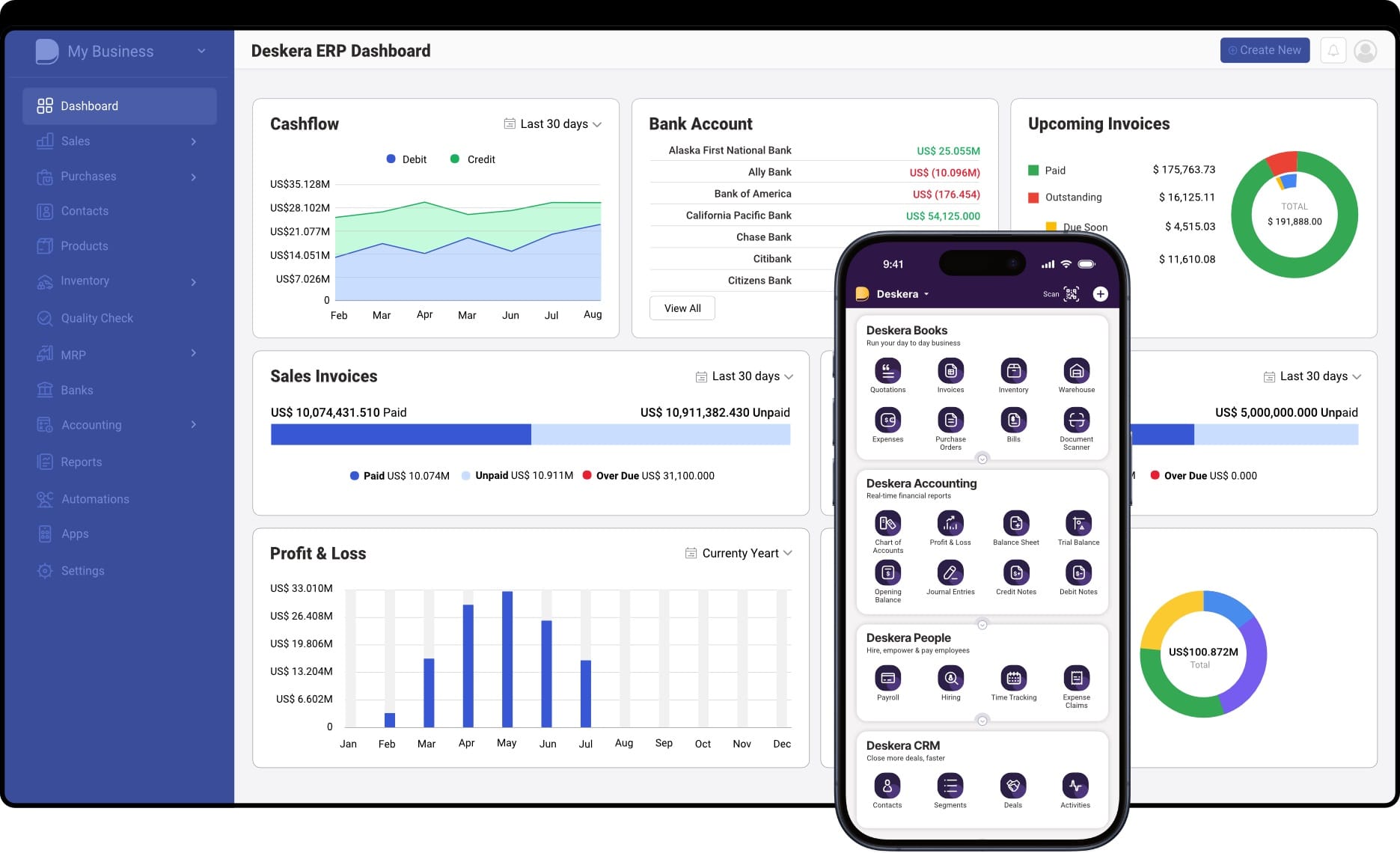
Deskera ERP enables businesses to unify customer data, eliminate silos, and deliver more personalized, accurate, and consistent customer experiences. By integrating information across sales, finance, support, inventory, and ecommerce systems, Deskera ensures your teams always operate with a complete and real-time view of each customer.
Here’s how Deskera simplifies and strengthens Customer Data Integration (CDI):
1. Unified, Centralized Customer Data Platform
Deskera consolidates customer information from all business functions into a single source of truth, ensuring every team accesses accurate, updated data for smoother interactions and better decision-making.
2. Seamless Integration Across Business Applications
With built-in connectors, APIs, and integration capabilities, Deskera syncs data across CRM tools, ecommerce platforms, support systems, and marketing applications—eliminating manual data transfers.
3. Automated Workflows for Real-Time Data Syncing
Deskera automates key workflows—orders, billing, fulfillment, returns—ensuring every update is instantly reflected across connected systems, reducing errors and improving response times.
4. Real-Time Visibility Into Customer Activity and Order Status
Teams get instant access to order updates, inventory levels, payment histories, and support interactions, enabling faster resolutions and proactive customer engagement.
5. Enhanced Collaboration Across Departments
With all customer data in one ecosystem, sales, finance, support, and operations work in sync—leading to quicker coordination and a more seamless customer experience.
6. Better Personalization Through Integrated Insights
Deskera unifies behavioral, transactional, and operational data to help businesses tailor recommendations, promotions, and communication with greater accuracy.
7. Strong Data Security and Governance
Role-based access controls, audit trails, and compliance-ready security measures ensure customer data remains safe and properly governed.
8. Scalability for Growing Data and Integration Needs
Deskera’s flexible architecture grows with your business, supporting new apps, increasing data volumes, and evolving customer channels without disruption.
9. AI-Powered Assistance with Deskera’s Intelligent Assistant, David
Deskera’s AI assistant helps teams analyze trends, detect anomalies, predict customer needs, and access insights faster—fueling smarter decisions.
10. Holistic Reporting and Advanced Analytics
With customizable dashboards and ready-made templates, Deskera helps you track customer behavior, forecast demand, and measure CX improvements effectively.
11. End-to-End Integration From Sales to Fulfillment
Deskera ensures seamless data flow—from order creation to inventory checks, warehouse operations, delivery, and invoicing—enabling faster, error-free fulfillment and improved customer satisfaction.
Key Takeaways
- Integrated customer data is the foundation of modern customer experience, and businesses that unify their data significantly reduce churn, improve personalization, and overcome operational inefficiencies caused by data silos.
- A strong CDI framework relies on unified data pipelines, real-time synchronization, master data management, data quality controls, and governance policies that maintain accuracy and consistency across all systems.
- Understanding and integrating diverse customer data—identity, engagement, behavioral, attitudinal, transactional, interaction, demographic, and predictive insights—enables businesses to deliver more relevant, personalized, and timely customer experiences.
- Successful CDI requires selecting the right integration tools, mapping the customer journey, enforcing strong governance, eliminating data silos, defining unique identifiers, assigning data stewards, customizing insights dashboards, and planning for future integration needs.
- Integrated customer data drives measurable CX gains by enabling hyper-personalization, faster issue resolution, consistent omnichannel engagement, predictive service, and stronger long-term customer relationships.
- Deskera ERP empowers businesses with centralized customer records, automated data syncing, real-time visibility, cross-department collaboration, advanced analytics, and scalable integrations—creating a unified ecosystem for superior customer experience.
Related Articles
 Deskera Content Team
 Deskera Content Team
 Niti Samani
 Niti Samani
 Deskera Content Team
 Deskera Content Team