


Why do so many businesses struggle to predict their revenue accurately, even with access to vast amounts of data? The answer lies in disconnected systems, outdated spreadsheets, and a lack of real-time visibility across operations. Revenue planning is no longer just about estimating sales—it requires aligning financial data, market demand, and operational capacity to make informed, forward-looking decisions.
At its core, revenue planning plays a critical role in ensuring business stability and growth. It helps organizations forecast income, allocate resources effectively, and prepare for uncertainties. However, traditional methods often fall short due to manual processes and fragmented data, leading to inaccurate forecasts and missed opportunities.
This is where ERP systems step in as a game changer. By integrating key business functions such as finance, sales, and inventory into a single platform, ERP systems provide a unified view of data. This enables businesses to generate accurate forecasts, monitor performance in real time, and make proactive decisions that drive revenue growth.
Solutions like Deskera ERP take this a step further by offering a cloud-based platform with real-time financial insights, automated reporting, and advanced forecasting capabilities. With features such as AI-powered assistance, seamless integration across departments, and user-friendly dashboards, Deskera empowers businesses to streamline revenue planning and respond quickly to changing market conditions.
What Is Revenue Planning?
Revenue planning is the process of forecasting and strategizing how a business will generate income over a specific period, typically a fiscal year or quarter. It involves combining historical performance, current market trends, sales pipeline data, and strategic business goals to create a clear roadmap for achieving revenue targets. In simple terms, it is a structured financial strategy that outlines expected income, identifies key growth drivers, and sets measurable objectives to guide decision-making.
This process goes beyond basic forecasting. Revenue planning requires businesses to break down income streams across products, services, customer segments, or geographic regions. It also considers external factors such as economic conditions, regulatory changes, and competitive dynamics that may impact revenue performance. By analyzing these variables, organizations can set realistic targets and prepare for potential risks and opportunities.
Another important aspect of revenue planning is aligning cross-functional teams. Finance, sales, marketing, and operations work together to ensure that revenue goals are achievable and supported by the right resources and strategies. This collaborative approach helps eliminate guesswork and creates a more coordinated plan for driving consistent business growth.
Ultimately, effective revenue planning enables companies to make smarter decisions about resource allocation, investments, and expansion strategies. It helps businesses anticipate cash flow, evaluate different growth scenarios, and prioritize initiatives that deliver the highest returns. In an increasingly competitive and data-driven environment, having a well-defined revenue plan is essential for maintaining financial stability and achieving long-term success.
Revenue Planning vs Revenue Forecasting vs Sales Planning
While these terms are often used interchangeably, they serve distinct purposes within a business’s financial and operational strategy. Understanding the differences between revenue planning, revenue forecasting, and sales planning is essential for aligning goals, improving accuracy, and driving sustainable growth.
The table below highlights how each function differs in scope, focus, and impact.
When Is the Right Time for Revenue Planning?
Revenue planning is not a one-time activity—it is a continuous process that should align with both long-term strategy and short-term business changes. While most organizations begin formal revenue planning during specific financial cycles, maintaining flexibility and regularly updating plans is key to staying competitive and responsive.
During the Annual Budgeting Cycle
The primary time for revenue planning is during the annual budgeting process, typically a few months before the new fiscal year. Businesses set financial goals, forecast revenue, allocate resources, and define key performance indicators (KPIs) to create a clear roadmap for the year ahead.
At Quarterly Reviews
Quarterly planning sessions allow businesses to evaluate actual performance against forecasts. These reviews help identify trends, address gaps, and refine strategies based on real-time data, ensuring that revenue plans remain accurate and aligned with current business conditions.
After Major Business Changes
Revenue planning should be revisited after significant events such as product launches, market expansion, mergers, or acquisitions. These changes can significantly impact revenue projections and require businesses to adjust strategies and reallocate resources accordingly.
In Response to Market Shifts
Unexpected changes in market conditions—such as economic fluctuations, evolving customer behavior, or regulatory updates—should trigger a reassessment of revenue plans. Businesses must remain agile and update their forecasts to minimize risks and capture emerging opportunities.
Before Strategic Initiatives
Before launching major initiatives like marketing campaigns, expansion plans, or restructuring efforts, businesses should conduct revenue planning. This helps estimate the financial impact of these initiatives and ensures that sufficient resources are allocated for successful execution.
By approaching revenue planning as an ongoing and adaptive process, businesses can stay aligned with their goals, respond quickly to changes, and maintain consistent financial performance.
Key Steps in the Revenue Planning Process
Revenue planning is a structured process that involves a series of interconnected steps to help businesses accurately forecast income and achieve financial goals. Each step builds on the previous one, creating a comprehensive and adaptable strategy.
Data Analysis and Historical Review
Businesses begin by examining past revenue data to uncover trends, seasonality, and performance drivers. This includes analyzing sales reports, customer behavior, and past campaigns. A strong historical foundation helps organizations set realistic expectations and build accurate forecasts that reflect actual business performance rather than assumptions.
Market and Competitive Analysis
Organizations assess external factors such as market demand, economic conditions, industry trends, and competitor strategies. This step helps identify growth opportunities and potential threats. By understanding the broader business environment, companies can align their revenue plans with current realities and position themselves more effectively within the market.
Sales and Revenue Forecasting
Using historical data, pipeline insights, and market analysis, businesses estimate future revenue. They typically create multiple scenarios—best case, worst case, and most likely outcomes—to prepare for uncertainty. This structured forecasting approach improves decision-making and ensures businesses remain flexible in changing market conditions.
Segmentation and Goal Setting
Revenue is divided into segments such as products, services, regions, or customer groups. Businesses then set clear, measurable targets for each segment. This detailed approach enables better tracking, accountability, and performance evaluation, helping organizations focus on high-performing areas while addressing underperforming segments effectively.
Revenue Sources Identification
Companies identify where their revenue will come from, including existing customers, upselling opportunities, new leads, and pipeline deals. This clarity ensures a balanced strategy between retention and acquisition. Understanding revenue sources helps businesses prioritize efforts and allocate resources to the most profitable and sustainable channels.
Strategic Planning and Resource Allocation
Once targets are defined, businesses decide how to achieve them by allocating budgets, personnel, and tools. This may include investing in marketing campaigns, expanding sales teams, or enhancing technology. Effective resource allocation ensures that efforts are aligned with revenue goals and deliver maximum return on investment.
Cross-Departmental Collaboration
Revenue planning requires coordination across finance, sales, marketing, and operations. Each department contributes insights and aligns its activities with overall revenue goals. This collaboration eliminates silos, improves communication, and ensures that all teams are working together toward shared business objectives.
Performance Tracking and Monitoring
Businesses continuously track performance using key performance indicators (KPIs) such as revenue growth, conversion rates, and customer retention. Regular monitoring helps identify gaps between planned and actual outcomes, enabling timely corrective actions and ensuring the business stays on track to meet its targets.
Risk Assessment and Contingency Planning
Organizations identify potential risks such as economic downturns, supply chain issues, or shifts in customer demand. They then develop contingency plans to mitigate these risks. This proactive approach ensures business continuity and helps companies respond quickly to unexpected challenges without significantly impacting revenue.
Continuous Adjustments and Optimization
Revenue planning is not static; it evolves with changing business conditions. Companies regularly refine their strategies based on real-time data and performance insights. Continuous optimization allows businesses to adapt quickly, improve efficiency, and maintain alignment with their financial goals and market dynamics.
Importance of Revenue Planning for Businesses
Revenue planning is essential for businesses aiming to achieve sustainable growth and financial stability. It provides a structured approach to forecasting income, aligning strategies, and ensuring that every department works toward common financial goals. Without a clear revenue plan, businesses often struggle with uncertainty, inefficient resource use, and missed growth opportunities.
Supports Strategic Decision-Making
Revenue planning provides a clear framework for making informed decisions about investments, hiring, and operational priorities. By understanding expected revenue outcomes, businesses can allocate time, money, and resources more effectively, ensuring that every decision contributes to long-term growth and profitability.
Ensures Financial Stability
A well-defined revenue plan helps businesses maintain a stable financial position by predicting cash inflows and identifying potential shortfalls. This visibility allows companies to manage expenses, avoid liquidity issues, and ensure smooth day-to-day operations even during uncertain market conditions.
Improves Goal Alignment Across Teams
Revenue planning creates shared financial targets that align departments such as sales, marketing, finance, and operations. This alignment ensures that all teams work toward the same objectives, improving coordination, accountability, and overall business performance.
Enhances Financial Visibility
With revenue planning, businesses gain a clear view of their financial health. It helps identify potential risks and opportunities that could impact revenue generation, enabling leaders to act proactively rather than reactively.
Enables Better Resource Allocation
Revenue planning ensures that resources are directed toward the most impactful initiatives. By prioritizing high-return activities, businesses can optimize the use of their workforce, budget, and technology, leading to improved efficiency and productivity.
Drives Profitability and Growth
By identifying new revenue streams and optimizing existing ones, revenue planning helps businesses maximize profitability. It also enables organizations to capitalize on growth opportunities while maintaining a balanced and sustainable expansion strategy.
Supports Risk Management and Mitigation
Revenue planning helps businesses anticipate risks such as demand fluctuations, economic downturns, or pipeline gaps. With contingency plans in place, organizations can respond quickly to challenges and minimize potential disruptions to revenue.
Improves Performance Tracking and Accountability
Breaking down revenue goals into measurable targets allows businesses to monitor progress effectively. This improves accountability across teams and ensures that performance is continuously evaluated and optimized.
Encourages Cross-Department Collaboration
Revenue planning involves input from multiple departments, fostering collaboration and a unified approach to achieving business goals. This reduces silos and encourages innovation as teams work together to identify and execute growth strategies.
Overall, revenue planning acts as a roadmap that guides businesses toward financial success. It not only improves decision-making and operational efficiency but also equips organizations to adapt quickly in a dynamic and competitive business environment.
Key Challenges in Revenue Planning for Modern Businesses
Despite its importance, revenue planning is not without challenges. Businesses often face multiple obstacles that can impact the accuracy of forecasts and the effectiveness of their strategies. Addressing these challenges is essential to building a reliable and adaptable revenue plan.
Inaccurate or Incomplete Data
Many businesses struggle with inconsistent data collection, gaps in customer insights, or incomplete sales pipeline information. Without accurate data, it becomes difficult to establish reliable baselines, identify trends, and create realistic revenue projections, leading to flawed planning and poor decision-making.
Over-Reliance on Historical Data
While past performance provides valuable insights, relying too heavily on it can limit adaptability. Market conditions, customer behavior, and industry dynamics evolve rapidly, and historical trends may not always reflect future opportunities or risks, especially in fast-changing business environments.
Lack of Cross-Department Collaboration
Revenue planning requires input from multiple teams, including sales, marketing, finance, and operations. However, when departments operate in silos, data inconsistencies and misaligned assumptions arise, resulting in inaccurate forecasts and ineffective strategies.
Difficulty in Predicting Customer Behavior
Anticipating customer preferences, demand shifts, and churn rates is challenging. Changes in customer expectations, competitive pressure, and market trends make it difficult for businesses to accurately forecast revenue and plan long-term strategies.
Uncertainty Around New Revenue Streams
Exploring new products, services, pricing models, or markets introduces uncertainty. Since these revenue streams are untested, businesses must rely on assumptions, which increases the risk of overestimation or underperformance.
Unrealistic Sales Projections
Sales teams may set overly optimistic targets, especially when forecasting new customer acquisitions or deal closures. Balancing ambition with realistic expectations is a constant challenge, as overestimations can lead to gaps between planned and actual revenue.
Resource Constraints
Limited budgets, workforce capacity, and operational capabilities can restrict revenue growth. Businesses must carefully balance their revenue goals with available resources to avoid overextending their capabilities or underinvesting in growth opportunities.
Unpredictable Market Conditions
External factors such as economic fluctuations, regulatory changes, and competitive actions can significantly impact revenue plans. These uncertainties make it difficult to maintain accuracy while requiring businesses to remain flexible and responsive.
By recognizing and addressing these challenges, businesses can create more resilient revenue plans that adapt to changing conditions and support long-term growth.
Key Ways ERP Systems Improve Revenue Planning
ERP systems play a crucial role in transforming revenue planning by integrating data, automating processes, and providing real-time insights. By connecting various business functions, ERP solutions enable organizations to move from reactive planning to proactive, data-driven decision-making.
Real-Time Data and Financial Visibility
ERP systems provide access to up-to-date financial and operational data across departments. This real-time visibility eliminates data silos and ensures that decision-makers are working with accurate, consistent information. As a result, businesses can make faster, more informed decisions and quickly respond to changes that impact revenue.
Accurate Sales Forecasting
With built-in analytics capabilities, ERP systems leverage historical data to improve forecasting accuracy. They help identify patterns, trends, and seasonal variations while using predictive analytics to estimate future revenue. This enables businesses to create more reliable forecasts and reduce the risk of overestimating or underestimating revenue.
Integrated Financial Planning
ERP systems align sales, finance, and operational data within a unified platform. This integration ensures that revenue plans are consistent with budgets, expenses, and overall financial goals. Businesses can track budgets in real time and make necessary adjustments to stay aligned with their revenue targets.
Demand Planning and Inventory Alignment
By connecting sales forecasts with inventory and supply chain data, ERP systems help businesses match supply with demand. This reduces the risk of stockouts and overstocking, ensuring optimal inventory levels while supporting consistent revenue generation and improved customer satisfaction.
Automated Reporting and Analytics
ERP systems automate the creation of reports and dashboards, providing real-time insights into key performance metrics. Customizable dashboards allow businesses to track revenue performance quickly and efficiently, reducing manual effort and enabling faster, data-driven decision-making.
Scenario Planning and Risk Management
ERP systems support scenario planning by allowing businesses to model different outcomes, such as best-case and worst-case scenarios. This helps organizations prepare for uncertainties and make proactive decisions, ensuring they remain resilient and adaptable in changing market conditions.
Benefits of Using ERP for Revenue Planning
Implementing an ERP system for revenue planning offers significant advantages by improving accuracy, efficiency, and strategic alignment. With integrated data and advanced analytics, businesses can plan more effectively and respond quickly to changing conditions.
Improved Forecast Accuracy
ERP systems use centralized, real-time data combined with historical analysis to generate more accurate revenue forecasts. By eliminating data silos and inconsistencies, businesses can rely on precise insights, reducing the risk of overestimating or underestimating future revenue.
Enhanced Decision-Making
With access to real-time dashboards and detailed analytics, ERP systems empower decision-makers with actionable insights. Businesses can evaluate performance, identify trends, and make informed strategic decisions quickly, ensuring that revenue plans remain aligned with organizational goals.
Increased Operational Efficiency
ERP systems automate repetitive tasks such as data collection, reporting, and reconciliation. This reduces manual errors and saves time, allowing teams to focus on strategic activities. Streamlined workflows also improve coordination across departments, enhancing overall productivity.
Better Cash Flow Management
ERP systems provide clear visibility into incoming and outgoing cash flows. This helps businesses anticipate financial needs, manage expenses, and maintain liquidity. Improved cash flow management ensures that organizations can meet obligations while investing in growth opportunities.
Scalable Planning Processes
As businesses grow, their revenue planning needs become more complex. ERP systems offer scalable solutions that adapt to increasing data volume, additional business units, and evolving strategies. This flexibility allows organizations to maintain effective planning processes without disruption.
These benefits make ERP systems a powerful tool for building accurate, agile, and growth-focused revenue planning strategies.
Best Practices for Using ERP in Revenue Planning
To fully leverage ERP systems for revenue planning, businesses must go beyond implementation and focus on how effectively the system is used. Following best practices ensures accurate insights, better alignment, and continuous improvement in planning outcomes.
Ensure Data Accuracy and Consistency
Accurate data is the foundation of effective revenue planning. Businesses should establish standardized data entry processes, regularly audit data quality, and eliminate duplicates or inconsistencies. Reliable data ensures that forecasts, reports, and insights generated by the ERP system are trustworthy and actionable.
Integrate All Key Business Functions
An ERP system delivers maximum value when all critical departments—finance, sales, marketing, and operations—are fully integrated. This unified approach eliminates silos, ensures seamless data flow, and provides a comprehensive view of the business, enabling more aligned and effective revenue planning.
Use Analytics and Forecasting Tools Effectively
ERP systems offer advanced analytics and forecasting capabilities that should be actively utilized. Businesses should leverage dashboards, predictive analytics, and scenario modeling tools to gain deeper insights, identify trends, and make data-driven decisions that improve revenue outcomes.
Train Teams for ERP Adoption
Successful ERP usage depends on user adoption. Organizations should invest in regular training to ensure employees understand how to use the system effectively. Well-trained teams can input accurate data, generate meaningful reports, and fully utilize ERP features to support revenue planning.
Continuously Monitor and Optimize Plans
Revenue planning is an ongoing process that requires regular review. Businesses should use ERP-generated insights to track performance against targets, identify gaps, and refine strategies. Continuous monitoring and optimization help organizations stay agile and aligned with changing market conditions.
By following these best practices, businesses can maximize the value of their ERP systems and create more accurate, efficient, and adaptable revenue planning processes.
Key Metrics to Track for Effective Revenue Planning
Tracking the right metrics is essential for building an accurate and actionable revenue plan. These metrics provide insights into financial performance, customer behavior, and growth opportunities, enabling businesses to make informed, data-driven decisions and continuously refine their strategies.
Monthly Recurring Revenue (MRR)
MRR measures the predictable revenue generated each month, making it especially important for subscription-based businesses. It provides visibility into financial stability, supports cash flow planning, and helps evaluate the effectiveness of sales and marketing efforts over time.
Annual Recurring Revenue (ARR)
ARR represents the total recurring revenue expected over a year. It helps businesses understand long-term revenue trends, assess growth potential, and plan strategically. This metric is particularly valuable for forecasting and investor reporting.
Customer Acquisition Cost (CAC)
CAC calculates the total cost of acquiring a new customer, including marketing and sales expenses. It helps businesses evaluate the efficiency of their acquisition strategies and identify opportunities to optimize spending and improve conversion rates.
Customer Lifetime Value (LTV)
LTV estimates the total revenue a business can generate from a single customer over their entire relationship. Comparing LTV with CAC helps determine profitability and sustainability, guiding decisions on customer acquisition and retention strategies.
Churn Rate
Churn rate measures the percentage of customers who stop doing business with a company over a given period. High churn can negatively impact revenue, making it crucial to monitor and improve customer retention efforts.
Average Revenue Per User (ARPU)
ARPU indicates how much revenue is generated per customer over a specific period. It helps businesses assess the effectiveness of pricing strategies, upselling, and cross-selling efforts to maximize customer value.
Sales Pipeline Speed
This metric tracks how quickly leads move through the sales funnel. A faster pipeline means quicker conversions and revenue generation, while delays may indicate inefficiencies or bottlenecks in the sales process.
Win Rate
Win rate measures the percentage of deals successfully closed compared to total opportunities. It reflects sales team effectiveness and product-market fit, helping businesses refine their sales strategies and improve performance.
Revenue Growth Rate
Revenue growth rate shows the percentage increase in revenue over time. It is a key indicator of business performance and helps organizations assess whether their revenue strategies are delivering expected results.
Gross Margin
Gross margin measures the profitability of products or services by calculating the percentage of revenue remaining after costs. It helps businesses evaluate cost efficiency and pricing strategies to maintain healthy profit levels.
Revenue Per Employee
This metric assesses workforce productivity by dividing total revenue by the number of employees. It helps identify operational efficiency and highlights opportunities for automation or process improvements.
Net Promoter Score (NPS)
NPS measures customer satisfaction and loyalty by evaluating how likely customers are to recommend the business. While indirect, a high NPS often leads to increased retention and organic growth through referrals.
Expansion Revenue Rate
Expansion revenue rate tracks additional revenue generated from existing customers through upselling, cross-selling, or increased usage. It highlights the effectiveness of customer growth strategies and the ability to maximize lifetime value.
By consistently monitoring these metrics, businesses can gain deeper insights into their revenue drivers, identify areas for improvement, and build more accurate and resilient revenue planning strategies.
How Deskera ERP Supports Revenue Planning
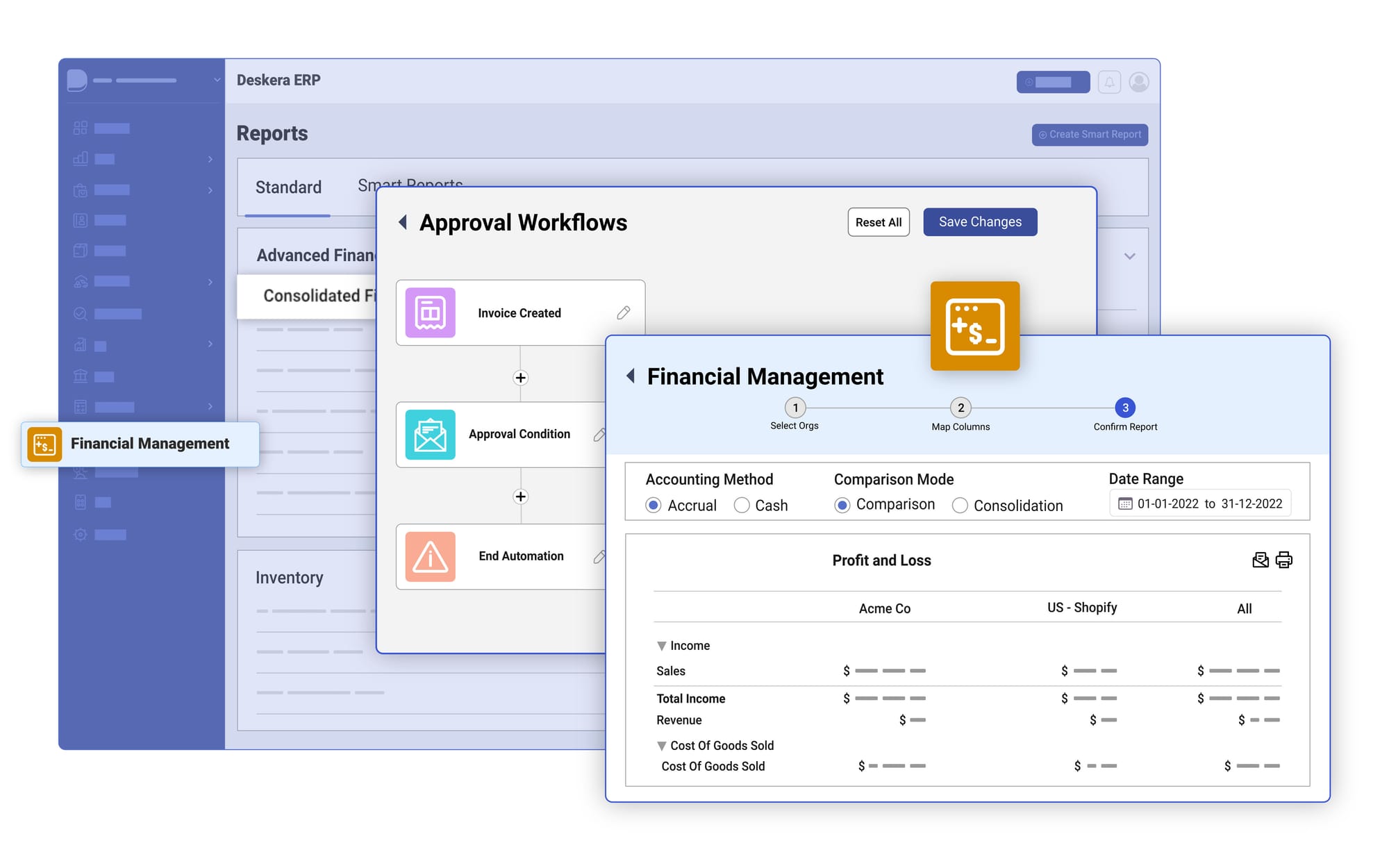
Deskera ERP provides a comprehensive platform that simplifies and strengthens revenue planning by combining real-time data, automation, and intelligent insights. By integrating key business functions, it enables organizations to plan more accurately, respond faster to changes, and drive consistent revenue growth.
Real-Time Financial Tracking
Deskera ERP offers real-time visibility into financial data, including revenue, expenses, and cash flow. This allows businesses to monitor performance continuously, identify deviations from targets, and make timely adjustments to stay aligned with their revenue goals.
AI-Powered Insights with David
Deskera’s AI assistant, David, delivers intelligent insights by analyzing financial and operational data. It helps identify trends, detect anomalies, and provide actionable recommendations, enabling businesses to make smarter, data-driven decisions and improve the accuracy of revenue planning.
Integrated Sales and Inventory Data
By connecting sales and inventory management within a single system, Deskera ERP ensures seamless data flow across departments. This integration helps businesses align demand with supply, track sales performance, and optimize inventory levels to support consistent revenue generation.
Advanced Reporting and Forecasting Tools
Deskera ERP includes customizable dashboards and robust reporting features that provide deep insights into business performance. Its forecasting tools use historical data and trends to generate accurate revenue projections, helping businesses plan with confidence and reduce uncertainty.
Scalable and Cloud-Based System
As a cloud-based solution, Deskera ERP offers flexibility and scalability to support growing business needs. Whether expanding operations, adding new revenue streams, or entering new markets, businesses can adapt their revenue planning processes without disruption.
With its integrated features and intelligent capabilities, Deskera ERP empowers businesses to streamline revenue planning, enhance accuracy, and build a strong foundation for long-term growth.
Key Takeaways
- Revenue planning provides a structured approach to forecasting income and aligning business strategies for sustainable growth.
- ERP systems centralize data and integrate business functions, enabling more accurate and efficient revenue planning.
- Key steps in the revenue planning process ensure a systematic approach to forecasting, goal setting, and performance tracking.
- Revenue planning, forecasting, and sales planning serve distinct roles but work together to drive business success.
- Revenue planning is essential for improving financial stability, decision-making, and cross-department alignment.
- Businesses face challenges such as data inaccuracies, market uncertainty, and lack of collaboration in revenue planning.
- ERP systems improve revenue planning through real-time visibility, accurate forecasting, and integrated financial management.
- Using ERP for revenue planning enhances forecast accuracy, efficiency, and scalability while improving cash flow control.
- Following best practices ensures businesses maximize the value of ERP systems in revenue planning.
- Deskera ERP supports revenue planning with real-time tracking, AI-powered insights, and advanced forecasting tools.
Related Articles
 Niti Samani
 Niti Samani
 Niti Samani
 Niti Samani
 Niti Samani
 Niti Samani