
Are hidden inefficiencies quietly eroding your production output and profitability? The answer, in many cases, lies in an overlooked metric—process yield. Process yield measures how efficiently raw materials are converted into finished goods, and even a small drop in yield can lead to significant losses in cost, time, and resources. Understanding and optimizing this metric is essential for businesses aiming to stay competitive in today’s fast-paced manufacturing landscape.
Process yield is more than just a calculation—it is a direct reflection of operational efficiency, product quality, and process consistency. A high process yield indicates minimal waste and maximum output, while a low yield signals bottlenecks, defects, or inefficiencies that need immediate attention. By accurately calculating process yield, businesses can uncover hidden gaps in their operations and take data-driven steps to improve performance.
However, improving process yield is not just about identifying problems—it requires a strategic approach that combines process optimization, quality control, and continuous monitoring. From minimizing machine downtime to enhancing workforce productivity and ensuring better material utilization, every aspect of the production cycle plays a role. Organizations that prioritize yield improvement often see better cost control, improved customer satisfaction, and stronger overall profitability.
This is where modern solutions like Deskera MRP come into play. Deskera MRP helps businesses streamline production planning, track real-time manufacturing data, and monitor material usage with precision. By offering features such as automated workflows, inventory optimization, and performance analytics, it enables manufacturers to identify inefficiencies and improve process yield effectively. With better visibility and control over operations, businesses can make smarter decisions and drive consistent production excellence.
What Is Process Yield?
Process yield is a key performance metric used in manufacturing to measure how efficiently a production process converts raw materials into finished, defect-free products. It is calculated as the ratio or percentage of good units produced compared to the total number of units manufactured. In simple terms, process yield tells you how much of your output meets quality standards without requiring rework or being discarded as waste.
At its core, process yield reflects both quality and efficiency. A high process yield indicates that most products pass through the production cycle successfully, with minimal defects or losses. On the other hand, a low yield signals underlying issues such as process inefficiencies, equipment problems, or inconsistencies in production. Because of this, process yield is widely used in lean manufacturing to identify gaps, reduce waste, and improve overall operational performance.
For example, if a company produces 1,000 units and 950 of them meet quality standards, the process yield is 95%. This simple calculation provides powerful insights into how well a process is performing and where improvements may be needed. By consistently tracking yield, businesses can make informed decisions to enhance production quality, optimize resource utilization, and control costs.
Process yield is especially critical in industries such as manufacturing, pharmaceuticals, electronics, and food processing, where even minor defects can lead to significant financial losses or compliance issues. It not only impacts profitability but also plays a major role in customer satisfaction, as higher yield typically translates to more reliable and consistent product quality.
Key Factors Affecting Process Yield
Process yield does not operate in isolation—it is influenced by multiple elements across the production lifecycle. Understanding these factors helps businesses identify inefficiencies, reduce defects, and implement targeted improvements for better outcomes and consistent production performance.
Quality of Raw Materials
The consistency and quality of raw materials directly influence the final output of any manufacturing process. When materials vary in composition or fail to meet specifications, defects become more likely. Ensuring reliable suppliers and conducting strict quality checks at the input stage helps maintain consistency, reduce rework, and significantly improve overall process yield.
Efficiency of Manufacturing Processes
Efficient and well-structured manufacturing processes are essential for achieving high process yield. Poorly designed workflows, bottlenecks, or unnecessary steps can introduce errors and inconsistencies. By streamlining operations and eliminating inefficiencies, businesses can ensure smoother production cycles, reduce defects, and enhance the overall quality and reliability of finished products.
Workforce Skill and Training
A skilled and well-trained workforce plays a crucial role in maintaining high process yield. Employees who understand production procedures and quality standards are more likely to execute tasks accurately. Regular training programs, clear instructions, and continuous skill development ensure that workers can identify issues early and contribute to consistent, high-quality production outcomes.
Technology and Automation
The integration of advanced technology and automation improves precision and consistency in manufacturing operations. Automated systems reduce the chances of human error and ensure repeatability across production cycles. With real-time monitoring and data insights, businesses can quickly identify inefficiencies, optimize processes, and maintain higher levels of process yield over time.
Equipment Condition and Maintenance
The performance and reliability of machinery significantly affect process yield. Equipment that is poorly maintained or frequently breaks down can lead to defects and production delays. Implementing preventive maintenance schedules and regularly monitoring equipment health ensures optimal performance, reduces unexpected downtime, and helps maintain consistent product quality throughout the manufacturing process.
Process Design and Standardization
A clearly defined and standardized process ensures that every production run follows consistent steps and quality guidelines. Without standardization, variations can occur, leading to defects and inefficiencies. Establishing standard operating procedures and continuously refining process design helps minimize variability, improve repeatability, and enhance overall process yield in the long term.
Quality Control and Inspection Systems
Robust quality control measures are essential for detecting defects at various stages of production. By implementing systematic inspections and testing procedures, businesses can identify and address issues before they escalate. Early detection reduces waste, prevents defective products from advancing further, and ensures that only high-quality outputs contribute to the final process yield.
Production Planning and Scheduling
Effective production planning and scheduling help maintain a balanced workflow and prevent unnecessary pressure on resources. Poor planning can result in rushed operations, increased errors, and inefficient use of materials. By aligning production schedules with capacity and demand, businesses can improve consistency, reduce defects, and achieve better process yield outcomes.
Data Visibility and Real-Time Monitoring
Access to accurate and real-time data enables businesses to monitor production performance continuously. Without visibility, it becomes difficult to identify inefficiencies or respond to issues promptly. Real-time monitoring systems provide actionable insights, allowing managers to make informed decisions, optimize processes, and maintain consistent yield levels across operations.
Environmental and Operational Conditions
External conditions such as temperature, humidity, and cleanliness can impact the quality of production, especially in sensitive industries. Uncontrolled environments may lead to inconsistencies and defects. Maintaining stable and suitable working conditions ensures that production processes remain consistent, reducing variability and supporting higher process yield over time.
Supply Chain Consistency
A stable and reliable supply chain is essential for maintaining consistent production quality. Variations in supplier performance, material specifications, or delivery timelines can disrupt operations. By building strong supplier relationships and ensuring consistent input quality, businesses can minimize disruptions and maintain a steady, high process yield.
Change Management and Process Variability
Frequent or poorly managed changes in production processes can introduce variability and reduce yield. Without proper planning and control, adjustments in materials, methods, or designs may lead to inconsistencies. Implementing structured change management practices ensures smooth transitions, maintains process stability, and protects overall production quality and efficiency.
Types of Process Yield Metrics
Process yield is not measured using a single formula alone. Depending on the complexity of operations and the level of insight required, businesses rely on different yield metrics to evaluate performance across various stages of production. Understanding these metrics helps identify inefficiencies, reduce defects, and improve overall process effectiveness.
First-Time Yield (FTY)
First-Time Yield (FTY) measures the percentage of units that are produced correctly without any defects or rework during the first attempt. It provides a clear snapshot of how efficient a process is at a specific stage. A high FTY indicates strong process control, minimal errors, and reduced need for corrections, which ultimately improves productivity and lowers operational costs.
Throughput Yield (TPY)
Throughput Yield (TPY) focuses on the probability that a unit passes through a specific step in the process without defects. Unlike FTY, it considers defect opportunities rather than just units. This metric helps businesses evaluate the effectiveness of individual production stages and identify where quality issues are most likely to occur within the workflow.
Rolled Throughput Yield (RTY)
Rolled Throughput Yield (RTY) measures the probability that a unit passes through the entire production process without any defects or rework. It provides a comprehensive view of overall process performance across multiple stages. RTY is particularly useful in complex manufacturing environments, as it highlights the cumulative impact of inefficiencies throughout the entire production cycle.
Final Yield
Final Yield represents the percentage of units that successfully pass through all stages of the production process compared to the total number of units initially started. It gives a high-level view of overall production success. However, it does not reveal where defects occur, making it less useful for diagnosing specific process inefficiencies.
Normalized Yield
Normalized Yield is a defect-based metric that calculates the average yield expected at each stage of a multi-step process. It is derived from the rolled throughput yield and helps standardize performance across different stages. While useful for benchmarking, it should be interpreted carefully, especially when process steps vary significantly in performance.
First-Pass Yield (FPY)
First-Pass Yield (FPY) is similar to FTY but is often used in continuous production environments. It measures the proportion of units that move through a process step without requiring rework or repair. FPY is valuable for tracking real-time performance and ensuring that production flows smoothly without interruptions or quality issues.
Defect Yield (or Defect Rate-Based Yield)
Defect Yield focuses on the number of defects relative to the total number of defect opportunities in a process. It provides a deeper understanding of quality performance beyond unit-based metrics. This approach is particularly useful in industries where multiple defect opportunities exist within a single unit, such as electronics or precision manufacturing.
Cumulative Yield
Cumulative Yield measures the combined effectiveness of multiple process stages by multiplying the yields of each step. It helps businesses understand how small inefficiencies at individual stages can compound and significantly impact overall production output. This metric reinforces the importance of optimizing every step in the manufacturing process.
Unit Yield
Unit Yield is a straightforward metric that compares the number of defect-free units to the total units produced at a specific stage. It is easy to calculate and interpret, making it useful for quick performance checks. However, it may not capture the full complexity of defects in processes with multiple quality parameters.
Why Process Yield is Critical for Business Efficiency
Process yield is more than just a performance metric—it is a direct indicator of how efficiently a business utilizes its resources to produce high-quality outputs. A strong process yield reflects streamlined operations, minimal waste, and consistent product quality, all of which are essential for maintaining competitiveness in today’s demanding market environment.
Reduces Production Costs
A higher process yield means fewer defective products and less need for rework or scrap. This directly reduces material waste, labor costs, and energy consumption. By improving yield, businesses can produce more usable output from the same input, leading to better cost efficiency and improved profit margins over time.
Improves Product Quality
Process yield is closely tied to product quality. When a larger percentage of products meet quality standards on the first attempt, it ensures consistency and reliability. This not only reduces returns and complaints but also strengthens brand reputation and customer trust in the long run.
Minimizes Waste and Resource Loss
Low process yield often results in significant waste, including raw materials, time, and effort. By optimizing yield, businesses can minimize these losses and make better use of available resources. This aligns with lean manufacturing principles and supports more sustainable production practices.
Enhances Operational Efficiency
Efficient processes produce higher yields with fewer disruptions. By focusing on yield improvement, organizations can identify bottlenecks, eliminate inefficiencies, and streamline workflows. This leads to faster production cycles, improved throughput, and better utilization of equipment and workforce.
Supports Better Decision-Making
Tracking process yield provides valuable insights into production performance. It helps managers identify problem areas, monitor trends, and make data-driven decisions. With accurate yield data, businesses can implement targeted improvements and continuously refine their operations.
Increases Customer Satisfaction
Higher process yield ensures that customers receive defect-free, high-quality products consistently. This reduces the chances of returns, complaints, and delays, leading to improved customer satisfaction and customer loyalty. Reliable product quality also gives businesses a competitive edge in the market.
Boosts Profitability and Business Growth
Ultimately, improving process yield has a direct impact on the bottom line. Lower costs, higher efficiency, and better product quality contribute to increased profitability. Over time, this enables businesses to scale operations, invest in innovation, and achieve sustainable growth.
How to Calculate Process Yield
Accurately calculating process yield is essential for understanding how efficiently your production process is performing. It helps businesses quantify the proportion of defect-free products and identify opportunities to reduce waste, improve quality, and enhance overall operational efficiency.
Basic Process Yield Formula
At its simplest, process yield is calculated as the percentage of good (defect-free) units produced out of the total units manufactured.
Process Yield = (Good Units / Total Units Produced) x 100
This formula provides a clear and standardized way to measure production effectiveness and compare performance across different time periods or processes.
Explanation of Key Components
To calculate process yield accurately, it’s important to clearly understand the components involved:
- Total Units Produced: The total number of items manufactured during a specific production cycle, including both good and defective units.
- Good Units: The number of units that meet predefined quality standards without requiring rework or repair.
- Defective Units: These include products that fail to meet quality standards, either requiring rework or being scrapped entirely.
Clearly defining these components ensures consistency in measurement and avoids discrepancies in yield calculations.
Step-by-Step Calculation Method
Calculating process yield can be broken down into a few simple steps:
- Determine total production output: Identify the total number of units produced during the process.
- Identify good (defect-free) units: Count how many units meet quality standards without requiring rework.
- Apply the process yield formula: Divide the number of good units by the total units produced.
- Convert into percentage: Multiply the result by 100 to express the yield as a percentage.
- Analyze the results: Evaluate whether the yield meets performance benchmarks and identify areas for improvement if needed.
Example Calculation for Better Clarity
Let’s consider a simple manufacturing scenario:
- Total units produced = 1,000
- Good units = 950
- Defective units = 50 (including rework and scrap)
Using the formula:
Process Yield = (950 ÷ 1000) × 100 = 95%
This means that 95% of the total production output meets quality standards, while 5% represents inefficiencies such as defects, rework, or waste.
Advanced Considerations for Better Accuracy
While the basic formula is useful, more complex manufacturing environments may require deeper analysis:
- First Pass Yield (FPY) can be used to measure how many units pass without any rework.
- Rolled Throughput Yield (RTY) helps evaluate performance across multiple production stages.
- Defect tracking allows businesses to distinguish between rework and scrap for more precise insights.
By combining these methods with the basic yield formula, organizations can gain a more comprehensive understanding of their production efficiency and identify targeted opportunities for improvement.
Common Challenges in Measuring Process Yield
Measuring process yield may seem straightforward, but in practice, it can be complex due to variations in processes, data limitations, and operational inconsistencies. Businesses often face multiple challenges that can lead to inaccurate measurements and misguided decisions if not addressed properly.
Inaccurate Data Collection
One of the most common challenges is the lack of accurate and reliable data. Manual data entry, inconsistent reporting methods, or outdated systems can lead to errors in tracking production output and defects. Without precise data, process yield calculations become unreliable, making it difficult to assess true performance or identify areas for improvement.
Undefined Quality Standards
Process yield depends heavily on what is considered a “good” unit. If quality standards are not clearly defined or consistently applied, different teams may interpret quality differently. This inconsistency can distort yield calculations and make it challenging to compare performance across production runs or departments.
Difficulty in Tracking Defects
In many production environments, defects are not always properly recorded or categorized. Some defective units may be reworked without documentation, while others may go unnoticed. This lack of visibility makes it difficult to accurately measure defect rates and ultimately impacts the accuracy of process yield calculations.
Complex Multi-Stage Processes
In multi-step manufacturing processes, measuring yield at each stage can be challenging. Defects may occur at different points, and it can be difficult to trace their origin. Without proper tracking systems, businesses may struggle to calculate metrics like Rolled Throughput Yield (RTY) and understand the cumulative impact of inefficiencies.
Lack of Real-Time Visibility
Many organizations rely on delayed or periodic reporting instead of real-time data. This limits their ability to identify and address issues as they occur. Without real-time visibility, problems can escalate, leading to higher defect rates and lower overall process yield.
Inconsistent Measurement Methods
Different departments or teams may use varying methods to calculate yield, leading to inconsistencies in reporting. Without standardized measurement practices, it becomes difficult to benchmark performance, track improvements, or make informed decisions based on yield data.
Overlooking Rework and Scrap Differences
Some businesses fail to distinguish between reworkable defects and scrap. Treating both the same can lead to misleading yield calculations. Understanding the difference is crucial, as rework still consumes time and resources, while scrap results in complete material loss.
Limited Integration Between Systems
When production, quality control, and inventory systems are not integrated, data remains siloed. This fragmentation makes it difficult to gather a complete picture of the production process. Integrated systems are essential for accurate yield measurement and effective decision-making.
Human Errors and Operational Variability
Variability in human performance, such as inconsistent adherence to procedures or manual mistakes, can affect both production quality and data accuracy. These inconsistencies make it harder to measure yield reliably and identify the root causes of inefficiencies.
Resistance to Process Transparency
In some organizations, there may be reluctance to report defects or inefficiencies due to fear of accountability. This lack of transparency can result in underreported issues and inaccurate yield data, preventing businesses from addressing the real problems affecting their processes.
Proven Strategies to Improve Process Yield
Improving process yield requires a structured and continuous approach that focuses on eliminating inefficiencies, enhancing quality, and optimizing every stage of production. By implementing proven strategies, businesses can reduce defects, minimize waste, and achieve consistent, high-quality output over time.
Standardize and Optimize Processes
Establishing clear and standardized processes ensures consistency across all production runs. When workflows are well-documented and optimized, variability is reduced, and employees can follow best practices more effectively. Continuous evaluation and refinement of processes help eliminate bottlenecks, improve efficiency, and ensure that production operates at optimal performance levels.
Implement Strong Quality Control Measures
Quality control should be integrated at every stage of the production process rather than only at the end. Regular inspections, in-process checks, and automated quality systems help identify defects early before they escalate. This proactive approach reduces rework, minimizes waste, and ensures that only high-quality products move forward in the production cycle.
Invest in Employee Training and Skill Development
A knowledgeable and skilled workforce plays a critical role in improving process yield. Providing regular training ensures that employees understand production standards, equipment usage, and quality requirements. Skilled workers are more capable of identifying issues early, reducing errors, and maintaining consistency throughout the manufacturing process.
Leverage Automation and Advanced Technology
Automation reduces human error and enhances precision in production processes. Advanced technologies such as real-time monitoring systems, IoT devices, and analytics tools provide better visibility into operations. These tools help detect inefficiencies quickly, optimize workflows, and ensure consistent output quality, leading to improved process yield.
Maintain Equipment Regularly
Regular maintenance of machinery is essential to prevent breakdowns and ensure consistent performance. Preventive maintenance schedules help identify potential issues before they disrupt production. Well-maintained equipment operates more efficiently, produces fewer defects, and contributes to a stable and reliable production process.
Improve Material Quality and Supplier Management
High-quality raw materials are fundamental to achieving high process yield. Businesses should work closely with reliable suppliers and establish strict quality standards for incoming materials. Consistent material quality reduces variability in production, minimizes defects, and ensures smoother manufacturing operations.
Use Data-Driven Decision Making
Tracking and analyzing production data helps businesses identify trends, inefficiencies, and areas for improvement. By leveraging real-time data and performance metrics, managers can make informed decisions and implement targeted improvements. Data-driven insights enable continuous optimization and help maintain high process yield over time.
Adopt Continuous Improvement Practices
Continuous improvement methodologies such as Kaizen encourage ongoing evaluation and refinement of processes. Small, incremental changes can lead to significant improvements in yield over time. Encouraging employee involvement and fostering a culture of improvement helps organizations stay proactive in identifying and resolving inefficiencies.
Reduce Process Variability
Variability in production processes often leads to defects and inconsistent output. By controlling process parameters and maintaining standard conditions, businesses can achieve more predictable results. Reducing variability improves consistency, enhances product quality, and ultimately increases overall process yield.
Enhance Production Planning and Workflow Management
Efficient production planning ensures that resources are used effectively and workflows remain smooth. Proper scheduling, balanced workloads, and clear coordination between teams help prevent delays and errors. A well-managed workflow reduces stress on operations and contributes to consistent, high-quality production outcomes.
Role of Technology in Process Yield Optimization
Technology plays a transformative role in improving process yield by enabling better visibility, precision, and control across the entire production lifecycle. In today’s competitive environment, relying on manual processes alone is no longer sufficient. Advanced digital tools help businesses identify inefficiencies faster, reduce defects, and maintain consistent quality at scale.
Real-Time Data Monitoring and Visibility
Modern technology allows businesses to track production activities in real time, providing instant insights into performance and quality. With real-time dashboards and monitoring systems, managers can quickly identify deviations, detect defects early, and take corrective action before issues escalate, ultimately improving process yield and reducing losses.
Automation and Reduced Human Error
Automation minimizes manual intervention in repetitive and complex tasks, significantly reducing the risk of human error. Automated production lines, robotics, and smart systems ensure consistent execution of processes. This leads to higher accuracy, improved repeatability, and fewer defects, all of which contribute to better process yield outcomes.
Advanced Analytics and Predictive Insights
Data analytics tools enable businesses to analyze historical and real-time data to uncover patterns and trends. Predictive analytics can identify potential issues before they occur, such as equipment failures or process deviations. This proactive approach allows organizations to prevent defects and optimize production processes for higher yield.
Integration of ERP and MRP Systems
Enterprise Resource Planning (ERP) and Material Requirements Planning (MRP) systems centralize data from various departments, including production, inventory, and quality control. This integration ensures seamless information flow, improves coordination, and provides a holistic view of operations, enabling better decision-making and improved process yield.
IoT and Smart Manufacturing
The Internet of Things (IoT) connects machines, sensors, and devices across the production floor. These connected systems collect and transmit data continuously, allowing for precise monitoring of equipment performance and environmental conditions. IoT-driven insights help optimize processes, reduce downtime, and maintain consistent quality levels.
Digital Quality Management Systems
Technology-driven quality management systems automate inspection processes and ensure compliance with quality standards. These systems track defects, manage corrective actions, and maintain detailed records. By standardizing quality control, businesses can reduce variability and improve the overall consistency of production output.
Improved Traceability and Transparency
Digital tools enhance traceability by tracking materials, components, and processes throughout the production lifecycle. This transparency helps businesses quickly identify the source of defects and take corrective measures. Improved traceability not only boosts process yield but also ensures compliance with regulatory and industry standards.
Enhanced Collaboration and Workflow Efficiency
Technology enables better communication and collaboration across teams through integrated platforms and cloud-based systems. This ensures that everyone involved in production has access to the same data and insights. Improved coordination reduces errors, streamlines workflows, and contributes to higher process efficiency and yield.
Key Metrics to Track Alongside Process Yield
While process yield is a vital indicator of production efficiency, it does not provide a complete picture on its own. Tracking complementary metrics helps businesses uncover root causes of inefficiencies, improve decision-making, and maintain consistent operational performance.
Defect Rate
Defect rate measures the percentage of products that fail to meet quality standards out of total production. It highlights how frequently errors occur and helps identify weak points in the process. Monitoring this metric allows businesses to focus on reducing defects and improving overall product quality.
Scrap Rate
Scrap rate indicates the portion of materials or products that must be discarded due to irreparable defects. A rising scrap rate signals inefficiencies in production and unnecessary material loss. Tracking this metric helps organizations control waste, improve resource utilization, and enhance cost efficiency.
Rework Rate
Rework rate measures the percentage of units that require additional processing to meet quality standards. Although rework salvages products, it consumes extra time and resources. Monitoring this metric helps businesses identify process gaps and improve first-time production accuracy.
Overall Equipment Effectiveness (OEE)
OEE evaluates how effectively equipment is used by considering availability, performance, and quality. It provides insights into whether machines are operating at their full potential. Tracking OEE helps identify issues related to downtime, speed losses, or quality problems within production systems.
Production Downtime
Production downtime refers to periods when equipment or processes are not operational due to breakdowns, maintenance, or delays. High downtime disrupts workflow and affects productivity. Monitoring this metric helps businesses identify causes of interruptions and maintain smoother, more consistent operations.
Cycle Time
Cycle time is the total time required to produce one unit from start to finish. Variations in cycle time often indicate inefficiencies in workflows or resource allocation. Tracking this metric helps businesses streamline operations and ensure steady, predictable production output.
Throughput Rate
Throughput rate measures the number of units produced within a specific timeframe. It reflects the production capacity and speed of operations. Monitoring throughput helps businesses evaluate whether processes are running efficiently without compromising output quality.
First Pass Yield (FPY)
First Pass Yield tracks the percentage of units that pass through a process stage without requiring rework. It provides a stage-level view of production quality and helps identify where defects are occurring within the workflow.
Cost of Poor Quality (COPQ)
COPQ represents the financial impact of defects, including costs related to scrap, rework, and returns. This metric helps businesses understand how inefficiencies affect profitability and supports better prioritization of quality improvement initiatives.
Material Usage Efficiency
Material usage efficiency measures how effectively raw materials are utilized during production. Excess consumption or waste indicates process inefficiencies. Tracking this metric helps businesses optimize inventory usage and reduce unnecessary costs.
Best Practices for Sustaining High Process Yield
Achieving a high process yield is important, but sustaining it over time requires consistency, discipline, and a proactive approach to continuous improvement. Businesses must focus on long-term strategies that ensure processes remain efficient, adaptable, and aligned with quality standards as operations scale and evolve.
Establish Standard Operating Procedures (SOPs)
Clear and well-documented SOPs ensure that every task in the production process is performed consistently. Standardization reduces variability, minimizes errors, and helps maintain quality across different shifts and teams. Regularly reviewing and updating SOPs ensures they remain relevant and effective as processes improve.
Focus on Continuous Improvement
Adopting a continuous improvement mindset, such as Kaizen, helps organizations consistently refine their processes. Instead of relying on one-time fixes, businesses should encourage ongoing evaluation and small, incremental improvements. This approach ensures that process yield remains stable and continues to improve over time.
Invest in Employee Training and Engagement
Employees play a crucial role in maintaining high process yield. Regular training ensures that workers stay updated on best practices, equipment usage, and quality standards. Engaging employees in improvement initiatives also fosters accountability and encourages proactive problem-solving on the production floor.
Implement Preventive Maintenance Programs
Regular maintenance of equipment helps prevent unexpected breakdowns and ensures consistent performance. Preventive maintenance schedules allow businesses to address potential issues before they affect production. Reliable machinery reduces defects and supports stable, high-quality output over the long term.
Leverage Data and Performance Monitoring
Consistently tracking production data helps businesses monitor performance and identify deviations early. Real-time insights enable quick corrective actions and support informed decision-making. Using data-driven approaches ensures that process yield remains consistent and aligned with operational goals.
Strengthen Quality Control Systems
Maintaining strict quality control at every stage of production ensures that defects are detected early and do not propagate through the process. Regular audits, inspections, and testing help uphold quality standards and prevent issues from affecting overall yield.
Enhance Supplier Quality Management
Reliable suppliers are essential for maintaining consistent input quality. Businesses should establish strong supplier relationships, conduct regular evaluations, and enforce quality standards for incoming materials. Consistent raw material quality reduces variability and supports sustained high process yield.
Optimize Production Planning and Scheduling
Efficient planning ensures that resources are used effectively and production runs smoothly. Balanced workloads and realistic schedules prevent rushed operations and reduce the likelihood of errors. Proper coordination across teams helps maintain consistency and stability in production output.
Encourage Cross-Functional Collaboration
Collaboration between departments such as production, quality, and maintenance ensures a holistic approach to process improvement. Sharing insights and aligning goals across teams helps address issues more effectively and maintain consistent performance across the organization.
Adopt Scalable Technology Solutions
As businesses grow, their processes become more complex. Implementing scalable technology solutions such as ERP and MRP systems helps maintain control and visibility. These tools support automation, streamline workflows, and ensure that high process yield can be sustained even as operations expand.
How Deskera MRP Helps Improve Process Yield
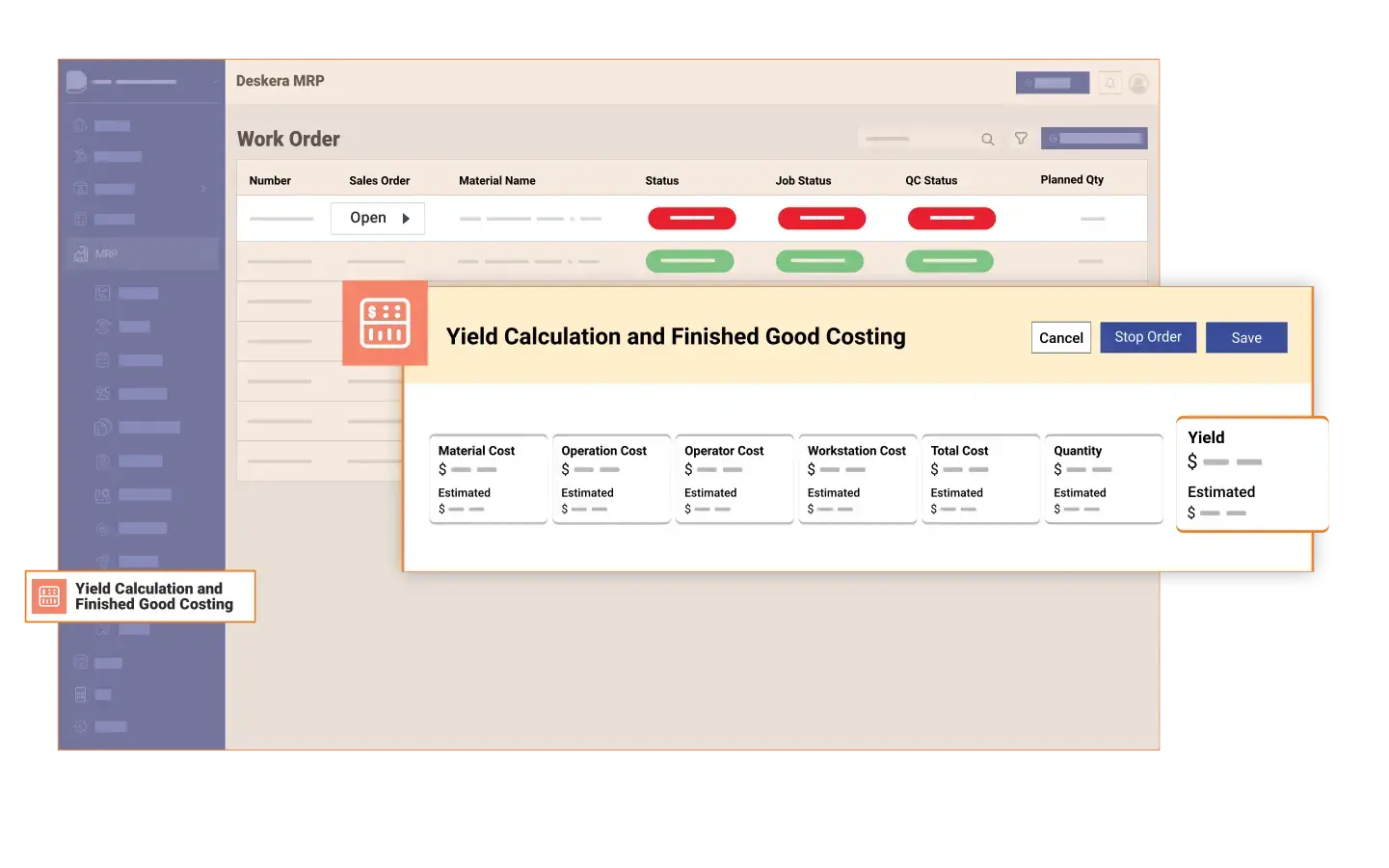
Improving process yield requires more than just identifying inefficiencies—it demands accurate data, real-time visibility, and streamlined operations. This is where Deskera MRP plays a crucial role by integrating production, inventory, and costing into a single platform. It enables businesses to monitor performance closely, reduce waste, and make data-driven decisions that enhance overall process efficiency.
Establishes a Structured Yield Calculation Process
Deskera MRP helps businesses define and standardize how process yield is calculated across operations. By consistently tracking input and output quantities, it ensures accurate measurement of yield at every stage. This structured approach eliminates inconsistencies and provides a reliable foundation for analyzing production performance.
Enables Accurate Finished Goods Costing
The system allows businesses to configure cost elements for each product, ensuring precise calculation of finished goods costs. By linking yield data with costing, organizations can understand how inefficiencies impact production expenses and take corrective actions to improve profitability.
Monitors Raw Material Costs in Real Time
Deskera MRP provides visibility into raw material usage and costs throughout the production cycle. By tracking material consumption and identifying discrepancies, businesses can reduce waste, improve material utilization, and maintain consistent process yield.
Automates Production Costing
Manual costing processes are often time-consuming and prone to errors. Deskera MRP automates production costing, ensuring quick and accurate calculations. This automation reduces administrative effort, improves accuracy, and helps businesses focus on optimizing production efficiency.
Analyzes Product Yield Data
With built-in analytics, Deskera MRP enables businesses to analyze yield data across different production runs. It helps identify trends, detect inefficiencies, and uncover root causes of defects. These insights support continuous improvement and better decision-making.
Tracks Finished Goods Costs and Profitability
The platform allows businesses to monitor finished goods costs in real time, ensuring accurate pricing and margin analysis. By understanding the relationship between yield and cost, organizations can optimize both production efficiency and profitability.
Generates Detailed Costing Reports
Deskera MRP provides comprehensive reporting capabilities, offering detailed insights into production costs and yield performance. Periodic reports help managers track progress, evaluate efficiency, and identify areas that require improvement.
Implements Budget Controls
Budget control features help businesses keep production costs within planned limits. By monitoring expenses and comparing them against budgets, organizations can prevent cost overruns and ensure that yield improvements translate into financial gains.
Monitors Overhead Costs
In addition to direct costs, Deskera MRP tracks overhead expenses associated with production. This ensures a more accurate understanding of total production costs and helps businesses optimize resource allocation while maintaining high process yield.
Identifies Costing Trends for Continuous Improvement
By analyzing historical costing and yield data, Deskera MRP helps businesses identify patterns and trends. These insights enable organizations to proactively address inefficiencies, refine processes, and sustain long-term improvements in process yield.
Key Takeaways
- Process yield is a critical metric that reflects how efficiently production converts inputs into defect-free outputs, directly impacting quality and profitability.
- Multiple yield metrics such as FTY, RTY, and TPY provide deeper insights into process performance across different stages of production.
- Accurately calculating process yield requires clear definitions of good units, total output, and defects, supported by consistent measurement methods.
- Measuring process yield can be challenging due to data inaccuracies, lack of standardization, and limited visibility across production stages.
- Improving process yield requires a combination of process optimization, quality control, workforce training, and continuous improvement strategies.
- Technology plays a vital role in yield optimization by enabling real-time monitoring, automation, and data-driven decision-making.
- Tracking complementary metrics like defect rate, scrap rate, and OEE helps businesses gain a more comprehensive view of production efficiency.
- Sustaining high process yield depends on standardized processes, preventive maintenance, employee engagement, and ongoing performance monitoring.
- Deskera ERP enhances process yield by providing real-time insights, automating costing, improving material tracking, and enabling data-driven production optimization.
Related Articles
 Niti Samani
 Niti Samani
 Niti Samani
 Niti Samani
 Niti Samani
 Niti Samani