


Running a successful business requires more than generating revenue—it demands careful planning, disciplined spending, and strategic allocation of resources. This is where budget management becomes essential. A well-structured budget allows businesses to plan their expenses, control costs, and ensure that financial resources are used efficiently. Without a clear budgeting strategy, organizations often struggle to maintain financial stability and make informed decisions.
Statistics highlight just how important effective budgeting is for business sustainability. Research shows that nearly 82% of business failures are linked to poor cash flow management, demonstrating the critical role financial planning plays in long-term survival. Yet, despite these risks, around 61% of small businesses still operate without a formal budget, leaving them vulnerable to unexpected expenses and financial uncertainty. This gap between the need for budgeting and its actual implementation continues to create major challenges for many organizations.
Effective budget management not only helps businesses track income and expenses but also strengthens financial performance. Studies indicate that proper budget planning and financial control can explain about 12% of the variations in a company’s financial results, showing how structured budgeting directly contributes to better profitability and stability. By setting financial goals, monitoring spending, and adjusting plans when necessary, businesses can improve operational efficiency and build a stronger foundation for growth.
Modern financial tools have made budget management significantly easier and more accurate. Solutions like Deskera ERP help businesses streamline budgeting processes through real-time financial tracking, automated reporting, and a centralized system for storing and managing business data. With integrated financial insights, companies can monitor expenses, manage cash flow, and make informed financial decisions. By simplifying financial planning and improving visibility, Deskera ERP enables businesses to maintain better control over their budgets while supporting sustainable growth.
What is Budget Management?
Budget management refers to the process of planning, monitoring, and controlling a company’s income and expenses over a specific period. It involves creating a financial plan that outlines expected revenue and how funds will be allocated across various business activities. By establishing a clear budget, organizations can guide spending, manage operational costs, and ensure that financial resources are used efficiently to achieve business objectives.
In most businesses, budget management is carried out by the finance team or department leaders who set financial targets for a defined timeframe, such as a quarter or a year. These targets help teams control expenses, increase revenue where possible, and identify opportunities to reduce unnecessary costs. As a result, budgeting becomes an important tool for maintaining financial discipline and ensuring that business operations remain aligned with strategic goals.
Budget management is often confused with budget creation, but the two processes serve different purposes. Budget creation focuses on setting financial goals and allocating resources at the beginning of a period. Budget management, on the other hand, is the ongoing process of tracking actual performance, comparing it with the planned budget, and making adjustments when necessary to keep financial plans on track.
Since business environments constantly change, effective budget management requires continuous monitoring and evaluation. Revenue levels may fluctuate, costs may rise unexpectedly, and organizational priorities may shift. Active oversight helps businesses respond to these changes quickly, optimize resource allocation, and maintain financial stability while working toward long-term growth.
Budget Management vs Financial Forecasting
Budget management and financial forecasting are closely related processes that help businesses plan and control their finances. While both involve analyzing financial data and making projections, they serve different purposes in financial planning.
Budget management focuses on controlling and monitoring spending according to a predefined financial plan, whereas financial forecasting estimates future financial outcomes based on trends and data.
Understanding the distinction between the two helps businesses make better strategic and operational decisions.
Budget Management
- Focuses on planning, controlling, and monitoring income and expenses based on a predefined budget.
- Establishes financial limits and spending guidelines for departments or projects.
- Involves tracking actual financial performance and comparing it with the planned budget.
- Helps businesses control costs, allocate resources efficiently, and maintain financial discipline.
- Requires regular monitoring, reporting, and adjustments to ensure the organization stays within its financial plan.
- Typically created for a specific period, such as monthly, quarterly, or annually.
Financial Forecasting
- Focuses on predicting future financial performance based on historical data, market trends, and business conditions.
- Estimates future revenue, expenses, and cash flow to support long-term planning.
- Helps businesses anticipate opportunities, risks, and financial challenges.
- Used for strategic decision-making, such as expansion, investments, or resource planning.
- Forecasts are updated regularly as new data becomes available to improve accuracy.
- Provides insights into potential financial outcomes, but does not set spending limits like a budget.
Objectives of Budget Management
Budget management plays a crucial role in ensuring that a business maintains financial stability and operates efficiently. By establishing clear financial plans and monitoring spending, organizations can allocate resources effectively, evaluate performance, and support long-term strategic goals.
The following are some of the key objectives of budget management.
Financial Planning
One of the primary objectives of budget management is to support effective financial planning. It helps businesses anticipate income, expenses, investments, and future cash flows over a specific period.
With a structured financial plan in place, organizations can gain a clear understanding of their financial position and prepare for upcoming operational and strategic needs.
Efficient Resource Allocation
Budget management helps businesses allocate financial resources to the areas that matter most. By prioritizing spending and directing funds toward critical activities, companies can ensure that their resources are used efficiently to achieve business objectives while avoiding unnecessary expenditures.
Performance Measurement
Budgets provide a benchmark for evaluating the performance of departments, projects, or business units. By comparing actual financial results with budgeted projections, businesses can assess whether their operations are performing as expected and identify areas that require improvement.
Informed Decision-Making
Budget management provides valuable financial insights that support better decision-making. Managers can use budget data to evaluate the financial impact of various options, such as launching new projects, expanding operations, or reducing costs. This helps organizations make more strategic and financially sound decisions.
Motivation and Accountability
Establishing clear budgets encourages managers and teams to work toward specific financial targets. When departments are responsible for managing their allocated budgets, it promotes accountability and motivates employees to control costs and achieve performance goals.
Prevention of Financial Crises
Another important objective of budget management is to detect financial issues early. By regularly monitoring actual results against budgeted expectations, businesses can identify deviations and take corrective actions before minor issues develop into serious financial problems.
Optimization of Financial Resources
Budget management helps organizations use their financial resources more effectively. It encourages businesses to eliminate unnecessary spending, control costs, and maximize returns on investments, ultimately improving overall financial efficiency.
Financial Transparency
Budgets provide a transparent view of a company’s financial situation. Clear financial planning and reporting help stakeholders—including managers, investors, and lenders—understand how funds are allocated and used within the organization.
Alignment of Organizational Goals
Budget management helps align financial planning with the company’s overall strategic objectives. By linking budgets with business goals, organizations can ensure that financial decisions support long-term growth, operational priorities, and overall business strategy.
Key Components of Effective Budget Management
Effective budget management relies on several interconnected components that help businesses plan, track, and control their financial activities. When these elements work together, organizations can maintain financial discipline, improve decision-making, and ensure resources are allocated efficiently.
The following components form the foundation of a well-managed budget.
Revenue Planning
Revenue planning involves estimating the income a business expects to generate during a specific period. This includes forecasting sales, identifying potential revenue streams, and setting realistic financial targets based on historical performance and market conditions.
Accurate revenue planning allows businesses to determine how much they can allocate to operations, investments, and growth initiatives while maintaining financial stability.
Expense Planning
Expense planning focuses on identifying and organizing the costs a business expects to incur. These costs are typically categorized into fixed expenses, such as rent, salaries, and insurance, and variable expenses, such as utilities, marketing, and raw materials. By clearly defining these cost categories, businesses can allocate resources more effectively and identify areas where spending can be controlled or reduced.
Cash Flow Management
Cash flow management ensures that a business maintains sufficient liquidity to meet its financial obligations. It involves monitoring cash inflows, such as sales revenue and payments received, and cash outflows, including operational expenses and supplier payments. Proper cash flow management helps businesses avoid liquidity shortages and ensures that day-to-day operations run smoothly.
Financial Monitoring and Reporting
Financial monitoring involves regularly comparing actual financial results with the planned budget. This process helps businesses identify variances between expected and actual performance.
Reporting plays an important role by transforming financial data into clear insights that support decision-making. Detailed reports help management understand spending patterns, evaluate performance, and ensure financial goals remain on track.
Tracking Financial Transactions
Tracking focuses on recording actual income and expenses as they occur. Accurate tracking ensures that financial data reflects real business activity rather than estimates or assumptions. With reliable records, businesses can assess whether their budgets accurately represent operational realities and make informed financial decisions.
Budget Monitoring and Variance Analysis
Monitoring involves reviewing budget performance on a regular basis and comparing it with actual financial results. This process often includes variance analysis, which helps identify differences between planned and actual spending or revenue. Early detection of these variations allows businesses to address minor issues before they escalate into major financial problems.
Budget Adjustments
Business conditions frequently change due to market fluctuations, shifting priorities, or unexpected costs. Budget adjustments allow organizations to update their financial plans based on these changes. By revising assumptions and reallocating resources when necessary, businesses can ensure that their budgets remain realistic, flexible, and aligned with current financial goals.
Types of Budgets Used by Businesses
Businesses use different types of budgets to plan and control their financial activities effectively. Each budget focuses on a specific aspect of operations, such as sales, expenses, production, or long-term investments.
By using multiple budgeting approaches, organizations can gain better financial visibility, allocate resources efficiently, and support both short-term operations and long-term strategic goals.
The following are some of the most common types of budgets used by businesses.
Operating Budget
An operating budget outlines the expected revenue and expenses associated with a company’s day-to-day operations during a specific period, usually monthly or annually.
It typically includes sales forecasts, production costs, administrative expenses, and other operating costs. This budget helps businesses manage routine financial activities and ensures that operational spending stays aligned with revenue expectations.
Cash Flow Budget
A cash flow budget focuses on managing a company’s liquidity by forecasting cash inflows and outflows over a defined period.
It tracks sources of cash such as sales receipts, loans, or investments, and compares them with outgoing payments like salaries, supplier payments, and operational expenses.
This type of budget is essential for ensuring that a business has enough cash available to meet its financial obligations and avoid liquidity issues.
Capital Budget
A capital budget is used to plan long-term investments in assets such as machinery, technology, buildings, or infrastructure. It helps businesses evaluate large expenditures and determine whether the investment will generate sufficient returns over time.
By analyzing costs, potential benefits, and risks, capital budgeting supports informed decision-making for strategic investments that contribute to long-term growth.
Static Budget
A static budget is a fixed financial plan that remains unchanged throughout the budget period, regardless of changes in business performance or activity levels.
It is usually prepared at the beginning of the financial period based on expected revenue and expenses.
While static budgets provide a clear financial benchmark, they may become less effective if market conditions or operational factors change significantly.
Flexible Budget
A flexible budget adjusts according to actual business performance or activity levels.
Unlike a static budget, it allows businesses to revise expenses and revenue expectations based on changes in production volume, sales, or operational requirements.
Flexible budgets are particularly useful for organizations operating in dynamic environments, as they provide greater adaptability and more accurate financial control.
Sales Budget
A sales budget forecasts the expected sales volume and revenue for a specific period. It is typically based on historical sales data, market trends, and business growth projections.
This budget serves as the foundation for many other budgets, including production, purchasing, and marketing budgets, since expected sales directly influence business operations.
Expense Budget
An expense budget outlines the anticipated costs a business expects to incur during a given period. These expenses may include operational costs, administrative expenses, marketing expenditures, and capital-related costs.
Creating an expense budget helps organizations monitor spending, identify cost-saving opportunities, and maintain better control over financial resources.
Production Budget
A production budget is mainly used by manufacturing businesses to plan the number of units that need to be produced based on expected sales and desired inventory levels.
It helps businesses determine the required raw materials, labor, and production resources. By aligning production planning with sales forecasts, companies can manage inventory more efficiently and avoid shortages or overproduction.
Human Resources Budget
A human resources budget focuses on workforce planning and the costs associated with employees. It includes salaries, benefits, training expenses, recruitment costs, and other employee-related expenditures. This budget helps organizations ensure they have the right staffing levels while managing labor costs effectively.
Marketing Budget
A marketing budget outlines the financial resources allocated to marketing activities such as advertising, promotions, public relations, digital marketing, and campaigns.
It helps businesses plan and execute marketing strategies while ensuring that spending aligns with overall business objectives and expected returns.
Research and Development (R&D) Budget
An R&D budget allocates financial resources for innovation, product development, and technological improvements. It covers expenses related to research projects, product testing, prototypes, and development activities.
This type of budget is particularly important for companies focused on innovation and long-term competitive advantage.
Benefits of Budget Management
Effective budget management provides businesses with greater control over their financial resources and helps ensure long-term stability.
By planning, tracking, and evaluating financial activities, organizations can improve operational efficiency, reduce unnecessary costs, and make more informed business decisions.
The following are some of the key benefits of budget management.
Better Financial Planning
Budget management enables businesses to plan their finances more effectively by forecasting income, expenses, and future financial needs. With a structured budget in place, organizations can prepare for upcoming expenses, allocate funds appropriately, and ensure that financial resources are used strategically.
Improved Cost Control
A well-managed budget helps businesses monitor spending and identify areas where costs can be reduced. By tracking expenses regularly, companies can avoid overspending, eliminate unnecessary expenditures, and maintain better control over operational costs.
Increased Operational Efficiency
Budget management helps streamline business operations by ensuring that resources are allocated efficiently. When departments operate within defined budgets, they are more likely to use resources carefully and focus on activities that add value to the organization.
Better Financial Visibility
Budgets provide a clear overview of a company’s financial position, including income, expenses, and available resources. This visibility allows business leaders to understand financial performance more accurately and monitor how funds are being utilized across different departments.
Effective Resource Allocation
Another important benefit of budget management is the ability to allocate resources to priority areas. Businesses can direct funds toward activities that support growth, innovation, and operational efficiency while minimizing spending on less critical areas.
Risk Management
Budget management helps organizations prepare for financial uncertainties by identifying potential risks and planning for unexpected expenses. Regular monitoring of financial performance allows businesses to detect issues early and take corrective actions when needed.
Support for Strategic Decision-Making
A well-structured budget provides valuable financial data that supports better business decisions. Managers can evaluate the financial impact of different strategies, investments, or operational changes before implementing them.
Improved Profitability and Business Growth
By controlling costs, optimizing resources, and planning finances effectively, budget management contributes to improved profitability. Over time, this financial discipline helps businesses maintain stability and create a strong foundation for long-term growth.
Common Budget Management Challenges
While budget management is essential for maintaining financial stability, many businesses face challenges when implementing and maintaining effective budgeting processes.
These challenges can lead to inaccurate financial planning, inefficient resource allocation, and difficulties in controlling costs.
Understanding these common obstacles helps organizations take proactive steps to improve their budgeting practices.
Inaccurate Financial Data
Accurate financial data is the foundation of effective budget management. When businesses rely on incomplete, outdated, or incorrect data, the resulting budgets may be unrealistic or misleading.
Inaccurate revenue estimates or expense records can cause companies to either overspend or underallocate resources, leading to financial instability and poor decision-making.
Lack of Financial Visibility
Many organizations struggle with limited visibility into their financial activities, especially when financial information is spread across multiple systems or departments.
Without a clear and centralized view of income, expenses, and budget performance, it becomes difficult for managers to track spending or identify areas where costs may be exceeding planned limits.
Unexpected Expenses
Unforeseen costs, such as sudden equipment repairs, supply chain disruptions, or economic fluctuations, can significantly impact a company’s budget. When businesses do not plan for contingencies, these unexpected expenses can disrupt financial plans and create cash flow challenges. Effective budgeting requires flexibility and contingency planning to manage such situations.
Poor Communication Between Departments
Budget management often involves multiple departments, each with its own spending priorities and financial needs. Poor communication between teams can lead to misaligned budgets, duplicated expenses, or inefficient allocation of funds.
When departments fail to coordinate their financial planning, it becomes harder to ensure that resources are directed toward the organization’s most important objectives.
Manual Budgeting Processes
Many businesses still rely on spreadsheets or manual methods to create and manage budgets. While spreadsheets can be useful, they often lead to errors, version control issues, and time-consuming data entry.
Manual budgeting processes also make it difficult to update budgets quickly or generate real-time financial insights, which can reduce the overall effectiveness of budget management.
Different Stages of Budget Management in a Business
Budget management in a business follows a structured process that helps organizations plan, implement, and monitor their financial activities effectively. Each stage plays an important role in ensuring that budgets align with business objectives and that financial resources are used efficiently.
The following stages outline the typical budget management cycle used by many organizations.
Planning
The first stage of budget management involves defining the company’s financial priorities and strategic objectives. During this phase, business leaders determine short-term and long-term financial goals, such as revenue growth, cost reduction, or investment in new initiatives. This planning stage sets the foundation for developing a realistic and goal-oriented budget.
Data Collection
Before creating a budget, businesses must gather relevant financial data. This includes historical financial records, sales forecasts, operational costs, market trends, and resource requirements. Collecting accurate data helps organizations build a reliable financial plan and improves the overall accuracy of the budgeting process.
Budget Creation
In this stage, finance teams and managers prepare the actual budget by allocating funds to different departments or business activities. Budgets are typically created for areas such as sales, operations, marketing, human resources, and capital investments. The goal is to distribute financial resources in a way that supports the company’s strategic priorities.
Review and Approval
Once the budget is prepared, it is reviewed by senior management or relevant stakeholders. This step ensures that the proposed budget aligns with business goals, financial constraints, and operational requirements. Adjustments may be made during this stage before the budget receives final approval.
Implementation
After approval, the budget is implemented across the organization. Department managers begin operating according to the allocated financial limits and guidelines. Resources are distributed based on the approved budget, and teams begin executing their financial plans.
Monitoring and Control
Budget management requires continuous monitoring to ensure that actual financial performance aligns with the planned budget. During this stage, businesses regularly track income and expenses, compare actual results with budgeted projections, and perform variance analysis. If significant deviations occur, corrective actions may be taken to maintain financial control.
Reporting and Communication
Budget reports are generated and shared with management and relevant stakeholders. These reports provide insights into financial performance, spending patterns, and budget variances.
Transparent communication ensures that decision-makers have the information needed to evaluate financial performance and adjust strategies when necessary.
Budget Revision
Business conditions can change due to market fluctuations, operational changes, or unexpected expenses. When this happens, budgets may need to be revised to reflect updated financial conditions. Revising the budget helps ensure that financial plans remain realistic and aligned with current business needs.
Closure and Evaluation
At the end of the budgeting cycle, businesses review overall financial performance and compare actual results with the original budget. This evaluation helps organizations identify what worked well, what challenges occurred, and how budgeting processes can be improved in the future.
Training and Awareness
Training employees and managers on budgeting practices is essential for effective implementation. When teams understand the budgeting process and their financial responsibilities, they are more likely to follow budget guidelines and contribute to financial discipline within the organization.
Rewards and Accountability
Some businesses introduce incentives or accountability measures to encourage adherence to budgets. Departments or managers that successfully manage their budgets may receive recognition or rewards, while those exceeding budgets may be required to explain variances. This stage helps promote responsible financial management across the organization.
Best Practices for Effective Budget Management
Implementing effective budget management requires more than simply creating a financial plan. Businesses must adopt structured practices that help them plan accurately, monitor financial performance, and adjust their strategies when necessary.
By following proven budgeting practices, organizations can improve financial control, optimize resource allocation, and support long-term business growth.
Set Clear Financial Goals
Establishing clear financial goals is the foundation of effective budget management. Businesses should define specific objectives such as increasing revenue, reducing operational costs, or improving profit margins.
When financial goals are clearly outlined, it becomes easier to design a budget that aligns with the company’s overall strategy and guides decision-making across departments.
Use Historical Data for Accurate Budgeting
Historical financial data provides valuable insights into past revenue trends, spending patterns, and operational costs. By analyzing previous financial performance, businesses can create more realistic and accurate budgets.
This approach reduces the risk of overestimating revenue or underestimating expenses, leading to more reliable financial planning.
Involve Department Managers in Budget Planning
Budget planning should not be limited to the finance team alone. Involving department managers in the budgeting process ensures that the budget reflects the actual needs and priorities of each department.
Managers who understand their operational requirements can provide valuable input on expected costs and resource needs, resulting in more practical and achievable budgets.
Monitor Budget Performance Regularly
Regular monitoring is essential for ensuring that financial activities remain aligned with the budget. Businesses should compare actual financial results with budgeted projections on a consistent basis, such as monthly or quarterly.
This helps identify variances early, allowing management to take corrective actions and prevent small issues from turning into significant financial problems.
Use Budgeting Software or ERP Systems
Modern budgeting tools and ERP systems can significantly improve the accuracy and efficiency of budget management. These solutions automate financial tracking, generate real-time reports, and provide better visibility into income and expenses across departments.
By using budgeting software or ERP platforms, businesses can streamline financial planning, reduce manual errors, and make more informed financial decisions.
Essential Budget Management Strategies
Effective budget management requires practical strategies that help businesses control spending, allocate resources efficiently, and adapt to changing financial conditions.
By adopting structured budgeting frameworks and consistent financial habits, organizations can improve financial stability and make better strategic decisions.
The following strategies can help businesses strengthen their budgeting processes.
The 50/30/20 Budgeting Rule
The 50/30/20 rule is a simple budgeting framework that divides income into three categories: 50% for essential needs, 30% for discretionary spending, and 20% for savings or debt reduction.
While originally designed for personal finance, businesses can adapt this concept by categorizing expenses into fixed operational costs, flexible spending, and growth investments.
For example, a company may allocate a significant portion of its revenue to essential operational expenses such as salaries, rent, and utilities, while setting aside a portion for marketing initiatives, innovation, or savings.
The percentages can be adjusted based on the company’s financial goals, industry requirements, or growth stage.
Zero-Based Budgeting Approach
Zero-based budgeting (ZBB) requires businesses to justify every expense for each budgeting period rather than relying on previous budgets. Instead of assuming that past spending levels are necessary, this approach encourages organizations to evaluate all expenses from scratch.
To implement zero-based budgeting, businesses typically start by defining financial objectives and identifying all necessary activities and associated costs. Each expense is then evaluated based on its value and importance to the organization.
Funds are allocated according to priority, ensuring that resources are directed toward the most impactful initiatives. This approach helps eliminate unnecessary spending and improves overall cost efficiency.
Rolling Forecasts
Rolling forecasts are a budgeting strategy that continuously updates financial projections based on new data and changing business conditions. Instead of relying solely on a fixed annual budget, companies regularly revise forecasts—often monthly or quarterly—to reflect updated revenue expectations, cost changes, or market conditions.
This approach allows businesses to respond more quickly to economic changes, seasonal demand fluctuations, or unexpected operational challenges. Rolling forecasts help maintain accurate financial planning and support more agile decision-making.
Flexible Budgeting
Flexible budgeting allows businesses to adjust their budgets based on actual performance or activity levels. For example, if sales increase significantly, the budget for production, marketing, or staffing may also increase to support higher demand. Conversely, if revenue declines, expenses can be adjusted to maintain financial stability.
Flexible budgets are particularly useful for companies operating in industries with fluctuating demand or rapidly changing market conditions. This strategy helps ensure that budgets remain relevant and aligned with real business performance.
Strategic Cost Prioritization
Another important budgeting strategy is prioritizing expenses based on business value and long-term objectives.
Organizations should regularly evaluate which activities generate the highest return on investment and focus their financial resources accordingly.
By prioritizing strategic initiatives—such as innovation, customer experience, or operational improvements—businesses can maximize the impact of their budgets.
Regular Budget Reviews and Performance Analysis
Consistent budget reviews help businesses monitor financial performance and identify variances between planned and actual results. Conducting regular financial reviews allows management to detect issues early, analyze spending patterns, and implement corrective actions when necessary. Continuous performance analysis ensures that budgets remain aligned with organizational goals and financial realities.
How Deskera ERP Helps with Budget Management
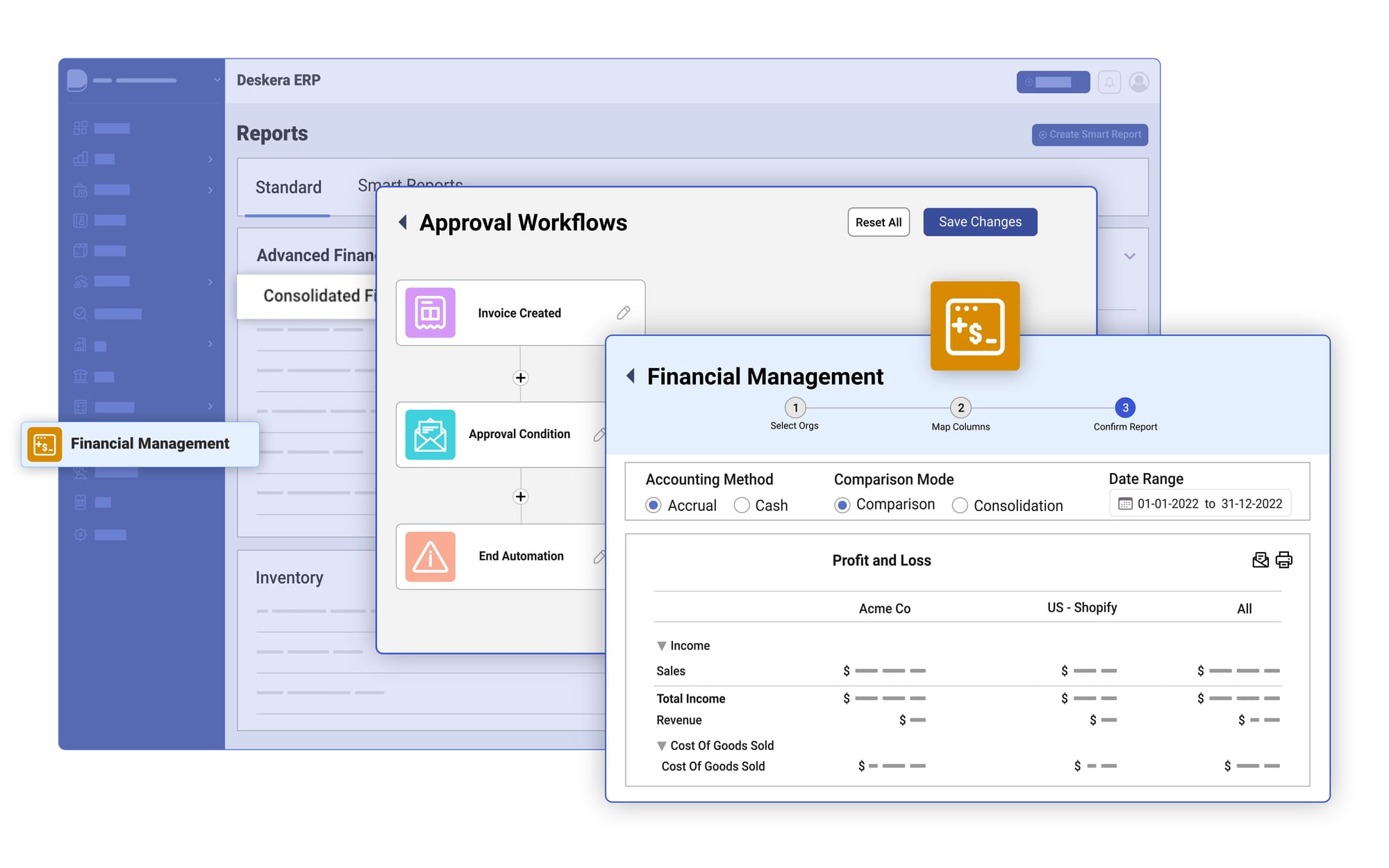
Managing budgets effectively requires accurate data, continuous monitoring, and the ability to adjust financial plans as business conditions change. Modern ERP systems simplify these processes by integrating financial data, automating reporting, and providing real-time insights. Deskera ERP offers a range of tools that help businesses plan, track, and control their budgets more efficiently.
Budget Planning and Forecasting
Deskera ERP includes budgeting and forecasting capabilities that allow businesses to create detailed financial plans based on historical data and business goals. Finance teams can estimate revenue, expenses, and cash flow while setting realistic financial targets for departments or projects. These tools help organizations plan their finances more accurately and align budgets with strategic objectives.
Real-Time Financial Tracking
One of the key advantages of Deskera ERP is real-time visibility into financial performance. Businesses can monitor actual income, expenses, and cash flow as transactions occur, allowing them to compare real-time results with planned budgets. This immediate insight helps managers detect variances early and take corrective actions before financial issues escalate.
Centralized Financial Data and Visibility
Deskera ERP brings financial data—such as accounts, expenses, invoices, and transactions—into a single integrated system. Having a unified financial platform improves data accuracy, eliminates data silos, and provides a clear overview of the organization’s financial health. This centralized approach helps finance teams manage budgets more effectively and maintain better control over financial operations.
Automated Financial Processes
The platform automates many routine financial tasks, including expense tracking, invoicing, reconciliations, and journal entries. Automation reduces manual errors, saves time, and ensures that financial records are consistently updated. With fewer manual processes, finance teams can focus more on analyzing budget performance and improving financial planning.
Detailed Financial Reporting and Insights
Deskera ERP generates detailed financial reports and dashboards that help businesses analyze budget performance. These reports provide insights into revenue trends, cost patterns, and overall financial health. By using data-driven insights, managers can make more informed decisions about spending, investments, and resource allocation.
Collaboration and Departmental Budget Control
Deskera ERP enables multiple departments to collaborate on financial planning through a shared platform. Teams can access budget data, monitor spending, and coordinate financial plans more effectively. This collaborative approach ensures that departmental budgets remain aligned with the company’s overall financial strategy.
Improved Cost Control and Financial Governance
With features such as approval workflows, role-based access controls, and audit trails, Deskera ERP helps businesses maintain strong financial governance. These controls ensure that expenses follow company policies, reduce the risk of overspending, and improve accountability in budget management.
Overall, Deskera ERP simplifies budget management by integrating financial planning, tracking, reporting, and collaboration into a single platform. This helps businesses maintain better financial control, improve decision-making, and support sustainable growth.
Key Takeaways
- Budget management helps businesses plan, monitor, and control financial resources to support stability and growth.
- Budget management focuses on controlling spending and tracking financial performance, while financial forecasting predicts future financial outcomes based on trends and data.
- Effective budget management relies on key components such as revenue planning, expense planning, cash flow management, financial tracking, monitoring, and regular adjustments.
- Businesses use different types of budgets—including operating, cash flow, capital, sales, and flexible budgets—to manage various financial aspects of their operations.
- Budget management supports financial planning, efficient resource allocation, performance evaluation, and alignment of financial activities with business goals.
- Implementing structured budgeting practices improves financial planning, cost control, operational efficiency, and long-term profitability.
- Common challenges such as inaccurate financial data, limited visibility, unexpected expenses, poor communication, and manual processes can hinder effective budget management.
- Following best practices like setting clear goals, using historical data, involving department managers, monitoring budgets regularly, and using digital tools improves budgeting effectiveness.
- Deskera ERP simplifies budget management through real-time financial tracking, automated processes, integrated financial data, and detailed reporting that supports better decision-making.
Related Articles
 Niti Samani
 Niti Samani
 Niti Samani
 Niti Samani
 Niti Samani
 Niti Samani