


Why do warehouse picking errors continue to disrupt even well-run operations? Because picking is where speed, people, and process collide. Even a small mistake—selecting the wrong item, quantity, or location—can trigger delayed shipments, higher return rates, and frustrated customers. As order volumes rise and fulfillment timelines shrink, warehouses can no longer afford inaccuracies in their picking operations.
Warehouse picking errors are more than operational hiccups; they directly impact customer satisfaction and profit margins. Studies consistently show that order inaccuracies increase handling costs, rework, and labor inefficiencies. In fast-paced warehouses, manual processes, poor layout design, and lack of real-time visibility often amplify these errors, making accuracy a critical performance metric rather than a back-office concern.
Reducing warehouse picking errors requires a combination of disciplined processes, the right picking strategies, and technology-driven controls. From optimizing warehouse layouts and standardizing workflows to using barcode scanning and performance tracking, best practices help warehouses strike the right balance between speed and precision. When implemented consistently, these measures not only reduce errors but also improve overall fulfillment efficiency.
This is where solutions like Deskera ERP play a vital role. Deskera ERP provides integrated inventory and warehouse management capabilities that enable real-time stock visibility, barcode-enabled picking, and process automation. With centralized data, guided workflows, and actionable insights, Deskera helps warehouses reduce picking errors, improve order accuracy, and scale operations without compromising control.
What Are Warehouse Picking Errors?
Warehouse picking errors refer to any mistakes made during the order picking process while selecting items to fulfill a customer order. In warehouse operations, these errors occur when the wrong product, quantity, or condition of an item is picked, or when an item is missed entirely—each of which can disrupt order fulfillment and inventory accuracy.
The terms picking error and mispick are often used interchangeably, but they are not the same. A mispick specifically means selecting the wrong SKU. Picking errors, however, are broader and can include picking the wrong quantity, skipping an item, choosing the correct item from the wrong location, or placing damaged goods into a tote or cart. Even minor errors at this stage can ripple through downstream processes, causing fulfillment delays and inventory mismatches.
Because order picking accounts for a significant share of warehouse labor, picking errors tend to have outsized operational and financial consequences. They often lead to costly rework, increased labor expenses, higher return rates, and reduced inventory accuracy. Over time, these issues directly impact operational efficiency, customer satisfaction, and overall profitability.
Most warehouse picking errors stem from human and process-related challenges. Common root causes include disorganized warehouse layouts that increase picker fatigue, undertrained or overworked staff, limited real-time visibility into inventory levels, and picking strategies that do not align with warehouse design or order volume. While addressing these issues through better training, automation, and warehouse management systems may require upfront investment, the long-term cost of ignoring high picking error rates is often far greater.
Root Causes of Warehouse Picking Errors
Warehouse picking errors rarely occur in isolation. In most cases, they are the result of underlying process, people, or system-level issues that compound over time. Understanding these root causes is essential for implementing corrective actions that reduce errors sustainably rather than treating symptoms.
Manual Picking and Human Error
Manual picking remains one of the most error-prone stages in warehouse operations. Selecting the wrong item, quantity, or location accounts for a significant share of picking mistakes, often due to misread labels, similar-looking SKUs, or reliance on memory. Fatigue, repetitive tasks, and time pressure further increase the likelihood of human error in high-volume environments.
Inadequate Training and Skill Gaps
Insufficient training directly impacts picking accuracy. When warehouse staff are not properly trained on picking procedures, equipment usage, or exception handling, error rates rise. New hires, temporary workers, or employees assigned to unfamiliar zones are especially vulnerable, as they may lack the operational context needed to pick accurately and consistently.
Poor Warehouse Layout and Organization
Disorganized storage layouts create confusion and slow down picking operations. When items are poorly slotted, mislabeled, or stored too closely together, pickers are more likely to grab the wrong SKU or skip items altogether. Inefficient layouts also increase travel time and fatigue, indirectly contributing to higher error rates.
Ineffective Inventory Tracking and Visibility
Inaccurate or outdated inventory data is a major driver of picking errors. When system records do not reflect actual stock levels or locations, pickers may attempt to retrieve items that are unavailable or stored elsewhere. This leads to delays, mispicks, and last-minute substitutions that increase fulfillment risk.
Incompatible Picking Methods
Picking strategies that do not align with warehouse size, SKU complexity, or order volume often introduce errors. For example, single-order picking may be inefficient in high-volume environments, while batch or wave picking without proper controls can result in order mix-ups. Choosing the wrong method amplifies operational complexity and confusion on the floor.
Lack of Standardized Processes
Inconsistent workflows and undocumented procedures leave room for interpretation and improvisation. Without clear SOPs for picking, put away, replenishment, and exception handling, employees may follow different practices—resulting in uneven accuracy and avoidable mistakes.
Insufficient Use of Technology
Warehouses that rely heavily on paper-based processes or legacy systems lack real-time validation. The absence of barcode scanning, guided picking, or automated checks increases dependence on manual verification, making it easier for errors to pass through undetected.
Workforce Fatigue and High Workload Pressure
Extended shifts, understaffing, and peak-season pressure increase both physical and cognitive fatigue. Tired employees are more likely to rush, overlook details, or make judgment errors, particularly in environments where accuracy competes with speed.
Poor Upstream Processes (Receiving and Put Away)
Picking errors often originate before picking begins. Incorrect receiving, mislabeling during put away, or assigning stock to the wrong locations creates downstream problems that pickers cannot easily detect. These upstream inaccuracies directly translate into fulfillment errors.
Limited Performance Monitoring and Feedback
When picking performance is not measured consistently, errors go unnoticed until they reach the customer. The absence of KPIs, audits, and feedback loops prevents teams from identifying recurring issues and correcting them early.
What Are the Costs of Warehouse Picking Errors?
Warehouse picking errors are rarely isolated incidents. Each mistake sets off a chain reaction of direct and indirect costs that continue to accumulate until the error is detected, corrected, and absorbed by the business. Even errors caught early consume time, labor, and resources—while those that reach the customer can significantly inflate fulfillment costs and damage long-term performance.
Direct Labor and Rework Costs
When a picking error is identified, additional labor is immediately required to repick the order, restock incorrect items, recount inventory, and update records. These activities disrupt normal workflows and divert staff from productive tasks. Even when an error is caught before shipment, the cost of corrective labor can be substantial, especially in high-volume operations.
Shipping, Returns, and Reverse Logistics Costs
Errors that leave the warehouse are significantly more expensive. Businesses often absorb the cost of return shipping, replacement shipments, and additional handling. Returned items must be received, inspected, reworked, and repackaged before restocking—if they can be resold at all. In many cases, companies also ship the correct item at their own expense, multiplying fulfillment costs for a single order.
Inventory Inaccuracy and Shrinkage
Picking errors directly undermine inventory accuracy. Misplaced, miscounted, or damaged items distort stock levels, leading to phantom inventory, unexpected stockouts, or excess safety stock. Over time, these inaccuracies result in higher carrying costs, unnecessary replenishment, and increased risk of obsolescence or write-offs.
Customer Service and Administrative Overhead
Each picking error typically generates additional customer service activity, including order investigations, complaint handling, refunds, and manual corrections. These tasks increase administrative overhead and place extra strain on support teams, especially during peak order periods.
Lost Revenue and Margin Erosion
The financial impact of picking errors extends beyond operational costs. Discounts, refunds, free replacements, and expedited shipping erode profit margins. In some cases, damaged or returned products cannot be resold at full value, resulting in direct revenue loss.
Customer Satisfaction and Retention Risk
Errors that affect delivery accuracy or timeliness weaken customer trust. Even when businesses cover the cost of reshipping, customers expect to receive the right product on time. Repeated picking errors increase return rates, reduce repeat purchases, and raise the risk of customer churn—particularly in competitive markets where switching costs are low.
Scalability and Operational Efficiency Constraints
High picking error rates signal deeper process or system inefficiencies. As order volumes grow, these errors become harder and more expensive to manage, limiting a warehouse’s ability to scale without adding disproportionate labor and cost. Over time, persistent errors can stall growth and reduce overall operational agility.
Long-Term Financial Impact
While the cost of a single picking error may range from tens to hundreds of dollars, the cumulative impact can be severe. Even modest error rates can translate into significant annual losses for mid- to high-volume warehouses. Beyond measurable costs, picking errors introduce operational friction that affects profitability, efficiency, and customer loyalty over the long term.
20 Strategies to Reduce Warehouse Picking Errors
Reducing warehouse picking errors isn’t about quick fixes or isolated technology upgrades. Sustainable accuracy comes from strengthening people, processes, and systems together. The following strategies combine operational discipline with smart use of technology to help warehouses improve picking accuracy as order volumes and SKU complexity grow.
1. Standardize and Regularly Review SOPs
Clear, documented Standard Operating Procedures (SOPs) provide consistency across picking, packing, and exception handling. They define every step, from SKU verification and quantity checks to final order confirmation, reducing reliance on individual judgment. SOPs should be regularly reviewed and updated as order volumes, SKUs, or warehouse technology evolve.
Outdated processes can introduce hidden errors and slow operations. Regularly communicating SOP updates to staff, making procedures easily accessible, and using checklists for validation ensures that employees consistently follow best practices. A robust SOP framework scales with growth, minimizing human error across all shifts and teams.
2. Use Barcode Scanning for Item and Location Validation
Barcode scanning introduces a critical verification layer at every pick. Scanning confirms the SKU, location, and quantity in real time, removing reliance on memory or visual checks. Integration with a Warehouse Management System (WMS) enables immediate inventory updates, improving both accuracy and traceability.
By scanning items at pick and pack stages, errors such as selecting the wrong SKU or wrong bin are drastically reduced. Barcode validation also simplifies audits and enhances reporting, as scanned data can be analyzed for recurring issues. This technology ensures consistent accuracy even during peak seasons or with temporary staff.
3. Implement a Structured Quality Control (QC) Check
A Quality Control (QC) step—manual or system-driven—acts as a final safeguard before shipment. QC ensures picked items, quantities, and order integrity match the original request, preventing costly returns or customer dissatisfaction. High-value, fragile, or complex orders especially benefit from a QC checkpoint.
Manual double-checking, cross-referencing pick lists, or automated WMS alerts flag discrepancies before items leave the warehouse. QC also enables staff to identify process inefficiencies and recurring errors, creating a feedback loop for continuous improvement. By verifying every order before dispatch, warehouses maintain accuracy, strengthen customer trust, and reduce operational disruptions.
4. Optimize Warehouse Layout and Slotting
Warehouse layout impacts picking speed and accuracy. Logical zoning, clear aisle labelling, and strategic slotting of fast-moving SKUs near packing areas reduce travel time and mispicks. Slotting should be reviewed periodically to reflect seasonal changes, SKU velocity, and demand patterns. High-risk or look-alike products should be physically separated to minimize confusion.
Combining layout optimization with visual cues, such as color-coded aisles or shelving, guides pickers intuitively through the warehouse. Proper layout reduces fatigue and cognitive load, ensuring employees can focus on accuracy rather than navigating a disorganized space, ultimately improving throughput and customer satisfaction.
5. Optimize Picking Routes and Sequences
Efficient picking paths reduce backtracking and picker confusion. By sequencing picks logically—based on zone, SKU type, or order frequency—pickers can follow the most efficient route, balancing speed with accuracy. WMS-guided route optimization allows dynamic adjustment based on order complexity, peak hours, or congestion in high-traffic areas.
Properly optimized routes prevent rushed decisions that lead to mispicks and improve order completion times. Periodic evaluation of route efficiency using performance data ensures continual improvement. When pickers are guided through predictable, efficient sequences, they are less prone to fatigue-related errors and more likely to meet accuracy targets consistently.
6. Separate Look-Alike and High-Risk SKUs
Products with similar packaging, size, or names are frequent sources of picking mistakes. Physically separating these SKUs, adding visual alerts, and configuring WMS-based warnings reduces cognitive errors. For example, high-value electronics, fragile items, or frequently confused SKUs should be isolated from common stock. Dedicated bin dividers or color-coded labels provide immediate visual differentiation.
Staff training should emphasize the handling of high-risk SKUs. Additionally, picking sequences can prioritize these items to reduce pressure during multi-item orders. By actively mitigating confusion, warehouses reduce mispicks and returns, safeguarding both inventory integrity and customer satisfaction.
7. Invest in Continuous Employee Training
Regular, role-specific training ensures pickers understand SOPs, technology, and exception handling. Monthly refresher courses reinforce picking standards, barcode scanning procedures, and handling instructions for high-value or complex SKUs. Pairing new hires with experienced staff accelerates learning and reduces errors.
Training should include performance feedback, highlighting areas for improvement and recognizing accuracy achievements. Seasonal or temporary staff should receive accelerated onboarding with SOP and layout briefings. Well-trained employees are confident, efficient, and less likely to commit mistakes under time pressure. Continuous training fosters a culture of accountability and accuracy, improving overall warehouse reliability.
8. Use the Right Picking Strategy for Order Volume
Selecting the optimal picking strategy—single-order, batch, zone, or wave—is critical. High-volume warehouses benefit from batch or wave picking, which minimizes travel and reduces handling errors. Low-volume operations may use single-order picking for simplicity.
Picking methods should be reviewed regularly as order volume, SKU mix, and customer expectations change. Misalignment between strategy and workflow causes confusion, duplicate handling, and errors. Testing new approaches incrementally allows for evaluation before full implementation. Aligning the picking strategy with operational realities ensures accuracy, reduces fatigue, and optimizes labor utilization across shifts.
9. Maintain Inventory Accuracy Through Cycle Counting
Inventory discrepancies often drive picking errors. Cycle counts, spot checks, and targeted audits for high-velocity or high-value SKUs ensure pickers rely on accurate data. Integration with mobile scanners and WMS allows real-time updates, reducing manual entry mistakes. Any detected discrepancies can trigger immediate correction, preventing downstream mispicks.
Regularly scheduled counts also reveal systemic inventory issues, such as misplacements or overstocking, that impact picking efficiency. Accurate inventory enables confident decision-making, reduces the risk of short-shipped orders, and prevents time-consuming order corrections. Maintaining reliable stock data is a foundational step in error-free warehouse operations.
10. Standardize Labels, Signage, and Bin Identification
Clear and consistent labelling reduces hesitation and mistakes. All bins, shelves, and aisles should follow standardized formats, including SKU, location codes, and product categories. Visual cues, such as color-coding, highlight high-risk or fast-moving items. Standardized signage supports temporary or seasonal staff who may not be familiar with warehouse layout. Regular audits ensure labels remain accurate, visible, and legible.
Updating documentation to reflect layout or SKU changes prevents miscommunication. By making item identification intuitive, warehouses reduce dependency on memory, minimize picking errors, and maintain consistent operational performance even during peak periods.
11. Implement Replenishment Accuracy Controls
Many picking errors originate during replenishment rather than the pick itself. Scan-based replenishment verification ensures the correct SKU is placed in the designated pick face. Separate staff responsibilities between picking and replenishment prevent rushed multitasking mistakes. Regular checks of replenishment accuracy, coupled with cycle counts, identify misplacements before they impact orders.
WMS alerts for incorrect placements or stock discrepancies provide proactive intervention. Maintaining replenishment accuracy supports a smooth picking workflow, reduces exceptions, and ensures that pickers always interact with correct inventory, ultimately improving order fulfillment accuracy and warehouse efficiency.
12. Track Picking Accuracy KPIs and Act on Insights
Monitoring key performance indicators (KPIs) such as mispick rate, order accuracy, picks per hour, and labor utilization highlights areas for improvement. Dashboards with real-time data allow managers to identify trends by zone, SKU, or employee. Insights from KPI tracking inform training, layout adjustments, and SOP updates, ensuring that systemic errors are addressed promptly.
Performance monitoring also supports recognition programs for high performers, boosting morale and compliance with accuracy standards. By transforming operational data into actionable strategies, warehouses can reduce recurring mistakes, enhance efficiency, and maintain high-quality fulfillment processes across all shifts.
13. Reduce Picker Fatigue and Cognitive Load
Physical and mental fatigue increase picking errors. Long travel distances, poorly lit aisles, cluttered bins, and complex multi-tasking all contribute. Ergonomic slotting, shorter travel paths, adequate lighting, and climate control improve picker alertness. Task assignments should balance workload to prevent overburdening specific employees.
Regular breaks and rotation between high- and low-intensity tasks reduce cognitive overload. Minimizing decision fatigue through intuitive layouts and SOPs further improves accuracy. By creating a supportive work environment, warehouses not only reduce errors but also increase staff satisfaction and retention, contributing to long-term operational stability and consistent picking performance.
14. Introduce Pick-to-Light or Voice Picking Where Applicable
Pick-to-light and voice-picking technologies provide guided, hands-free operations that significantly reduce human error. Pick-to-light displays illuminate the exact bin and quantity, while voice systems verbally guide employees through picks. These solutions excel in high-SKU environments or complex order profiles where visual matching may fail.
Technology adoption should align with ROI and operational scale, as over-automation can introduce new errors if poorly implemented. By combining guidance systems with barcode validation, warehouses reduce mispicks, improve speed, and maintain accurate inventory records. Targeted implementation ensures cost-effectiveness while boosting employee productivity and confidence.
15. Use a Warehouse Management System (WMS)
A modern WMS integrates barcode scanning, guided picking, real-time inventory updates, KPI tracking, and exception handling. Automated pick lists, route optimization, and inventory validation reduce reliance on memory or manual checks. WMS capabilities enable performance monitoring, QC alerts, and order verification before shipment. Real-time stock updates prevent over-picking and shortages, ensuring accurate inventory visibility.
As warehouses scale, a WMS maintains operational discipline without proportionally increasing labor costs. It also supports continuous improvement initiatives by providing actionable data on bottlenecks, mispicks, and process inefficiencies, driving both accuracy and efficiency simultaneously.
16. Establish Clear Exception Handling Workflows
Short picks, damaged items, or order substitutions should follow standardized, system-driven procedures. Predefined workflows prevent ad hoc decisions that compromise order accuracy or inventory integrity. Exception workflows should include automated alerts for supervisors and guidance on corrective actions.
Staff training ensures consistent handling across teams and shifts. Integrating exceptions with a WMS allows immediate inventory updates, reducing cascading errors. Regular review of exception patterns identifies recurring issues, enabling process refinement. Clear workflows mitigate the impact of errors, maintain fulfillment standards, and provide a structured approach for managing deviations efficiently and consistently.
17. Conduct Regular Audits and Post-Peak Reviews
Scheduled operational audits reveal recurring errors, layout inefficiencies, or process gaps. Post-peak reviews turn high-volume season insights into actionable improvements. Using WMS data, managers can analyze pick accuracy, order cycle times, and error clusters. Audits should include physical layout checks, SOP compliance, and exception handling reviews.
Insights inform training, slotting adjustments, or route optimizations. Regular auditing establishes accountability, ensures that corrective actions are implemented, and prevents error recurrence. Combining routine audits with post-peak analysis ensures continuous improvement, reducing mistakes over time and maintaining consistent warehouse performance throughout seasonal fluctuations.
18. Foster Accountability and Continuous Improvement
Assigning associate IDs, tracking performance metrics, and implementing recognition programs create accountability and motivation for accuracy. Transparent reporting highlights individual and team strengths while revealing training gaps. Encouraging a blame-free culture allows staff to report mistakes, fostering a learning environment.
Continuous improvement initiatives, informed by data from KPIs, audits, and feedback loops, support systemic enhancements. By pairing accountability with coaching, warehouses cultivate engagement, reduce repeated errors, and maintain high standards. Empowering employees to participate in problem-solving promotes ownership, operational discipline, and long-term reduction of picking mistakes across all levels.
19. Use Order Complexity Segmentation
Orders vary in SKU count, item similarity, value, or handling requirements. Segmenting orders allows warehouses to apply the appropriate level of validation. Simple orders can follow standard fast-track processes, while complex or high-value orders receive additional checks, experienced pickers, or QC review. Segmentation prevents rushed decisions that often cause errors in difficult picks.
WMS-guided workflows ensure that segmentation logic is consistently applied and tracked. This targeted approach aligns effort with risk, improving accuracy without slowing overall throughput, ensuring high-risk orders receive sufficient attention while maintaining efficiency on routine, low-risk picks.
20. Identify and Eliminate Picking Bottlenecks
Bottlenecks create congestion, forcing rushed picks and increasing errors. Common causes include peak-hour surges, shared pick faces, high-velocity SKUs, or replenishment delays. Using WMS data to monitor pick times, mispick incidents, and zone-specific delays identifies bottlenecks. Solutions include rebalancing workloads, staggered picking waves, alternate routes, or additional labor allocation during peaks.
Continuous monitoring allows dynamic adjustment of resources to prevent recurring congestion. Removing friction points improves flow, reduces fatigue, and allows pickers to focus on accuracy rather than speed. Addressing bottlenecks enhances throughput, operational efficiency, and overall warehouse performance.
Benefits of Reducing Warehouse Costs
Reducing warehouse costs goes beyond simply saving money—it is a strategic move that impacts profitability, operational efficiency, and long-term business growth.
Efficient cost management ensures that resources are used wisely, processes run smoothly, and employees can perform optimally. By optimizing warehouse operations, companies can achieve more with less, improve customer satisfaction, and strengthen their competitive position.
Here are the key benefits of reducing warehouse costs and why it matters for modern supply chain management:
1. Improved Profit Margins
Lowering warehouse costs directly increases a company’s profit margins. Reducing expenses such as labor inefficiencies, energy consumption, and excess inventory frees up funds that can either be reinvested in growth initiatives or added to net profits.
Streamlining operations ensures that resources are used efficiently, reducing waste and maximizing financial performance without negatively impacting service quality. For businesses with tight margins, even small reductions in warehouse costs can significantly improve overall profitability.
2. Enhanced Operational Efficiency
Cost reduction often comes from optimizing processes, such as automating repetitive tasks, improving inventory management, or redesigning warehouse layouts. These improvements streamline workflows, reduce bottlenecks, and minimize errors.
Efficient operations mean faster order fulfillment, fewer stockouts, and reduced overtime costs. By running the warehouse smoothly, businesses can handle higher volumes with the same resources, boosting throughput while keeping costs under control.
3. Better Inventory Management
Reducing warehouse costs usually involves smarter inventory control—avoiding overstocking, minimizing obsolete items, and ensuring faster stock turnover.
Improved inventory management prevents tying up capital in excess stock, reduces storage requirements, and lowers carrying costs. Accurate demand forecasting and cycle counting also prevent stockouts or rush orders, which can be expensive and inefficient.
4. Increased Competitiveness
Lower operating costs allow companies to offer competitive pricing or reinvest savings in customer experience, marketing, or technology upgrades.
A lean warehouse operation ensures faster delivery times, accurate orders, and consistent service quality—all of which enhance the company’s reputation and market positioning.
Businesses that manage warehouse costs effectively can adapt more easily to market fluctuations while maintaining profitability.
5. Scalability and Growth Opportunities
A cost-efficient warehouse can support expansion without proportionally increasing expenses. Savings achieved through automation, optimized layouts, and labor efficiency can be reinvested in new warehouses, technology, or staff training.
Reducing unnecessary costs makes scaling operations more manageable and sustainable, allowing businesses to grow faster while maintaining operational control and accuracy.
6. Improved Employee Satisfaction and Productivity
Cost reduction often coincides with process improvements that reduce repetitive, error-prone, or physically demanding tasks. Employees benefit from better tools, ergonomically designed workspaces, and clear workflows.
When pickers and warehouse staff can work efficiently and with fewer errors, productivity increases and job satisfaction improves, which also reduces turnover and associated hiring/training costs.
7. Environmental and Sustainability Benefits
Reducing warehouse costs by minimizing waste, optimizing energy usage, and reducing unnecessary movement also supports sustainability goals. Efficient warehouses use less energy, produce less waste, and reduce carbon emissions, which benefits both the environment and the company’s ESG (Environmental, Social, Governance) profile. Sustainable practices can also attract environmentally conscious customers and partners.
8. Risk Mitigation
Lean, well-managed warehouses reduce financial and operational risks. Lower inventory levels reduce exposure to obsolescence, shrinkage, or damage. Streamlined processes reduce errors that can lead to costly returns or customer dissatisfaction. Controlled costs make it easier to withstand market fluctuations or unexpected disruptions, improving business resilience.
How Deskera ERP Can Help Reduce Warehouse Picking Errors
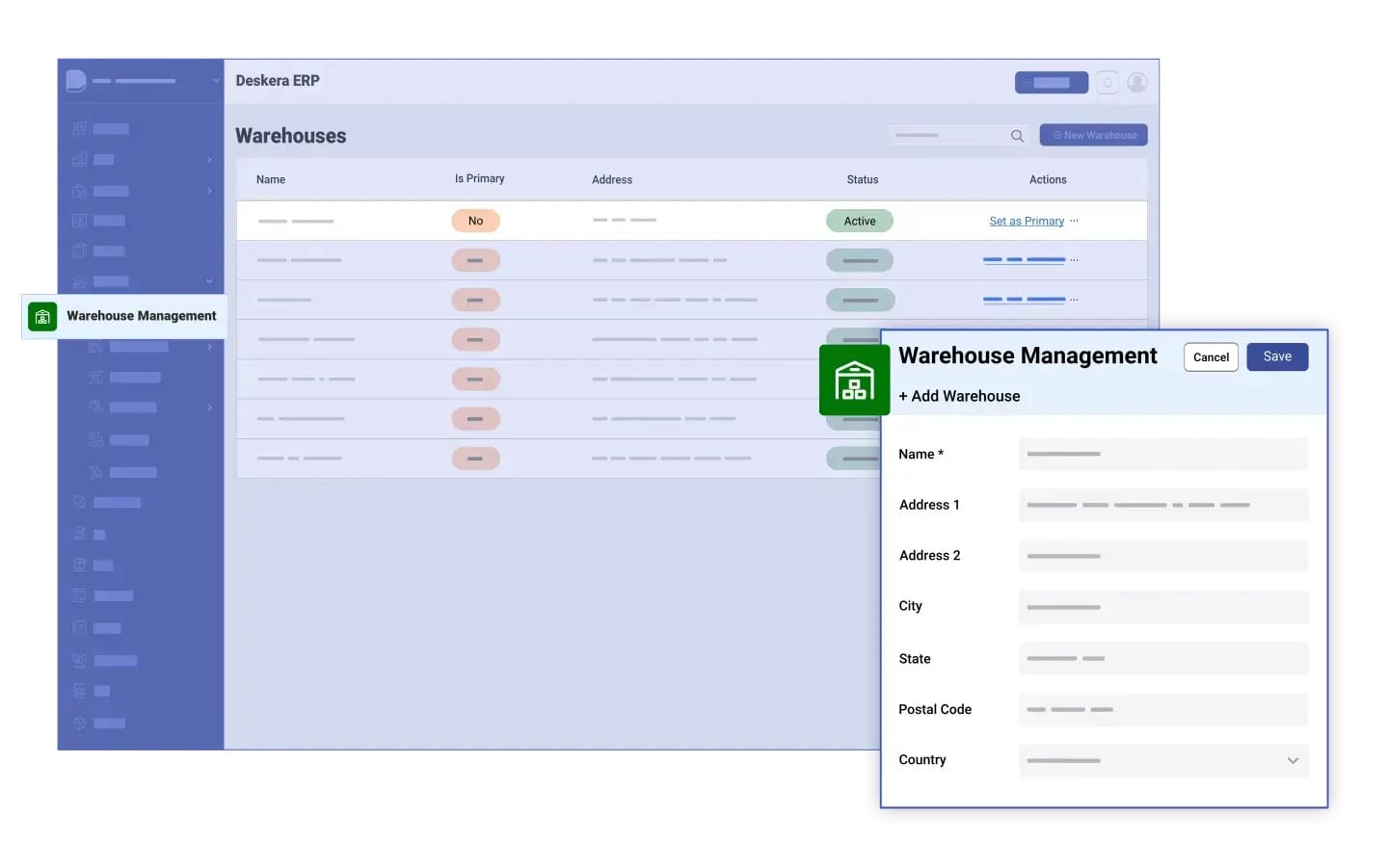
Reducing warehouse picking errors requires clear visibility, accurate inventory, and streamlined workflows. Deskera ERP supports warehouses with practical tools that minimize mistakes by guiding staff, automating validation, and ensuring up-to-date stock information. Here’s how its features help improve picking accuracy:
1. Barcode Scanning & Item Validation
Deskera ERP supports barcode scanning to verify SKUs and locations during picking. Workers can scan items to confirm they match order details, reducing human error. Integration with inventory records ensures real-time validation, helping pickers select the right items efficiently while maintaining accurate stock levels across the warehouse.
2. Real-Time Inventory Visibility
With Deskera ERP, inventory levels update in real time as items are picked, packed, or moved. This ensures staff always work with accurate stock data, preventing errors caused by selecting unavailable items. Real-time visibility also supports better decision-making for replenishment and order fulfilment.
3. Structured Warehouse Locations
Deskera allows warehouses to organize stock with clear row, rack, and bin details. This structured approach reduces confusion, helping pickers locate items quickly and accurately. Logical storage layouts minimize backtracking and mispicks, especially in warehouses with high SKU counts or fast-moving inventory.
4. Pick, Pack & Ship Workflows
Deskera ERP manages standardized pick, pack, and ship workflows, ensuring orders follow a consistent process. Staff can track which items have been picked, packed, or shipped, reducing missed items or incorrect quantities. Clear workflows improve efficiency and accuracy across all fulfilment stages.
5. Cycle Counts & Inventory Reconciliation
Regular cycle counts and inventory reconciliation in Deskera ERP help maintain accurate stock records. Identifying discrepancies early prevents pickers from working with incorrect data, reducing errors. Routine checks ensure inventory integrity, particularly for high-volume or high-value SKUs.
6. Reporting & Analytics
Deskera provides reports on stock movements, order fulfilment, and inventory performance. These insights help managers identify trends, bottlenecks, or frequently mispicked SKUs, enabling data-driven adjustments to workflows, training, and warehouse organization for improved picking accuracy.
Key Takeaways
- Minimizing picking errors directly improves order accuracy, customer satisfaction, and operational efficiency, preventing costly returns and delays.
- A combination of standardized SOPs, technology adoption, layout optimization, and staff training systematically reduces mispicks and improves warehouse workflow.
- Lowering warehouse expenses through accuracy and efficiency frees up capital, increases profitability, and supports scalable growth.
- Deskera ERP streamlines picking with real-time inventory updates, barcode scanning, built-in QC, exception management, and automated workflows, enabling higher accuracy and fewer errors.
Related Articles
 Niti Samani
 Niti Samani
 Damini
 Niti Samani
 Niti Samani
 Niti Samani