


Why do some companies consistently launch products faster than their competitors and capture market share early? The answer lies in how effectively they manage their time to market (TTM)—the total time it takes to move a product from initial concept to final launch. In today’s fast-paced and highly competitive business environment, speed is no longer optional; it’s a strategic advantage that can determine whether a product succeeds or fades into obscurity.
Time to market is more than just a timeline—it reflects how well an organization aligns its product development, supply chain, and operational processes. A shorter TTM allows businesses to respond quickly to changing customer demands, capitalize on emerging trends, and stay ahead of competitors. On the other hand, delays can lead to missed opportunities, increased costs, and reduced profitability, especially in industries where innovation cycles are rapidly accelerating.
However, improving time to market is not without its challenges. Businesses often struggle with inefficient workflows, lack of real-time visibility, siloed teams, and supply chain disruptions. These obstacles can slow down decision-making and create bottlenecks at critical stages of product development. As a result, companies must adopt smarter strategies and leverage technology to streamline operations and accelerate their go-to-market processes.
This is where solutions like Deskera ERP play a crucial role. Deskera ERP provides a unified platform that integrates inventory management, procurement, production planning, and financials into a single system. With real-time data visibility, automated workflows, and seamless collaboration across departments, businesses can identify delays early and make faster, data-driven decisions. By simplifying complex processes and improving operational efficiency, Deskera ERP empowers organizations to significantly reduce their time to market and stay competitive in dynamic markets.
What Is Time to Market (TTM)?
Time to market (TTM) refers to the total time it takes for a product or service to move from the initial idea or concept stage to its final launch in the market where customers can purchase or use it. It captures the entire journey—starting from ideation and planning, through design, development, and testing, all the way to commercialization. In essence, TTM reflects how quickly a business can transform an idea into a market-ready offering.
While TTM is most commonly associated with new product development, it also applies to launching new features, services, marketing campaigns, or even internal processes. It is often considered a key performance indicator (KPI) because it measures how efficiently an organization can respond to market demand and competitive pressures. However, TTM is not just about speed—it is about achieving the right balance between speed, quality, cost, and customer expectations.
The time-to-market process typically consists of several critical stages, including ideation, product design, prototyping, testing, production, and market introduction. The exact start and end points may vary across industries. For example, some companies begin measuring TTM from the moment a product idea is approved, while others may start when development begins. Similarly, the endpoint could be the first sale, product launch, or full market availability, making TTM a flexible and context-dependent metric.
A shorter time to market gives businesses a significant competitive advantage. It enables them to capture early demand, generate revenue faster, and strengthen customer relationships by meeting expectations quickly. At the same time, rushing the process without proper coordination can lead to issues such as inconsistent product information, quality concerns, or operational inefficiencies. This is why effective time-to-market management requires strong collaboration, accurate data, and streamlined processes across the entire organization.
Importance of Time to Market (TTM)
In today’s fast-paced and highly competitive business environment, timing can be the difference between success and failure. Time to market (TTM) plays a critical role in determining how effectively a company can seize opportunities, respond to customer demands, and outperform competitors. It is not just a measure of speed but a strategic lever that directly impacts revenue, profitability, market position, and long-term growth.
A well-optimized TTM enables businesses to launch products at the right moment, capitalize on emerging trends, and establish a strong foothold in the market. Conversely, delays can result in missed opportunities, higher costs, and reduced competitiveness.
Below are the key reasons why time to market is so important:
First-Mover Advantage and Competitive Edge
Being first to market allows businesses to capture early customer attention, establish brand recognition, and shape consumer preferences before competitors enter the space. This first-mover advantage often leads to stronger market positioning and customer loyalty. On the other hand, a delayed launch can force companies to compete in an already saturated market, making it harder to differentiate and gain traction.
Faster Revenue Generation and ROI
A shorter TTM means products reach customers sooner, enabling businesses to start generating revenue earlier. This accelerates return on investment (ROI) and improves overall financial performance. In contrast, longer development cycles delay revenue streams and increase the risk of losing potential sales to faster competitors.
Cost Reduction and Improved Profitability
Reducing time to market can significantly lower development and operational costs. The longer a product remains in the development phase, the higher the expenses related to labor, resources, and overhead. By shortening TTM, businesses can optimize resource utilization and enhance profit margins.
Increased Market Share
Launching products early gives companies access to untapped or less competitive markets, increasing their chances of capturing a larger market share. Early entry allows businesses to dominate demand before alternatives become available, strengthening their position in the industry.
Enhanced Customer Satisfaction and Loyalty
Faster product launches enable businesses to respond quickly to customer needs and expectations. Delivering timely and relevant solutions improves customer satisfaction, builds trust, and encourages repeat purchases. It also allows companies to gather early feedback and refine their offerings for better long-term success.
Stronger Brand Reputation and Innovation
Consistently bringing products to market quickly signals innovation and agility. It positions a brand as forward-thinking and responsive to market trends. This not only enhances brand reputation but also increases perceived value among customers and stakeholders.
Reduced Risk of Market Changes and Obsolescence
Markets evolve rapidly, and customer preferences can shift within a short period. A long TTM increases the risk that a product may become outdated or irrelevant by the time it is launched. Faster time to market helps businesses stay aligned with current trends and reduces the likelihood of costly rework or failure.
Better Strategic Planning and Execution
TTM provides a clear framework for planning product development and launch timelines. It helps organizations align teams, streamline workflows, and improve coordination across departments. By focusing on TTM, businesses can create more predictable processes and execute strategies more effectively.
Maximized Product Lifecycle Value
Entering the market early allows companies to fully capitalize on the product lifecycle, especially during the high-demand early stages. This extended market presence increases revenue potential and ensures better returns over the product’s lifespan.
By prioritizing time to market, businesses can unlock significant advantages across financial performance, customer relationships, and competitive positioning—making it a crucial metric for sustainable growth.
Types of Time to Market (TTM)
Time to market is not a one-size-fits-all concept. Depending on business goals, industry dynamics, and product strategies, organizations may prioritize different aspects of TTM. These variations are often categorized into distinct types, each focusing on a specific objective within the product development and launch cycle.
Understanding these types helps businesses choose the right approach to optimize their market entry strategy.
Speed-Focused Time to Market
This is the most widely recognized type of TTM, where the primary goal is to launch a product as quickly as possible. Businesses adopting this approach prioritize rapid development and early market entry to gain a first-mover advantage.
It is especially critical in fast-evolving industries like technology, where products can become obsolete quickly. However, while speed is crucial, companies must ensure that quality and customer expectations are not compromised in the race to launch first.
Agility-Focused Time to Market
Agility-focused TTM emphasizes flexibility and the ability to adapt quickly during the product development process. Instead of just focusing on speed, businesses aim to continuously improve product features, respond to customer feedback, and make adjustments without delaying the final launch.
This approach is particularly useful in dynamic markets where customer preferences and requirements evolve rapidly, allowing companies to stay relevant and competitive.
Predictability-Focused Time to Market
In this type, the focus is on delivering products consistently within planned timelines. Predictability is crucial for industries where timing is tied to specific events, seasons, or market windows—such as retail, fashion, or holiday-related products.
Businesses prioritize structured planning, reliable processes, and accurate forecasting to ensure products are launched exactly when needed. Missing these timelines can result in lost sales opportunities and reduced market impact.
By understanding these different types of time to market, businesses can align their strategies with their objectives—whether it’s being first, staying flexible, or ensuring timely and reliable product launches.
How to Measure Time to Market (TTM)
Measuring time to market (TTM) is essential for understanding how efficiently your organization can turn ideas into market-ready products. At its core, TTM is measured as the total time taken from the beginning of a product’s journey to its final launch.
While the concept is simple, the way it is measured can vary depending on business goals, industry standards, and internal processes. Establishing a clear and consistent measurement approach helps identify bottlenecks, improve planning, and accelerate future product launches.
Define the Start and End Points
The first step in measuring TTM is deciding when the clock starts and stops. The starting point could be when an idea is first proposed, approved, or when resources are assigned to the project.
Similarly, the endpoint might be when the product enters manufacturing, is launched in the market, or achieves its first sale. Since definitions can vary, it is important to standardize these points across projects to ensure consistency and accurate benchmarking.
Track the Total Development Cycle Time
Once the boundaries are defined, measure the total time taken to move from concept to launch. This is typically recorded in days, weeks, or months, depending on the complexity of the product.
Tracking this overall duration provides a high-level view of development efficiency and helps organizations compare performance across different products or teams.
Break Down the Process into Stages
To gain deeper insights, divide the product lifecycle into key phases such as ideation, design, development, testing, and launch. Measuring the time spent in each stage helps identify where delays occur and which areas need improvement. This stage-wise analysis is critical for optimizing workflows and reducing inefficiencies.
Use Key Performance Indicators (KPIs)
Several KPIs can be used to measure and evaluate TTM effectively:
- Average time to market to assess overall speed
- Cycle time per development stage to identify bottlenecks
- On-time delivery rate to measure adherence to planned timelines
- Change request turnaround time to evaluate responsiveness
- Number of releases per year to gauge innovation and agility
- Development cycle duration and team efficiency metrics
These indicators provide both quantitative and qualitative insights into the product development process.
Estimate and Compare Planned vs. Actual TTM
Before starting a project, create an estimated timeline for each phase of development. After the product launch, compare the estimated TTM with the actual time taken. This comparison helps assess team performance, identify gaps, and improve future planning accuracy.
Leverage Tools and Technology
Modern tools such as ERP systems, project management software, and analytics platforms play a crucial role in measuring TTM. These tools provide real-time visibility into project progress, automate milestone tracking, and highlight delays or inefficiencies. Advanced analytics can even predict potential bottlenecks, enabling proactive decision-making.
Account for Project Complexity
Not all products are equal in terms of scope and complexity. When comparing TTM across projects, it is important to consider factors such as product intricacy, resource requirements, and regulatory constraints. This ensures fair evaluation and more meaningful insights.
Continuously Monitor and Improve
Measuring TTM is not a one-time activity. Organizations should continuously track performance, analyze results, and refine their processes. By learning from past projects and applying those insights, businesses can progressively reduce time to market and improve overall efficiency.
By following a structured approach to measuring time to market, businesses can gain better control over their product development cycles, enhance decision-making, and achieve faster, more reliable market launches.
Factors That Influence Time to Market (TTM)
Time to market is shaped by a combination of internal processes, external conditions, and strategic decisions. Some factors are within a company’s control—such as workflows and technology—while others, like market dynamics and regulations, require careful planning and adaptability.
Understanding these factors is essential for identifying bottlenecks, improving efficiency, and accelerating product launches.
Product Development Strategy
A well-defined product development strategy plays a crucial role in determining TTM. Clear planning, structured workflows, and defined milestones help streamline the journey from concept to launch.
Approaches like Minimum Viable Product (MVP) allow businesses to release early versions, gather feedback, and iterate quickly—reducing overall development time.
Adoption of Agile Methodology
Agile methodologies significantly impact TTM by enabling iterative development and continuous feedback. Instead of long, rigid development cycles, Agile promotes shorter sprints, faster testing, and ongoing improvements. This reduces rework, enhances flexibility, and accelerates delivery timelines.
Cross-Functional Collaboration
Effective collaboration across departments—such as R&D, production, marketing, and supply chain—helps eliminate silos and improve communication. Cross-functional teams enable faster decision-making, quicker problem resolution, and smoother transitions between development stages, all of which contribute to shorter TTM.
Resource Allocation and Workflow Efficiency
Proper allocation of resources, including workforce, budget, and technology, ensures that projects move forward without delays. Efficient workflows, supported by streamlined processes and automation, reduce bottlenecks and maintain momentum throughout the product lifecycle.
Product Complexity
The complexity of a product directly impacts how long it takes to develop and launch. Products with multiple features, components, or dependencies require more time for design, testing, and validation. Balancing complexity with speed is essential to avoid delays while maintaining quality.
Technology and Infrastructure
The tools and systems a company uses can either accelerate or slow down TTM. Modern, integrated technologies—such as ERP systems, automation tools, and analytics platforms—enable real-time visibility and faster decision-making. In contrast, outdated or fragmented systems often lead to inefficiencies and delays.
Business Processes and Decision-Making
Organizations with complex approval hierarchies and slow decision-making processes tend to experience longer TTM. Streamlined processes, clear accountability, and faster approvals help reduce delays and improve overall efficiency.
Budget and Financial Resources
The availability of financial resources influences how quickly a product can be developed and launched. Adequate funding allows businesses to invest in skilled talent, advanced tools, and faster production capabilities, while limited budgets may slow down progress.
Market Demand and Readiness
Market conditions and customer demand play a significant role in determining TTM. High demand can accelerate product development and prioritization, while launching too early or too late can impact success. Aligning product launches with market readiness is critical for maximizing impact.
Regulatory and Compliance Requirements
In industries such as healthcare, manufacturing, and food production, compliance with regulations can significantly affect TTM. Delays in approvals, certifications, or quality checks can extend timelines, making early planning and compliance management essential.
Competitive Pressure
The level of competition in the market influences how quickly companies need to launch their products. Intense competition often pushes businesses to accelerate development to secure first-mover advantage or maintain relevance.
By understanding and managing these factors effectively, businesses can optimize their processes, reduce delays, and achieve faster, more efficient time to market—ultimately gaining a stronger competitive edge.
Typical Time to Market (TTM) Averages by Industry
Time to market (TTM) is not uniform across industries—it varies significantly based on factors such as product complexity, regulatory requirements, development processes, and innovation cycles. While some industries can launch products within months, others require years or even decades due to strict compliance and extensive testing.
Understanding these variations helps businesses set realistic expectations and benchmark their performance effectively.
Software and SaaS (6–18 Months)
Software and SaaS products typically have the shortest TTM due to minimal physical production requirements and the ability to iterate quickly. Agile development, continuous integration, and cloud-based deployment enable faster releases. Many companies launch minimum viable products (MVPs) within months and refine them post-launch.
Consumer Packaged Goods (6–18 Months)
Products such as food, beverages, and personal care items usually take between 6 to 18 months to reach the market. While development cycles are relatively short, factors like packaging design, supply chain coordination, and retail distribution play a key role in determining TTM.
Consumer Electronics (1–3 Years)
Devices like smartphones, laptops, and wearables require longer development cycles due to hardware design, prototyping, testing, and manufacturing complexities. Balancing software stability with hardware production timelines often extends TTM to one to three years.
Automotive (3–5 Years)
The automotive industry typically experiences longer TTM due to engineering complexity, safety testing, and regulatory approvals. Developing new vehicle models involves extensive design, prototyping, and validation processes. However, advancements in technology and agile practices are helping some companies shorten these timelines.
Medical Devices (2–3 Years)
Medical devices require rigorous testing, quality assurance, and regulatory approvals to ensure safety and effectiveness. These compliance requirements extend TTM to around two to three years, even for relatively simple devices.
Pharmaceuticals (8–12 Years)
The pharmaceutical industry has one of the longest TTM cycles due to extensive research, clinical trials, and strict regulatory approvals. Developing a new drug can take anywhere from 8 to 12 years, although exceptional cases—such as emergency vaccine development—can significantly shorten timelines.
Aerospace and Defense (3–22 Years)
Projects in aerospace and defense involve extreme complexity, high costs, and stringent regulations. Development timelines can range from a few years to over two decades, depending on the scale, technology, and mission requirements.
These averages highlight how industry characteristics shape time to market. Businesses should evaluate their own TTM performance within the context of their industry while continuously seeking ways to optimize processes and reduce delays.
Advantages of Accelerating Time to Market (TTM)
Accelerating time to market (TTM) goes beyond simply launching faster—it transforms how efficiently a business operates, adapts, and scales. When organizations reduce delays across product development and go-to-market execution, they unlock tangible operational and strategic benefits that directly impact growth, agility, and long-term sustainability.
Earlier Revenue Realization and Extended Earning Window
Bringing a product to market sooner allows businesses to start monetizing earlier and extend the total revenue-generating lifecycle of the product. This longer earning window increases cumulative returns without necessarily increasing development investment.
Reduced Development Cycle Costs
Shorter development timelines help minimize ongoing expenses such as labor, infrastructure, testing, and overhead. By avoiding prolonged development phases and inefficiencies, businesses can significantly improve cost control and overall project profitability.
Improved Operational Efficiency
Accelerating TTM forces organizations to streamline workflows, eliminate bottlenecks, and optimize resource utilization. This results in more efficient processes, better coordination across teams, and improved execution in future projects.
Higher Release Frequency and Innovation Velocity
Faster TTM enables companies to launch products, updates, or features more frequently. This increased release cadence strengthens innovation capabilities and allows businesses to continuously evolve their offerings based on real-world feedback.
Greater Flexibility to Adapt and Pivot
Shorter development cycles provide the flexibility to quickly respond to new information, customer feedback, or unexpected changes. Businesses can refine products, adjust strategies, or pivot direction without being locked into long, rigid timelines.
Stronger Alignment with Market Timing
Accelerating TTM helps ensure that products are launched when demand is at its peak. This alignment with market readiness improves the effectiveness of product launches and reduces the risk of entering too early or too late.
Increased Investor and Stakeholder Confidence
Consistently delivering products within shorter timelines demonstrates strong execution capabilities and operational maturity. This builds confidence among investors and stakeholders, signaling that the business can efficiently turn ideas into results.
Better Utilization of Resources Across Projects
When products are developed and launched faster, teams and resources become available sooner for new initiatives. This improves overall productivity and allows organizations to take on more projects without increasing resource strain.
By accelerating time to market, businesses not only improve speed but also enhance efficiency, adaptability, and execution quality—creating a stronger foundation for sustained growth and innovation.
Common Time to Market (TTM) Challenges
Despite careful planning and strong intent, many organizations struggle to achieve faster time to market due to a range of internal inefficiencies and external uncertainties. These challenges can slow down product development, increase costs, and cause missed market opportunities. Identifying and addressing these obstacles is essential for improving TTM performance.
Bottlenecks and Poor Collaboration
One of the most common challenges is the presence of bottlenecks caused by misaligned teams and ineffective communication. When departments operate in silos or lack clear ownership, even minor issues can lead to delays, rework, and slow decision-making. Without transparent workflows and shared goals, progress across the product lifecycle becomes inconsistent.
Organizational Inertia and Resistance to Change
Many organizations struggle with outdated processes and resistance to adopting new ways of working. Teams often rely on legacy systems and traditional workflows, even when they are inefficient. This inertia slows down innovation and prevents businesses from adapting quickly to market demands.
Feature Creep and Scope Expansion
Expanding product features during development—commonly known as feature creep—can significantly delay launches. Adding new requirements mid-cycle increases complexity, extends testing timelines, and diverts focus from core functionality, ultimately pushing back release dates.
Quality Control and Testing Delays
While speed is important, maintaining product quality is equally critical. Insufficient testing or rushed quality checks can result in defects, rework, or even product recalls. In many cases, fixing issues after development takes longer than addressing them early, leading to further delays.
Regulatory and Compliance Hurdles
Industries such as healthcare, finance, and manufacturing face strict regulatory requirements that can extend TTM. Delays in approvals, evolving compliance standards, or incomplete documentation can disrupt timelines and require additional revisions.
Supply Chain Disruptions
Dependence on suppliers, raw materials, and logistics networks introduces risks that can delay production and product launches. Shortages, transportation issues, or geopolitical factors can create unexpected setbacks, making supply chain resilience a key factor in TTM.
Resource Constraints
Limited budgets, workforce shortages, or lack of specialized skills can slow down development. Without adequate resources, teams may struggle to meet deadlines, leading to extended timelines and reduced efficiency.
Changing Market Conditions
Customer preferences, competitor actions, and market trends can shift rapidly. Products that are relevant at the start of development may require adjustments later, causing delays. Late-stage changes or pivots can significantly impact TTM.
Inefficient Processes and Approval Delays
Complex approval hierarchies and lengthy decision-making processes can stall progress. When too many stakeholders are involved or processes are overly bureaucratic, even simple decisions can take significant time, delaying the overall timeline.
Lack of Real-Time Visibility and Data
Without access to real-time data and insights, teams may struggle to identify issues early or make informed decisions. Poor visibility into project progress, resource utilization, or risks can lead to delays and inefficiencies.
Addressing these challenges requires a proactive and structured approach—focusing on better collaboration, streamlined processes, and the adoption of modern technologies. By overcoming these barriers, businesses can significantly improve their ability to bring products to market faster and more effectively.
Strategies for Optimizing and Improving Time to Market (TTM)
Optimizing time to market (TTM) requires a structured approach that combines process efficiency, smart resource utilization, and the right technology. Rather than simply speeding up development, businesses need to eliminate bottlenecks, improve coordination, and create systems that enable faster and more reliable execution.
The following strategies can help organizations streamline their product journey and achieve faster market entry without compromising quality.
Leverage Automation and Digital Tools
Automation reduces manual effort, minimizes errors, and speeds up repetitive tasks across the product lifecycle. Tools such as project management software, ERP systems, and AI-powered analytics enable real-time visibility, faster approvals, and seamless coordination. By automating workflows, teams can focus on high-value activities like innovation and problem-solving.
Adopt Agile Development Practices
Agile methodologies replace rigid, linear processes with iterative development cycles. Breaking projects into smaller sprints allows teams to test ideas early, gather feedback, and make improvements continuously. This reduces rework, enhances flexibility, and ensures faster progress toward launch.
Focus on Minimum Viable Product (MVP)
Instead of building a fully-featured product from the start, businesses can prioritize a minimum viable product (MVP) that addresses core customer needs. Launching an MVP allows companies to enter the market faster, validate assumptions, and refine features based on real user feedback.
Streamline Workflows and Reduce Bottlenecks
Complex workflows and excessive approvals can significantly delay product launches. Simplifying processes, eliminating unnecessary steps, and clearly defining roles and responsibilities help improve efficiency. Faster decision-making and smoother handoffs between teams are critical to reducing delays.
Strengthen Cross-Functional Collaboration
Close collaboration between departments—such as product, engineering, marketing, and operations—ensures alignment from the early stages of development. Breaking down silos, maintaining transparent communication, and using centralized collaboration tools help teams resolve issues quickly and keep projects on track.
Optimize Resource Allocation
Assigning the right people, budget, and tools to the right tasks ensures that projects progress without interruptions. Strategic allocation of resources enables parallel workstreams, improves productivity, and prevents delays caused by resource shortages or mismanagement.
Implement Rapid Prototyping and Continuous Testing
Early and frequent testing helps identify design flaws and technical issues before they escalate. Rapid prototyping enables teams to validate concepts quickly, while continuous testing ensures quality throughout the development process, reducing the need for time-consuming rework later.
Enhance Decision-Making Processes
Delays often occur due to slow or unclear decision-making. Establishing structured decision frameworks, limiting unnecessary approvals, and empowering teams to make informed decisions can significantly accelerate development timelines.
Leverage Data-Driven Insights
Using data analytics helps businesses make informed decisions about product design, demand forecasting, and market readiness. Real-time insights allow teams to identify risks, prioritize tasks effectively, and optimize strategies for faster execution.
Consider Strategic Outsourcing
Outsourcing specific tasks to external experts can help accelerate development, especially when specialized skills are required. It allows internal teams to focus on core competencies while leveraging external expertise to speed up execution.
Proactively Manage Risks
Identifying potential risks early in the development cycle helps prevent delays. By implementing proactive risk management strategies, businesses can mitigate disruptions related to supply chain issues, regulatory changes, or technical challenges.
Maintain Flexibility and Adaptability
Markets and customer preferences can change rapidly. Maintaining flexibility throughout the development process allows businesses to adapt quickly, make necessary adjustments, and avoid delays caused by unexpected changes.
By combining these strategies, organizations can build a more agile, efficient, and responsive product development process—enabling them to consistently reduce time to market and stay competitive in dynamic industries.
Key Decision-Making Considerations for Optimizing Time to Market (TTM)
Improving time to market is not just about execution—it also involves making strategic trade-offs that can significantly impact product success. Businesses must carefully evaluate priorities, resources, and outcomes to strike the right balance between speed, quality, and cost.
The following are some of the most important decisions organizations need to make when optimizing TTM:
Speed vs. Product Quality
One of the most critical decisions is whether to prioritize speed or product quality. While launching quickly can provide a competitive edge, releasing a product that fails to meet basic expectations can damage brand reputation and customer trust. Businesses must ensure that even a fast launch delivers at least a minimum viable product (MVP) that provides real value to users.
Resource Investment vs. Cost Control
Accelerating TTM often requires additional resources, such as hiring more talent, investing in better tools, or outsourcing certain tasks. However, increasing resources also raises costs. Organizations must decide whether the potential gains from a faster launch justify the additional investment, or if maintaining tighter cost control is the priority.
Feature Prioritization vs. Scope Expansion
Deciding which features to include in the initial release is a key strategic choice. Adding more features can improve product appeal but may significantly delay the launch. On the other hand, limiting features helps speed up development but may impact customer satisfaction. Businesses must carefully prioritize features that deliver the most value while deferring less critical ones.
First-Mover Advantage vs. Fast Follower Strategy
Companies must decide whether to aim for being first to market or to enter later with a more refined product. While first movers can capture early market share, fast followers can learn from competitors’ mistakes and deliver improved offerings. Choosing the right approach depends on market dynamics, competition, and internal capabilities.
In-House Development vs. Outsourcing
Organizations often need to decide whether to handle development internally or outsource specific tasks to external partners. Outsourcing can speed up execution by leveraging specialized expertise, but it may introduce challenges related to coordination and quality control.
Flexibility vs. Process Stability
Maintaining flexibility allows teams to adapt quickly to changes in customer needs or market conditions. However, too much flexibility can lead to scope changes and delays. Businesses must balance adaptability with structured processes to ensure consistent progress.
Making the right decisions around these trade-offs is essential for optimizing time to market. By carefully evaluating each factor, businesses can align their strategy with their goals and achieve faster, more effective product launches.
How Deskera ERP Helps Improve Time to Market (TTM)
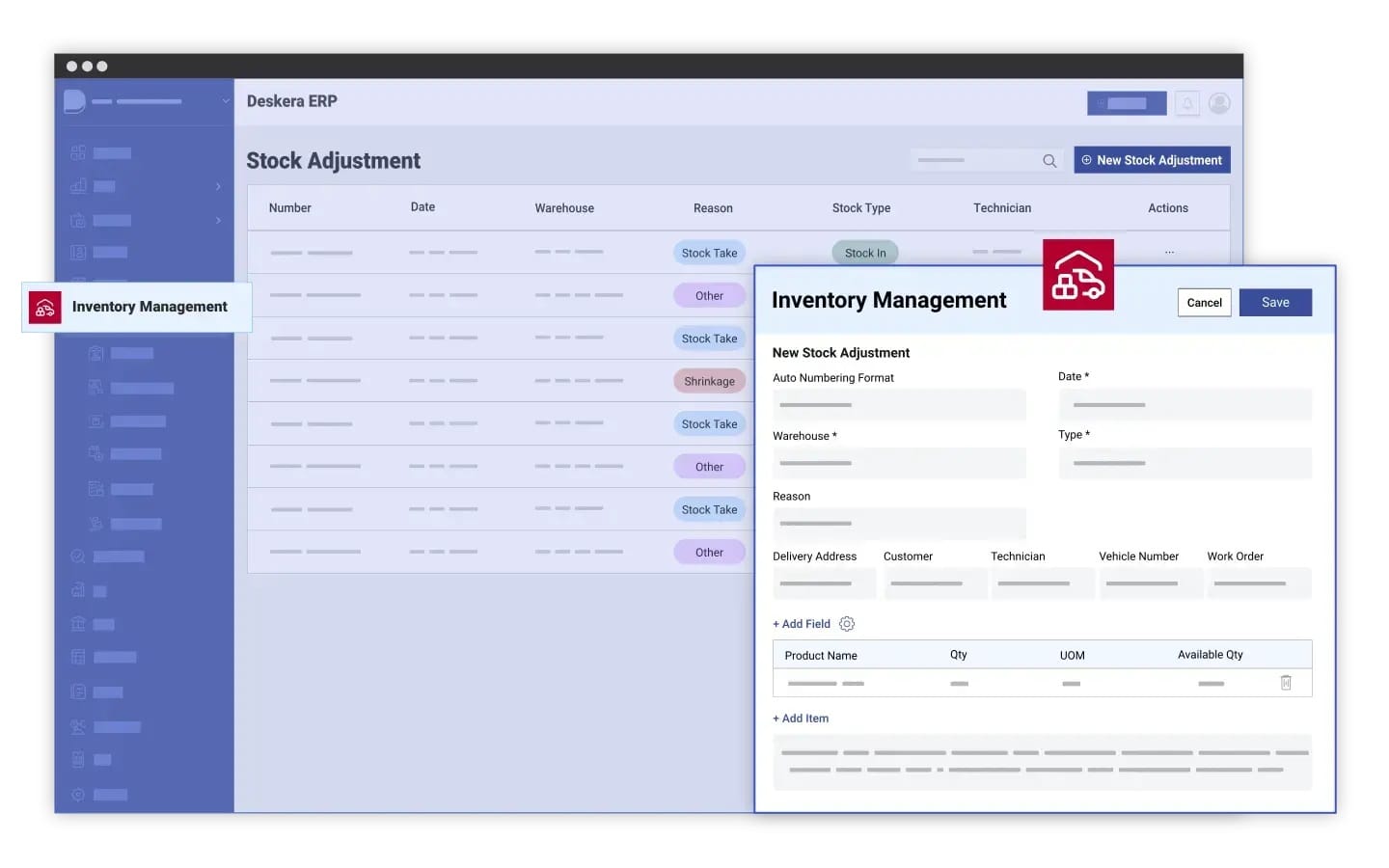
Reducing time to market requires more than just faster execution—it demands visibility, coordination, and control across the entire product lifecycle. This is where Deskera ERP plays a critical role. By integrating key business functions into a single platform, it enables organizations to streamline operations, eliminate bottlenecks, and accelerate product development and launch cycles.
Centralized Data and Real-Time Visibility
Deskera ERP provides a unified system where all business data—inventory, production, procurement, and finance—is accessible in real time. This eliminates data silos and ensures that teams can make faster, more informed decisions without delays caused by fragmented information.
Streamlined Production Planning and Scheduling
With advanced production planning tools, Deskera ERP helps businesses optimize manufacturing schedules, allocate resources efficiently, and reduce idle time. Better planning ensures that production processes run smoothly, minimizing delays in getting products ready for market.
Efficient Inventory and Supply Chain Management
Deskera ERP enables real-time tracking of inventory levels, supplier performance, and order status. This helps prevent stockouts, overstocking, and supply chain disruptions—common factors that delay product launches. Improved coordination with suppliers ensures timely availability of materials.
Automated Procurement Processes
Manual procurement processes can slow down development timelines. Deskera ERP automates purchase requests, approvals, and vendor management, reducing lead times and ensuring that required materials and services are available when needed.
Improved Cross-Functional Collaboration
By connecting departments such as procurement, production, finance, and sales, Deskera ERP enhances collaboration across teams. Everyone works with the same data and insights, enabling faster communication, better alignment, and quicker decision-making.
Faster Financial Tracking and Budget Control
Deskera ERP integrates financial management with operational processes, allowing businesses to track costs, budgets, and cash flow in real time. This helps prevent financial bottlenecks and ensures that projects stay on track without delays caused by funding or cost overruns.
Workflow Automation and Reduced Manual Errors
Automation of routine tasks—such as reporting, approvals, and data entry—reduces manual effort and minimizes errors. This not only speeds up processes but also improves accuracy, preventing costly delays caused by rework.
Data-Driven Insights and Performance Monitoring
With built-in analytics and reporting tools, Deskera ERP provides insights into key performance metrics, including production timelines and operational efficiency. Businesses can quickly identify bottlenecks, monitor progress, and take corrective action to keep projects on schedule.
By bringing together people, processes, and data into a single ecosystem, Deskera ERP enables businesses to operate more efficiently and respond faster to market demands. The result is a shorter, more predictable time to market—helping organizations stay competitive and capitalize on opportunities with confidence.
Key Takeaways
- Time to market (TTM) measures the total time taken to move a product from initial concept to final launch, reflecting a company’s execution efficiency and responsiveness to market demand.
- TTM is critical because it directly impacts revenue potential, competitive positioning, market share, and overall business profitability.
- Different types of TTM—speed, agility, and predictability—highlight varying strategic priorities depending on industry needs and business goals.
- Measuring TTM requires clearly defined start and end points, along with KPIs such as cycle time, release frequency, and on-time delivery rates.
- Multiple factors influence TTM, including product complexity, resource allocation, workflows, market conditions, and technological capabilities.
- TTM varies significantly across industries, with faster cycles in software and longer timelines in highly regulated sectors like pharmaceuticals and aerospace.
- Accelerating TTM enhances adaptability, improves customer satisfaction, strengthens brand positioning, and increases overall business agility.
- Common challenges such as bottlenecks, poor collaboration, regulatory hurdles, and supply chain disruptions can delay product launches and reduce efficiency.
- Optimizing TTM requires strategies like adopting agile methodologies, leveraging automation, improving collaboration, and streamlining workflows.
- Effective decision-making—balancing speed, quality, cost, and scope—is essential to successfully reduce TTM without compromising product value.
- Deskera ERP supports faster time to market by integrating operations, automating workflows, improving visibility, and enabling better coordination across teams.
Related Articles
 Niti Samani
 Niti Samani
 Niti Samani
 Niti Samani
 Niti Samani
 Niti Samani