


Are traditional budgets enough to help businesses navigate today’s rapidly changing markets? The answer is increasingly no. Static annual budgets often become outdated within months due to market fluctuations, shifting customer demand, and unexpected economic changes. To stay competitive and financially agile, organizations are turning to more flexible planning approaches such as rolling forecasts, which allow them to continuously update financial projections and adapt to new information.
A rolling forecast is a dynamic financial planning method that continuously updates projections for a set future period—such as 12 or 18 months—by regularly adding new data and dropping completed periods. Unlike traditional budgeting, which typically remains fixed for the entire year, rolling forecasts provide businesses with a forward-looking view of their financial performance. This approach enables organizations to respond quickly to changes, improve financial accuracy, and make better strategic decisions.
Rolling forecasts are particularly valuable in today’s unpredictable business environment. Companies face constant changes in supply chains, customer behavior, operational costs, and market conditions. By updating forecasts monthly or quarterly, businesses can better anticipate risks, identify opportunities, and allocate resources more effectively. As a result, rolling forecasting has become an essential tool for modern financial planning and performance management.
Modern ERP solutions such as Deskera ERP further enhance the effectiveness of rolling forecasts by providing centralized financial data, automated reporting, and real-time insights. With integrated accounting, financial analytics, and customizable dashboards, Deskera ERP helps businesses track financial performance and update forecasts more efficiently. By streamlining financial management and enabling data-driven decision-making, the platform supports organizations in maintaining accurate and agile forecasting processes.
What is a Rolling Forecast?
A rolling forecast is a dynamic financial planning method that continuously updates a company’s financial projections over a specific future period. Instead of relying on a fixed annual forecast, this approach regularly replaces completed periods with actual results and adds new future periods to maintain a consistent planning horizon. In simple terms, as one month or quarter ends, it “rolls off” the forecast while a new period is added, keeping the outlook forward-looking and relevant.
Rolling forecasts typically rely on both historical data and current business insights to estimate future performance. Organizations analyze internal factors such as sales performance, operational costs, and workforce requirements, along with external factors like market conditions and economic trends. This combination of quantitative data and qualitative insights helps businesses create more realistic and adaptable financial projections.
Financial rolling forecasts are often used to estimate the activities reflected in a company’s three key financial statements: the income statement, balance sheet, and cash flow statement. Among these, income statement forecasts are commonly used to predict revenue, expenses, and profitability, which helps leadership make informed strategic decisions. Cash flow forecasting is also critical because it enables businesses—especially small and midsize companies—to anticipate potential liquidity issues and manage financial stability.
A defining characteristic of rolling forecasts is the “add-and-drop” or “actualization” approach. As each forecasting period ends, actual financial results replace the projected figures, and a new forecast period is added to maintain the same time horizon. Most organizations use a 12-month rolling forecast, though some may extend it to 18 months depending on their planning needs. By continuously updating projections, rolling forecasts help businesses remain agile and better prepared to respond to changing market conditions.
Rolling Forecasts vs Static Budgets
Understanding the difference between rolling forecasts and static budgets is essential for effective financial planning and decision-making. While both approaches aim to estimate a company’s future financial performance, they differ significantly in how they handle time, flexibility, and changing business conditions. Traditional budgets are typically fixed for a specific period, whereas rolling forecasts are continuously updated to reflect new information and evolving market conditions.
Static vs Flexible
Static budgets follow a “set it and forget it” approach. They are usually created before the start of a fiscal year using historical data and assumptions available at that time. Once finalized, the budget remains unchanged throughout the year, providing organizations with clear financial targets for revenue, expenses, and resource allocation. This approach can work well for businesses operating in stable environments with predictable costs and revenues. However, because static budgets are inflexible, they can quickly become outdated when market conditions change.
Rolling forecasts, on the other hand, are dynamic and flexible. Businesses update them regularly—often monthly or quarterly—by replacing completed periods with actual results and adding new future periods. This continuous update process ensures that financial projections remain aligned with the latest data, trends, and business conditions. As a result, rolling forecasts are particularly valuable for companies operating in fast-changing or highly competitive industries.
Level of Detail
Traditional budgets often focus on high-level financial targets for the entire fiscal year. Organizations may set overall goals for revenue, capital expenditure, and operating costs without breaking them down into highly detailed departmental or operational forecasts. While this simplified structure makes budgeting easier to manage, it can limit visibility into specific performance drivers across the business.
Rolling forecasts usually provide more granular insights. Because they are updated frequently, they often include detailed projections by department, product line, or business unit. These forecasts may also incorporate assumptions, key performance indicators (KPIs), and performance drivers, allowing organizations to better understand how various factors influence financial outcomes.
Variance Analysis
Variance analysis plays an important role in both budgeting and forecasting, but it functions differently in each approach. In traditional budgeting, variance analysis typically involves comparing actual performance with the predetermined budget at the end of a reporting period. These insights are then used to evaluate performance and improve planning in the next budgeting cycle.
With rolling forecasts, variance analysis becomes a continuous process. Businesses regularly compare actual results with projected figures and use the insights to immediately adjust future forecasts. This ongoing evaluation helps organizations respond quickly to emerging trends and maintain more accurate financial projections.
Responsiveness to Market Changes
One of the biggest limitations of static budgets is their limited responsiveness to sudden market changes. Since the budget is fixed for the entire year, organizations often wait until the next planning cycle to adjust financial plans, even if major changes occur during the year.
Rolling forecasts are designed specifically to adapt to changing business environments. By updating projections regularly, companies can respond to shifts in customer demand, economic conditions, supply chain disruptions, or cost fluctuations. This proactive approach enables businesses to maintain better control over financial planning and make informed decisions based on the most recent data.
In practice, many organizations use both approaches together. The annual budget sets high-level financial goals and allocates resources, while the rolling forecast provides ongoing visibility into future performance and helps businesses adjust their strategies as conditions evolve.
Key Elements of Rolling Forecasts
Rolling forecasts provide a dynamic and forward-looking approach to financial planning. Unlike static budgets that remain fixed for a full year, rolling forecasts continuously evolve by incorporating new data and focusing on the operational factors that drive business performance.
To implement rolling forecasts effectively, organizations must understand the key elements that make this forecasting approach accurate, flexible, and valuable for strategic decision-making.
Driver-Based Planning
One of the most important elements of rolling forecasting is driver-based planning, which focuses on the key business metrics that directly influence financial outcomes. Instead of relying solely on static line items, rolling forecasts prioritize operational drivers such as sales volume, production capacity, customer demand, or pricing changes. By concentrating on these variables, businesses can better align financial projections with real-world performance.
For example, a subscription-based company may focus on metrics such as customer acquisition cost, churn rate, and average revenue per user. In contrast, a manufacturing company might prioritize production capacity, raw material costs, and inventory turnover. By linking forecasts to these drivers, organizations can create projections that are more realistic and responsive to operational changes.
Frequent Updates
Another defining feature of rolling forecasts is the regular update cycle. Instead of being prepared once a year like traditional budgets, rolling forecasts are typically updated monthly or quarterly. As each reporting period ends, actual results replace the projected figures, and a new forecast period is added to maintain the planning horizon.
Frequent updates allow businesses to quickly adjust their financial expectations based on the most recent information. For instance, if a company experiences an unexpected increase in demand, it can immediately revise its revenue projections, production plans, or marketing budgets. This continuous adjustment process improves forecasting accuracy and helps organizations respond proactively to changes.
Real-Time Data Integration
Reliable and timely data is essential for effective rolling forecasting. Real-time data integration ensures that forecasts are based on the most current financial and operational information available. Modern financial management systems and ERP platforms can automatically collect and consolidate data from multiple sources, reducing the need for manual data entry and minimizing errors.
By integrating financial, operational, and market data, organizations gain a comprehensive view of business performance. This enables decision-makers to identify emerging trends, monitor performance indicators, and make informed adjustments to forecasts when necessary.
Scenario Analysis
Rolling forecasts also support scenario analysis, which allows businesses to evaluate how different situations may impact their financial performance. By creating multiple “what-if” scenarios, organizations can assess potential outcomes and prepare strategies for different possibilities.
For example, a logistics company may analyze how rising fuel costs could affect profitability, while a retail business might evaluate the impact of seasonal demand fluctuations. Scenario analysis helps companies anticipate risks, explore opportunities, and make strategic decisions based on potential future developments.
Collaborative Input
Effective rolling forecasts rely on collaboration across multiple departments. While traditional budgeting processes are often managed primarily by the finance team, rolling forecasts benefit from insights provided by different business units.
Sales teams can provide information on customer demand and upcoming deals, marketing teams can share campaign performance data, operations teams can highlight production capacity or supply chain constraints, and HR teams can provide workforce planning insights. This cross-functional collaboration ensures that forecasts reflect a comprehensive and realistic view of the organization’s future performance, ultimately improving the accuracy and usefulness of financial planning.
Step-by-Step Process of Rolling Forecasts
Implementing a rolling forecast requires a structured approach to ensure accuracy, consistency, and meaningful insights. While the process may vary depending on the organization’s size and complexity, most rolling forecasts follow a clear sequence of steps.
These steps help businesses continuously update financial projections and make better strategic decisions based on the latest information.
1. Define the Objectives
The first step in creating a rolling forecast is to clearly define its purpose and objectives. Organizations must determine what they want to achieve with the forecasting process, such as improving cash flow visibility, supporting growth plans, optimizing costs, or managing workforce planning.
At this stage, businesses should also identify the key stakeholders involved in the process. This typically includes finance teams responsible for preparing the forecasts, department managers who provide operational data, and executives who rely on the forecasts for strategic decision-making. Establishing clear goals ensures that the forecasting process remains aligned with the company’s broader business strategy.
2. Establish the Forecast Horizon and Update Frequency
The next step is to determine how far into the future the forecast will extend and how often it will be updated. Most organizations maintain a rolling forecast horizon of 12 to 18 months, although some may extend it to 24 months depending on the nature of their business.
Companies must also decide the update cadence—whether forecasts should be revised weekly, monthly, or quarterly. For example, businesses operating in highly dynamic industries may require monthly updates, while companies with stable demand patterns may update forecasts quarterly. As each period closes, the completed period is removed and a new period is added to maintain the forward-looking timeline.
3. Determine the Level of Detail
Rolling forecasts should strike a balance between accuracy and simplicity. Organizations must decide how detailed the forecast should be, such as whether projections will be prepared at the company-wide level, by department, or by product line.
The level of detail often depends on the potential impact of decisions based on the forecast. If incorrect projections could lead to major financial consequences, more detailed forecasting may be required. However, focusing on key business drivers rather than thousands of individual line items often leads to more practical and manageable forecasts.
4. Identify Key Contributors and Business Drivers
Successful rolling forecasts rely on input from multiple departments across the organization. Finance teams should identify key contributors who can provide reliable insights and operational data. These may include sales managers, marketing teams, operations leaders, and HR professionals.
At the same time, organizations should determine the primary drivers of financial performance. These drivers could include sales volumes, pricing strategies, production capacity, material costs, customer demand, or hiring plans. Focusing on these drivers ensures that the forecast reflects the factors that truly influence business performance.
5. Gather and Validate Data
Accurate data is essential for reliable forecasting. Organizations must collect financial and operational data from credible sources, such as accounting systems, sales platforms, supply chain systems, and market research.
It is also important to verify the quality and reliability of the data before using it in the forecasting model. Poor data quality can lead to inaccurate projections and flawed decision-making. Using automated systems or integrated platforms can help streamline data collection and reduce manual errors.
6. Build the Forecast Model
Once the data and assumptions are ready, the finance team can build the rolling forecast model. This step involves using historical data, operational drivers, and market trends to estimate future financial performance.
During this stage, organizations typically replace projected numbers with actual results for completed periods, then extend the forecast by adding a new future period. Automation tools and financial planning software can significantly simplify this process by automatically updating data and calculations.
7. Conduct Scenario and Sensitivity Analysis
One of the strengths of rolling forecasting is the ability to test different scenarios and assumptions. Businesses can create multiple “what-if” scenarios to evaluate how changes in factors such as market demand, pricing, or cost structures might affect future performance.
Scenario analysis helps organizations prepare for uncertainty by considering best-case, worst-case, and most likely outcomes. This allows leadership teams to make proactive decisions and develop contingency plans before challenges arise.
8. Perform Variance Analysis
After implementing the rolling forecast, businesses must regularly compare actual results with forecasted figures. This process, known as variance analysis, helps identify differences between expected and actual performance.
Some variances may occur due to incorrect assumptions in the forecast, while others may arise from operational changes or unexpected market conditions. Analyzing these differences allows organizations to refine their assumptions and improve the accuracy of future forecasts.
9. Adjust and Extend the Forecast
The final step in the rolling forecast process is to update the forecast and make necessary adjustments. As each reporting period closes, the completed period is removed from the forecast, and a new future period is added to maintain the planning horizon.
Organizations also update assumptions, revise projections, and reallocate resources based on the latest insights. This continuous update cycle ensures that the forecast remains relevant and aligned with current business conditions, enabling companies to respond quickly to opportunities and risks.
Benefits of Rolling Forecasts
Rolling forecasts provide organizations with a dynamic and forward-looking approach to financial planning. Unlike static budgets that remain fixed for an entire fiscal year, rolling forecasts are continuously updated to reflect current business conditions and market trends. This ongoing adjustment allows businesses to make better decisions, manage risks effectively, and remain agile in a rapidly changing environment.
Here are some of the key benefits of implementing rolling forecasts:
1. Improved Forecast Accuracy
One of the most significant advantages of rolling forecasts is greater accuracy in financial projections. Because forecasts are updated regularly—often monthly or quarterly—they incorporate the latest financial and operational data.
Traditional annual budgets rely on assumptions made months in advance, which may quickly become outdated. Rolling forecasts, however, allow businesses to revise estimates as new information becomes available. This reduces the gap between projected and actual performance and leads to more reliable planning.
2. Greater Business Flexibility
Rolling forecasts provide organizations with the flexibility needed to respond quickly to changing business conditions. Since forecasts are continuously updated, leaders gain a longer forward-looking view of potential challenges and opportunities.
For example, if demand unexpectedly increases or supply chain costs rise, companies can quickly adjust production plans, pricing strategies, or resource allocation. This flexibility enables businesses to remain competitive and adapt their strategies without waiting for the next annual planning cycle.
3. Faster and Better Decision-Making
Up-to-date financial insights make rolling forecasts highly valuable for day-to-day and strategic decision-making. Executives and managers can analyze current data, identify emerging trends, and take corrective action more quickly.
For instance, if sales projections begin to decline, leadership teams can immediately revise marketing strategies or adjust operational plans. This faster decision-making process helps organizations reduce financial risks and improve overall performance.
4. Stronger Risk Management
Rolling forecasts play an important role in identifying and managing business risks. By continuously analyzing financial and operational data, organizations can detect potential problems earlier and take preventive measures.
Scenario planning is often incorporated into rolling forecasts, allowing companies to test different assumptions and evaluate the potential impact of various situations. This proactive approach enables businesses to develop contingency plans and prepare for economic uncertainties or market disruptions.
5. Better Resource Allocation
Another key benefit of rolling forecasts is more effective resource allocation. With updated financial projections, organizations can identify where resources are most needed and adjust budgets accordingly.
For example, if certain products or services show strong growth potential, companies can allocate additional resources to support expansion. At the same time, underperforming areas can be reviewed and optimized to improve efficiency. This ensures that resources are aligned with current priorities and long-term strategic goals.
6. Enhanced Cross-Department Collaboration
Rolling forecasts encourage collaboration across different departments within an organization. Since forecasts rely on operational drivers and real-time business insights, finance teams often work closely with sales, marketing, operations, and HR departments to gather relevant data.
This cross-functional collaboration improves the quality of forecasts and ensures that all departments are aligned with the organization’s financial and strategic objectives. It also promotes better communication and shared accountability across the business.
7. Better Strategic Alignment
Rolling forecasts help organizations connect short-term planning with long-term strategic goals. By maintaining a consistent forward-looking horizon, businesses can monitor whether their current actions are aligned with overall strategic objectives.
This alignment allows leadership teams to evaluate progress, adjust strategies when needed, and ensure that operational decisions support long-term growth and sustainability. As a result, rolling forecasts become an essential tool for guiding both operational and strategic planning.
8. Faster Planning Cycles
Compared to traditional budgeting processes, rolling forecasts often reduce the time spent on lengthy planning cycles. Instead of preparing a detailed budget once a year, organizations focus on continuously updating key drivers and assumptions.
This streamlined approach allows finance teams to spend less time on manual data collection and more time analyzing insights and supporting strategic initiatives. As a result, businesses can react more quickly to changes and maintain a more agile planning process.
9. Early Identification of Performance Gaps
Rolling forecasts help businesses detect performance gaps at an early stage. By regularly comparing forecasted results with actual performance, organizations can quickly identify areas where targets are not being met.
This early visibility allows management to investigate the root causes of underperformance and take corrective action before issues escalate. As a result, businesses can maintain better control over revenue, costs, and profitability.
10. Improved Visibility into Business Performance
Rolling forecasts provide leadership teams with continuous visibility into financial and operational performance. Instead of waiting for periodic reports or annual planning cycles, managers gain ongoing insights into revenue trends, cost fluctuations, and cash flow projections.
This improved visibility enables leaders to monitor progress toward strategic goals and adjust plans in real time, ensuring that the organization remains on track to achieve its objectives.
11. Supports Long-Term Strategic Planning
Although rolling forecasts are frequently updated, they still maintain a consistent forward-looking planning horizon, often spanning 12 to 18 months. This continuous outlook helps organizations balance short-term operational decisions with long-term strategic priorities.
By maintaining a clear view of the future, businesses can plan investments, expansion initiatives, and resource allocation more effectively while staying aligned with overall growth strategies.
Challenges of Using Rolling Forecasts
While rolling forecasts offer many advantages, implementing and maintaining them can present certain challenges for organizations. Businesses must address these obstacles carefully to ensure that the forecasting process remains efficient, accurate, and aligned with strategic goals.
1. Higher Time and Resource Requirements
Rolling forecasts require continuous monitoring, updating, and analysis, which can demand additional time and effort from finance teams and other departments. Unlike static budgets that are prepared once a year, rolling forecasts must be updated regularly—often monthly or quarterly.
This ongoing process may require organizations to invest in additional staff time, financial planning tools, and training programs to ensure the forecasting system operates effectively.
2. Dependence on High-Quality Data
Accurate rolling forecasts rely heavily on reliable and up-to-date data. If the data used for forecasting is incomplete, outdated, or inconsistent, the resulting projections may be misleading.
Organizations must therefore establish strong data governance practices, ensure proper data integration across systems, and regularly validate information to maintain the accuracy of forecasts.
3. Cultural Resistance Within the Organization
Introducing rolling forecasts often requires a shift in organizational mindset. Managers and team leaders may be accustomed to traditional annual budgeting processes and may resist the additional responsibilities associated with frequent forecast updates.
To overcome this challenge, companies must focus on effective communication, stakeholder engagement, and training to help employees understand the long-term benefits of rolling forecasts.
4. Complexity of Implementation
Setting up a rolling forecasting framework can be complex, particularly for organizations that lack established financial planning systems. Businesses must define forecasting horizons, select key drivers, determine update frequency, and integrate data from multiple departments.
Without a clear implementation strategy, the process may become complicated and difficult to manage.
5. Cross-Department Coordination Challenges
Rolling forecasts often require input from multiple departments, including sales, operations, marketing, HR, and finance. Coordinating updates and ensuring that all departments provide accurate and timely data can be difficult.
If communication between teams is weak, the forecasting process may suffer from delays or inconsistencies.
6. Risk of Over-Forecasting or Excessive Adjustments
Frequent updates can sometimes lead to over-adjustment of forecasts, where teams react too quickly to short-term fluctuations rather than focusing on long-term trends.
To avoid this issue, organizations must establish clear guidelines for when and how forecasts should be updated, ensuring that adjustments are based on meaningful changes rather than temporary variations.
Best Practices for Implementing Rolling Forecasts
Implementing rolling forecasts can significantly improve a company’s ability to respond to market changes and make proactive decisions. However, the effectiveness of rolling forecasts depends on how well the process is designed and integrated into everyday business operations.
By following proven best practices, organizations can create accurate, flexible, and actionable forecasts that support strategic planning and long-term growth.
Align Rolling Forecasts with Strategic Goals
A rolling forecast should be closely linked to the organization’s strategic objectives. When forecasting aligns with the company’s mission and long-term vision, it becomes a powerful tool for guiding decisions and allocating resources effectively. Leadership support is also essential.
Having an executive sponsor, such as the CEO or CFO, ensures that the forecasting process remains consistent with organizational priorities and encourages accountability across departments.
Define the Appropriate Forecast Horizon
Selecting the right forecasting time frame is critical for success. Many organizations use a 12-month rolling forecast, while businesses with longer operational cycles may adopt 18-month or 24-month horizons.
The chosen time frame should reflect the organization’s business cycle, industry conditions, and decision-making needs. Establishing clear update intervals—such as monthly or quarterly—helps maintain forecast relevance and accuracy.
Focus on Key Business Drivers
Instead of including excessive details, organizations should concentrate on the key drivers that significantly influence business performance. These drivers may include sales volumes, pricing trends, production capacity, operational costs, or market demand. By focusing on high-impact variables, companies can build more meaningful forecasts and conduct effective scenario planning and what-if analysis.
Ensure Cross-Functional Collaboration
Rolling forecasts should not be managed by the finance department alone. Successful implementation requires collaboration between various departments such as sales, operations, marketing, procurement, and human resources.
Cross-functional participation ensures that forecasts reflect real operational conditions and improves the accuracy of assumptions used in planning.
Maintain High-Quality and Consistent Data
Accurate forecasting relies heavily on reliable data. Organizations should establish clear data governance policies, standardized data definitions, and validation processes to ensure consistency across departments. Regular data audits and centralized data systems can further improve the accuracy and reliability of the information used for forecasting.
Invest in the Right Technology
While rolling forecasts can be created using spreadsheets, manual processes often become inefficient as complexity grows. Implementing modern financial planning and forecasting tools can automate data collection, enable real-time updates, and improve collaboration between teams. Advanced forecasting software also supports scenario analysis, integrated planning, and dynamic reporting.
Integrate Rolling Forecasts into Daily Business Activities
Rolling forecasts should be embedded into regular business processes rather than treated as a separate financial exercise. Organizations should use forecasts as a decision-making tool for evaluating performance, allocating budgets, and responding to changing market conditions. Integrating forecasts into operational planning ensures that insights are applied effectively.
Monitor Performance and Adjust Regularly
Rolling forecasts are designed to evolve as new information becomes available. Businesses should continuously compare forecasted results with actual performance and adjust projections accordingly. This ongoing monitoring allows organizations to identify trends early, correct deviations, and maintain realistic expectations.
Keep the Forecasting Process Simple and Efficient
Rolling forecasts do not need to mirror the level of detail found in traditional budgets. Keeping the process lightweight by aggregating data where possible helps reduce workload and allows teams to focus on analysis rather than data preparation. A streamlined process ensures that the forecasting cycle remains sustainable over time.
Encourage Transparency and Communication
Open communication among stakeholders is essential for maintaining trust in the forecasting process. Regular discussions between finance teams and business leaders help validate assumptions and ensure that everyone understands the implications of forecast changes. Transparent communication also fosters accountability and supports better decision-making.
How Deskera ERP Helps with Rolling Forecasts
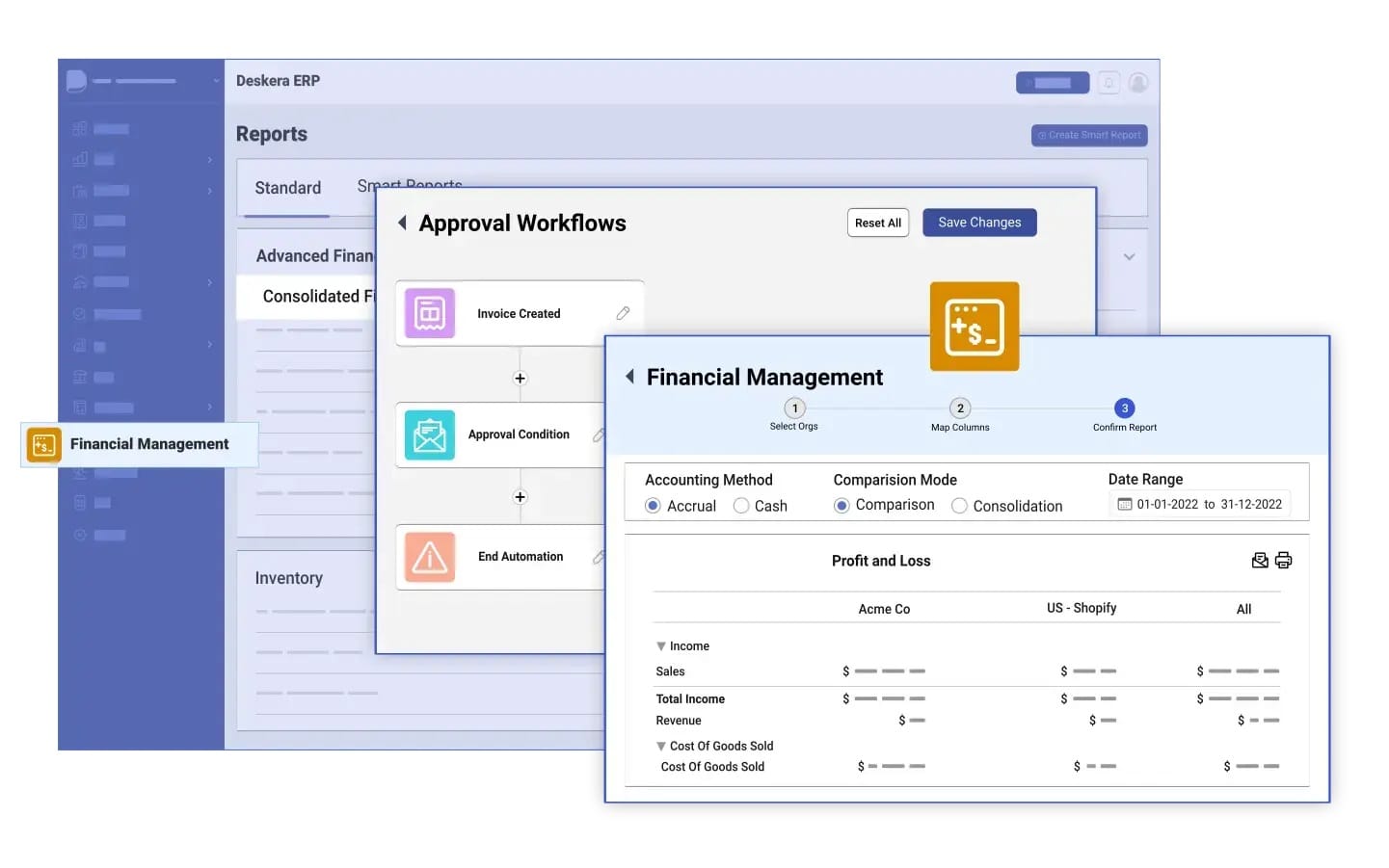
Implementing rolling forecasts requires accurate data, collaboration across departments, and the ability to continuously update projections as new information becomes available. Deskera ERP provides a unified platform that integrates financial, operational, and sales data, enabling organizations to build dynamic forecasts and respond quickly to changing business conditions.
Centralized and Real-Time Data Access
Deskera ERP consolidates financial, operational, and transactional data into a single system. This centralized visibility allows finance teams to access real-time information on sales, expenses, inventory, and production costs, ensuring that rolling forecasts are based on the most current data rather than outdated assumptions.
Automated Forecasting and Data Processing
Manual forecasting processes often involve spreadsheets and repetitive data entry, which can increase errors and consume valuable time. Deskera ERP automates data collection, processing, and forecasting workflows, allowing teams to focus more on analyzing results and refining strategies rather than preparing data.
Integrated Budgeting and Financial Planning
Deskera’s budgeting and forecasting tools allow businesses to create detailed financial plans, forecast revenues and expenses, and track actual performance against projections. This integration helps organizations continuously adjust their forecasts and maintain alignment with their financial goals.
Real-Time Monitoring and Variance Analysis
Rolling forecasts require continuous monitoring of actual performance. Deskera ERP provides dashboards and real-time reporting tools that allow organizations to compare forecasts with actual results and quickly identify variances. This helps businesses take corrective action early and maintain accurate projections.
Scenario Planning and Predictive Insights
Deskera ERP supports scenario analysis by allowing businesses to create multiple projections based on different assumptions, such as changes in demand, pricing, or operational costs. Predictive analytics and AI-driven insights help organizations evaluate potential outcomes and prepare for different market conditions.
Cross-Functional Collaboration
Effective rolling forecasts require input from multiple departments. Deskera ERP integrates finance, sales, operations, and inventory management into one platform, ensuring that all teams contribute data and insights. This collaborative approach improves forecast accuracy and ensures that strategic decisions are based on a complete view of business performance.
Advanced Reporting and Visualization
Deskera provides customizable dashboards and financial reports that help stakeholders understand forecasting trends and performance metrics. These visualization tools make it easier to communicate insights, track KPIs, and support data-driven decision-making across the organization.
By combining automation, real-time data visibility, and integrated financial planning capabilities, Deskera ERP enables businesses to implement rolling forecasts more efficiently. As a result, organizations can improve forecasting accuracy, enhance agility, and make proactive decisions in an increasingly dynamic business environment.
Key Takeaways
- Rolling forecasts provide a continuous and forward-looking view of business performance by regularly updating projections instead of relying on fixed annual budgets.
- Unlike traditional budgeting, rolling forecasts extend the planning horizon by adding new forecast periods as time progresses, ensuring that organizations always have a current outlook on future performance.
- The main objective of rolling forecasts is to help businesses respond quickly to market changes, improve financial planning accuracy, and support better strategic decision-making.
- Rolling forecasts are built on key elements such as driver-based planning, frequent updates, real-time data integration, scenario analysis, and cross-functional collaboration.
- By continuously updating forecasts, businesses can improve financial accuracy, adapt quickly to market changes, optimize resource allocation, and reduce uncertainty in planning.
- Despite their advantages, rolling forecasts may present challenges such as higher implementation costs, cultural resistance, data quality issues, and the complexity of establishing new forecasting processes.
- Following best practices such as aligning forecasts with strategic goals, using reliable data sources, encouraging cross-department collaboration, and leveraging the right technology helps ensure successful implementation.
- ERP systems like Deskera ERP support rolling forecasts by providing centralized data, automated forecasting capabilities, real-time reporting, and integrated financial planning tools.
Related Articles
 Niti Samani
 Niti Samani
 Niti Samani
 Niti Samani
 Niti Samani
 Niti Samani