
Why do machines tend to fail at the worst possible time—right when production demand is at its peak? The answer often lies in a lack of proactive care. Preventive maintenance has emerged as a critical strategy for businesses looking to avoid unexpected breakdowns, reduce costly disruptions, and maintain consistent operational performance. Instead of reacting to failures, organizations are now shifting toward planned maintenance to stay ahead of potential issues.
Preventive maintenance (PM) is already being leveraged by 71% of maintenance professionals as a core strategy to improve equipment reliability and longevity. When implemented effectively, it can extend equipment life by 20–40% while significantly reducing unplanned downtime. In contrast, reactive maintenance can be 2–5 times more expensive, and allowing equipment to run to failure may cost up to 10 times more than performing regular maintenance. These numbers clearly highlight why a proactive approach is no longer optional but essential.
At its core, preventive maintenance involves scheduled inspections, servicing, and repairs to ensure assets operate at optimal efficiency. This approach not only enhances equipment performance but also improves workplace safety, ensures compliance with industry standards, and helps businesses better control maintenance budgets. From manufacturing plants to logistics operations, organizations across industries are embracing preventive maintenance as a long-term cost-saving and efficiency-driving strategy.
Modern solutions like Deskera MRP further strengthen preventive maintenance efforts by bringing automation, visibility, and intelligence into the process. With features such as automated maintenance scheduling, real-time asset tracking, and integrated inventory management, Deskera MRP enables businesses to plan and execute maintenance activities seamlessly. Its data-driven insights and mobile accessibility empower teams to make faster, more informed decisions, ensuring that maintenance is no longer a reactive task but a strategic advantage.
What Is Preventive Maintenance?
Preventive maintenance (PM) is a proactive maintenance strategy that focuses on preventing equipment failures before they occur. Instead of waiting for machinery to break down, businesses perform routine, scheduled maintenance activities to ensure assets continue operating efficiently. As a subset of planned maintenance, preventive maintenance is carried out at predetermined intervals—based on time, usage, or condition—to minimize unexpected disruptions and maintain operational continuity.
At its core, preventive maintenance includes a wide range of regular activities designed to keep equipment in optimal condition. These tasks help reduce wear and tear, identify potential issues early, and maintain consistent performance.
Common preventive maintenance activities include:
- Cleaning equipment to remove dirt, debris, and contaminants
- Lubricating moving parts to reduce friction and wear
- Conducting routine inspections to detect abnormalities
- Making adjustments to improve performance and efficiency
- Replacing worn or aging components before failure
- Calibrating instruments to ensure measurement accuracy
- Performing safety checks to verify proper functioning of safeguards
- Testing equipment to confirm operational reliability
- Updating software to improve functionality and security
In practice, preventive maintenance follows a structured and well-documented schedule. Maintenance teams rely on historical data, equipment manuals, and usage patterns to plan and execute maintenance tasks effectively. This systematic approach not only reduces unplanned downtime but also improves productivity, enhances workplace safety, and lowers long-term maintenance costs.
Preventive maintenance is widely used across industries and applies to both equipment and facility management. Its versatility makes it essential for organizations that rely on consistent performance and operational efficiency.
Common applications of preventive maintenance include:
- Manufacturing equipment: lubrication, inspection, and part replacement for machines and production lines
- HVAC systems: cleaning filters, checking airflow, and maintaining heating and cooling systems
- Electrical systems: inspecting wiring, circuit breakers, and connections
- Vehicles and transportation: routine servicing, oil changes, and brake inspections
- Facility maintenance: upkeep of lighting, plumbing, and infrastructure
- Industrial machinery: calibration, testing, and monitoring of heavy equipment
- IT systems: software updates, backups, and system performance checks
- Energy and utilities: maintenance of generators, pipelines, and power systems
By implementing preventive maintenance across these areas, organizations can significantly reduce unexpected breakdowns, extend asset lifespan, and ensure smooth, uninterrupted operations.
Preventive Maintenance vs Reactive Maintenance
Maintenance strategies play a critical role in determining operational efficiency, cost control, and equipment reliability. Two of the most commonly used approaches are preventive maintenance and reactive maintenance.
While preventive maintenance focuses on avoiding failures through planned activities, reactive maintenance deals with fixing issues only after they occur. Understanding the differences between these approaches helps businesses choose the right strategy for minimizing downtime and maximizing asset performance.
By comparing these two strategies, it becomes clear that preventive maintenance offers a more sustainable and cost-effective approach, while reactive maintenance may still be useful in specific low-risk scenarios.
4 Main Components of Preventive Maintenance
A successful preventive maintenance program is built on a structured approach that ensures equipment reliability and operational efficiency.
At its core, preventive maintenance revolves around four key components that work together to identify, address, and eliminate potential issues before they lead to failures.
These components not only help reduce downtime but also improve safety, extend asset lifespan, and optimize maintenance costs.
Inspection
Inspection is the foundation of any preventive maintenance program. It involves regularly checking equipment, systems, and facilities to ensure they are operating safely and efficiently. These inspections help identify visible signs of wear, damage, or irregularities before they escalate into serious problems.
Regular inspections also play a critical role in maintaining workplace safety and ensuring compliance with operational standards. By verifying that equipment is functioning as intended, organizations can prevent accidents, reduce liability, and maintain consistent performance.
Detection
Detection focuses on identifying potential issues at an early stage. Instead of waiting for equipment to fail, preventive maintenance enables teams to uncover hidden problems through monitoring, testing, and performance analysis.
Early detection helps organizations avoid costly repairs and operational disruptions. By catching issues when they are still minor, maintenance teams can address them quickly and efficiently, reducing the overall impact on productivity and costs.
Correction
Correction involves taking timely action to fix identified issues before they turn into major failures. Once a problem or potential fault is detected, maintenance teams carry out necessary repairs, adjustments, or part replacements to restore optimal performance.
This proactive correction approach ensures that small issues do not escalate into expensive breakdowns. It also helps maintain equipment reliability and supports uninterrupted operations.
Prevention
Prevention is the most strategic component of preventive maintenance. It focuses on learning from past maintenance activities, inspections, and failures to avoid recurring issues. By analyzing maintenance records and performance data, organizations can implement improvements that eliminate the root causes of problems.
This continuous improvement approach reduces the likelihood of future failures, enhances productivity, and allows maintenance teams to shift from reactive firefighting to proactive planning.
Key Characteristics of Preventive Maintenance
Preventive maintenance is defined by a set of core characteristics that distinguish it from other maintenance strategies. These characteristics ensure that maintenance activities are proactive, structured, and aligned with long-term operational goals. Understanding these traits helps organizations implement preventive maintenance more effectively and consistently.
Scheduled and Routine-Based
Preventive maintenance is carried out at predefined intervals, either based on time (daily, weekly, monthly) or usage (operating hours, production cycles). This structured scheduling ensures that maintenance tasks are performed consistently, reducing the likelihood of unexpected equipment failures.
Proactive Approach
Unlike reactive maintenance, preventive maintenance focuses on preventing problems before they occur. The goal is to anticipate potential failures and address them early, minimizing disruptions and avoiding costly emergency repairs.
Condition Monitoring and Early Detection
A key characteristic of preventive maintenance is monitoring equipment performance to identify early signs of wear or malfunction. This may involve inspections, testing, and performance tracking to detect issues before they escalate into serious problems.
Standardized Procedures
Preventive maintenance relies on well-defined procedures and checklists to ensure consistency. Each maintenance task follows a structured process, including specific steps, tools, and safety measures, which helps maintain quality and reliability across operations.
Detailed Documentation and Record-Keeping
All maintenance activities are documented, including inspections, repairs, and part replacements. This data provides valuable insights into equipment performance, helps track maintenance history, and supports better decision-making for future planning.
Cost-Effective in the Long Run
Although it may require upfront investment, preventive maintenance is designed to reduce overall costs over time. By preventing major breakdowns and extending equipment life, it helps organizations avoid expensive repairs and unplanned downtime.
Safety-Focused
Regular maintenance ensures that equipment operates within safe parameters. Preventive maintenance reduces the risk of accidents, protects employees, and helps organizations comply with safety regulations and industry standards.
Data-Driven and Measurable
Preventive maintenance programs often rely on performance metrics and historical data to improve effectiveness. Key indicators such as downtime, failure rates, and maintenance costs are tracked to optimize schedules and processes.
Resource Planning and Optimization
Because maintenance activities are planned in advance, organizations can efficiently allocate labor, tools, and spare parts. This improves productivity and reduces last-minute disruptions in operations.
Continuous Improvement-Oriented
Preventive maintenance is not static—it evolves over time. Organizations continuously review maintenance data, refine schedules, and improve processes to enhance efficiency and adapt to changing operational needs.
These characteristics collectively make preventive maintenance a reliable and strategic approach for maintaining equipment, improving efficiency, and ensuring long-term operational success.
Types of Preventive Maintenance
Preventive maintenance is not a one-size-fits-all approach. Organizations adopt different types of preventive maintenance strategies depending on their equipment, operational goals, and available resources.
While all these methods fall under planned maintenance, each type is designed to address specific maintenance needs—ranging from simple scheduling to advanced data-driven decision-making. In practice, most businesses use a combination of these approaches to achieve maximum efficiency and reliability.
Time-Based Maintenance (TBM)
Time-based maintenance is the most traditional and widely used form of preventive maintenance. It involves performing maintenance activities at fixed time intervals, regardless of equipment usage or condition. These schedules are often based on manufacturer recommendations or regulatory requirements.
For example, equipment may be serviced monthly, quarterly, or annually to ensure consistent performance. While this method is simple to implement and ensures regular upkeep, it can sometimes lead to over-maintenance, resulting in unnecessary costs or downtime.
Usage-Based Maintenance (UBM)
Usage-based maintenance schedules maintenance tasks based on how much an asset is used rather than on time. This approach relies on measurable usage metrics such as operating hours, production cycles, or mileage.
For instance, a machine may require servicing after a specific number of operating hours. This method provides a more accurate reflection of wear and tear, helping reduce unnecessary maintenance, but it requires accurate tracking systems.
Condition-Based Maintenance (CBM)
Condition-based maintenance focuses on the actual condition of equipment to determine when maintenance is required. It uses sensors, inspections, and monitoring tools to track parameters such as temperature, vibration, and pressure.
Maintenance is triggered only when indicators show early signs of failure. This approach improves efficiency but requires investment in monitoring tools and systems.
Predictive Maintenance (PdM)
Predictive maintenance uses advanced technologies such as IoT, data analytics, and machine learning to predict potential equipment failures before they occur. It analyzes historical and real-time data to identify patterns and forecast issues.
This allows organizations to perform maintenance at the optimal time, reducing downtime and extending asset life. However, it requires advanced infrastructure and expertise.
Prescriptive Maintenance
Prescriptive maintenance goes beyond prediction by recommending specific actions to prevent failures. Using AI and advanced analytics, it suggests the best course of action based on data insights.
For example, it may recommend adjusting operating conditions or replacing certain components to avoid breakdowns. This approach delivers highly optimized maintenance strategies but requires sophisticated systems and data capabilities.
Failure-Finding Maintenance
Failure-finding maintenance is focused on identifying hidden failures in equipment, particularly in safety systems or backup components that are not regularly in use. These failures are not visible during normal operations and may only become apparent when the system is needed.
Regular inspections and testing are conducted at set intervals to ensure that these systems will function correctly when required. This type of maintenance does not prevent failure directly but ensures reliability when it matters most.
Risk-Based Maintenance (RBM)
Risk-based maintenance prioritizes maintenance activities based on the level of risk associated with equipment failure. This risk is typically determined by evaluating the likelihood of failure and its potential consequences.
Critical assets with high risk receive more frequent and detailed maintenance, while low-risk equipment is maintained less frequently. This approach helps optimize resources and reduce overall operational risk while maintaining efficiency.
In practice, effective preventive maintenance programs combine multiple types of strategies. Time- and usage-based maintenance form the foundation, while condition-based, predictive, prescriptive, and risk-based approaches enhance decision-making and resource optimization.
When Should Businesses Use Preventive Maintenance
Preventive maintenance is not a one-size-fits-all solution—it should be applied strategically where it delivers the most value. Businesses should adopt preventive maintenance when the cost, risk, and impact of equipment failure are significantly higher than the effort required to maintain it. Identifying the right scenarios ensures efficient use of resources while maximizing equipment reliability and operational continuity.
For Critical Equipment
Preventive maintenance is essential for equipment that is vital to daily operations. Failures in critical assets can lead to major production losses, operational disruptions, or complete shutdowns. Regular and scheduled maintenance ensures these assets remain reliable and perform consistently.
When Equipment Failure is Costly
If repairing or replacing equipment after a breakdown is significantly more expensive than maintaining it, preventive maintenance becomes the smarter choice. Avoiding emergency repairs, production losses, and downtime helps businesses save substantial costs in the long run.
For Equipment with Predictable Wear and Tear
Machines with components that degrade over time—such as belts, filters, bearings, and lubricants—are ideal candidates for preventive maintenance. Since their failure patterns are predictable, scheduled servicing and replacements can prevent unexpected breakdowns.
In High-Risk or Safety-Critical Environments
Industries like manufacturing, construction, and energy involve equipment that can pose safety hazards if not properly maintained. Preventive maintenance helps identify and address potential risks early, ensuring a safer work environment and reducing the likelihood of accidents.
When Operations Have Tight Schedules
Businesses that operate under strict production timelines or high customer demand cannot afford unexpected downtime. Preventive maintenance allows organizations to plan maintenance during low-demand periods, ensuring minimal disruption to operations.
For High-Value Equipment
Expensive machinery and assets require consistent care to protect the investment. Preventive maintenance helps extend the lifespan of such equipment and ensures maximum return on investment by keeping it in optimal working condition.
For Regulatory and Compliance Requirements
In many industries, regular maintenance is mandated by safety, environmental, or operational regulations. Preventive maintenance ensures compliance with these standards, helping businesses avoid legal penalties and maintain operational certifications.
When Equipment Has Known Failure Modes
If equipment has identifiable failure patterns or historical data indicating when and how it fails, preventive maintenance can be scheduled to address those issues before they occur. This reduces the risk of unexpected breakdowns.
For Assets with Low Random Failure Risk
Preventive maintenance is most effective when failures are predictable rather than random. Equipment that shows gradual signs of wear or deterioration benefits more from scheduled maintenance compared to assets that fail unpredictably.
When the Goal is Long-Term Asset Performance
Businesses aiming to extend equipment lifespan, improve efficiency, and maintain consistent performance should adopt preventive maintenance. It ensures assets operate under optimal conditions over time, supporting long-term operational goals.
By applying preventive maintenance in these scenarios, businesses can strike the right balance between cost, efficiency, and reliability—ensuring that maintenance efforts deliver maximum impact where they are needed most.
Benefits of Preventive Maintenance
Implementing a preventive maintenance program delivers long-term value by improving equipment performance, reducing operational risks, and optimizing maintenance costs.
Instead of dealing with unexpected failures, businesses can take a proactive approach that ensures smooth operations and better resource utilization.
The following benefits highlight why preventive maintenance is a critical strategy for modern organizations.
Extended Asset Lifespan
Preventive maintenance significantly extends the lifespan of equipment by ensuring it operates under optimal conditions. Regular inspections, cleaning, lubrication, and timely part replacements reduce wear and tear, preventing premature failures.
When assets are consistently maintained, they experience less stress and degradation over time. This not only delays the need for costly replacements but also improves return on investment. As a result, businesses can maximize the value of their assets while maintaining consistent performance across operations.
Reduced Unplanned Downtime
One of the most impactful benefits of preventive maintenance is the reduction of unexpected equipment failures. By identifying and addressing potential issues early, organizations can avoid sudden breakdowns that disrupt production.
Scheduled maintenance allows businesses to plan downtime during non-critical hours, minimizing operational impact. This ensures smoother workflows and uninterrupted production cycles.
Reduced downtime directly contributes to higher productivity, improved efficiency, and better adherence to delivery timelines, which is crucial in competitive industries.
Lower Maintenance Costs
Preventive maintenance helps control and reduce overall maintenance expenses by avoiding costly emergency repairs. Fixing minor issues early is far more economical than dealing with major breakdowns or complete equipment failure.
Planned maintenance also eliminates the need for urgent spare parts procurement and expensive last-minute labor. Additionally, it enables better budgeting and cost forecasting, as maintenance activities are scheduled in advance. Over time, this proactive approach leads to significant cost savings and more efficient allocation of resources.
Improved Workplace Safety
A well-maintained workplace is a safer workplace. Preventive maintenance ensures that equipment is functioning correctly and does not pose a risk to employees. Regular inspections help identify potential hazards such as faulty components, electrical issues, or worn-out parts before they lead to accidents.
This proactive approach reduces the likelihood of workplace injuries and ensures compliance with safety regulations. By maintaining safe working conditions, organizations can protect their workforce while also avoiding legal and financial consequences associated with accidents.
Enhanced Equipment Efficiency and Performance
Equipment that undergoes regular maintenance operates more efficiently and delivers consistent performance. Preventive maintenance ensures that machines are properly calibrated, cleaned, and adjusted, allowing them to function at peak efficiency.
This leads to improved output quality, reduced energy consumption, and fewer operational disruptions. Efficient equipment not only enhances productivity but also contributes to better overall operational performance. Over time, businesses benefit from improved reliability and a more streamlined production process.
Better Planning and Resource Management
Preventive maintenance allows organizations to plan maintenance activities in advance, leading to better utilization of labor, tools, and spare parts. With a structured schedule in place, maintenance teams can allocate resources more effectively and avoid last-minute disruptions.
This also improves inventory management by ensuring that necessary spare parts are available when needed. Better planning reduces uncertainty, enhances coordination across teams, and ensures that maintenance activities align with production schedules.
Improved Sustainability
Preventive maintenance supports sustainability by reducing waste and optimizing resource usage. Well-maintained equipment consumes less energy and operates more efficiently, lowering the overall environmental impact. Additionally, extending the lifespan of assets reduces the need for frequent replacements, minimizing material waste.
By preventing major failures and reducing unnecessary repairs, organizations can also cut down on excess resource consumption. This contributes to more sustainable operations while aligning with environmental goals and regulatory requirements.
Steps for Preventive Maintenance Planning and Implementation
Planning and implementing an effective preventive maintenance program requires a structured and strategic approach. It is not just about scheduling tasks but ensuring the right assets are maintained at the right time using the right resources. A well-defined process helps organizations reduce downtime, improve asset reliability, and optimize maintenance costs.
The following steps outline how businesses can successfully plan and implement preventive maintenance.
Identify and Create an Asset Inventory
The first step is to identify and document all equipment and assets that require maintenance. This includes capturing key details such as asset type, location, manufacturer, installation date, and maintenance history.
A comprehensive asset inventory serves as the foundation for the entire maintenance program, helping teams stay organized and ensuring no critical equipment is overlooked during planning.
Assess Asset Criticality and Set Priorities
Not all assets require the same level of attention. Organizations must evaluate the criticality of each asset based on factors such as its impact on production, safety, downtime costs, and failure frequency.
High-priority assets should be scheduled for more frequent and detailed maintenance, while less critical equipment can follow a lighter maintenance schedule. This prioritization ensures optimal use of time and resources.
Determine Maintenance Requirements
Once assets are identified and prioritized, the next step is to define the specific maintenance tasks required for each asset. This includes referring to manufacturer guidelines, operational data, and historical performance records.
Tasks may include inspections, lubrication, calibration, cleaning, or part replacement. Clearly defining these requirements ensures consistency and effectiveness in maintenance execution.
Establish Maintenance Triggers and Intervals
Maintenance schedules should be based on appropriate triggers such as time, usage, or equipment condition.
For example, tasks may be scheduled weekly, after a certain number of operating hours, or when specific performance thresholds are reached.
Setting accurate intervals ensures that maintenance is neither performed too frequently nor delayed, helping maintain efficiency and avoid unnecessary costs.
Develop Standard Procedures and Checklists
To ensure consistency and quality, organizations should create detailed maintenance procedures for each task. These procedures should include step-by-step instructions, required tools, safety precautions, and estimated completion time.
Standard operating procedures (SOPs) and checklists help maintenance teams perform tasks accurately, reduce errors, and maintain uniformity across operations.
Leverage Technology and MRP Systems
Modern preventive maintenance programs rely heavily on technology for better planning and execution. Tools such as CMMS, EAM, and MRP systems enable organizations to automate maintenance scheduling, track work orders, manage spare parts inventory, and monitor asset performance in real time.
These systems improve visibility, streamline workflows, and ensure that maintenance activities are aligned with production planning and resource availability.
Train Maintenance Teams
A preventive maintenance plan is only as effective as the people executing it. Proper training ensures that maintenance personnel understand procedures, safety protocols, and how to use maintenance software effectively. Regular training sessions help improve technical skills, increase efficiency, and ensure that tasks are carried out correctly and consistently.
Execute, Monitor, and Track Performance
Once the plan is implemented, it is important to continuously monitor maintenance activities and track performance metrics. Key indicators such as maintenance completion rates, downtime, and equipment performance provide insights into the effectiveness of the program. Monitoring ensures that maintenance tasks are completed on time and helps identify any gaps in execution.
Review, Optimize, and Improve Continuously
Preventive maintenance is an ongoing process that requires continuous improvement. Organizations should regularly review maintenance data, identify recurring issues, and adjust schedules or procedures accordingly. By refining the plan based on real-world performance, businesses can enhance efficiency, reduce costs, and ensure long-term success of their maintenance strategy.
Common Challenges in Preventive Maintenance
While preventive maintenance offers significant advantages, implementing and managing it effectively comes with its own set of challenges. Organizations often face difficulties in balancing costs, resources, and operational demands while maintaining an efficient maintenance program. Understanding these challenges helps businesses prepare better and adopt strategies to overcome them.
High Initial Implementation Costs
Setting up a preventive maintenance program requires a considerable upfront investment. This includes costs for system development, purchasing tools and software, training staff, and creating maintenance schedules. For small and mid-sized organizations, these initial expenses can be a major barrier, especially when immediate returns are not visible.
Risk of Over-Maintenance
Preventive maintenance relies on predefined schedules, which may sometimes lead to servicing equipment that does not actually require attention. This can result in unnecessary maintenance activities, increasing labor costs and wasting valuable resources without delivering proportional benefits.
Increased Labor and Resource Requirements
A well-functioning preventive maintenance program demands continuous effort from maintenance teams. Regular inspections, servicing, and documentation require dedicated personnel and time. Organizations with limited staff or a large number of assets may struggle to allocate sufficient resources effectively.
Scheduling Complexity
Coordinating maintenance activities without disrupting operations can be challenging. Maintenance tasks must be carefully scheduled around production cycles, equipment dependencies, and resource availability. Poor scheduling can lead to conflicts, missed tasks, or unnecessary downtime, reducing overall efficiency.
Planned Downtime and Reduced Availability
Although preventive maintenance reduces unexpected failures, it still requires equipment to be taken offline for servicing. If not scheduled properly, this planned downtime can impact productivity and reduce equipment availability during critical operational periods.
Data Management and Documentation Challenges
Preventive maintenance generates a large volume of data, including maintenance records, inspection reports, and performance metrics. Managing this information manually can be complex and error-prone. Without proper systems in place, organizations may struggle to maintain accurate records, prove compliance, and make data-driven decisions.
Difficulty in Predicting Failures
Not all equipment failures follow predictable patterns. Some assets may fail unexpectedly despite regular maintenance, especially if there are no clear warning signs. This limits the effectiveness of preventive maintenance in certain scenarios and highlights the need for complementary strategies like predictive maintenance.
Human Error and Compliance Issues
Preventive maintenance involves frequent human interaction with equipment, increasing the chances of errors. Mistakes in inspections, missed steps in procedures, or failure to follow schedules can compromise the effectiveness of the program. Ensuring strict adherence to maintenance protocols is often a challenge.
Balancing Maintenance with Operations
Organizations must balance preventive maintenance tasks with daily operational demands. Allocating too much time to maintenance can disrupt production, while neglecting it can lead to equipment failure. Finding the right balance is essential but often difficult, especially during peak production periods.
Not Suitable for All Equipment
Preventive maintenance may not be the most efficient approach for every asset. Some equipment may require condition-based or predictive maintenance instead, while others may not justify the cost of regular servicing. Applying a one-size-fits-all strategy can lead to inefficiencies and increased costs.
Continuous Monitoring and Improvement Requirements
A preventive maintenance program is not a one-time setup. It requires continuous monitoring, evaluation, and optimization to remain effective. Organizations must regularly review performance data, update schedules, and refine processes, which can be time-consuming and resource-intensive.
By recognizing these challenges, businesses can take proactive steps—such as adopting digital tools, improving training, and using data-driven insights—to enhance the effectiveness of their preventive maintenance programs.
Best Practices for Successful Preventive Maintenance
To get the most out of a preventive maintenance program, organizations need more than just schedules—they need a strategic, well-executed approach. Following best practices ensures consistency, improves efficiency, and maximizes the return on maintenance investments. The practices below help create a reliable and scalable preventive maintenance system.
Maintain a Comprehensive Asset Inventory
Start with a detailed and up-to-date inventory of all assets. Include critical information such as specifications, location, maintenance history, and performance data. A well-maintained asset database ensures better planning, tracking, and decision-making throughout the maintenance lifecycle.
Prioritize Critical Assets
Focus your efforts on equipment that has the greatest impact on operations, safety, and productivity. Conduct a criticality assessment to identify high-priority assets and allocate resources accordingly. This ensures that the most important equipment receives the attention it needs.
Follow Manufacturer Guidelines and Use Data Insights
Use OEM recommendations as a baseline for maintenance schedules, but refine them using real operational data. Historical performance, failure patterns, and usage trends help optimize maintenance intervals and avoid both under- and over-maintenance.
Standardize Maintenance Procedures
Develop clear and consistent standard operating procedures (SOPs) for all maintenance tasks. Include step-by-step instructions, safety guidelines, and required tools. Standardization reduces variability, improves quality, and ensures that tasks are performed correctly every time.
Leverage Technology and Automation
Use digital tools such as CMMS, EAM, and MRP systems to automate scheduling, track work orders, and manage inventory. These systems improve visibility, reduce manual errors, and help ensure that maintenance tasks are completed on time.
Implement Preventive Maintenance Checklists
Checklists help ensure that no steps are missed during maintenance activities. They provide structure, improve accountability, and make it easier for teams to follow procedures consistently, especially across multiple locations or teams.
Train and Upskill Maintenance Teams
Invest in continuous training for maintenance personnel. Skilled technicians are better equipped to identify issues, follow procedures, and use maintenance tools effectively. Regular training also helps teams stay updated with new technologies and best practices.
Schedule Maintenance Strategically
Plan maintenance activities during low-demand periods or planned downtime to minimize disruption to operations. Align maintenance schedules with production cycles to ensure efficiency and reduce the impact on productivity.
Track Key Performance Indicators (KPIs)
Measure the effectiveness of your maintenance program using KPIs such as maintenance compliance, downtime reduction, mean time between failures (MTBF), and maintenance costs. Tracking these metrics helps identify areas for improvement and supports data-driven decision-making.
Ensure Proper Documentation and Compliance
Keep accurate records of all maintenance activities, inspections, and repairs. Proper documentation helps in regulatory compliance, audits, and performance analysis. It also preserves valuable knowledge for future reference.
Continuously Review and Improve
Preventive maintenance is an ongoing process. Regularly review maintenance data, gather feedback from teams, and refine schedules and procedures. Continuous improvement ensures that the program adapts to changing operational needs and delivers long-term value.
Integrate with Overall Business Operations
Align preventive maintenance with broader business goals such as production planning, cost optimization, and sustainability. Integration ensures that maintenance is not treated as a separate function but as a key contributor to overall operational success.
By following these best practices, organizations can build a proactive maintenance culture, reduce downtime, improve asset reliability, and achieve greater operational efficiency.
How Deskera MRP Helps with Preventive Maintenance
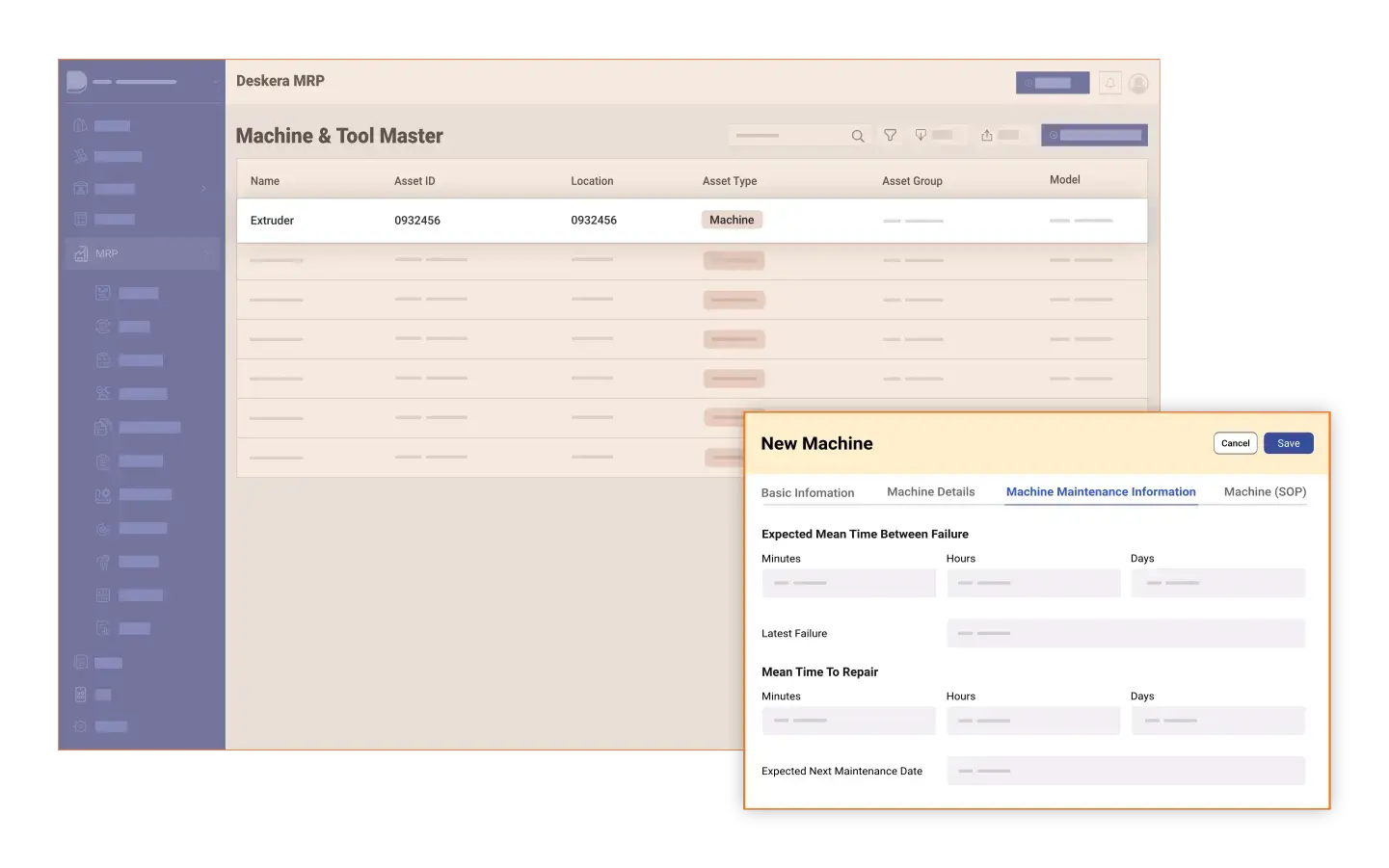
Implementing preventive maintenance becomes far more efficient when supported by the right technology. Deskera MRP provides an integrated platform that helps businesses plan, execute, and optimize maintenance activities while aligning them with production and inventory processes. By centralizing data and automating workflows, it enables organizations to shift from reactive fixes to a proactive maintenance strategy.
Centralized Asset and Maintenance Management
Deskera MRP allows businesses to maintain a centralized database of all equipment and assets. This includes maintenance history, specifications, and performance data, making it easier to track asset health and plan maintenance activities effectively.
Automated Maintenance Scheduling
With Deskera MRP, organizations can schedule preventive maintenance tasks based on time, usage, or predefined triggers. Automated alerts and reminders ensure that no maintenance activity is missed, improving compliance and reducing the risk of unexpected failures.
Work Order Management
The system simplifies the creation, assignment, and tracking of maintenance work orders. Teams can monitor task progress in real time, ensuring accountability and timely completion of maintenance activities.
Inventory and Spare Parts Optimization
Deskera MRP integrates maintenance planning with inventory management, ensuring that the right spare parts and materials are available when needed. This prevents delays caused by stock shortages and avoids overstocking, optimizing inventory costs.
Real-Time Data and Reporting
Access to real-time data and analytics helps businesses monitor equipment performance, track maintenance KPIs, and identify recurring issues. These insights enable better decision-making and continuous improvement of maintenance strategies.
Improved Resource Planning
By aligning maintenance schedules with production plans, Deskera MRP helps optimize the use of labor, tools, and equipment. This minimizes disruptions to operations and ensures efficient utilization of resources.
Scalability and Integration
As businesses grow, Deskera MRP scales with their needs, supporting more assets, users, and complex operations. Its integration with other business functions—such as procurement, finance, and production—ensures a seamless and holistic approach to maintenance management.
By leveraging Deskera MRP, businesses can streamline preventive maintenance processes, reduce downtime, and improve overall operational efficiency—making maintenance a strategic advantage rather than a reactive necessity.
Key Takeaways
- Preventive maintenance is a proactive strategy focused on reducing equipment failures, extending asset lifespan, and lowering long-term maintenance costs through planned and routine activities.
- Preventive maintenance minimizes downtime and costs through planned actions, while reactive maintenance leads to higher expenses and operational disruptions due to unplanned breakdowns.
- A strong preventive maintenance program is built on inspection, detection, correction, and prevention—ensuring issues are identified early and resolved before escalation.
- Preventive maintenance improves equipment efficiency, enhances safety, reduces downtime, and delivers long-term cost savings while optimizing operational performance.
- Successful implementation requires a structured approach—starting with asset inventory and prioritization, followed by scheduling, standardization, technology adoption, and continuous improvement.
- While effective, preventive maintenance comes with challenges such as high initial costs, scheduling complexity, resource demands, and the risk of over-maintenance.
- Following best practices like prioritizing critical assets, using data-driven insights, standardizing processes, and leveraging technology ensures a more efficient and reliable maintenance program.
- Preventive maintenance is most effective for critical, high-value, and safety-sensitive equipment, especially where failures can cause significant operational or financial impact.
- Preventive maintenance is proactive, scheduled, data-driven, and safety-focused, with an emphasis on consistency, documentation, and long-term efficiency.
- Deskera MRP streamlines preventive maintenance by automating scheduling, managing work orders, optimizing inventory, and providing real-time insights for better decision-making.
Related Articles
 Niti Samani
 Niti Samani
 Niti Samani
 Niti Samani
 Niti Samani
 Niti Samani