


What ensures that every project starts on the right foot and avoids costly misunderstandings later on? The answer lies in a well-defined Statement of Work (SOW)—a foundational document that clearly outlines what needs to be done, how it will be done, and who is responsible for each part of the project. Whether you're working with external vendors or managing internal teams, an SOW acts as a single source of truth that aligns expectations from the very beginning.
A Statement of Work (SOW) is more than just a formal document—it is a strategic tool that defines the scope, deliverables, timelines, and performance expectations of a project. By providing a structured framework, it ensures that all stakeholders are on the same page, reducing ambiguity and minimizing the risk of scope creep. In today’s fast-paced business environment, where projects often involve multiple teams and moving parts, having a clear SOW is essential for maintaining control and achieving desired outcomes.
Without a properly defined SOW, projects can quickly run into challenges such as missed deadlines, budget overruns, and miscommunication between stakeholders. A detailed SOW not only establishes accountability but also serves as a reference point throughout the project lifecycle. It helps teams track progress, measure performance, and resolve disputes effectively, making it a critical component of successful project management and execution.
Modern ERP solutions like Deskera ERP play a vital role in simplifying how businesses create and manage Statements of Work. Deskera ERP enables centralized access to project data, real-time collaboration, and seamless integration across departments, ensuring better visibility and control over project execution. With enhanced visibility and control, businesses can streamline workflows, ensure alignment, and execute projects more efficiently from start to finish.
What Is a Statement of Work (SOW)?
A Statement of Work (SOW) is a formal, detailed document that defines the full scope of a project, including what work will be performed, how it will be executed, and the expected outcomes. It serves as a foundational agreement between two or more parties—typically a client and a service provider—ensuring that everyone involved has a clear and shared understanding of the project from the outset.
At its core, an SOW outlines critical project elements such as tasks, deliverables, timelines, costs, and responsibilities. It goes beyond a simple agreement by acting as a comprehensive roadmap that guides the entire project lifecycle. By clearly documenting expectations and requirements, the SOW minimizes ambiguity and provides a structured framework for execution, monitoring, and evaluation.
A well-crafted Statement of Work is often considered a legally binding component of a contract or, in some cases, the primary agreement itself. It establishes accountability by defining who is responsible for each aspect of the project and sets measurable objectives that align with business goals. Additionally, it includes key details such as performance standards, acceptance criteria, and change management processes—ensuring that any modifications during the project are handled systematically.
SOWs are widely used across industries such as IT, consulting, construction, and marketing, especially when external vendors or service providers are involved. By serving as a single source of truth, the document helps prevent misunderstandings, reduces the risk of disputes, and supports better cost control and project efficiency. Ultimately, a Statement of Work is essential for ensuring smooth collaboration, successful delivery, and long-term project success.
Statement of Work vs Scope of Work vs MSA vs PO vs Contract vs Change Order vs SLA vs RFP
When managing projects and vendor relationships, multiple documents come into play—each serving a distinct purpose. While they are often used together, confusion between them can lead to misaligned expectations, contractual risks, and operational inefficiencies.
Understanding how these documents differ—and how they work together—helps establish clarity, prevent disputes, and ensure smooth project execution. Think of them as a structured hierarchy: from high-level legal frameworks to detailed execution plans and performance metrics.
This structured understanding ensures that each document is used correctly—the MSA sets the rules, the SOW defines the work, the PO funds it, the SLA measures it, and change orders refine it when needed.
Key Components of a Statement of Work (SOW)
A well-structured Statement of Work (SOW) leaves little room for ambiguity by clearly defining every aspect of a project—from objectives and scope to timelines and legal terms.
While the exact format may vary depending on the industry or project complexity, most effective SOWs include a set of core components that ensure alignment, accountability, and smooth execution.
Each section plays a critical role in setting expectations and guiding the project from initiation to completion.
1. Project Overview and Objectives
This section provides the context behind the project, explaining why it is being undertaken and the business need it addresses. It outlines the purpose, background, and key stakeholders involved.
Objectives define the specific, measurable outcomes the project aims to achieve. These goals should align with broader business priorities and act as benchmarks for success. Including KPIs or SLAs here helps establish how performance and outcomes will be evaluated.
2. Scope of Work
The scope of work is the backbone of the SOW, detailing the exact tasks, activities, and services to be performed. It clearly defines what is included in the project—and just as importantly, what is excluded.
By setting clear boundaries, this section prevents scope creep and ensures all stakeholders share a common understanding of the work involved, reducing the risk of misunderstandings or disputes.
3. Timeline and Milestones
This section outlines the project schedule, including start and end dates, key phases, and important milestones. Milestones act as checkpoints to track progress and ensure the project stays on course.
A well-defined timeline helps teams manage dependencies, allocate resources efficiently, and identify potential delays early, enabling proactive adjustments when needed.
4. Deliverables and Acceptance Criteria
Deliverables refer to the tangible outputs or results expected from the project. Each deliverable should be clearly described in terms of format, quality standards, and delivery method.
Acceptance criteria define the conditions that must be met for deliverables to be approved. This ensures both parties agree on what “completed” means, reducing rework and improving overall quality assurance.
5. Roles and Responsibilities
This section defines who is responsible for each aspect of the project, including both the client and the service provider. It identifies key stakeholders, points of contact, and decision-makers.
Clearly assigning roles enhances accountability, improves communication, and ensures that tasks are executed efficiently without confusion over ownership.
6. Pricing and Payment Terms
The financial section outlines the total project cost along with a breakdown of expenses. It specifies the pricing model—whether fixed, hourly, or milestone-based—and details payment schedules and invoicing terms.
Including information on additional costs, such as travel or materials, ensures transparency and helps both parties manage budgets effectively throughout the project lifecycle.
7. Terms, Conditions, and Change Management
This section covers the legal and governance aspects of the agreement, including confidentiality, intellectual property rights, compliance, and dispute resolution mechanisms.
It also defines the change management process, outlining how modifications to scope, timeline, or cost will be requested, evaluated, and approved. This ensures flexibility while maintaining control over the project.
8. Assumptions, Constraints, and Reporting
This component documents any assumptions made during project planning, such as resource availability or access to systems. It also highlights constraints like budget limits or regulatory requirements.
Additionally, it defines reporting expectations, including the frequency and format of progress updates. This promotes transparency and keeps stakeholders informed throughout the project.
By incorporating these components, a Statement of Work becomes a comprehensive and reliable blueprint for project success—ensuring clarity, alignment, and effective collaboration at every stage.
Types of Statement of Work (SOW)
Not all projects are the same—and neither are Statements of Work. The type of SOW you choose depends on factors such as project complexity, level of flexibility required, and how much control the client wants over execution.
Broadly, SOWs can be categorized into three main types, each designed to suit different project needs and working styles.
1. Design (or Detailed) SOW
A Design SOW focuses on how the work should be performed. It provides detailed instructions, specifications, and requirements that the service provider must follow. This includes step-by-step processes, technical guidelines, quality standards, and review checkpoints.
This type is ideal when the client has a clear vision of the expected outcome and wants tight control over execution. It is commonly used in industries like construction, manufacturing, and software development, where precision and adherence to specifications are critical. While it minimizes ambiguity and scope creep, it offers less flexibility to the vendor in terms of approach.
2. Level of Effort (Time & Materials) SOW
A Level of Effort (LOE) SOW is based on the time, resources, and effort required rather than fixed deliverables. Instead of defining exact outputs, it outlines the number of hours, personnel, and materials needed to complete the work.
This type is particularly useful for ongoing projects, consulting engagements, or situations where requirements are not fully defined upfront. It provides flexibility to adapt as the project evolves. However, since payment is tied to time and resources, it requires strong monitoring to control costs and ensure efficiency.
3. Performance-Based SOW
A Performance-Based SOW focuses on results and outcomes rather than the process. It defines clear goals, success metrics, and performance standards, leaving the service provider free to decide how to achieve them.
This approach encourages innovation, efficiency, and accountability, as vendors are evaluated based on their ability to deliver results. It is widely used in service-based industries, government contracts, and projects where measurable outcomes—such as service levels or business impact—are more important than the specific methods used.
By understanding these types, businesses can select the most suitable SOW structure—whether they need strict control, flexible execution, or outcome-driven performance—to ensure successful project delivery.
Benefits of Drafting a Statement of Work (SOW)
A well-crafted Statement of Work (SOW) is more than just a project document—it acts as a strategic foundation that ensures clarity, alignment, and accountability across all stakeholders.
By defining expectations upfront and documenting every critical aspect of the project, an SOW reduces uncertainty and enables smoother execution.
Below are the key benefits of creating a detailed and structured SOW:
1. Establishes Clear Expectations
An SOW clearly defines project objectives, deliverables, timelines, and responsibilities, ensuring that all stakeholders are aligned from the beginning. This shared understanding minimizes confusion and eliminates assumptions that often lead to errors.
When expectations are documented and agreed upon, teams can focus on execution rather than clarification. It also helps set realistic goals and provides a benchmark against which progress and performance can be measured throughout the project lifecycle.
2. Defines Scope and Prevents Scope Creep
One of the most critical benefits of an SOW is its ability to establish clear project boundaries. By detailing what is included and excluded, it prevents unnecessary additions or changes during execution.
This protects both timelines and budgets from unexpected disruptions. A clearly defined scope also makes it easier to evaluate change requests and maintain project focus, ensuring that all work remains aligned with the original objectives and agreed deliverables.
3. Improves Communication and Collaboration
An SOW serves as a centralized reference point for all project-related information, improving communication between stakeholders, vendors, and internal teams. With clearly documented requirements and expectations, everyone works from the same source of truth, reducing misunderstandings.
This structured communication framework fosters better collaboration, encourages transparency, and ensures that decisions are made based on clearly defined guidelines rather than assumptions or fragmented information.
4. Enhances Accountability and Transparency
By assigning roles and responsibilities to specific individuals or teams, an SOW creates a strong sense of accountability. Each stakeholder understands their duties and deliverables, which reduces confusion and overlaps.
This transparency makes it easier to track progress, evaluate performance, and address any issues proactively. When accountability is clearly defined, teams are more likely to stay committed to deadlines and deliver quality outcomes.
5. Supports Better Budget Control
An SOW outlines the project’s financial structure, including total costs, pricing models, and payment schedules. This upfront clarity helps both parties plan and manage budgets effectively.
By agreeing on costs before the project begins, organizations can avoid unexpected expenses and financial disputes. Additionally, clearly defined payment terms tied to milestones or deliverables ensure that spending remains aligned with progress and project performance.
6. Reduces Project Risks
A detailed SOW helps identify potential risks early by outlining requirements, assumptions, and constraints. This proactive approach allows teams to plan mitigation strategies and avoid disruptions during execution.
By clearly documenting expectations and responsibilities, the SOW reduces the likelihood of misunderstandings, delays, and conflicts. It also provides a structured framework to handle uncertainties, ensuring that risks are managed effectively throughout the project lifecycle.
7. Enables Effective Project Tracking and Monitoring
With clearly defined timelines, milestones, and deliverables, an SOW makes it easier to monitor project progress. Teams can track performance against predefined benchmarks and identify deviations early.
This visibility allows project managers to take corrective actions promptly and keep the project on schedule. Regular tracking also ensures that all stakeholders remain informed, improving overall control and coordination throughout the project.
8. Facilitates Smooth Change Management
Projects often evolve due to changing requirements or external factors, and an SOW provides a structured approach to manage these changes. It includes defined procedures for requesting, reviewing, and approving modifications to scope, timeline, or cost.
This ensures that changes are controlled and documented, preventing disruptions. A clear change management process helps maintain alignment while allowing flexibility to adapt to new business needs.
9. Provides Legal Protection and Dispute Resolution
An SOW often forms part of a legally binding agreement, offering protection to both parties involved. It clearly documents the terms, responsibilities, and expectations, which can be referenced in case of disputes.
This reduces the likelihood of conflicts escalating and provides a basis for fair resolution. By having everything formally documented, organizations can safeguard their interests and maintain professional relationships.
10. Improves Project Efficiency and Outcomes
By breaking down the project into structured phases with defined deliverables and timelines, an SOW creates a clear roadmap for execution. This improves resource allocation, reduces wasted effort, and enhances productivity.
Teams can work more efficiently when they understand exactly what needs to be done and when. Ultimately, this structured approach increases the likelihood of delivering projects on time, within budget, and to the desired quality standards.
Common Statement of Work (SOW) Mistakes
Even with the best intentions, organizations often make critical mistakes when drafting a Statement of Work. These errors may not be immediately visible but tend to surface during project execution—leading to delays, disputes, and cost overruns.
Understanding these common pitfalls can help businesses create stronger, more effective SOWs that support successful project outcomes and long-term collaboration.
1. Using Vague or Ambiguous Language
One of the most frequent mistakes in an SOW is the use of unclear or generic language such as “high quality,” “as needed,” or “provide support.” These terms leave room for interpretation and often result in disagreements later in the project.
Without precise definitions, stakeholders may have different expectations about deliverables and outcomes. A strong SOW should use specific, measurable, and detailed descriptions to eliminate ambiguity and ensure everyone shares the same understanding.
2. Incomplete or Poorly Defined Scope
Failing to clearly define the scope of work can lead to confusion and uncontrolled scope creep. When tasks, responsibilities, or exclusions are not explicitly documented, additional work may be assumed or requested without proper agreement.
This can disrupt timelines and budgets. A comprehensive SOW should clearly outline what is included and, just as importantly, what is not, ensuring that all parties understand project boundaries from the start.
3. Missing Key Information and Details
An SOW that lacks essential elements such as payment terms, timelines, deliverables, or change management processes undermines its effectiveness. These gaps create uncertainty and weaken the document’s role as a reliable reference point.
Missing details can lead to billing disputes, delays, and operational inefficiencies. A well-prepared SOW should include all critical components to provide a complete and actionable framework for project execution.
4. Setting Unrealistic Timelines or Expectations
Overpromising on deadlines, budgets, or deliverables is a common mistake, often driven by pressure to win projects. Unrealistic expectations can lead to missed deadlines, reduced quality, and strained relationships.
A practical SOW should be based on realistic assessments of resources, dependencies, and potential risks. Including buffer time and clearly stating constraints helps ensure that expectations remain achievable and sustainable.
5. Lack of Clear Acceptance Criteria
Without clearly defined acceptance criteria, it becomes difficult to determine when deliverables are complete or meet required standards. This often results in repeated revisions, delays, and disagreements during project closeout.
A strong SOW should include measurable criteria, testing procedures, and approval processes for each deliverable. This ensures that both parties agree on what “done” looks like and reduces the risk of disputes.
6. Ignoring Change Management Processes
Projects rarely go exactly as planned, yet many SOWs fail to include a structured approach for handling changes. Without a defined change management process, informal requests can lead to scope creep, budget overruns, and timeline disruptions.
A well-drafted SOW should clearly outline how changes will be requested, evaluated, approved, and implemented, ensuring that all modifications are controlled and documented.
7. Excluding Key Stakeholders from the Process
Creating an SOW in isolation can result in missed requirements and lack of alignment. When key stakeholders such as legal, finance, and project teams are not involved, critical perspectives may be overlooked.
This can lead to gaps in the document and challenges during execution. Involving all relevant stakeholders ensures that the SOW is comprehensive, accurate, and aligned with organizational goals.
8. Poor Review and Approval Process
Rushing through the review process—or skipping it altogether—can allow errors, inconsistencies, and ambiguities to go unnoticed. This increases the likelihood of issues arising during project execution.
A thorough review involving all stakeholders ensures that the SOW is accurate, complete, and aligned with contractual agreements. Taking the time to validate the document upfront can prevent costly mistakes later.
9. Misalignment with Contracts or Agreements (e.g., MSA)
An SOW that conflicts with existing agreements, such as a Master Service Agreement (MSA), can create confusion and legal risks. Inconsistent terms related to pricing, liability, or responsibilities may lead to disputes.
Ensuring alignment between all related documents is essential for maintaining consistency and clarity. A coordinated review process helps avoid contradictions and strengthens the overall agreement structure.
10. Lack of Flexibility for Project Changes
While specificity is important, an overly rigid SOW can make it difficult to adapt to changing business needs or project conditions. Projects often evolve due to new requirements, technologies, or external factors.
Without built-in flexibility, frequent renegotiations may be required. A well-balanced SOW should combine clarity with adaptability by including mechanisms for updates, ensuring the project remains relevant and manageable.
Avoiding these common mistakes can significantly improve the effectiveness of your Statement of Work, helping ensure smoother execution, stronger collaboration, and better project outcomes.
Best Practices for Writing an Effective Statement of Work (SOW)
Creating an effective Statement of Work requires more than just listing tasks—it involves careful planning, collaboration, and clarity to ensure successful project execution. A well-written SOW minimizes risks, aligns stakeholders, and provides a structured roadmap for delivery.
By following proven best practices, organizations can create SOWs that are precise, adaptable, and aligned with business objectives.
1. Be Clear, Specific, and Precise
Clarity is the foundation of an effective SOW. Avoid vague terms like “high quality” or “as needed,” and instead use specific, measurable language to describe deliverables, timelines, and expectations.
Clearly define what needs to be done, how it will be evaluated, and when it is due. Precision reduces misunderstandings and ensures all stakeholders interpret the document in the same way, making execution smoother and more predictable.
2. Define Measurable Objectives and Deliverables
Every SOW should include clearly defined objectives and deliverables that are measurable and aligned with business goals. Specify what success looks like by including acceptance criteria, quality standards, and performance metrics.
This ensures there is no ambiguity when evaluating outcomes. Measurable deliverables also help track progress effectively and provide a clear basis for approvals, payments, and overall project success.
3. Establish Realistic Timelines and Milestones
Timelines should be practical and based on realistic assessments of resources, dependencies, and potential risks. Break the project into phases with clearly defined milestones and deadlines.
Include buffer time for reviews, revisions, and unforeseen challenges. A well-structured timeline helps teams stay on track, improves coordination, and reduces the likelihood of delays or rushed deliverables.
4. Involve Key Stakeholders Early
An SOW should never be created in isolation. Engage all relevant stakeholders—including project teams, legal, finance, and vendors—during the drafting process.
Their input helps identify potential gaps, align expectations, and ensure the document reflects real-world requirements. Early involvement also builds ownership and reduces the chances of conflicts or revisions later in the project.
5. Include a Strong Change Management Process
Projects often evolve, making it essential to include a structured change management process within the SOW. Clearly define how changes to scope, timeline, or cost will be requested, evaluated, and approved.
This prevents uncontrolled scope creep and ensures that all modifications are documented and agreed upon by both parties, maintaining project stability and accountability.
6. Use Simple and Consistent Language
While legal accuracy is important, the SOW should also be easy to understand for all stakeholders. Avoid overly complex language or unnecessary jargon. Use consistent terminology throughout the document to prevent confusion.
A clear and readable SOW improves communication, ensures alignment, and makes it easier for teams to follow and implement the agreed terms.
7. Plan and Document Resource Requirements
Clearly outline all resources required for the project, including personnel, tools, materials, and access to systems. Specify who is responsible for providing each resource.
This helps prevent delays caused by missing dependencies and ensures that both parties are prepared to meet their obligations. Proper resource planning also supports accurate budgeting and efficient project execution.
8. Regularly Review and Update the SOW
An SOW should be treated as a living document rather than a one-time deliverable. As projects progress, conditions may change, requiring updates to keep the document aligned with reality.
Regular reviews help identify gaps, ensure relevance, and maintain accuracy. Using version control ensures that all stakeholders are working from the latest agreed-upon version.
9. Align the SOW with Contracts and Other Documents
Ensure that the SOW is fully aligned with related agreements such as contracts or master agreements. Any inconsistencies between documents can create confusion and legal risks.
A consistent and integrated approach ensures that all terms, responsibilities, and expectations are clearly defined and enforceable across the entire project framework.
10. Leverage ERP System for Better SOW Management
Using an ERP system can significantly improve how SOWs are created, managed, and tracked. It helps centralize project data, standardize templates, and ensure consistency across documents.
ERP systems also enable real-time collaboration, version control, and integration with financial and project management modules, making it easier to track progress, manage budgets, and maintain alignment throughout the project lifecycle.
Following these best practices ensures that your Statement of Work is clear, comprehensive, and adaptable, ultimately leading to better collaboration, reduced risks, and successful project outcomes.
How Can Deskera ERP Help You with Statement of Work (SOW) Management?
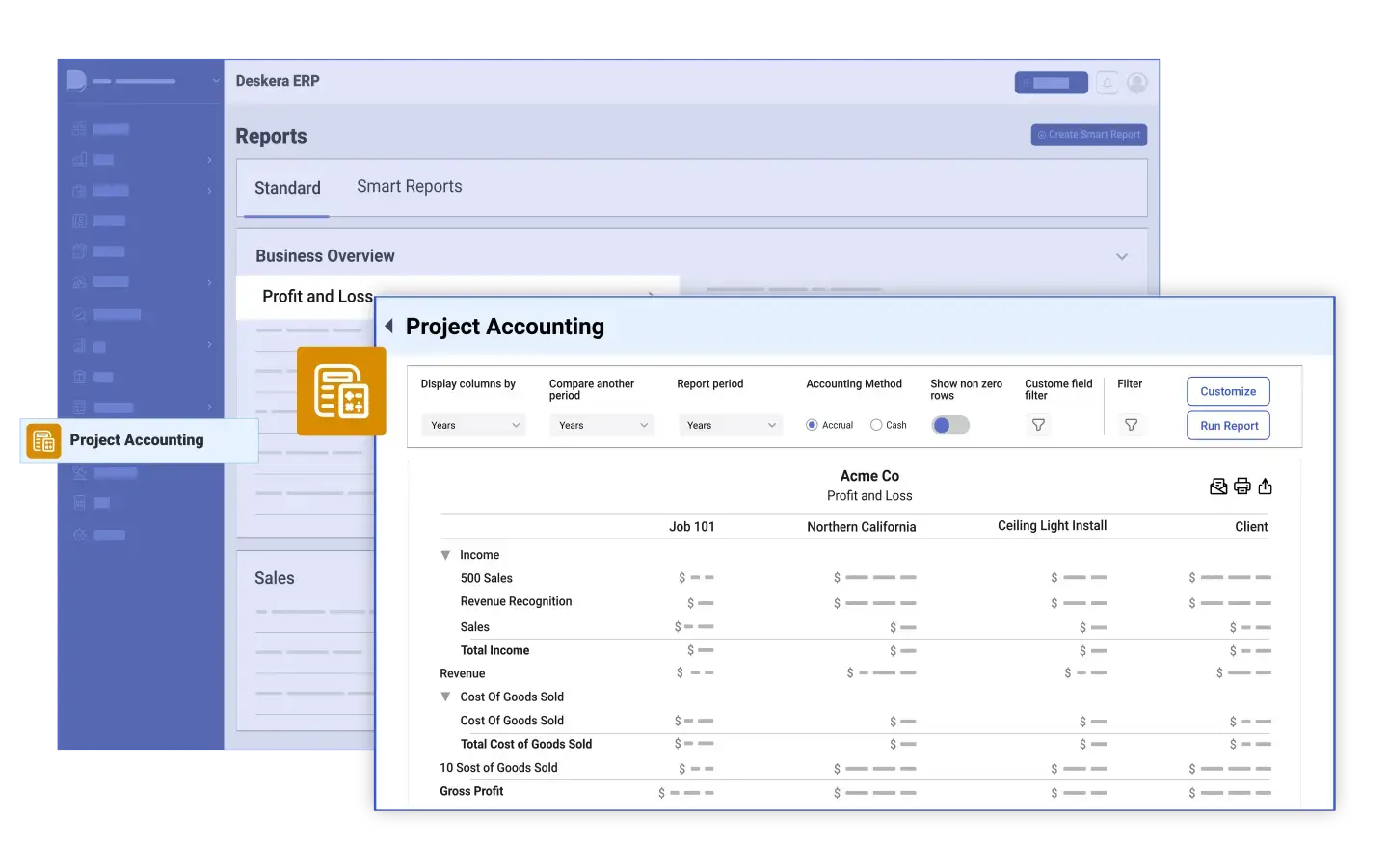
Managing a Statement of Work (SOW) effectively requires clarity, coordination, and real-time visibility—areas where a robust ERP system like Deskera ERP can make a significant difference. By integrating project management, finance, and operations into a single platform, it streamlines the entire SOW lifecycle.
Real-Time Tracking of Deliverables and Milestones
With built-in project tracking capabilities, Deskera ERP allows teams to monitor milestones, timelines, and deliverables in real time. This ensures that project execution stays aligned with the agreed SOW while enabling early identification of delays or bottlenecks. Improved visibility helps teams take corrective actions quickly and maintain project momentum.
Financial Visibility and Budget Control
Deskera ERP provides comprehensive financial tracking, allowing businesses to align SOW budgets with actual project costs. It supports multiple pricing models such as fixed, milestone-based, or time and materials. This ensures accurate billing, better cost control, and improved profitability while reducing the risk of budget overruns.
Role-Based Access and Accountability
The system enables clear assignment of roles and responsibilities across teams. With role-based access controls, organizations can ensure that each stakeholder understands their tasks and ownership. This improves accountability, reduces confusion, and enhances overall project efficiency.
Change Management and Flexibility
As projects evolve, Deskera ERP helps manage changes by tracking adjustments in scope, timelines, and costs. This structured approach ensures that all changes are properly evaluated and aligned with project goals. It helps prevent uncontrolled scope creep while maintaining flexibility to adapt to business needs.
Integrated Reporting and Insights
Deskera ERP offers real-time reporting and analytics that provide insights into project performance, resource utilization, and financial health. These insights enable better decision-making and help organizations continuously improve their SOW planning and execution strategies.
Improved Collaboration Across Teams
By connecting project data, financials, and operational workflows, Deskera ERP enhances collaboration between internal teams and external stakeholders. This ensures better communication, smoother execution, and stronger alignment throughout the project lifecycle.
Overall, Deskera ERP helps transform SOW management into a structured, efficient, and data-driven process—ensuring projects are delivered on time, within budget, and with greater control.
Key Takeaways
- A Statement of Work (SOW) serves as a comprehensive blueprint that defines project scope, deliverables, timelines, and responsibilities, ensuring alignment from the start.
- Understanding the differences between SOW, Scope of Work, MSA, contract, PO, SLA, RFP, and change orders helps prevent confusion and ensures each document is used correctly.
- Including all essential components such as scope, deliverables, timeline, roles, pricing, and terms ensures the SOW is complete and actionable.
- Choosing the right type of SOW—design, level of effort, or performance-based—depends on project requirements, flexibility, and desired outcomes.
- A well-written SOW improves clarity, reduces risks, enhances accountability, and ensures better budget and project control.
- Avoiding common mistakes like vague language, missing details, unrealistic timelines, and lack of stakeholder involvement is critical for project success.
- Following best practices such as being specific, defining measurable outcomes, involving stakeholders, and planning for change leads to a more effective SOW.
- Using an ERP system helps streamline SOW management by improving visibility, tracking progress, managing budgets, and enhancing collaboration.
Related Articles
 Niti Samani
 Niti Samani
 Niti Samani
 Niti Samani
 Niti Samani
 Niti Samani