

Why are so many companies moving parts of their operations overseas? The answer lies in the growing need for businesses to reduce costs, access global talent, and stay competitive in an increasingly interconnected marketplace. As organizations expand beyond domestic borders, offshoring has become a strategic approach that allows them to tap into international resources while maintaining efficiency and scalability.
Offshoring refers to the practice of relocating certain business processes or operations to another country, often to benefit from lower labor costs, specialized expertise, or favorable economic conditions. Companies across industries—from manufacturing and IT services to customer support and finance—use offshoring to streamline operations and improve overall productivity. By leveraging global capabilities, businesses can operate more efficiently while focusing their resources on core strategic activities.
However, while offshoring offers significant advantages, it also presents challenges such as communication barriers, time zone differences, regulatory complexities, and quality control concerns. Successfully managing offshore operations requires careful planning, strong coordination between teams, and the right technological infrastructure to ensure transparency and operational control across locations.
This is where modern ERP platforms like Deskera ERP play a critical role. Deskera ERP helps businesses manage offshore operations by providing centralized access to financial data, inventory, procurement, and supply chain processes across multiple locations. With real-time insights, automated workflows, and integrated business management tools, Deskera enables companies to maintain visibility and control over global operations while improving efficiency and decision-making.
What is Offshoring?
Offshoring refers to the practice of relocating business operations, services, or processes from one country to another. Companies typically move certain functions to foreign locations to benefit from more favorable business conditions, such as lower labor costs, improved production capabilities, or easier access to skilled professionals. By shifting operations overseas, organizations can optimize resources and improve overall operational efficiency.
In many cases, businesses offshore activities to take advantage of global talent pools and cost advantages that may not be available in their home country. Offshoring can involve transferring ownership or responsibility for a complete business process—such as manufacturing, accounting, or customer support—to another country. Companies may either establish their own offshore facilities, often referred to as Global In-house Centers (GICs), or collaborate with offshore partners to manage specific operations.
Offshoring is commonly used across a wide range of industries and job functions. Sectors such as information technology, business process outsourcing (BPO), manufacturing, digital marketing, engineering services, and customer support frequently rely on offshoring to enhance efficiency and reduce operational expenses. These functions are particularly suitable for offshoring because they can be managed remotely or performed effectively across different geographical locations.
Offshoring vs Outsourcing vs Nearshoring
Businesses often use strategies like offshoring, outsourcing, and nearshoring to optimize operations, reduce costs, and access specialized expertise. While these terms are sometimes used interchangeably, they refer to different approaches to managing business processes and resources.
Understanding their differences helps organizations choose the most suitable strategy based on their operational needs and long-term goals.
Offshoring
Offshoring refers to relocating business operations or processes to a different country, usually to benefit from lower labor costs, skilled talent, or favorable business conditions. The work may still be managed by the company itself through its own offshore facility or subsidiary.
For example, a company based in the United States may establish a software development center in India or move manufacturing operations to Vietnam. Offshoring focuses primarily on geographical relocation, and the work can be performed either internally or by external partners.
Outsourcing
Outsourcing involves delegating specific business functions or processes to an external third-party provider. The main goal is to allow businesses to focus on their core activities while specialized vendors handle certain operational tasks.
Outsourcing does not necessarily involve moving operations to another country. For instance, a company may outsource payroll processing, customer support, or IT services to a third-party firm located in the same country or abroad. The key aspect of outsourcing is that another organization is responsible for performing the task.
Nearshoring
Nearshoring refers to transferring business processes to a nearby or neighboring country, typically within the same region or time zone. Companies choose nearshoring to balance cost savings with better communication, cultural alignment, and easier collaboration.
For example, a company in the United States may nearshore operations to Mexico or Canada, while a Western European company may move certain processes to Eastern Europe. Nearshoring helps reduce challenges such as large time zone differences and communication barriers while still providing cost advantages.
Key Differences at a Glance
In practice, businesses may combine these strategies. For example, a company might outsource customer service to a third-party provider in another country, which would be considered offshore outsourcing.
Choosing the right approach depends on factors such as cost considerations, communication requirements, talent availability, and operational control.
Key Components of Offshoring
Offshoring is not simply about relocating operations to another country. It involves several critical components that ensure the process is strategic, efficient, and aligned with business goals. Organizations must carefully evaluate multiple factors—from location selection to process management—to successfully implement an offshoring strategy.
Geographic Relocation
The most fundamental component of offshoring is the geographic relocation of business operations from the home country to a foreign location. This relocation allows companies to take advantage of favorable conditions such as lower labor costs, supportive government policies, and improved access to resources.
The choice of destination country plays a crucial role, as factors like political stability, infrastructure quality, and workforce availability can significantly influence the success of offshore operations.
Business Process Transfer
Offshoring typically involves transferring specific business functions or processes to the offshore location. Companies may offshore operational processes such as manufacturing or support functions like accounting and customer service.
Commonly offshored processes include information technology services, customer support operations, manufacturing activities, research and development, human resources functions, and financial and accounting services. By relocating these processes, businesses can optimize costs while maintaining operational efficiency.
Access to Skilled Talent
Another key component of offshoring is the ability to tap into global talent pools. Many companies offshore operations to regions where specialized skills are more readily available.
For example, businesses often offshore software development, engineering, or analytics tasks to countries known for strong technical expertise. Access to skilled professionals allows companies to improve productivity and innovation while addressing talent shortages in their domestic markets.
Technology and Infrastructure Support
Effective offshoring relies heavily on reliable technology and infrastructure. Digital communication tools, cloud platforms, and integrated business systems enable organizations to coordinate work between domestic and offshore teams seamlessly.
Strong infrastructure—including telecommunications networks, transportation systems, and reliable power supply—also plays an important role in ensuring smooth operations and consistent service delivery.
Strategic Planning and Implementation
Successful offshoring requires careful planning and a well-defined strategy. Organizations must evaluate potential offshore locations, analyze cost structures, understand local labor laws and regulations, and assess potential risks.
Strategic implementation also includes setting clear performance metrics, establishing governance structures, and creating communication frameworks to ensure that offshore teams align with the company’s overall objectives.
Risk Management and Compliance
Managing risks is another essential component of offshoring. Businesses must address challenges related to data security, intellectual property protection, regulatory compliance, and cultural differences.
Developing comprehensive risk management strategies—such as compliance monitoring, cybersecurity protocols, and contingency planning—helps companies safeguard their operations and maintain business continuity across international locations.
Purpose and Benefits of Offshoring
The purpose of offshoring goes beyond simply reducing costs. While cost savings remain one of the primary motivations, businesses increasingly use offshoring as a strategic approach to improve operational efficiency, access specialized expertise, and expand their global presence.
By relocating certain processes to countries that offer economic or resource advantages, companies can optimize their operations and strengthen their competitive position in global markets.
Cost Reduction and Improved Profitability
One of the most significant benefits of offshoring is the ability to reduce operational costs. Labor expenses in many offshore destinations are considerably lower than in developed countries, particularly for labor-intensive functions such as manufacturing, IT services, and customer support.
Lower production and labor costs help businesses improve profit margins and enhance cash flow. These savings can then be reinvested into key areas such as research and development, innovation, and business expansion.
Access to a Global Talent Pool
Offshoring allows companies to tap into a broader pool of skilled professionals across the world. In many cases, businesses offshore operations to locations where specialized technical or professional expertise is more readily available.
Access to global talent can help organizations address skill shortages in their home markets while also improving the quality and efficiency of their operations.
Increased Operational Efficiency
Another important benefit of offshoring is enhanced operational efficiency. Companies can distribute work across multiple locations, enabling tasks to be completed more quickly and effectively.
Offshoring also allows businesses to streamline processes by assigning certain functions to regions where they can be performed more efficiently due to better infrastructure, specialized skills, or cost advantages.
24/7 Business Operations
By operating in multiple time zones, companies can maintain round-the-clock productivity and service availability.
For example, customer support teams located in offshore regions can provide assistance outside the standard working hours of the company’s home country.
This continuous service capability improves customer satisfaction and ensures faster response times for global clients.
Faster Speed to Market
Offshoring can accelerate production cycles and service delivery. When businesses distribute operations across different regions, they can reduce turnaround times and bring products or services to market more quickly.
This advantage is particularly valuable in industries where speed and responsiveness are critical to staying competitive.
Global Market Expansion
Offshoring also supports international growth strategies. Establishing operations in foreign markets allows companies to expand their global footprint and reach new customer segments.
In addition to increasing distribution capabilities, offshore locations may offer government incentives, favorable regulations, and easier access to local resources, all of which can support long-term business growth.
Greater Business Flexibility
Offshoring provides organizations with greater flexibility in managing their workforce and operations. Companies can scale teams more easily, adjust production levels, and adapt to changing market demands. This flexibility helps businesses remain agile and responsive in a rapidly evolving global business environment.
Challenges and Risks of Offshoring
While offshoring offers significant advantages, it also presents several challenges that businesses must carefully manage. Relocating operations to another country introduces complexities related to communication, management, regulatory compliance, and operational control.
Without proper planning and oversight, these challenges can reduce the potential benefits of offshoring and affect overall business performance.
Communication and Cultural Barriers
One of the most common challenges in offshoring is communication difficulties between onshore and offshore teams. Differences in language, communication styles, and cultural norms can lead to misunderstandings and collaboration issues.
Cultural differences in workplace practices, decision-making approaches, and expectations may also create friction between teams if they are not effectively managed.
Time Zone Differences
Operating across multiple time zones can make coordination more difficult. Scheduling meetings, managing workflows, and resolving urgent issues may take longer when teams are located in different regions of the world.
While time zone differences can support round-the-clock operations, they can also slow down decision-making and project timelines if communication is not well organized.
Quality Control Challenges
Maintaining consistent quality standards across geographically dispersed teams can be challenging. Differences in work practices, production standards, or management oversight may result in inconsistencies in product quality or service delivery.
Businesses must establish clear performance metrics, standardized procedures, and effective monitoring systems to maintain quality control across offshore operations.
Data Security and Privacy Risks
Offshoring often requires companies to share sensitive business information or intellectual property with teams located in other countries. This increases the risk of data breaches, unauthorized access, or misuse of proprietary information.
Additionally, organizations must comply with data protection regulations that vary across jurisdictions, which can make data security management more complex.
Regulatory and Compliance Complexities
Labor laws, tax regulations, and commercial policies differ from country to country. Navigating these legal frameworks can be challenging and time-consuming for businesses operating internationally.
Failure to comply with local regulations may lead to legal penalties, financial losses, or operational disruptions, making compliance management a critical aspect of offshoring.
Hidden and Unexpected Costs
Although offshoring is often pursued for cost savings, businesses may encounter hidden costs during implementation. Expenses related to infrastructure setup, employee training, travel, legal services, and process integration can increase the total cost of offshoring. Without careful financial planning, these unexpected costs may reduce the anticipated savings.
Political and Economic Risks
Companies operating in foreign countries may also face geopolitical risks, such as political instability, economic fluctuations, or changes in government policies. Currency volatility, trade restrictions, or regulatory changes can impact operational costs and business continuity. As a result, businesses must continuously monitor external factors and develop contingency plans to mitigate potential disruptions.
Best Practices for Successful Offshoring
Implementing an offshoring strategy requires more than simply relocating operations to another country. To achieve the intended benefits—such as cost savings, improved efficiency, and access to global talent—businesses must adopt structured processes and strategic planning.
The following best practices can help organizations successfully manage offshore operations and minimize potential risks.
Conduct Thorough Planning and Research
Successful offshoring begins with careful planning and detailed research. Organizations should clearly define their objectives, such as cost reduction, access to specialized talent, or global expansion.
Businesses must also evaluate potential offshore locations based on factors such as infrastructure quality, labor availability, cost structures, regulatory environments, and political stability. Conducting a cost-benefit analysis helps companies determine whether offshoring will deliver long-term value.
Choose the Right Location and Partners
Selecting the appropriate offshore destination and partners is critical. Businesses should assess potential vendors or offshore teams based on their experience, technical capabilities, security standards, and track record. A reliable partner can significantly improve operational efficiency and ensure that offshore teams meet the company’s performance expectations.
Establish Clear Communication and Collaboration Systems
Effective communication is essential when managing teams across different locations and time zones. Organizations should implement structured communication channels such as regular video conferences, collaborative project management tools, and shared documentation platforms. Clear communication protocols help ensure that both onshore and offshore teams remain aligned with business goals and project timelines.
Define Performance Metrics and Quality Standards
Maintaining consistent quality across offshore operations requires clear performance measurement systems. Businesses should establish key performance indicators (KPIs), quality standards, and service-level agreements (SLAs) to monitor productivity and outcomes. Regular performance reviews, audits, and feedback mechanisms can help identify areas for improvement and maintain high operational standards.
Provide Cultural Awareness and Team Integration
Cultural differences can affect communication and teamwork in offshore environments. Providing cultural awareness training and encouraging collaboration between onshore and offshore teams can help reduce misunderstandings and strengthen working relationships. Team-building initiatives and cross-cultural training programs promote better cooperation and improve overall productivity.
Implement Risk Management and Compliance Measures
Offshoring involves various risks related to data security, regulatory compliance, and geopolitical factors. Companies should implement strong cybersecurity practices, legal frameworks, and compliance monitoring systems to protect sensitive information and ensure adherence to local laws. Developing contingency plans and business continuity strategies can also help organizations respond effectively to unexpected disruptions.
Monitor and Continuously Improve Offshore Operations
Offshoring should be treated as an evolving strategy rather than a one-time initiative. Businesses should continuously evaluate the performance of offshore teams, gather feedback, and refine processes to improve efficiency. Regular assessments and improvement initiatives help ensure that offshore operations remain aligned with organizational goals and deliver sustainable long-term benefits.
How Deskera ERP Helps You Manage Offshoring
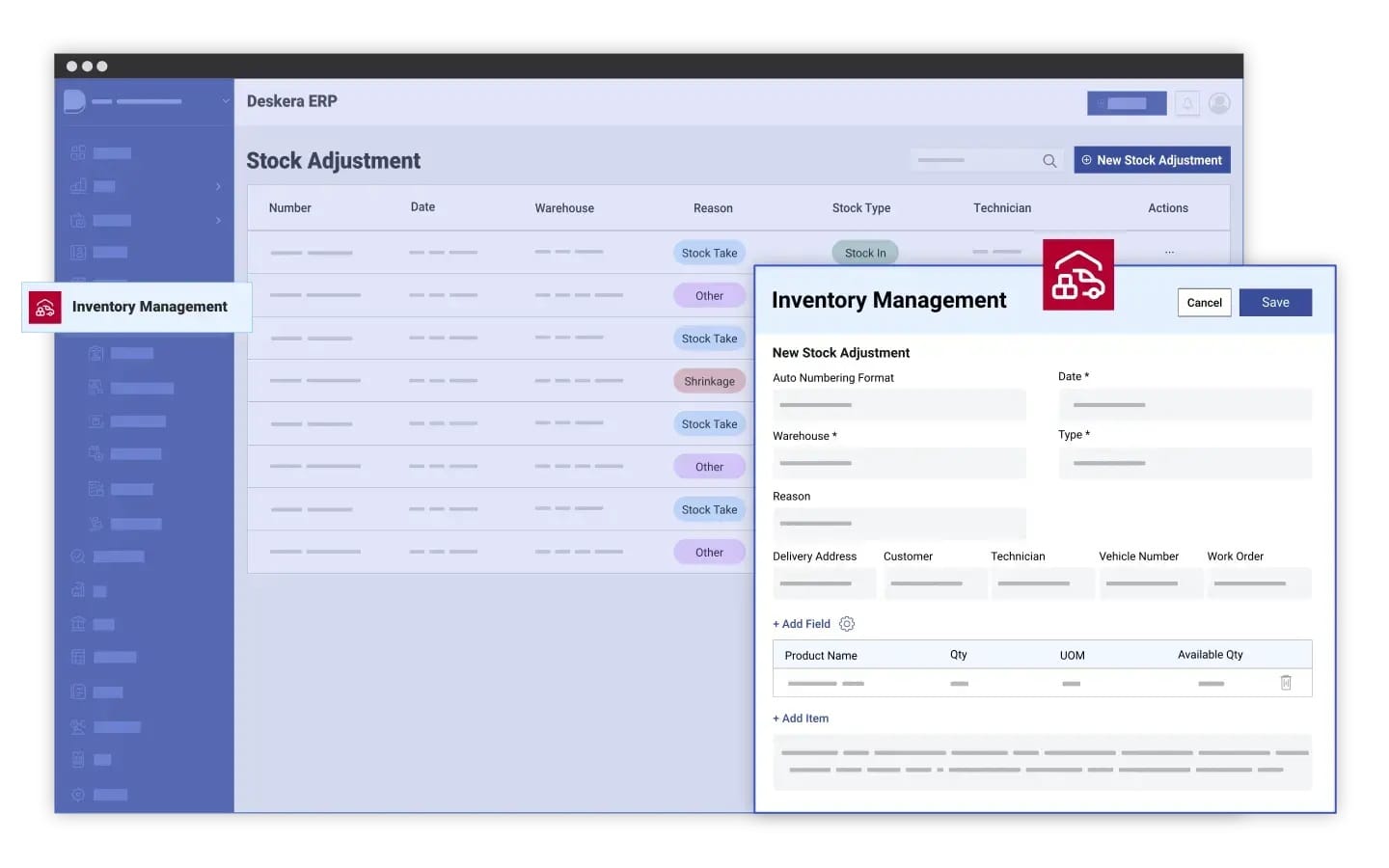
Managing offshore operations can be complex because businesses must coordinate multiple locations, teams, suppliers, and financial processes across different countries. A comprehensive ERP system like Deskera ERP helps organizations maintain visibility, control, and efficiency when operating globally. By centralizing business data and automating processes, it allows companies to manage offshore operations more effectively.
Centralized Business Operations Across Locations
Deskera ERP provides an integrated platform that connects key business functions such as accounting, inventory, procurement, and order management in one system. This centralized approach ensures that all departments and offshore teams work with the same data, improving coordination and reducing operational silos.
Real-Time Visibility into Global Operations
With real-time dashboards and reporting tools, businesses can monitor financial performance, inventory levels, and operational activities across multiple locations. This visibility helps managers make faster, data-driven decisions and maintain better control over offshore processes.
Multi-Location Inventory and Supply Chain Management
Companies operating in multiple countries often need to track inventory across warehouses and production facilities. Deskera ERP enables real-time inventory tracking across multiple locations and warehouses, helping businesses manage stock movements, prevent shortages, and maintain accurate inventory records.
Automated Financial Management and Multi-Currency Support
Offshoring often involves managing finances across different entities, currencies, and regulatory environments. Deskera ERP supports automated accounting processes, financial reporting, and multi-currency management, allowing companies to track financial performance across offshore operations more efficiently.
Improved Collaboration and Workflow Automation
Deskera ERP automates routine processes such as purchase orders, invoicing, and approvals, reducing manual work and improving operational efficiency. Automated workflows ensure that tasks are completed on time and help teams across different locations collaborate more effectively.
Scalable Platform for Global Expansion
As companies expand their offshore operations, they require systems that can scale with their growth. Deskera ERP supports business expansion by accommodating multiple locations, business units, and increasing operational complexity without disrupting existing workflows.
In summary, Deskera ERP simplifies the management of offshore operations by providing centralized control, real-time visibility, automated workflows, and scalable business management tools. With these capabilities, businesses can streamline global operations, improve coordination between teams, and maintain better oversight of their offshore activities.
Key Takeaways
- Offshoring involves relocating business processes or operations to another country to reduce costs, access specialized talent, and improve operational efficiency.
- Unlike outsourcing, which involves delegating tasks to external vendors, and nearshoring, which moves operations to nearby countries, offshoring specifically focuses on relocating work to distant international locations.
- The key components of offshoring include geographic relocation, transferring business processes, accessing global talent, leveraging technology infrastructure, and implementing strong strategic planning and risk management.
- The primary purpose of offshoring is to help businesses reduce production and labor costs, access a wider talent pool, improve efficiency, enable 24/7 operations, and support global market expansion.
- Despite its advantages, offshoring can create challenges such as communication barriers, time zone differences, quality control issues, data security risks, regulatory complexities, and hidden operational costs.
- Successful offshoring requires best practices such as thorough planning, selecting the right location and partners, establishing effective communication systems, defining performance metrics, providing cultural training, and implementing strong risk management strategies.
- Deskera ERP helps businesses manage offshoring effectively by providing centralized operations management, real-time visibility into global activities, multi-location inventory tracking, automated financial processes, and improved collaboration across teams.
Related Articles
 Nalini
 Niti Samani
 Niti Samani
 Niti Samani
 Niti Samani
 Niti Samani