


Are your procurement processes truly driving value—or quietly draining time, money, and efficiency? The answer, for many businesses, lies somewhere in between. Traditional procurement methods often focus heavily on cost reduction but overlook hidden inefficiencies like delays, excess inventory, and poor supplier coordination. This is where lean procurement steps in, offering a smarter, more strategic approach that prioritizes value creation while systematically eliminating waste.
In today’s fast-paced and highly competitive business landscape, procurement is no longer just a back-office function—it plays a critical role in shaping operational efficiency and overall profitability. Lean procurement, inspired by lean manufacturing principles, focuses on streamlining processes, improving supplier collaboration, and ensuring that every procurement activity contributes directly to business goals. By aligning procurement with value-driven outcomes, organizations can reduce costs while enhancing agility and responsiveness.
At its core, lean procurement is about doing more with less—less time, less waste, and fewer resources—without compromising on quality or performance. It encourages businesses to rethink traditional workflows, identify non-value-adding activities, and adopt continuous improvement practices. Whether it’s reducing procurement cycle times or building stronger supplier relationships, lean procurement enables organizations to create a more efficient and resilient supply chain.
Modern ERP solutions like Deskera ERP play a vital role in enabling lean procurement by bringing automation, visibility, and intelligence into the process. With features such as centralized procurement management, real-time inventory tracking, and AI-powered demand forecasting through its assistant David, Deskera helps businesses streamline purchasing workflows and eliminate inefficiencies. Its advanced reporting and supplier management capabilities further empower organizations to make data-driven decisions, making lean procurement not just achievable but scalable.
What is Lean Procurement?
Lean procurement, also known as lean purchasing or lean sourcing, is a strategic approach to procurement that focuses on maximizing value while minimizing waste and inefficiencies.
Instead of viewing procurement purely as a cost-cutting function, lean procurement emphasizes improving process efficiency, enhancing supplier collaboration, and ensuring that every activity contributes meaningfully to business outcomes.
At its core, lean procurement is rooted in the broader philosophy of lean management—delivering more value with fewer resources. This means identifying and eliminating non-value-adding activities such as redundant approvals, delays, excess inventory, and manual inefficiencies.
By streamlining procurement workflows and leveraging automation, organizations can create a more responsive and resource-efficient purchasing system that aligns closely with their strategic goals.
One of the reasons lean procurement can feel broad or even abstract is because it is built on the principle of continuous improvement. What “lean” looks like can vary significantly from one organization to another, depending on their processes, industry, and operational challenges.
For some, it may involve adopting e-procurement tools and automating sourcing, while for others, it could mean restructuring supplier relationships or implementing just-in-time inventory practices to reduce waste and improve cash flow.
In practice, lean procurement goes beyond theory by combining process optimization, technology adoption, and cultural change. It involves designing procurement functions that are agile, transparent, and data-driven—capable of quickly adapting to market demands while maintaining efficiency.
Ultimately, the goal is to build a procurement system that not only reduces costs but also enhances overall productivity, strengthens the supply chain, and drives long-term business value.
Lean Procurement vs Traditional Procurement
Lean procurement and traditional procurement differ significantly in their approach, priorities, and overall impact on business performance.
While traditional procurement focuses primarily on cost control and transactional efficiency, lean procurement takes a more strategic, value-driven approach by emphasizing efficiency, collaboration, and continuous improvement.
1. Focus and Objective
- Traditional Procurement: Primarily focused on reducing purchase costs and negotiating the lowest price.
- Lean Procurement: Focuses on maximizing overall value by balancing cost, quality, speed, and efficiency.
2. Approach to Processes
- Traditional Procurement: Often involves rigid, step-heavy processes with multiple approvals and manual interventions.
- Lean Procurement: Streamlines workflows by eliminating unnecessary steps and automating repetitive tasks to improve speed and accuracy.
3. Supplier Relationships
- Traditional Procurement: Typically transactional, with a focus on short-term contracts and price negotiations.
- Lean Procurement: Builds long-term, collaborative partnerships with suppliers to improve reliability, innovation, and mutual growth.
4. Flexibility and Agility
- Traditional Procurement: Less flexible and slower to adapt to changes in demand or market conditions.
- Lean Procurement: Highly agile, enabling faster decision-making and better responsiveness to dynamic business needs.
5. Use of Technology
- Traditional Procurement: Limited reliance on digital tools, often dependent on manual processes and siloed systems.
- Lean Procurement: Leverages automation, data analytics, and e-procurement platforms to enhance visibility and efficiency.
6. Waste and Efficiency
- Traditional Procurement: Inefficiencies such as delays, excess inventory, and redundant processes are often overlooked.
- Lean Procurement: Actively identifies and eliminates waste to create a more efficient and streamlined procurement cycle.
7. Decision-Making
- Traditional Procurement: Decisions are often based on historical data and cost considerations alone.
- Lean Procurement: Uses real-time data and insights to make informed, strategic decisions that align with broader business goals.
Traditional procurement ensures operational continuity, but lean procurement transforms procurement into a strategic function that drives efficiency, agility, and long-term value.
Key Principles of Lean Procurement
Lean procurement is built on a set of core principles that help organizations streamline purchasing processes, eliminate inefficiencies, and maximize value. These principles guide procurement teams in creating a more agile, efficient, and value-driven function.
1. Value Identification
The first step in lean procurement is understanding what truly adds value to the business and its customers. This involves clearly defining procurement objectives—whether it’s cost efficiency, quality improvement, faster delivery, or supplier reliability. By focusing only on value-adding activities, organizations can avoid unnecessary spending and effort.
2. Waste Elimination
A central principle of lean procurement is the removal of waste from processes. Waste can take many forms, such as excessive approvals, duplicate orders, long waiting times, or inefficient supplier communication. Identifying and eliminating these inefficiencies helps streamline procurement and improve overall performance.
3. Continuous Improvement (Kaizen)
Lean procurement is not a one-time initiative but an ongoing process. Continuous improvement, often referred to as Kaizen, encourages teams to regularly evaluate procurement workflows, identify gaps, and implement incremental improvements. This ensures that procurement processes remain efficient and adaptable over time.
4. Supplier Collaboration
Rather than treating suppliers as transactional vendors, lean procurement emphasizes building long-term, strategic partnerships. Strong supplier relationships lead to better communication, improved quality, reduced lead times, and greater flexibility in responding to changing business needs.
5. Process Standardization
Standardizing procurement processes helps create consistency, reduce errors, and improve efficiency. By establishing clear workflows, guidelines, and approval systems, organizations can ensure smoother operations and better control over procurement activities.
6. Just-in-Time (JIT) Approach
Lean procurement often incorporates a just-in-time approach, where materials and goods are procured only when needed. This reduces excess inventory, minimizes storage costs, and improves cash flow while maintaining operational efficiency.
7. Data-Driven Decision Making
Lean procurement relies heavily on data and analytics to guide decisions. By leveraging real-time insights into spending, supplier performance, and demand patterns, organizations can make more informed, accurate, and strategic procurement choices.
Together, these principles enable businesses to transform procurement from a reactive, cost-focused function into a proactive, strategic driver of efficiency and value.
Types of Waste in Procurement
In lean procurement, “waste” refers to any activity that consumes time, resources, or money without adding value to the organization or the end customer. Identifying and eliminating these inefficiencies is essential to building a streamlined and cost-effective procurement process.
Below are the most common types of waste in procurement:
1. Overprocessing
This occurs when procurement processes involve unnecessary steps, such as excessive approvals, duplicate documentation, or overly complex workflows. These activities slow down operations without improving outcomes.
2. Waiting Time
Delays in approvals, supplier responses, or order processing can significantly impact procurement efficiency. Waiting time not only disrupts workflows but can also lead to missed opportunities and production delays.
3. Excess Inventory
Purchasing more than what is needed leads to high holding costs, storage issues, and the risk of obsolescence. Excess inventory ties up working capital and reduces overall financial efficiency.
4. Unnecessary Transportation
Inefficient logistics, such as sourcing from distant suppliers when closer options are available, can increase transportation costs and lead times. Poor planning in delivery schedules also contributes to this type of waste.
5. Errors and Rework
Mistakes in purchase orders, incorrect supplier details, or mismatched invoices often result in rework. These errors consume time, increase administrative costs, and can strain supplier relationships.
6. Unused or Underutilized Talent
When skilled procurement professionals spend time on repetitive manual tasks instead of strategic activities, their potential is wasted. This limits innovation and reduces the overall effectiveness of the procurement function.
7. Maverick Spend
Maverick spend refers to purchases made outside established procurement processes or approved suppliers. This leads to a lack of control, higher costs, and reduced visibility into organizational spending.
By identifying and addressing these types of waste, businesses can significantly improve procurement efficiency, reduce costs, and create a more agile and value-driven supply chain.
Structure of Lean Procurement
The structure of lean procurement follows a systematic and interconnected approach designed to optimize every stage of the procurement lifecycle. It ensures that processes are streamlined, waste is minimized, and value is consistently delivered.
Below are the key components that define the structure of lean procurement:
1. Value Stream Mapping
Value stream mapping is the foundation of lean procurement, as it provides a clear visualization of the entire procurement process—from sourcing to final delivery. By mapping each step, organizations can identify bottlenecks, redundancies, and non-value-adding activities.
This structured visibility enables procurement teams to redesign workflows, eliminate inefficiencies, and create a more streamlined and cost-effective process aligned with business objectives.
2. Supplier Relationship Management (SRM)
Supplier relationship management plays a critical role in the lean procurement structure by shifting the focus from transactional interactions to long-term collaboration. Organizations prioritize selecting reliable suppliers, negotiating mutually beneficial terms, and fostering open communication.
Strong supplier partnerships lead to improved quality, reduced lead times, and enhanced flexibility, enabling procurement teams to respond quickly to changing demands while maintaining efficiency.
3. Demand Planning and Forecasting
Accurate demand planning and forecasting are essential to ensure that procurement aligns with actual business needs. Lean procurement emphasizes the use of data-driven insights to predict demand patterns and avoid overstocking or stockouts.
By synchronizing procurement activities with real-time demand, organizations can reduce excess inventory, improve cash flow, and enhance responsiveness across the supply chain.
4. Inventory Management
Inventory management in lean procurement focuses on maintaining optimal stock levels while minimizing carrying costs. By adopting just-in-time (JIT) practices, businesses procure materials only when needed, reducing storage requirements and the risk of obsolescence.
This structured approach ensures efficient inventory turnover, better utilization of resources, and improved financial performance without compromising operational continuity.
5. Process Optimization
Process optimization involves continuously refining procurement workflows to improve efficiency and eliminate waste. Lean techniques such as standardization, Kaizen (continuous improvement), and visual management tools like Kanban help streamline operations.
By reducing unnecessary steps, simplifying approval processes, and eliminating bottlenecks, organizations can achieve faster procurement cycles and greater consistency in execution.
6. Technology Integration
Technology integration is a key structural element that enables lean procurement to function effectively at scale. E-procurement systems, automated purchasing workflows, and digital sourcing platforms provide real-time visibility and reduce manual effort.
These tools help centralize procurement activities, enhance transparency, and support data-driven decision-making, making it easier to identify inefficiencies and maintain control over spending.
7. Performance Measurement and KPIs
Measuring performance through well-defined key performance indicators (KPIs) ensures that lean procurement initiatives stay on track.
Metrics such as procurement cycle time, supplier performance, cost savings, and order accuracy provide valuable insights into process effectiveness.
Regular monitoring allows organizations to identify gaps, make informed improvements, and ensure continuous alignment with strategic procurement goals.
8. Risk Management
Risk management is an integral part of lean procurement, focusing on identifying and mitigating potential disruptions in the supply chain. This includes evaluating supplier reliability, monitoring market fluctuations, and preparing for geopolitical or operational risks. A structured risk management approach helps organizations maintain continuity, reduce uncertainties, and build a more resilient procurement function.
9. Continuous Improvement
Continuous improvement is the driving force behind lean procurement, ensuring that processes evolve with changing business needs. Organizations foster a culture where employees actively identify inefficiencies and suggest improvements. By regularly reviewing performance data and implementing incremental changes, procurement teams can sustain long-term efficiency, adaptability, and competitive advantage.
4 Factors for Successful Lean Procurement
Successfully implementing lean procurement goes beyond applying principles—it requires a focused strategy supported by key enablers or 4 factors that drive real impact. These factors help organizations move from theory to execution, ensuring that lean procurement delivers measurable value across the supply chain.
1. Segmentation of Procurement Functions
A critical success factor is the clear segmentation of procurement activities into categories such as supply management, tactical purchasing, and strategic sourcing. This structured division allows organizations to apply lean methodologies where they are most effective, particularly in downstream activities. It also helps reduce complexity, improve control over third-party risks, and ensure that each function operates with greater clarity and efficiency.
2. Focus on High-Value Activities
Lean procurement thrives when organizations prioritize activities that generate the most value. By leveraging procurement technology to automate repetitive and manual tasks, teams can redirect their efforts toward strategic decision-making, supplier collaboration, and cost optimization. This focused approach not only improves productivity but also ensures that procurement contributes directly to business growth and competitive advantage.
3. Customization of Sourcing Strategies
A one-size-fits-all approach does not work in lean procurement. Successful organizations tailor their sourcing strategies based on the type of goods or services being procured—whether they are critical, high-risk items or standard commodities. This differentiation allows procurement teams to allocate resources more effectively, manage risks better, and optimize supplier selection based on the specific needs of each category.
4. Motivation and Change Management
Driving lean procurement requires strong organizational buy-in and a culture that embraces change. Motivating teams across departments through incentives, training, and clear communication is essential for successful adoption. When employees understand the value of lean practices and are encouraged to contribute to improvements, it fosters collaboration, innovation, and long-term sustainability of lean initiatives.
By focusing on these 4 factors—segmentation, value-driven focus, customization, and motivation—organizations can strengthen their lean procurement strategy and ensure consistent, scalable success in optimizing procurement operations.
Benefits of Lean Procurement
Adopting lean procurement can transform procurement from a routine, transactional function into a strategic driver of business value. By focusing on efficiency, waste reduction, and continuous improvement, organizations can unlock a wide range of tangible and long-term benefits.
1. Enhanced Efficiency and Faster Processes
Lean procurement significantly improves operational efficiency by streamlining workflows and eliminating unnecessary steps that slow down procurement cycles.
By automating repetitive tasks such as purchase order creation, approvals, and supplier communication, organizations can reduce manual intervention and human error.
This leads to faster processing times, improved accuracy, and better coordination between departments. As a result, procurement teams can handle higher volumes of work without increasing workload, ensuring smoother operations.
Faster procurement cycles also mean quicker response to business needs, helping organizations maintain continuity and avoid delays in production or service delivery.
2. Significant Cost Reduction
Lean procurement enables organizations to achieve substantial cost savings by focusing on eliminating waste across the entire procurement lifecycle.
Instead of relying solely on negotiating lower prices, it identifies inefficiencies such as overstocking, redundant processes, and unnecessary approvals that increase operational costs.
By optimizing resource utilization and improving process efficiency, businesses can reduce hidden expenses that often go unnoticed. Additionally, better demand planning and supplier collaboration help avoid emergency purchases and price fluctuations.
This comprehensive approach to cost management not only improves profitability but also ensures sustainable financial performance without compromising quality or supplier relationships.
3. Improved Supplier Relationships
A key benefit of lean procurement is the shift from transactional supplier interactions to long-term, collaborative partnerships. Organizations work closely with suppliers to improve communication, align expectations, and enhance overall performance.
This collaboration fosters trust and transparency, enabling suppliers to better understand business needs and deliver consistent quality. Strong supplier relationships also lead to improved negotiation outcomes, faster issue resolution, and greater flexibility in handling demand changes.
Over time, these partnerships can drive innovation, as suppliers contribute ideas for cost reduction and process improvement, ultimately strengthening the entire supply chain ecosystem.
4. Greater Flexibility and Responsiveness
Lean procurement enhances an organization’s ability to respond quickly to changing market conditions, customer demands, and supply chain disruptions.
By simplifying processes and improving visibility into procurement activities, teams can make faster, data-driven decisions. This agility allows businesses to adjust sourcing strategies, switch suppliers if needed, and manage demand fluctuations effectively.
Improved responsiveness also reduces the risk of stockouts or overstocking, ensuring operational continuity. In a dynamic business environment, this flexibility provides a competitive advantage, enabling organizations to stay resilient and adapt to uncertainties without compromising efficiency or performance.
5. Increased Strategic Focus
By automating routine and time-consuming procurement tasks, lean procurement frees up valuable time for procurement professionals to focus on strategic initiatives. Instead of managing day-to-day transactions, teams can concentrate on supplier development, risk management, cost optimization, and long-term planning.
This shift elevates procurement from a support function to a key contributor to business strategy. With a stronger strategic focus, procurement teams can align their activities with organizational goals, drive innovation, and create additional value. This not only improves decision-making but also enhances the overall impact of procurement on business growth and competitiveness.
6. Better Inventory Management
Lean procurement promotes efficient inventory management by aligning purchasing decisions closely with actual demand. Through practices like just-in-time (JIT) procurement, organizations can minimize excess inventory and reduce storage costs. This approach helps prevent overstocking, obsolescence, and unnecessary capital investment in inventory.
At the same time, it ensures that essential materials are available when needed, avoiding production disruptions. Improved inventory control enhances cash flow and allows businesses to allocate resources more effectively. By maintaining optimal stock levels, organizations can achieve a balance between efficiency and reliability in their supply chain operations.
7. Enhanced Transparency and Visibility
Lean procurement improves visibility across the entire procurement process by integrating systems and leveraging real-time data. Organizations gain clear insights into spending patterns, supplier performance, and procurement activities, enabling better monitoring and control. This transparency helps identify inefficiencies, track compliance with procurement policies, and prevent issues such as maverick spending.
With access to accurate and timely information, decision-makers can make informed choices that align with business objectives. Enhanced visibility also fosters accountability across teams and departments, ensuring that procurement processes remain efficient, controlled, and aligned with organizational goals.
8. Reduced Errors and Rework
Standardization and automation in lean procurement significantly reduce the likelihood of errors in procurement processes. Manual tasks such as data entry, order processing, and invoice matching are prone to mistakes, which can lead to delays, additional costs, and strained supplier relationships.
By implementing streamlined workflows and automated systems, organizations can improve accuracy and consistency. This reduces the need for rework, saving both time and resources.
Fewer errors also enhance supplier trust and ensure smoother transactions. Ultimately, minimizing errors contributes to a more reliable, efficient, and cost-effective procurement function.
Challenges in Implementing Lean Procurement
While lean procurement offers significant benefits, implementing it is not without challenges. Organizations often face structural, cultural, and technological barriers that can slow down or complicate adoption.
Understanding these challenges is essential to ensure a smoother transition and long-term success.
1. Resistance to Change
One of the most common challenges in implementing lean procurement is resistance from employees and stakeholders. Procurement teams and other departments may be accustomed to traditional processes and hesitant to adopt new methodologies. Changes in workflows, responsibilities, and decision-making structures can create uncertainty and pushback.
Without proper communication, training, and leadership support, this resistance can delay implementation. Building awareness about the benefits of lean procurement and involving teams in the transformation process is crucial to overcoming this challenge and ensuring organization-wide acceptance.
2. Lack of Process Visibility
Many organizations struggle with limited visibility into their existing procurement processes, making it difficult to identify inefficiencies and waste. Without clear insights into procurement activities, spending patterns, and supplier performance, implementing lean practices becomes challenging.
This lack of transparency often results from siloed systems and manual processes. To address this, businesses need to invest in tools and systems that provide real-time data and end-to-end visibility, enabling better analysis, monitoring, and decision-making throughout the procurement lifecycle.
3. Supplier Alignment Issues
Lean procurement relies heavily on strong supplier collaboration, but aligning suppliers with lean principles can be difficult. Some suppliers may be resistant to changes such as just-in-time deliveries, tighter schedules, or increased transparency requirements.
Differences in capabilities, communication gaps, and lack of trust can further complicate collaboration. Organizations need to work closely with suppliers, set clear expectations, and build long-term partnerships to ensure alignment. This may also involve training suppliers or selecting partners who are better equipped to support lean initiatives.
4. Limited Technology Adoption
A lack of advanced procurement technology can hinder the successful implementation of lean procurement. Manual processes, outdated systems, and disconnected tools make it difficult to automate workflows, track performance, and gain actionable insights.
Without the right technology, achieving efficiency and transparency becomes a challenge. Organizations must invest in modern e-procurement solutions, automation tools, and analytics platforms to support lean practices and enable seamless procurement operations.
5. Difficulty in Identifying Waste
Identifying waste within procurement processes is not always straightforward. Inefficiencies such as redundant approvals, delays, or underutilized resources may be deeply embedded in existing workflows and go unnoticed.
Without a structured approach like value stream mapping, organizations may struggle to pinpoint areas for improvement. This challenge requires a thorough analysis of procurement activities, along with continuous monitoring and evaluation, to effectively identify and eliminate waste.
6. Cultural and Organizational Barriers
Lean procurement requires a shift in organizational mindset, which can be difficult to achieve. Traditional procurement often focuses on cost reduction rather than value creation, and changing this perspective takes time.
Additionally, lack of cross-functional collaboration and siloed departments can hinder lean implementation. Organizations must foster a culture of continuous improvement, encourage collaboration across teams, and align procurement goals with overall business strategy to overcome these barriers.
7. Resource and Skill Constraints
Implementing lean procurement may require new skills, training, and dedicated resources, which can be a challenge for many organizations. Procurement teams may lack expertise in lean methodologies, data analysis, or advanced technologies.
Additionally, limited budgets and time constraints can slow down implementation efforts. Investing in employee training, hiring skilled professionals, and allocating sufficient resources are essential to successfully adopting lean procurement practices.
By recognizing and addressing these challenges proactively, organizations can create a strong foundation for lean procurement and ensure a smoother, more effective transformation.
Steps to Implement Lean Procurement
Implementing lean procurement requires a structured and strategic approach that focuses on eliminating inefficiencies, improving collaboration, and aligning procurement with business goals.
Below are the essential steps organizations can follow to successfully adopt lean procurement practices:
1. Assess Current Procurement Processes
The first step is to conduct a thorough evaluation of existing procurement workflows, systems, and policies. This includes analyzing how purchase requests are generated, approved, and fulfilled, as well as identifying bottlenecks and inefficiencies.
By gaining a clear understanding of the current state, organizations can establish a baseline for improvement. This assessment also helps uncover gaps in performance, areas of redundancy, and opportunities to streamline operations for better efficiency and effectiveness.
2. Identify Waste and Inefficiencies
Once the current processes are mapped, the next step is to identify non-value-adding activities that contribute to waste. These may include excessive approvals, delays in supplier communication, duplicate orders, or manual data entry errors.
Using techniques like value stream mapping, organizations can pinpoint inefficiencies across the procurement lifecycle. This step is critical for prioritizing improvement areas and ensuring that lean initiatives focus on eliminating waste while enhancing productivity and overall process performance.
3. Define Clear Procurement Goals
Establishing clear and measurable goals is essential for guiding lean procurement initiatives. These goals may include reducing procurement cycle time, lowering costs, improving supplier performance, or enhancing process transparency.
By aligning procurement objectives with broader business strategies, organizations can ensure that their efforts deliver meaningful value. Clearly defined goals also provide a framework for tracking progress, measuring success, and maintaining focus throughout the implementation journey.
4. Standardize Workflows
Standardizing procurement processes helps create consistency, reduce errors, and improve efficiency. This involves defining clear procedures for activities such as purchase requests, approvals, supplier selection, and order management.
Standardization minimizes variability and ensures that all team members follow best practices. It also simplifies training and enhances compliance with organizational policies. A well-structured workflow enables smoother operations and provides a strong foundation for automation and continuous improvement.
5. Build Strong Supplier Partnerships
Developing collaborative relationships with suppliers is a key component of lean procurement. Organizations should focus on selecting reliable suppliers, establishing clear communication channels, and working together to improve performance.
Strong partnerships lead to better quality, faster delivery, and increased flexibility in responding to changes. By involving suppliers in planning and improvement initiatives, businesses can create a more resilient and efficient supply chain that supports lean objectives.
6. Train Teams on Lean Principles
Successful implementation of lean procurement requires employees to understand and embrace lean principles. Providing training on concepts such as waste elimination, continuous improvement, and process optimization equips teams with the knowledge and skills needed to drive change.
Encouraging a culture of learning and innovation ensures that employees actively contribute to improving procurement processes. Well-trained teams are more likely to adopt new practices effectively and sustain lean initiatives over the long term.
7. Leverage Technology and Automation
Technology plays a crucial role in enabling lean procurement by automating manual tasks and providing real-time insights. Implementing e-procurement systems, digital sourcing platforms, and analytics tools helps streamline workflows and improve decision-making.
Automation reduces errors, enhances efficiency, and frees up time for strategic activities. By leveraging the right technology, organizations can achieve greater visibility, control, and scalability in their procurement operations.
8. Monitor Performance and Continuously Improve
Lean procurement is an ongoing process that requires continuous monitoring and refinement. Organizations should establish key performance indicators (KPIs) to track progress and measure the effectiveness of their initiatives.
Regular reviews of procurement data help identify new opportunities for improvement and ensure alignment with business goals. By fostering a culture of continuous improvement, organizations can sustain efficiency gains and adapt to evolving market conditions.
By following these structured steps, businesses can successfully transition to lean procurement and build a more efficient, agile, and value-driven procurement function.
Role of Technology in Lean Procurement
Technology plays a pivotal role in enabling lean procurement by bringing automation, transparency, and data-driven intelligence into procurement processes. Without the right digital tools, achieving the efficiency, speed, and accuracy required for lean procurement becomes difficult.
By integrating modern technologies, organizations can streamline operations, eliminate waste, and create a more agile and responsive procurement function.
1. Automation of Procurement Processes
Technology helps automate repetitive and time-consuming tasks such as purchase order creation, approvals, invoice matching, and supplier communication. Automation reduces manual errors, speeds up workflows, and ensures consistency across procurement activities.
This allows procurement teams to focus on strategic initiatives rather than routine administrative work. As a result, organizations can significantly improve productivity, reduce processing time, and enhance overall operational efficiency while maintaining better control over procurement activities.
2. Real-Time Data and Visibility
One of the key advantages of technology in lean procurement is the ability to access real-time data and gain end-to-end visibility into procurement operations. Digital platforms provide insights into spending patterns, supplier performance, order status, and inventory levels.
This transparency helps organizations identify inefficiencies, monitor compliance, and make informed decisions quickly. With better visibility, procurement teams can proactively address issues, reduce risks, and ensure smoother coordination across the supply chain.
3. Data-Driven Decision Making
Advanced analytics and reporting tools enable procurement teams to make data-driven decisions rather than relying on assumptions or historical trends alone. By analyzing procurement data, organizations can identify cost-saving opportunities, optimize supplier selection, and improve demand planning.
Data-driven insights also help in forecasting future requirements and managing risks more effectively. This strategic use of data enhances decision accuracy and aligns procurement activities with overall business objectives.
4. E-Procurement and Digital Platforms
E-procurement systems centralize procurement activities into a single digital platform, making it easier to manage sourcing, purchasing, and supplier interactions. These platforms standardize workflows, improve compliance, and provide better control over spending.
By digitizing procurement processes, organizations can eliminate paperwork, reduce delays, and improve collaboration between internal teams and external suppliers. This contributes to a more efficient and streamlined procurement lifecycle.
5. AI and Predictive Analytics
Artificial intelligence (AI) and predictive analytics are transforming lean procurement by enabling smarter and more proactive decision-making.
AI-powered tools can analyze large volumes of data to predict demand patterns, identify potential risks, and recommend optimal sourcing strategies.
Predictive analytics helps organizations anticipate market changes, avoid disruptions, and maintain optimal inventory levels. This enhances agility and ensures that procurement operations remain aligned with dynamic business needs.
6. Improved Supplier Collaboration
Technology enhances communication and collaboration with suppliers through digital portals, automated updates, and shared platforms. These tools enable real-time information exchange, better coordination, and improved transparency between organizations and their suppliers.
Stronger collaboration leads to better quality, faster deliveries, and more reliable supply chains. It also helps build long-term partnerships, which are essential for achieving the goals of lean procurement.
7. Integration with Inventory and Supply Chain Systems
Modern procurement systems can integrate seamlessly with inventory management and broader supply chain solutions. This integration ensures that procurement decisions are aligned with inventory levels, production schedules, and demand forecasts.
It helps prevent overstocking or stockouts and supports just-in-time procurement practices. By connecting different functions, technology enables a more cohesive and efficient supply chain, reinforcing the principles of lean procurement.
By leveraging technology, organizations can accelerate their lean procurement journey, improve efficiency, and create a more transparent, data-driven, and scalable procurement ecosystem.
Key Metrics to Measure Lean Procurement Success
Measuring the success of lean procurement is essential to ensure that efficiency improvements, cost savings, and process optimizations are delivering real value. By tracking the right key performance indicators (KPIs), organizations can monitor progress, identify gaps, and continuously refine their procurement strategies.
1. Procurement Cycle Time
Procurement cycle time measures the total time taken from initiating a purchase request to the final delivery of goods or services. In lean procurement, reducing cycle time is a primary objective, as it reflects improved efficiency and streamlined workflows.
Shorter cycle times indicate faster approvals, better supplier coordination, and fewer delays. Tracking this metric helps organizations identify bottlenecks in the process and take corrective actions to enhance speed and responsiveness.
2. Cost Savings and Cost Avoidance
This metric evaluates the financial impact of lean procurement initiatives. Cost savings refer to direct reductions in purchasing costs, while cost avoidance includes expenses that were prevented through better planning, negotiation, or process improvements.
By analyzing both, organizations gain a comprehensive view of procurement performance. This metric highlights how effectively lean practices contribute to improving profitability and optimizing overall spending.
3. Supplier Lead Time
Supplier lead time measures the time taken by suppliers to fulfill orders after receiving them. Lean procurement aims to reduce lead times through better supplier relationships and improved coordination.
Shorter and more consistent lead times indicate reliable supplier performance and a more efficient supply chain. Monitoring this metric helps organizations identify delays, evaluate supplier efficiency, and make informed decisions about supplier selection and management.
4. Purchase Order Accuracy
Purchase order accuracy tracks the percentage of orders that are processed without errors, such as incorrect quantities, pricing, or delivery details. High accuracy levels reflect well-structured processes and effective use of automation.
In lean procurement, reducing errors is crucial to avoid rework, delays, and additional costs. This metric helps ensure that procurement operations run smoothly and efficiently while maintaining strong supplier relationships.
5. Inventory Turnover Ratio
Inventory turnover measures how frequently inventory is used and replenished over a specific period. A higher turnover ratio indicates efficient inventory management and alignment with lean principles such as just-in-time procurement.
It shows that the organization is minimizing excess stock while meeting demand effectively. Tracking this metric helps optimize inventory levels, reduce holding costs, and improve cash flow.
6. Supplier Performance Metrics
Supplier performance metrics evaluate factors such as on-time delivery, quality of goods, responsiveness, and compliance with contract terms. Lean procurement relies heavily on strong supplier relationships, making this metric essential.
Regular evaluation helps identify high-performing suppliers and address issues with underperforming ones. It also supports continuous improvement and ensures that suppliers align with the organization’s lean objectives.
7. Spend Under Management
Spend under management refers to the percentage of total organizational spend that is actively managed through procurement processes. A higher percentage indicates better control, improved compliance, and reduced maverick spending.
In lean procurement, increasing spend under management ensures greater visibility and consistency across purchasing activities, contributing to more efficient and cost-effective operations.
8. Rate of Maverick Spending
Maverick spending measures the proportion of purchases made outside approved procurement processes or supplier contracts. Lean procurement aims to minimize this by enforcing standardized workflows and improving transparency.
A lower rate of maverick spending indicates better compliance and stronger procurement governance. Monitoring this metric helps organizations identify gaps in control and implement measures to improve adherence to procurement policies.
By consistently tracking these key metrics, organizations can evaluate the effectiveness of their lean procurement strategies, drive continuous improvement, and ensure long-term success in optimizing procurement operations.
Best Practices for Lean Procurement
Implementing lean procurement successfully requires more than just adopting principles—it demands consistent application of proven best practices. These practices help organizations sustain efficiency, eliminate waste, and continuously improve procurement performance over time.
1. Build Long-Term Supplier Relationships
One of the most effective best practices in lean procurement is developing strong, long-term partnerships with suppliers. Instead of focusing only on price negotiations, organizations should prioritize collaboration, trust, and transparency.
Engaging suppliers early in the procurement process and maintaining open communication helps improve quality, reduce lead times, and enhance reliability. Long-term relationships also encourage suppliers to contribute to innovation and cost-saving initiatives, creating mutual value and strengthening the overall supply chain.
2. Leverage Data for Decision-Making
Data-driven decision-making is essential for achieving lean procurement goals. Organizations should utilize analytics tools to monitor spending patterns, supplier performance, and procurement efficiency.
By analyzing real-time data, procurement teams can identify inefficiencies, forecast demand accurately, and make informed sourcing decisions. This approach reduces reliance on assumptions and enables more precise planning.
Leveraging data also helps in tracking key performance indicators (KPIs), ensuring continuous improvement and alignment with organizational objectives.
3. Standardize and Simplify Processes
Standardizing procurement workflows is crucial for reducing variability and improving efficiency. Clear procedures for purchase requests, approvals, and supplier selection ensure consistency across the organization.
Simplified processes minimize errors, reduce delays, and make it easier for employees to follow best practices. Standardization also supports automation, allowing organizations to streamline operations further.
By creating structured and repeatable workflows, businesses can enhance productivity while maintaining better control over procurement activities.
4. Embrace Automation and Digital Tools
Adopting procurement technology is a key enabler of lean practices. Automation tools can handle repetitive tasks such as order processing, invoice matching, and approvals, significantly reducing manual effort and errors.
E-procurement platforms centralize procurement activities, providing better visibility and control. Digital tools also facilitate faster communication with suppliers and improve overall efficiency.
By embracing technology, organizations can scale their lean procurement initiatives and achieve consistent, long-term improvements.
5. Foster Cross-Functional Collaboration
Lean procurement requires close collaboration between procurement, finance, operations, and other departments. Breaking down silos ensures better alignment of goals and improves decision-making.
When teams work together, they can identify inefficiencies more effectively and implement solutions that benefit the entire organization.
Cross-functional collaboration also enhances communication, reduces delays, and ensures that procurement activities support broader business objectives.
6. Focus on Continuous Improvement
Continuous improvement is at the heart of lean procurement. Organizations should regularly review their procurement processes, identify areas for enhancement, and implement incremental changes.
Encouraging employees to share feedback and suggest improvements fosters a culture of innovation. By continuously refining workflows and adopting best practices, businesses can sustain efficiency gains and remain competitive in a constantly evolving market.
7. Align Procurement with Business Strategy
For lean procurement to deliver maximum value, it must be aligned with the organization’s overall business strategy. Procurement goals should support broader objectives such as cost optimization, quality improvement, and growth.
This alignment ensures that procurement activities contribute directly to organizational success. By taking a strategic approach, businesses can transform procurement into a key driver of competitive advantage rather than just a support function.
By following these best practices, organizations can build a strong foundation for lean procurement, ensuring long-term efficiency, adaptability, and value creation across their procurement operations.
How Deskera ERP Supports Lean Procurement
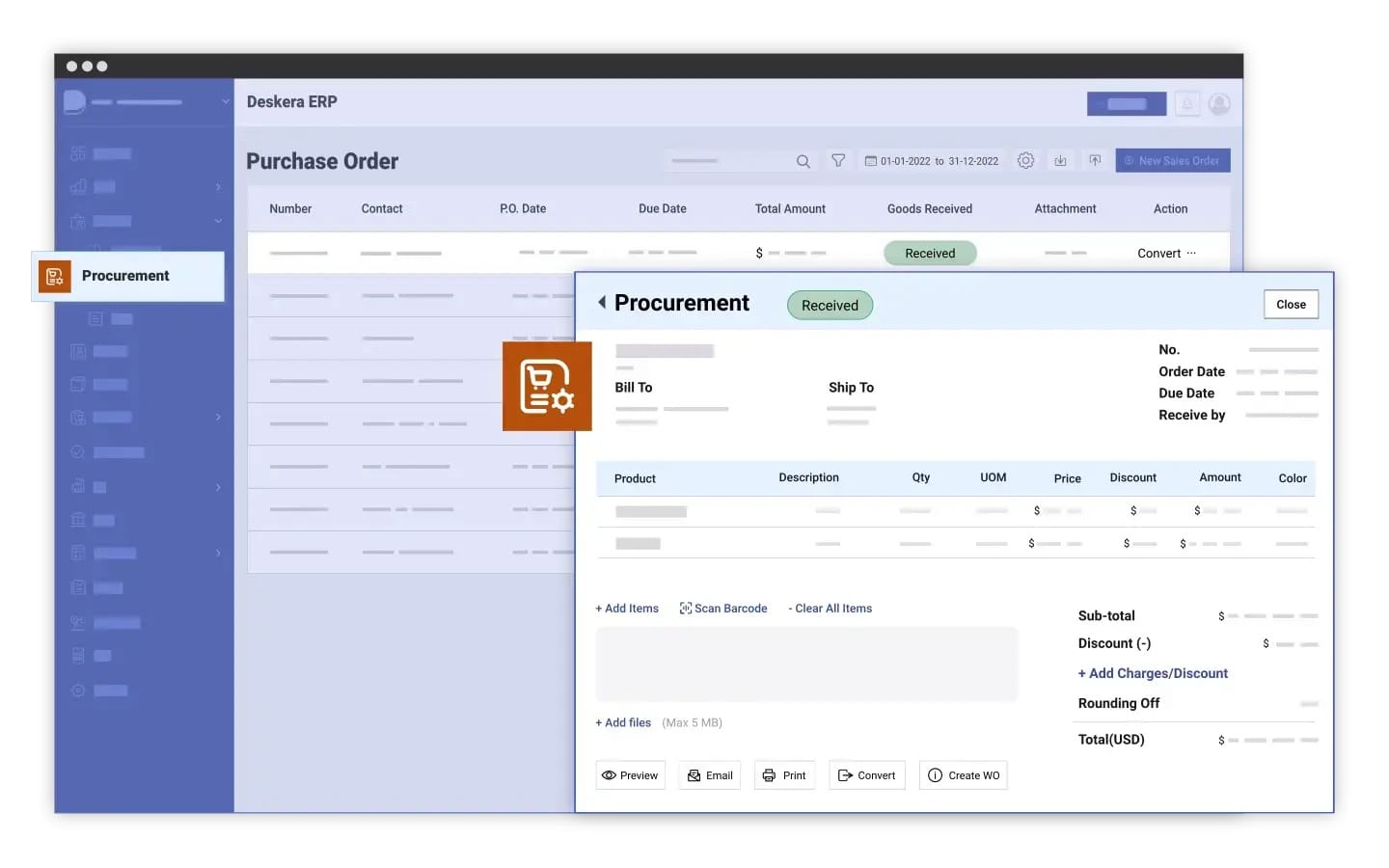
Modern lean procurement relies heavily on automation, visibility, and data-driven decision-making—and this is exactly where Deskera ERP plays a transformative role. By integrating procurement with inventory, finance, and analytics, Deskera enables organizations to eliminate waste, streamline workflows, and create a more agile procurement function.
1. End-to-End Procurement Automation
Deskera ERP automates the entire procurement lifecycle—from purchase requisitions and RFQs to purchase orders and invoice processing. Automated approval workflows ensure that requests are routed to the right stakeholders without delays, reducing bottlenecks and manual intervention. This directly aligns with lean procurement by eliminating redundant steps, minimizing errors, and accelerating procurement cycles for faster and more efficient operations.
2. Centralized Procurement Management
With Deskera ERP, all procurement activities are managed within a single, centralized platform. This includes supplier data, purchase orders, invoices, and approvals. Centralization improves control, reduces duplication, and ensures better coordination across departments. It also enhances transparency, allowing procurement teams to track every transaction and maintain consistency—key elements in eliminating waste and improving efficiency in lean procurement.
3. Real-Time Inventory Visibility
Lean procurement depends on accurate inventory management, and Deskera provides real-time visibility into stock levels across locations. This helps businesses avoid overstocking and stockouts by aligning procurement decisions with actual demand. With better inventory insights, organizations can implement just-in-time (JIT) practices, reduce carrying costs, and optimize working capital—core objectives of lean procurement.
4. Data-Driven Decision Making and Analytics
Deskera ERP offers advanced reporting and analytics that provide insights into procurement performance, supplier efficiency, and spending patterns. These data-driven insights enable organizations to identify inefficiencies, track KPIs, and make informed sourcing decisions. By replacing guesswork with actionable data, businesses can continuously improve procurement processes and align them with strategic goals.
5. Improved Supplier Management
Deskera ERP includes vendor management features such as supplier scorecards, quotation management, and performance tracking. These capabilities help organizations evaluate suppliers based on quality, reliability, and cost-effectiveness. Strong supplier management supports lean procurement by fostering long-term collaboration, improving communication, and ensuring consistent delivery performance across the supply chain.
6. Reduction of Maverick Spending and Cost Leakage
By providing complete visibility into procurement activities and enforcing standardized workflows, Deskera ERP helps eliminate maverick spending and duplicate purchases. Organizations gain better control over budgets, supplier contracts, and purchasing decisions. This ensures that all spending aligns with procurement policies, reducing unnecessary costs and improving overall financial discipline.
7. AI-Powered Forecasting and Planning
Deskera’s AI capabilities, including its assistant David, enable predictive demand forecasting and smarter procurement planning. By analyzing historical data and trends, the system helps businesses anticipate future requirements and avoid reactive purchasing. This proactive approach enhances supply chain efficiency, reduces waste, and ensures that procurement decisions are aligned with real business needs.
8. Integrated Ecosystem for Better Coordination
Deskera ERP integrates procurement with finance, inventory, warehouse, and production systems, creating a unified ecosystem. This integration ensures seamless data flow across departments, improving coordination and reducing silos. As a result, procurement decisions are better aligned with overall business operations, enabling a more efficient and responsive supply chain—one of the key goals of lean procurement.
By combining automation, real-time visibility, supplier management, and AI-driven insights, Deskera ERP empowers organizations to implement lean procurement effectively—turning procurement into a strategic, efficient, and value-driven function.
Key Takeaways
- Lean procurement transforms procurement from a cost-focused function into a value-driven strategy that improves efficiency, agility, and overall business performance.
- Lean procurement focuses on maximizing value and minimizing waste by streamlining processes, improving collaboration, and enabling continuous improvement.
- Core principles like waste elimination, continuous improvement, supplier collaboration, and data-driven decisions form the foundation of an efficient procurement system.
- Identifying and eliminating inefficiencies such as delays, excess inventory, errors, and maverick spending is essential for optimizing procurement performance.
- Lean procurement emphasizes value, agility, and strategic supplier relationships over rigid processes and a cost-only focus.
- A well-defined structure including value stream mapping, demand planning, supplier management, and continuous improvement ensures systematic efficiency.
- Success depends on segmentation, focusing on high-value activities, customizing sourcing strategies, and driving organizational motivation and change.
- Lean procurement delivers cost savings, improved efficiency, better supplier relationships, enhanced visibility, and stronger strategic impact.
- Common barriers include resistance to change, lack of visibility, supplier misalignment, limited technology, and skill gaps.
- A structured approach involving process assessment, waste identification, standardization, supplier collaboration, and technology adoption ensures successful implementation.
- Technology enables automation, real-time visibility, data-driven decisions, and improved collaboration, making lean procurement scalable and efficient.
- Tracking KPIs like cycle time, cost savings, supplier performance, and inventory turnover ensures continuous improvement and measurable outcomes.
- Adopting best practices such as process standardization, automation, collaboration, and continuous improvement helps sustain long-term efficiency.
- Deskera ERP enhances lean procurement through automation, real-time insights, AI-driven forecasting, and integrated procurement management.
Related Articles
 Niti Samani
 RVJ
RVJ
 Damini
 Niti Samani
 Niti Samani
 RVJ
RVJ