


What enables modern businesses to operate efficiently despite growing complexity, remote teams, and rapidly changing market demands? The answer lies in effective collaboration supported by the right technology. As organizations expand and processes become more interconnected, teams must share information quickly and work together seamlessly. Without a unified system that connects departments, businesses often struggle with miscommunication, delayed decisions, and fragmented data.
In today’s business environment, departments such as finance, procurement, inventory, and operations rely heavily on real-time data to perform their tasks effectively. However, when each department operates with separate systems or spreadsheets, it creates information silos that slow down workflows and reduce overall productivity. This is where ERP collaboration becomes essential. By integrating business processes into a centralized platform, ERP systems allow teams to access shared data, coordinate activities, and make informed decisions faster.
ERP collaboration not only improves communication across departments but also enhances operational transparency. With a single source of truth for business information, teams can monitor performance, track progress, and align their efforts with organizational goals. This level of connectivity helps businesses streamline processes, reduce errors, and respond more quickly to market changes—making collaboration a key driver of modern business success.
Solutions like Deskera ERP are designed to make such collaboration easier and more effective. Deskera ERP integrates critical functions such as accounting, inventory, procurement, and production within a unified platform, enabling teams to work with the same real-time data. Its cloud-based accessibility, automated workflows, and advanced reporting tools allow businesses to improve coordination across departments and maintain greater control over their operations. By enabling seamless collaboration and data sharing, Deskera ERP helps organizations operate more efficiently in today’s dynamic business environment.
What Is ERP Collaboration?
ERP collaboration refers to the ability of an Enterprise Resource Planning (ERP) system to enable seamless communication, information sharing, and coordinated workflows across different departments within an organization. Instead of teams working in isolation with separate tools or spreadsheets, ERP collaboration connects employees through a unified platform where data, updates, and processes are shared in real time.
In traditional business environments, departments such as finance, procurement, inventory, sales, and operations often rely on separate systems to manage their tasks. This separation creates data silos, making it difficult for teams to access accurate and timely information. ERP collaboration eliminates these barriers by centralizing business data and allowing teams to work together using the same system. As a result, employees can easily track activities, share insights, and coordinate their efforts more effectively.
Through ERP collaboration, businesses gain better visibility into their operations. Teams can monitor workflows, review performance metrics, and access up-to-date information whenever needed. This shared access to data helps reduce communication gaps, prevent duplication of work, and ensure that everyone is working with the most accurate information.
Modern ERP solutions, such as Deskera ERP, further enhance collaboration by offering cloud-based access, automated workflows, and integrated modules for finance, inventory, procurement, and production. These features enable employees across departments—and even across locations—to collaborate efficiently while maintaining a single source of truth for all business data.
Traditional Siloed Systems vs Collaborative ERP Environments
Businesses have traditionally relied on separate tools and systems to manage different functions such as finance, inventory, procurement, and operations. While these systems may work individually, they often create barriers to communication and data sharing across departments.
In contrast, modern ERP systems enable collaboration by integrating all business functions into a unified platform, allowing teams to work with shared information and coordinated workflows.
Traditional Siloed Systems
Traditional business systems often operate independently, with each department maintaining its own processes and data. This lack of integration creates information gaps and makes it difficult for teams to collaborate effectively.
Key characteristics of traditional siloed systems include:
- Isolated data sources: Each department stores and manages its own data, leading to fragmented information.
- Limited visibility across teams: Employees may not have access to real-time updates from other departments.
- Manual data sharing: Teams often rely on emails, spreadsheets, or meetings to exchange information.
- Higher risk of errors: Duplicate data entry and inconsistent records can create inaccuracies.
- Slower decision-making: Managers must gather data from multiple systems before making informed decisions.
Collaborative ERP Environments
Collaborative ERP environments integrate multiple business functions into a centralized system, enabling seamless communication and information sharing across departments. This approach ensures that all teams work with consistent and up-to-date data.
Key characteristics of collaborative ERP environments include:
- Centralized data platform: All departments access and update information within a single system.
- Real-time data visibility: Teams can instantly view updates related to inventory, finances, procurement, and operations.
- Automated workflows: Tasks such as approvals, reporting, and order processing are streamlined.
- Improved cross-department coordination: Teams can collaborate more effectively on projects and business processes.
- Better decision-making: Leaders gain access to accurate insights that support faster and more strategic decisions.
Why ERP Collaboration Is Important in Today’s Business Environment
In today’s fast-paced and interconnected business landscape, organizations must ensure that their departments work together efficiently. However, when teams rely on separate tools and disconnected systems, collaboration becomes difficult and operational efficiency suffers.
ERP collaboration addresses this challenge by integrating data, processes, and workflows within a single platform, allowing teams to share information, coordinate activities, and make informed decisions quickly.
Breaking Down Organizational Silos
One of the biggest challenges businesses face is the presence of organizational silos, where departments operate independently with limited visibility into each other’s activities. ERP collaboration eliminates these barriers by connecting key functions such as finance, procurement, inventory, and operations within a unified system.
When all departments access the same platform, information flows more freely across the organization. For example, the finance team can monitor procurement expenses in real time, while the operations team can track inventory levels and production requirements without waiting for manual updates. This interconnected approach ensures that teams work with consistent and accurate information.
Centralized and shared data also offers several advantages. Businesses gain a single source of truth for their information, which improves data accuracy and reduces duplication. It also enhances transparency across departments, allowing managers and employees to view relevant information and align their activities with broader business objectives.
Improving Communication Across Teams
Effective communication is essential for smooth business operations. ERP collaboration improves communication by enabling teams to access shared data, updates, and workflows within the same system. Instead of relying on multiple communication channels or manually exchanging information, employees can instantly view updates related to tasks, orders, or inventory changes.
Real-time updates allow teams to stay informed about important developments as they happen. For instance, when a procurement order is approved or inventory levels change, the relevant departments receive immediate updates. This reduces the need for constant follow-ups and manual reporting.
By streamlining information sharing, ERP collaboration also helps reduce communication gaps and delays. Teams can quickly resolve issues, coordinate tasks, and ensure that projects move forward without unnecessary interruptions.
Enabling Real-Time Decision Making
Access to accurate and up-to-date information plays a critical role in effective decision-making. ERP collaboration ensures that managers and decision-makers have access to real-time business insights across departments.
With integrated dashboards and reporting tools, leaders can review key metrics related to finance, inventory, procurement, and operations from a single platform. This visibility allows them to identify trends, detect potential issues, and evaluate performance more effectively.
As a result, businesses can respond faster to operational challenges or changing market conditions. Whether adjusting production schedules, managing inventory shortages, or optimizing procurement strategies, real-time insights enable organizations to make timely and informed decisions.
Supporting Remote and Distributed Workforces
Modern businesses increasingly rely on remote and distributed teams. ERP collaboration supports this shift by providing cloud-based systems that allow employees to access business data and collaborate from different locations.
Cloud ERP platforms enable team members to log in securely, view updates, and perform tasks regardless of where they are working. This flexibility ensures that operations continue smoothly even when teams are spread across offices, warehouses, or remote environments.
By enabling location-independent collaboration, ERP systems help organizations maintain productivity, improve coordination, and ensure that employees remain connected to business processes at all times.
Key Benefits of ERP Collaboration
ERP collaboration delivers a wide range of operational and strategic advantages by connecting teams, data, and workflows within a unified system. Instead of managing tasks through disconnected tools or manual coordination, employees can work within integrated processes that promote transparency, accountability, and efficiency. As a result, organizations can improve internal coordination while maintaining greater control over business operations.
Increased Operational Efficiency
ERP collaboration significantly improves operational efficiency by streamlining everyday business activities. Many processes that previously required manual coordination between departments—such as approvals, order processing, and status updates—can be automated through integrated workflows.
Key advantages include:
- Automated workflows: Tasks move automatically from one department to another based on predefined rules.
- Reduced manual coordination: Teams no longer need to rely on multiple emails or spreadsheets to manage processes.
- Faster task execution: Work progresses smoothly as system-driven triggers prompt the next step in a process.
- More time for strategic work: Employees can focus on higher-value tasks rather than repetitive administrative activities.
Better Data Accuracy and Visibility
ERP collaboration ensures that all teams rely on a single source of truth for business data. Instead of maintaining multiple versions of information across systems, ERP platforms store key data—such as inventory levels, financial records, and order status—in a centralized database.
Benefits of centralized data include:
- Consistent information across departments: Everyone works with the same updated data.
- Automatic updates: Changes made by one team are instantly reflected throughout the system.
- Reduced data duplication: Eliminates the need for repeated data entry across different tools.
- Clear visibility into operations: Employees can access relevant information when needed to support their tasks.
Improved Project and Workflow Management
ERP collaboration helps organizations manage complex workflows and projects more effectively. Integrated processes allow teams to track tasks, coordinate activities, and monitor progress within the same platform.
Key improvements include:
- End-to-end workflow tracking: Teams can follow processes from initiation to completion.
- Better coordination between departments: Activities in one function automatically trigger actions in another.
- Transparent task management: Everyone involved in a project can see responsibilities, timelines, and updates.
- Fewer process delays: Automated handoffs reduce bottlenecks between departments.
Stronger Strategic Alignment
When departments operate with shared systems and standardized processes, it becomes easier to align their efforts with broader business goals. ERP collaboration ensures that teams follow consistent workflows, reporting structures, and approval processes across the organization.
This leads to:
- Standardized processes across departments: Similar activities follow the same structured approach.
- Improved collaboration between business units: Teams understand how their work supports overall objectives.
- Better governance and compliance: Standard workflows help maintain control over approvals and documentation.
- Greater organizational transparency: Managers can monitor performance and ensure alignment with strategic priorities.
Greater Business Agility
ERP collaboration also improves an organization’s ability to adapt to changing conditions. As businesses grow, expand into new markets, or introduce new products, collaboration across departments becomes increasingly important.
ERP systems support agility through:
- Scalable collaboration frameworks: New teams, partners, or subsidiaries can easily be integrated into existing workflows.
- Flexible processes: Businesses can adjust workflows to accommodate new operational needs.
- Faster internal coordination: Teams can quickly collaborate to address emerging opportunities or challenges.
- Efficient expansion support: ERP systems enable consistent operations across multiple locations or business units.
Embedded Communication and Contextual Collaboration
ERP systems allow communication to happen directly within business workflows rather than through disconnected channels. Messages, notes, and updates are linked to specific transactions, tasks, or records.
Benefits include:
- Context-based communication: Discussions are attached to relevant orders, invoices, or tasks.
- Reduced miscommunication: Teams can see the full history of conversations related to a process.
- Better accountability: All communication related to a task is stored and easily accessible.
- Improved collaboration across teams: Employees can coordinate work without switching between multiple tools.
Enhanced Security and Role-Based Access
Effective collaboration requires transparency while maintaining control over sensitive information. ERP systems use role-based access controls to ensure employees only access the data relevant to their responsibilities.
Key advantages include:
- Controlled data access: Users can view or modify information based on their roles.
- Improved data security: Sensitive financial or operational data remains protected.
- Clear approval structures: Authorized users manage approvals and key decisions.
- Trust in collaboration: Employees can share information confidently while maintaining governance standards.
Improved Planning and Forecasting
ERP collaboration improves planning by allowing departments to work with shared insights and coordinated forecasts. Finance, operations, and procurement teams can align their strategies using the same business data.
Benefits include:
- More accurate demand planning: Teams coordinate forecasts using real operational data.
- Aligned budgeting and operational plans: Finance and operations collaborate more effectively.
- Better resource allocation: Organizations can deploy resources based on shared priorities.
- Proactive problem-solving: Teams can identify potential issues early and take corrective action.
Scalable Collaboration for Business Growth
As organizations expand, collaboration becomes more complex due to additional teams, partners, and operational units. ERP systems support this growth by enabling scalable collaboration frameworks.
Key benefits include:
- Support for multiple business units: Different departments or subsidiaries operate within a unified system.
- Standard collaboration processes: New teams can adopt established workflows easily.
- Improved coordination across locations: Global teams can collaborate seamlessly.
- Consistency across operations: Businesses maintain standardized processes while scaling their operations.
Examples of ERP Collaboration Across Departments
ERP collaboration becomes most valuable when it connects different departments that depend on each other’s information and processes. By integrating workflows and data across functions, ERP systems enable teams to coordinate their activities more effectively and maintain smooth operations.
The following examples illustrate how collaboration within an ERP environment improves coordination across key business departments.
Finance and Procurement Collaboration
Finance and procurement teams must work closely together to ensure that purchasing activities align with organizational budgets and financial policies. ERP systems facilitate this collaboration by linking procurement requests, approvals, and financial records within the same platform.
With ERP collaboration, procurement teams can create purchase requests and orders that are automatically visible to the finance department. Finance teams can then review budgets, approve expenses, and track procurement costs in real time. This integration ensures that purchasing decisions remain aligned with financial planning and organizational spending limits.
Key collaboration benefits include:
- Real-time budget monitoring during procurement activities
- Streamlined expense approvals through automated workflows
- Improved purchasing coordination between procurement and finance teams
- Better tracking of supplier payments and financial commitments
Sales and Inventory Coordination
Sales teams rely heavily on accurate inventory information to make reliable commitments to customers. ERP collaboration connects sales and inventory management systems so that both teams have real-time visibility into stock availability.
When a sales order is created, the ERP system automatically checks inventory levels and updates stock quantities. Inventory teams can monitor demand patterns generated by sales activities, while sales representatives gain immediate insight into product availability. This coordination helps prevent overselling, stock shortages, or delayed deliveries.
Key collaboration benefits include:
- Real-time inventory visibility for sales teams
- More accurate order commitments to customers
- Better coordination between demand generation and stock management
- Reduced risk of inventory shortages or overstocking
Production and Supply Chain Alignment
Production planning depends heavily on the availability of raw materials and accurate demand forecasts. ERP collaboration allows production teams and supply chain managers to coordinate their planning activities using shared operational data.
For example, production teams can review current inventory levels, supplier deliveries, and demand forecasts before scheduling manufacturing activities. At the same time, supply chain teams can monitor production plans and ensure that materials are procured and delivered on time.
Key collaboration benefits include:
- Coordinated production planning based on material availability
- Improved alignment between manufacturing schedules and supply chain operations
- Better demand forecasting using shared sales and production data
- Reduced disruptions caused by material shortages or supply delays
Through these integrated processes, ERP collaboration helps organizations ensure that departments work together efficiently, improving coordination across financial management, sales operations, inventory control, and production planning.
Challenges Businesses Face Without ERP Collaboration
Organizations that rely on disconnected systems and isolated workflows often face significant operational challenges. When departments operate independently without a centralized platform, it becomes difficult to share information, coordinate tasks, and maintain consistent processes. Over time, these issues can slow down operations, reduce productivity, and limit a company’s ability to respond effectively to changing business demands.
Fragmented Data Across Multiple Systems
Without ERP collaboration, business data is typically spread across multiple systems, spreadsheets, or departmental tools. Each department manages its own information independently, which can result in inconsistencies and duplicate records.
Common issues caused by fragmented data include:
- Multiple versions of the same data across departments
- Difficulty accessing accurate and up-to-date information
- Increased risk of data entry errors and inconsistencies
- Limited visibility into overall business performance
This fragmented data environment makes it harder for organizations to maintain reliable records and gain a clear understanding of their operations.
Lack of Communication Between Departments
When departments operate with separate tools and processes, communication between teams becomes more complicated. Employees often rely on manual updates, emails, or meetings to exchange information, which can slow down workflows and create misunderstandings.
Challenges caused by poor communication include:
- Delays in sharing critical business information
- Misalignment between departments working on related tasks
- Increased reliance on manual coordination
- Difficulty tracking updates and progress across teams
Without an integrated system, teams may struggle to stay informed about changes that impact their responsibilities.
Delays in Decision-Making and Operational Inefficiencies
Disconnected systems often prevent managers from accessing a complete and accurate view of business performance. Decision-makers may need to gather reports from multiple departments before analyzing information and taking action.
This situation can lead to:
- Slower decision-making due to limited data visibility
- Inefficient workflows that require manual intervention
- Difficulty identifying operational bottlenecks
- Reduced ability to respond quickly to operational challenges
As a result, organizations may miss opportunities or struggle to address issues in a timely manner.
Difficulty Scaling Operations as the Business Grows
As companies expand their operations, the limitations of disconnected systems become more apparent. Managing larger volumes of data, additional departments, and multiple business locations requires greater coordination and process integration.
Without ERP collaboration, businesses may experience:
- Increased complexity in managing operations across departments
- Difficulty maintaining consistent processes across teams or locations
- Limited ability to integrate new systems or business units
- Greater administrative effort required to manage growth
These challenges can slow down expansion and create operational inefficiencies that affect long-term business performance.
Best Practices for Implementing ERP Collaboration
Successfully implementing ERP collaboration requires more than simply deploying a new system. Businesses must ensure that technology, processes, and people work together to support effective collaboration across departments.
By following the right implementation practices, organizations can maximize the value of their ERP systems and create a more connected and efficient work environment.
Select an ERP Platform with Strong Collaboration and Integration Capabilities
Choosing the right ERP platform is the first step toward enabling effective collaboration. The system should support seamless integration between key business functions such as finance, inventory, procurement, sales, and operations.
A robust ERP platform should provide shared dashboards, real-time reporting, automated workflows, and easy integration with other business tools. These capabilities ensure that information flows smoothly across departments and that teams can collaborate without relying on separate systems.
When evaluating ERP solutions, businesses should consider factors such as scalability, cloud accessibility, user-friendly interfaces, and the ability to support cross-functional workflows.
Ensure All Departments Adopt a Centralized System
For ERP collaboration to be effective, all departments must operate within the same centralized system. If some teams continue using separate tools or spreadsheets, information silos can persist and limit the benefits of ERP integration.
Organizations should encourage full adoption across departments by migrating key processes into the ERP platform and ensuring that employees rely on the system for their daily operations. This unified approach helps create a single source of truth for business data and improves transparency across teams.
Strong leadership support and clear communication about the benefits of ERP collaboration can also help ensure successful organization-wide adoption.
Establish Standardized Workflows and Communication Processes
Standardized workflows play a crucial role in improving collaboration across departments. When teams follow consistent processes for tasks such as approvals, order processing, procurement requests, and reporting, coordination becomes easier and more predictable.
ERP systems allow businesses to design structured workflows that guide employees through each stage of a process. These workflows ensure that tasks are completed in the correct sequence and that relevant stakeholders are automatically notified when their input is required.
Clear communication processes within the ERP system—such as shared notes, updates, or approval notifications—also help teams stay informed and aligned.
Train Employees to Effectively Use Collaborative ERP Features
Even the most advanced ERP system cannot deliver its full value without proper user training. Employees must understand how to use collaborative features such as shared dashboards, automated workflows, task management tools, and integrated reporting.
Organizations should provide structured training programs that help employees become comfortable with the system and understand how it supports cross-department collaboration. Ongoing training and support can also ensure that teams continue to use ERP features effectively as the system evolves.
When employees are confident in using the ERP platform, they are more likely to adopt collaborative processes, share information efficiently, and contribute to a more connected and productive business environment.
How Deskera ERP Supports Business Collaboration
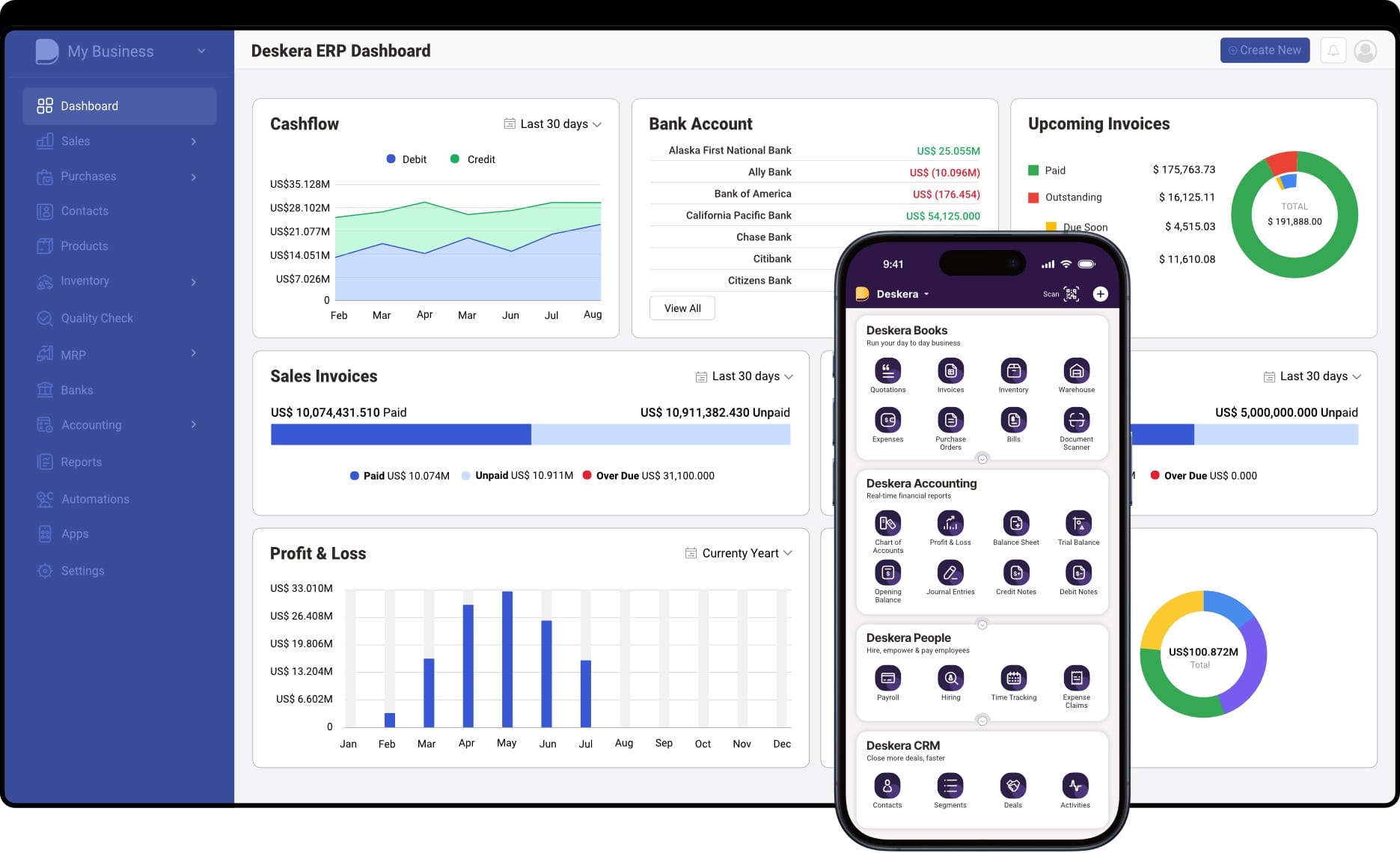
Modern businesses require seamless coordination between departments to ensure smooth operations and informed decision-making. An integrated ERP platform helps achieve this by connecting teams, processes, and data in one centralized environment. Deskera ERP is designed to enhance collaboration across organizations by providing real-time visibility, automated workflows, and unified data access for multiple business functions.
Centralized Data Management
Deskera ERP brings together critical business information—including financial data, inventory records, procurement details, and operational updates—within a single platform. This centralized data structure ensures that all departments work with the same accurate and up-to-date information.
With shared data access, teams can quickly review transaction details, monitor operational metrics, and coordinate tasks without relying on separate tools or manual updates. This improves transparency and helps eliminate the data inconsistencies that often arise from disconnected systems.
Real-Time Dashboards and Reporting
Collaboration becomes more effective when teams can access insights instantly. Deskera ERP provides real-time dashboards and customizable reports that allow departments to track key business metrics and performance indicators.
Managers and team members can monitor financial performance, inventory levels, procurement activities, and operational progress from a single interface. This visibility enables teams to stay aligned, identify potential issues early, and make timely decisions based on accurate information.
Integrated Business Modules
Deskera ERP integrates multiple business functions—including accounting, inventory management, procurement, and production—into one system. Because these modules share data automatically, activities in one department can trigger updates or actions in another.
For example, when a purchase order is created, finance teams can track associated expenses, while inventory teams can monitor stock replenishment. This integration helps ensure that departments coordinate their activities efficiently and maintain consistent workflows.
Automated Workflows and Approvals
Automation is a key feature that supports collaboration within Deskera ERP. The platform enables businesses to set up automated workflows for processes such as purchase approvals, order processing, and financial reconciliation.
These automated workflows reduce the need for manual follow-ups between departments. Once a task is initiated, the system automatically notifies the relevant team members and moves the process forward based on predefined rules. This improves coordination and ensures that business processes are completed efficiently.
Cloud-Based Accessibility
As businesses increasingly rely on distributed teams and multiple work locations, cloud-based systems play an essential role in enabling collaboration. Deskera ERP is built on a cloud platform, allowing employees to access business information securely from anywhere with an internet connection.
This accessibility allows teams working across offices, warehouses, or remote locations to collaborate on tasks, review updates, and manage operations in real time. By connecting employees through a shared system, Deskera ERP helps organizations maintain productivity and coordination regardless of where their teams are located.
By combining centralized data management, real-time insights, integrated modules, and automated workflows, Deskera ERP provides a collaborative environment that helps businesses improve communication, streamline processes, and maintain alignment across departments.
Key Takeaways
- ERP collaboration connects teams, processes, and data within a unified platform, improving coordination and information sharing across departments.
- Transitioning from siloed systems to collaborative ERP environments eliminates isolated data sources and enables seamless cross-department collaboration.
- ERP systems integrate departments such as finance, procurement, inventory, and operations, allowing teams to work with shared and consistent data.
- Real-time information sharing keeps employees updated on tasks, transactions, and operational changes across teams.
- Access to centralized and updated data allows leaders to evaluate performance quickly and make informed decisions.
- Cloud-based ERP systems allow employees to access business information and collaborate efficiently from different locations.
- Automated workflows and integrated processes reduce manual coordination and improve operational efficiency.
- Centralized ERP databases ensure departments rely on the same accurate and up-to-date business information.
- Structured workflows help teams track progress, manage tasks, and coordinate projects effectively.
- Standardized processes and shared data align departmental activities with organizational goals.
- ERP collaboration enables organizations to adapt quickly to operational changes and evolving market demands.
- Communication within ERP workflows allows teams to share updates and resolve issues more efficiently.
- Role-based access controls allow employees to collaborate while maintaining appropriate data security and governance.
- Shared insights across departments support better planning, forecasting, and resource allocation.
- ERP systems enable scalable collaboration as businesses expand across teams, locations, and business units.
- Integrated systems allow finance and procurement teams to coordinate purchasing decisions, monitor budgets, and streamline expense approvals.
- Real-time inventory visibility helps sales teams make accurate commitments to customers and manage demand effectively.
- Coordinated production planning and supply chain activities ensure materials and resources align with demand forecasts.
- Disconnected systems lead to fragmented data, communication gaps, slower decision-making, and operational inefficiencies.
- Selecting the right ERP platform, centralizing processes, standardizing workflows, and training employees supports successful ERP collaboration.
- Integrated modules, real-time insights, and automated workflows enable better coordination across departments using Deskera ERP.
Related Articles
 Niti Samani
 Niti Samani
 Niti Samani
 Niti Samani
 Niti Samani
 Niti Samani