


What enables businesses to truly transform in the digital age? The answer often lies in integrating technology that connects data, processes, and people across the organization. Digital transformation is no longer just about adopting new tools—it is about reshaping how businesses operate, make decisions, and deliver value. In this journey, Enterprise Resource Planning (ERP) systems play a central role by creating a unified digital backbone that supports modern, data-driven operations.
Digital transformation has become a strategic priority for organizations aiming to remain competitive in an increasingly technology-driven marketplace. From automating routine processes to enabling real-time data visibility, businesses are leveraging digital technologies to improve efficiency, agility, and customer experiences. However, successful transformation requires more than isolated digital tools—it demands a system that integrates all core business functions into a single platform.
This is where ERP-driven digital transformation comes into play. ERP systems bring together critical functions such as finance, inventory, procurement, manufacturing, and customer management into one integrated system. By centralizing data and automating workflows, ERP enables organizations to streamline operations, enhance collaboration, and gain actionable insights that support faster and smarter decision-making.
Solutions like Deskera ERP help businesses accelerate their digital transformation journey by providing a cloud-based platform that integrates accounting, inventory, and CRM functions in one place. With features such as real-time analytics, automated workflows, and mobile accessibility, Deskera enables organizations to manage operations efficiently while adapting to changing business demands. By offering scalable tools and AI-powered insights, Deskera ERP empowers companies to build a strong digital foundation for long-term growth.
What is ERP Digital Transformation?
ERP digital transformation refers to the integration of modern digital technologies with an Enterprise Resource Planning (ERP) system to fundamentally improve how a business operates and delivers value. Digital transformation, in general, involves replacing manual and disconnected processes with automated, data-driven workflows that enhance efficiency and decision-making. When ERP becomes the foundation of this transformation, it enables organizations to connect their core operations and create a unified digital ecosystem.
At its core, ERP digital transformation focuses on integrating business functions—such as finance, procurement, inventory, human resources, and manufacturing—into a single, centralized platform. Instead of relying on multiple standalone systems or spreadsheets, companies can manage operations through automated workflows and a shared data environment. This centralized approach improves data accuracy, enhances collaboration across departments, and enables leaders to make faster and more informed decisions.
ERP systems also act as the operational backbone that supports the adoption of advanced digital technologies. Modern ERP platforms incorporate capabilities such as cloud computing, automation, real-time analytics, mobility, and business intelligence. By leveraging these technologies, organizations can streamline processes, monitor performance in real time, and quickly respond to changing market demands.
Ultimately, ERP digital transformation is not a one-time upgrade but an ongoing evolution of how businesses operate. By modernizing ERP environments and moving toward integrated, cloud-based systems, organizations can improve productivity, strengthen customer experiences, and build a scalable foundation for continuous innovation and long-term growth.
Why Is Digital Transformation Increasing the Demand for ERP Systems?
As organizations accelerate their digital transformation initiatives, the demand for modern ERP systems has grown significantly. Digital transformation requires businesses to connect processes, integrate data, and adopt technologies that enable faster and smarter decision-making. However, fragmented legacy systems often create data silos and operational inefficiencies, making it difficult for organizations to fully benefit from digital technologies. ERP systems address this challenge by providing a unified platform that connects core business functions and supports digital-first operations.
Better Efficiency Than Legacy Systems
Traditional legacy systems often operate in isolation, creating separate databases for finance, supply chain, HR, and other departments. This fragmentation makes it difficult to obtain a complete view of business performance and slows down decision-making. Modern ERP platforms eliminate these silos by integrating all key business functions into a single system. With centralized data and automated workflows, organizations can streamline operations, reduce manual tasks, and improve overall efficiency.
Cloud-Based Scalability and Flexibility
Digital transformation encourages organizations to adopt cloud technologies that offer flexibility and scalability. Cloud-based ERP systems allow businesses to expand operations, add new users, and integrate with other digital tools without requiring major infrastructure investments. This scalability makes ERP systems particularly valuable for growing organizations that need technology capable of adapting to changing business demands.
Improved Agility and Competitive Advantage
In a highly competitive market, businesses need the ability to respond quickly to changes in customer expectations, supply chain disruptions, and market trends. ERP systems provide real-time visibility into operations, enabling organizations to make faster and more informed decisions. By leveraging integrated data, automation, and analytics, companies can optimize pricing strategies, manage inventory more effectively, and deliver personalized customer experiences—giving them a strong competitive advantage over organizations relying on disconnected systems.
Why ERP Digital Transformation Matters
In today’s fast-evolving digital economy, businesses must constantly adapt to new technologies, shifting market demands, and rising customer expectations. Traditional systems and manual processes often struggle to keep up with these changes, leading to inefficiencies, data silos, and slower decision-making. ERP digital transformation addresses these challenges by integrating business functions, automating workflows, and providing real-time insights that help organizations operate more efficiently and strategically.
By modernizing ERP systems and adopting digital technologies, businesses can create a connected and scalable operational environment. This transformation not only improves internal processes but also enables organizations to respond quickly to market changes, deliver better customer experiences, and support long-term growth.
Increased Operational Efficiency
ERP digital transformation significantly improves operational efficiency by automating routine and repetitive tasks across departments. Processes such as financial reporting, inventory management, procurement, and payroll can be streamlined through automated workflows, reducing the time and effort required for manual work. As a result, businesses experience fewer errors, faster cycle times, and improved productivity, allowing employees to focus on strategic activities rather than administrative tasks.
Better Real-Time Data Intelligence
Modern ERP systems provide access to real-time data and analytics, enabling leaders to make more informed and timely decisions. Instead of relying on outdated reports or fragmented data sources, decision-makers can use dashboards and analytics tools to monitor key performance indicators, identify trends, and forecast future outcomes. This data-driven approach helps organizations respond quickly to changes and make proactive business decisions.
Improved Collaboration Across Business Functions
ERP systems integrate various business functions—such as finance, sales, human resources, procurement, and manufacturing—into a single platform. With shared access to centralized data, departments can collaborate more effectively and align their operations with organizational goals. For example, sales teams can check real-time inventory levels before confirming orders, while finance teams can track costs as transactions occur, ensuring better coordination across the organization.
Increased Scalability and Flexibility
Digitally transformed ERP systems, especially cloud-based platforms, are designed to support business growth. Companies can easily add new users, expand operations, and manage increasing data volumes without major infrastructure changes. This scalability allows organizations to adapt their systems as they grow, ensuring that technology continues to support evolving business needs.
Improved Customer Experience
ERP digital transformation enhances customer experience by enabling faster and more accurate service delivery. With integrated systems, businesses can track orders in real time, manage customer data effectively, and respond quickly to inquiries or issues. This improved visibility allows companies to deliver personalized services, faster fulfillment, and more reliable communication, which ultimately increases customer satisfaction.
Data Centralization and Visibility
One of the most significant advantages of ERP transformation is the ability to centralize data from across the organization. Instead of maintaining separate databases for finance, sales, inventory, and other functions, all information is stored in a unified system. This consolidated view improves data accuracy, reduces duplication, and provides decision-makers with a comprehensive understanding of business operations.
Workflow Optimization and Automation
ERP systems optimize workflows by standardizing and automating key processes across the organization. Activities such as invoice processing, purchase order approvals, inventory updates, and payroll management can be handled automatically. Automation not only speeds up operations but also reduces the likelihood of human error and ensures greater process consistency.
Improved Insights and Performance Monitoring
Digital transformation relies on converting business data into actionable insights. ERP platforms with built-in analytics and reporting tools help organizations identify trends, detect inefficiencies, and measure performance against strategic goals. Real-time dashboards allow leaders to monitor metrics instantly, enabling quicker responses to opportunities and challenges.
Enhanced Compliance and Security
As regulatory requirements become more complex, businesses need systems that support compliance and data protection. ERP systems help maintain audit trails, enforce internal controls, and ensure accurate financial reporting. Many modern ERP platforms also provide advanced security features and regular updates, helping organizations protect sensitive data while meeting regulatory standards.
Integration with Emerging Technologies
ERP systems serve as the foundation for adopting advanced technologies such as artificial intelligence, machine learning, predictive analytics, and the Internet of Things (IoT). These technologies can be integrated with ERP platforms to provide deeper insights, automate complex tasks, and improve forecasting accuracy. For example, IoT devices can feed equipment data directly into ERP systems for predictive maintenance.
Business Scalability and Growth
ERP digital transformation supports long-term business growth by providing systems that can scale with organizational needs. Cloud ERP platforms allow companies to add new entities, expand into new markets, and manage higher transaction volumes without major infrastructure investments. This flexibility ensures that technology continues to support expansion and innovation as the business evolves.
Benefits of ERP-Driven Digital Transformation
ERP-driven digital transformation enables organizations to modernize their operations, improve visibility across business functions, and make better strategic decisions. By integrating digital technologies with ERP systems, companies can move beyond fragmented processes and build a connected, data-driven business environment. This transformation not only improves internal efficiency but also supports innovation, agility, and long-term growth.
Streamlined and Standardized Business Processes
ERP-driven digital transformation helps organizations standardize processes across departments such as finance, procurement, inventory, and human resources. Instead of relying on inconsistent workflows or department-specific tools, businesses can implement unified processes that ensure consistency and accuracy. Standardized workflows reduce process complexity and make it easier for organizations to scale operations while maintaining control.
Faster and More Informed Decision-Making
Modern ERP platforms provide organizations with access to accurate, real-time information from across the business. Decision-makers can analyze performance data, track operational metrics, and evaluate trends without waiting for manual reports. This improved access to information enables leaders to respond quickly to challenges, identify new opportunities, and make strategic decisions with greater confidence.
Increased Organizational Agility
ERP-driven digital transformation enables businesses to respond more quickly to market shifts, customer demands, and operational disruptions. With integrated systems and flexible digital tools, organizations can adjust processes, launch new initiatives, or expand into new markets more efficiently. This agility helps businesses remain competitive in industries where conditions change rapidly.
Improved Resource Management
ERP systems provide better visibility into how resources—such as inventory, finances, and workforce capacity—are being used. With accurate data and automated tracking, organizations can allocate resources more effectively and reduce waste. This improved resource planning helps businesses optimize operational costs while maintaining high levels of productivity.
Greater Transparency and Accountability
An ERP-driven digital environment improves transparency by providing clear visibility into business activities and performance metrics. Managers can monitor operations, track financial transactions, and review process outcomes through centralized dashboards and reports. This transparency encourages accountability across teams and ensures that employees follow standardized procedures.
Stronger Innovation Capabilities
Digital transformation supported by ERP systems creates an environment where organizations can adopt new technologies more easily. With a modern ERP foundation, companies can integrate tools such as advanced analytics, automation platforms, and digital collaboration solutions. This technological flexibility allows businesses to experiment with new ideas and continuously improve their operations.
Better Risk Management
ERP-driven digital transformation also helps organizations identify and manage risks more effectively. Integrated data and reporting capabilities allow companies to detect operational issues, financial inconsistencies, or compliance concerns early. By improving visibility and control, ERP systems help businesses maintain stability and protect their operations in a rapidly changing environment.
Challenges in ERP-Driven Digital Transformation
While ERP-driven digital transformation offers significant benefits, the journey toward modernization is not always straightforward. Implementing or upgrading an ERP system requires careful planning, resource investment, and organizational alignment. Without a clear strategy and proper execution, businesses may encounter obstacles that slow down transformation efforts or reduce the expected return on investment. Understanding these challenges helps organizations prepare better and implement ERP systems more successfully.
High Implementation Costs
One of the most common challenges in ERP-driven digital transformation is the initial cost of implementation. Businesses must invest in software, infrastructure, customization, training, and ongoing maintenance. For many organizations, especially small and medium-sized businesses, managing these costs while maintaining daily operations can be difficult. Proper budgeting and phased implementation strategies are often required to manage these financial commitments effectively.
Complex Data Migration
Migrating data from legacy systems to a modern ERP platform can be a complex and time-consuming process. Businesses often deal with inconsistent data formats, duplicate records, and outdated information stored across multiple systems. Ensuring data accuracy and integrity during migration is critical, as poor data quality can affect reporting, analytics, and operational processes after the ERP system is deployed.
Integration with Existing Systems
Many organizations rely on multiple software tools for different functions, such as customer management, payroll, or supply chain operations. Integrating these existing systems with a new ERP platform can be challenging, particularly if the legacy tools were not designed for modern integration. Without proper integration, businesses may continue to face data silos and workflow disruptions.
Change Management and Employee Resistance
Digital transformation often requires employees to adapt to new systems, workflows, and technologies. Resistance to change can arise when employees are unfamiliar with the new platform or fear that automation might affect their roles. Without effective change management strategies, including communication, training, and leadership support, employee adoption of the ERP system may be slow.
Need for Skilled Talent and Training
Successfully implementing and managing an ERP system requires employees with the right technical and operational skills. Organizations may need to invest in training programs to help staff understand new processes, analytics tools, and automated workflows. In some cases, companies may also need to hire specialists or consultants to manage the implementation and ongoing optimization of the ERP system.
Implementation Time and Operational Disruptions
ERP-driven digital transformation projects can take months or even years depending on the size and complexity of the organization. During this transition period, businesses may experience temporary disruptions to workflows or productivity as teams adapt to new systems. Careful planning, phased deployment, and continuous monitoring are necessary to minimize these disruptions and ensure a smooth transition.
Best Practices for Successful ERP-Driven Digital Transformation
Successfully implementing ERP-driven digital transformation requires more than simply adopting new software. Organizations must align technology with business objectives, prepare their teams for change, and ensure that systems are implemented strategically. By following proven best practices, businesses can maximize the value of ERP systems and ensure that their digital transformation initiatives deliver long-term results.
Align ERP Strategy with Business Goals
Before implementing an ERP system, organizations should clearly define their transformation goals. These may include improving operational efficiency, enhancing customer experience, or enabling data-driven decision-making. Aligning the ERP strategy with broader business objectives ensures that the system supports long-term growth and delivers measurable business value.
Choose the Right ERP Solution
Selecting the right ERP platform is a critical step in digital transformation. Businesses should evaluate ERP solutions based on scalability, industry compatibility, integration capabilities, and ease of use. Choosing a system that aligns with the organization’s operational requirements helps ensure smoother implementation and long-term usability.
Prioritize Data Quality and Governance
ERP systems rely heavily on accurate and well-structured data. Organizations should clean and standardize their data before migrating it to the new system. Establishing strong data governance practices ensures that information remains consistent, reliable, and secure across all business processes.
Implement the ERP System in Phases
Large-scale ERP implementations can be complex, so adopting a phased approach can reduce risks and disruptions. Businesses can begin by deploying core modules such as finance or inventory management before expanding to other functions. This gradual rollout allows teams to adapt to the system and resolve issues early in the process.
Invest in Employee Training and Change Management
Employee adoption plays a major role in the success of ERP-driven digital transformation. Organizations should provide comprehensive training programs to help employees understand new workflows and system functionalities. Clear communication about the benefits of ERP systems can also reduce resistance and encourage a smoother transition.
Focus on Process Optimization, Not Just Technology
Digital transformation should involve rethinking and improving existing business processes rather than simply automating outdated workflows. Organizations should evaluate their current operations and redesign inefficient processes before integrating them into the ERP system. This approach ensures that the technology delivers maximum efficiency and value.
Continuously Monitor and Improve the System
ERP-driven digital transformation is an ongoing process. After implementation, businesses should regularly monitor system performance, analyze operational data, and identify opportunities for improvement. Continuous optimization ensures that the ERP system evolves alongside the organization’s changing needs and technological advancements.
How Deskera ERP Supports Digital Transformation
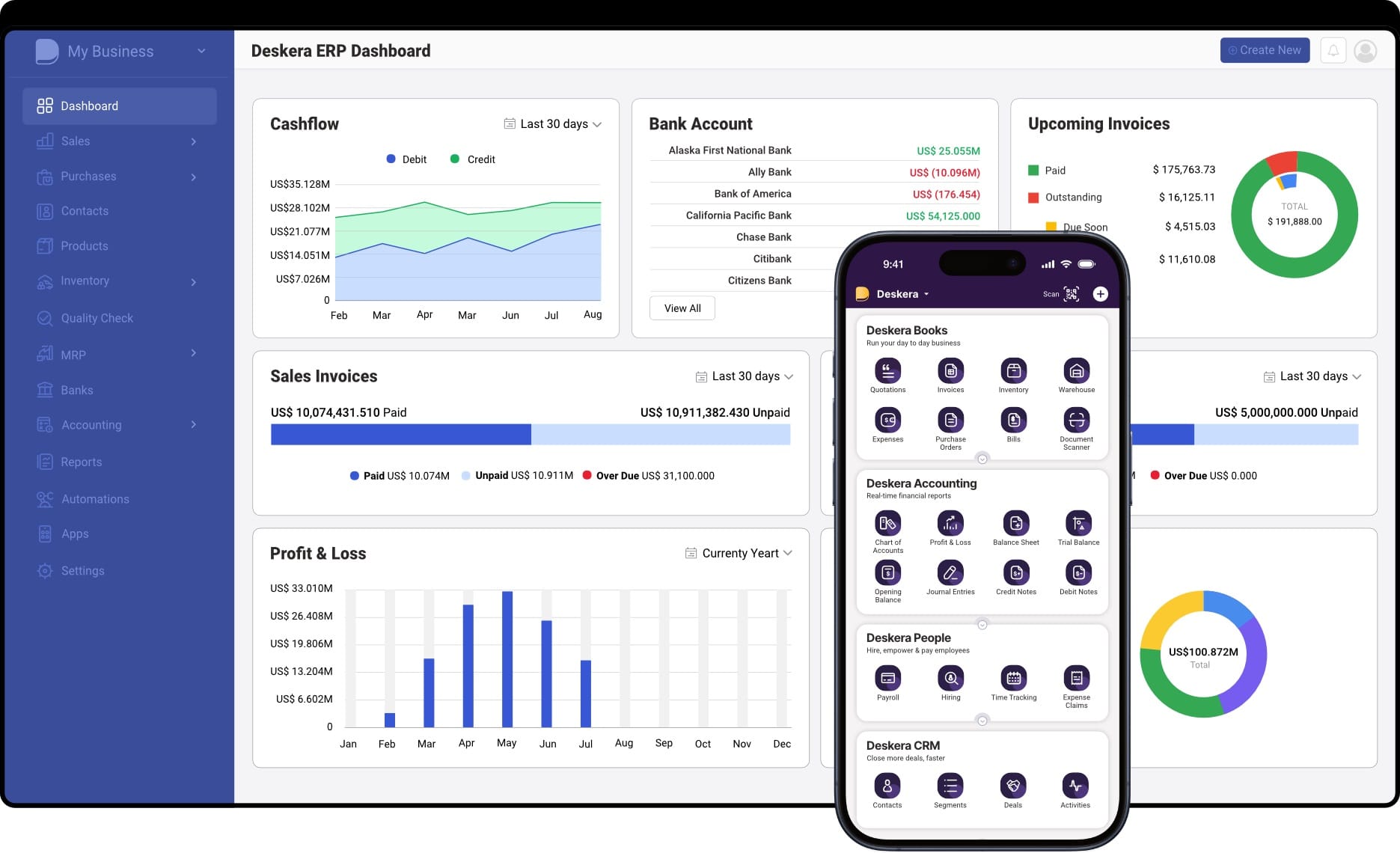
Modern digital transformation initiatives require a technology platform that can integrate business processes, automate workflows, and provide real-time insights. Deskera ERP supports this transformation by offering a cloud-based, AI-enabled platform that connects core business functions such as finance, inventory, sales, procurement, and manufacturing. By centralizing operations and enabling intelligent automation, Deskera helps organizations streamline processes, improve decision-making, and build a scalable digital foundation for growth.
Unified Platform for End-to-End Business Management
Deskera ERP integrates key business functions—including accounting, inventory management, purchasing, and order management—into a single platform. This unified environment eliminates data silos and ensures that all departments operate using the same real-time information. As a result, businesses gain better visibility into operations and can coordinate workflows across departments more effectively.
AI-Powered Automation and Intelligent Assistance
Deskera enhances digital transformation with built-in artificial intelligence capabilities, including its AI assistant David. This AI assistant can generate reports, create transactions, answer operational queries, and automate routine tasks through simple chat interactions. By reducing manual work and simplifying system interactions, AI-driven automation improves productivity and encourages faster adoption of ERP systems across teams.
Real-Time Data Insights and Predictive Analytics
Deskera ERP provides real-time dashboards and analytics that allow organizations to monitor financial performance, inventory levels, and operational KPIs instantly. These insights enable business leaders to identify trends, detect issues early, and make informed decisions based on up-to-date data. Predictive analytics capabilities further support demand forecasting, inventory optimization, and proactive planning.
Cloud-Based Accessibility and Scalability
As a cloud-native platform, Deskera ERP allows businesses to access their systems from anywhere while maintaining secure and reliable infrastructure. Cloud deployment eliminates the need for heavy on-premise investments and makes it easier for companies to scale operations as they grow. Organizations can add users, expand processes, and integrate new technologies without major system upgrades.
Automated Workflows and Process Optimization
Deskera helps organizations automate repetitive processes such as invoice processing, purchase approvals, stock updates, and financial reconciliations. Automated workflows reduce human error, accelerate business cycles, and ensure consistency across operations. By replacing manual processes with intelligent automation, businesses can improve efficiency and focus more on strategic initiatives.
Mobile Accessibility and Operational Flexibility
Deskera’s mobile capabilities enable managers and employees to monitor operations, approve transactions, and access business data from smartphones or tablets. This mobile-first approach improves operational responsiveness and ensures that leaders can stay connected to business performance regardless of location.
By combining cloud technology, AI-driven automation, real-time analytics, and integrated business management capabilities, Deskera ERP enables organizations to modernize their operations and accelerate digital transformation. Businesses can build a more agile, data-driven, and scalable operational environment that supports innovation and long-term success.
Key Takeaways
- ERP-driven digital transformation integrates modern technologies with ERP systems to connect business processes, automate workflows, and enable data-driven decision-making across the organization.
- Digital transformation is increasing the demand for ERP systems because businesses need integrated platforms that eliminate data silos, support cloud scalability, and enable faster, more agile operations.
- ERP digital transformation matters because it helps organizations improve efficiency, access real-time data insights, strengthen collaboration, and build scalable systems that support long-term growth.
- ERP-driven digital transformation offers benefits such as standardized processes, faster strategic decision-making, improved resource management, greater transparency, and stronger innovation capabilities.
- Despite its advantages, ERP-driven digital transformation can present challenges such as high implementation costs, complex data migration, system integration issues, employee resistance to change, and the need for proper training.
- Successful ERP-driven digital transformation requires best practices such as aligning ERP strategy with business goals, selecting the right platform, ensuring data quality, implementing systems in phases, and investing in employee training.
- Platforms like Deskera ERP support digital transformation by providing a unified cloud-based system with automation, AI-powered assistance, real-time analytics, and scalable tools that help businesses modernize operations and drive sustainable growth.